

VAN GOGH - SELF-PORTRAITS - ILLUSTRATIONS, COULEUR
This important publication accompanies the first ever exhibition devoted to Vincent van Gogh's self-portraits across his entire career. The exhibition at the Courtauld Gallery and accompanying catalogue feature world-famous and lesser known works from the great artist. The myth of Van Gogh today is linked as much to his extraordinary life as it is to his stunning paintings. His biography has often shaped the way that his self-portraits have been (mis)understood. Van Gogh. Self-Portraits reconsiders this aspect of his production and places the artist's self-representation in context to reveal the role it plays in his oeuvre. It also explores the power and profound emotion of these highly personal paintings. Van Gogh. Self-Portraits is the first time this theme has been exclusively addressed. Self-portraits painted during Van Gogh's time in Paris (February 1886 - February 1888) have been the subject of two exhibitions (in 1960 at Marlborough Fine Arts in London and in 1995 at the Kunsthalle in Hamburg) but never has the full chronological range been explored. The exhibition at The Courtauld Gallery features paintings from both the Parisian and Provençal periods. It brings together half of Van Gogh's thirty-five known self-portraits to examine the ways the artist approached this particular subject-matter. On a practical level, painting himself provided Van Gogh with the cheapest and most patient of models and represented an important conduit for stylistic experimentation. He also used self-portraiture as an homage to his illustrious Dutch predecessor Rembrandt, as well as a way of fashioning his own identity and presenting himself to the outside world. Of particular interest is the striking way the evolution of Van Gogh's self-representation over the short years of his artistic activity can be seen as a microcosm of his development as a painter. In addition to the world-famous Self-Portrait with Bandaged Ear in The Courtauld's collection, the exhibition showcases a group of major masterpieces brought together from international collections, including the Van Gogh Museum in Amsterdam, the Musée d'Orsay in Paris, the Art Institute of Chicago and the National Gallery of Art in Washington, D. C. among others. This beautifully illustrated catalogue includes detailed entries on each work, an appendix illustrating all of Van Gogh's self-portraits and three insightful essays on the theme.
| Nombre de pages | 152 |
|---|---|
| Date de parution | 04/03/2022 |
| Poids | 590g |
| Largeur | 216mm |
| EAN | 9781913645205 |
|---|---|
| Titre | VAN GOGH - SELF-PORTRAITS - ILLUSTRATIONS, COULEUR |
| Auteur | VAN TILBORGH/BAILEY |
| Editeur | HOLBERTON |
| Largeur | 216 |
| Poids | 590 |
| Date de parution | 20220304 |
| Nombre de pages | 152,00 € |
| Disponibilité | Sur commande en 4-6 jours |
Pourquoi choisir Molière ?
Du même auteur
-
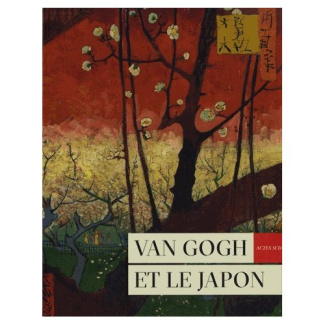
Van Gogh et le Japon
Durant ses années parisiennes, Vincent van Gogh découvre les gravures sur bois japonaises en couleurs (ukiyo-e). Cette rencontre va s'avérer décisive pour sa pratique artistique. Il achète avec enthousiasme des centaines d'estampes et ne tarde pas à tomber sous le charme de leur langage visuel et de leur style coloré et joyeux. Lentement mais sûrement, ce monde enchanté devient son principal point de référence artistique, à un point tel qu'il se présente désormais comme un artiste de tradition japonaise afin de se faire un nom dans l'avant-garde de son temps. Cet ouvrage s'attache à établir dans ses moindres détails l'influence exercée par la gravure japonaise sur l'oeuvre de Van Gogh.EpuiséVOIR PRODUIT49,00 € -

-
-


Du même éditeur
-

'A Perfect Eye and Steady Hand'. Goldsmithing in Tudor & Stuart London
This handsomely illustrated book is published to mark the opening of the Goldsmiths' Gallery at the new London Museum in Smithfield. Showcasing the Cheapside Hoard alongside historic treasures from the Goldsmiths' Company's collection, it takes readers on a global journey in the wake of plate, jewels and gemstones - and the people who made, traded and treasured them. Gold and silver are precious - prized as a form of portable capital, essential for the mints and coinage, used to express power and status. Yet great skill was needed in the buying, the fashioning and the selling of either metal. As fashions changed, much early modern plate and jewellery was melted down when sentiment gave way to market value. This makes the survival of the Goldsmiths' Company's holdings exceptional - and the Cheapside Hoard, unearthed by workmen in 1912 after lying undisturbed for nearly 300 years - nothing short of extraordinary. Comprising over 500 pieces - made of emeralds, diamonds and sapphires sourced from across the world, worked into mesmerising brooches, buttons, necklaces and rings - the Cheapside Hoard is the greatest single collection of Elizabethan and Stuart jewellery in the world. The book places the Hoard in its historical and global context, celebrating it alongside highlights from the Goldsmiths' Company's collection. It offers four main chapters on Elizabethan and early Stuart London, the goldsmiths' trade, the Hoard itself, and the city's global networks. Interwoven thematic sections explore craftsmanship, personal stories, trade practices, taste and fashion - bringingtogether jewels and plate to reveal a rich tapestry of skill, style and exchange.PréventePRÉCOMMANDER35,00 € -
-
-
