

Frankenstein (VO)
6,00 €
En stock
EAN :
9781853260230
Plus d'informations
| EAN | 9781853260230 |
|---|---|
| Auteur | Shelley Mary |
| Editeur | Wordsworth Editions Ltd |
| Date de parution | 19920505 |
| Disponibilité | En stock |
Pourquoi choisir Molière ?
Efficacité et rapidité Commandé avant 16h livré demain
Économique et pratique Livraison dès 3,90 €
Facile et sans frais Retrait gratuit en magasin
Du même auteur
-

FRANKENSTEIN
The lightning was all around me. I looked at the huge body. The silver light reached the hands, the feet and the head. For a moment everything was quiet. Was it moving ? No, yes ! An arm moved, then a leg. Then I heard breathing. Yes, the man was breathing. He was alive ! Points for Understanding comprehension questions. Free resources including worksheets, tests and author data sheets at www.macmillanenglish.com/readers. Audio CD/ download available for this title.EpuiséVOIR PRODUIT8,20 € -
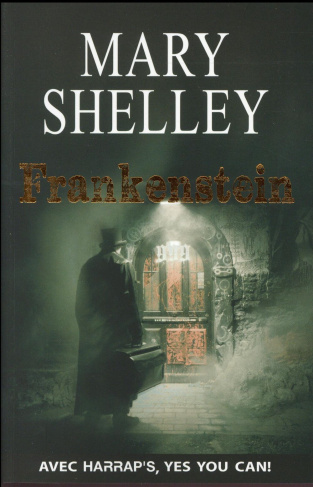
HARRAP'S FRANKENSTEIN
Un classique de l'épouvante, en VO avec des notes pour faciliter la compréhension.EpuiséVOIR PRODUIT11,15 € -

Frankenstein
Since it was first published in 1818, Mary Shelley's seminal novel has generated countless print, stage and screen adaptations, but none has ever matched the power and philosophical resonance of the original. Composed as part of a challenge with Byron and Shelley to conjure up the most terrifying ghost story, Frankenstein narrates the chilling tale of a being created by a bright young scientist and the catastrophic consequences that ensue. Considered by many to be the first science-fiction novel, the tragic tale of Victor Frankenstein and the tortured creation he rejects is a classic fable about the pursuit of knowledge, the nature of beauty and the monstrosity inherent to man.Sur commande en 6-10 joursCOMMANDER6,95 €


Du même éditeur
-

The picture of Dorian Gray (VO)
Extrait CHAPTER IThe studio was filled with the rich odour of roses, and when the light summer wind stirred amidst the trees of the garden, there came through the open door the heavy scent of the lilac, or the more delicate perfume of the pink-flowering thorn.From the corner of the divan of Persian saddle-bags on which he was lying, smoking, as was his custom, innumerable cigarettes, Lord Henry Wotton could just catch the gleam of the honey-sweet and honey-coloured blossoms of a laburnum, whose tremulous branches seemed hardly able to bear the burden of a beauty so flame-like as theirs; and now and then the fantastic shadows of birds in flight flitted across the tussore-silk curtains that were stretched in front of the huge window, producing a kind of momentary Japanese effect, and making him think of those pallid jade-faced painters of Tokio who, through the medium of an art that is necessarily immobile, seek to convey the sense of swiftness and motion. The sullen murmur of the bees shouldering their way through the long unmown grass, or circling with monotonous insistence round the dusty gilt horns of the straggling woodbine, seemed to make the stillness more oppressive. The dim roar of London was like the bourdon note of a distant organ.In the centre of the room, clamped to an upright easel, stood the full-length portrait of a young man of extraordinary personal beauty, and in front of it, some little distance away, was sitting the artist himself, Basil Hallward, whose sudden disappearance some years ago caused, at the time, such public excitement, and gave rise to so many strange conjectures.As the painter looked at the gracious and comely form he had so skilfully mirrored in his art, a smile of pleasure passed across his face, and seemed about to linger there. But he suddenly started up, and, closing his eyes, placed his fingers upon the lids, as though he sought to imprison within his brain some curious dream from which he feared he might awake."It is your best work, Basil, the best thing you have ever done," said Lord Henry, languidly. "You must certainly send it next year to the Grosvenor. The Academy is too large and too vulgar. Whenever I have gone there, there have been either so many people that I have not been able to see the pictures, which was dreadful, or so many pictures that I have not been able to see the people, which was worse. The Grosvenor is really the only place." "I don't think I shall send it anywhere," he answered, tossing his head back in that odd way that used to make his friends laugh at him at Oxford. "No: I won't send it anywhere."Lord Henry elevated his eyebrows, and looked at him in amazement through the thin blue wreaths of smoke that curled up in such fanciful whorls from his heavy opium-tainted cigarette. "Not send it anywhere? My dear fellow, why? Have you any reason? What odd chaps you painters are! You do anything in the world to gain a reputation. As soon as you have one, you seem to want to throw it away. It is silly of you, for there is only one thing in the world worse than being talked about, and that is not being talked about. A portrait like this would set you far above all the young men in England, and make the old men quite jealous, if old men are ever capable of any emotion.""I know you will laugh at me," he replied, "but I really can't exhibit it I have put too much of myself into it."Lord Henry stretched himself out on the divan and laughed. "Yes, I knew you would; but it is quite true, all the same.""Too much of yourself in it! Upon my word, Basil, I didn't know you were so vain; and I really can't see any resemblance between you, with your rugged strong face and your coal-black hair, and this young Adonis, who looks as if he was made out of ivory and rose-leaves. Why, my dear Basil, he is a Narcissus, and you — well, of course you have an intellectual expression, and all that. But beauty, real beauty, ends where an intellectual expression begins. Intellect is in itself a mode of exaggeration, and destroys the harmony of any face. The moment one sits down to think, one becomes all nose, or all forehead, or something horrid. Look at the successful men in any of the learned professions. How perfectly hideous they are! Except, of course, in the Church. But then in the Church they don't think. A bishop keeps on saying at the age of eighty what he was told to say when he was a boy of eighteen, and as a natural consequence he always looks absolutely delightful. Your mysterious young friend, whose name you have never told me, but whose picture really fascinates me, never thinks. I feel quite sure of that. He is some brainless, beautiful creature, who should be always here in winter when we have no flowers to look at, and always here in summer when we want something to chill our intelligence. Don't flatter yourself, Basil: you are not in the least like him."You don't understand me, Harry," answered the artist. "Of course I am not like him. I know that perfectly well. Indeed, I should be sorry to look like him. You shrug your shoulders? I am telling you the truth. There is a fatality about all physical and intellectual distinction, the sort of fatality that seems to dog through history the faltering steps of kings. It is better not to be different from one's fellows. The ugly and the stupid have the best of it in this world. They can sit at their ease and gape at the play. If they know nothing of victory, they are at least spared the knowledge of defeat. They live as we all should live, undisturbed, indifferent, and without disquiet. They neither bring ruin upon others, nor ever receive it from alien hands. Your rank and wealth, Harry; my brains, such as they are — my art, whatever it may be worth; Dorian Gray's good looks — we shall all suffer for what the gods have given us, suffer terribly.""Dorian Gray? Is that his name?" asked Lord Henry, walking across the studio towards Basil Hallward."Yes, that is his name. I didn't intend to tell it to you.""But why not?""Oh, I can't explain. When I like people immensely I never tell their names to any one. It is like surrendering a part of them. I have grown to love secrecy. It seems to be the one thing that can make modern life mysterious or marvellous to us. The commonest thing is delightful if one only hides it. When I leave town now I never tell my people where I am going. If I did, I would lose all my pleasure. It is a silly habit, I dare say, but somehow it seems to bring a great deal of romance to one's life. I suppose you think me awful foolish about it?""Not at all," answered Lord Henry, "not at all, my dear Basil. You seem to forget that I am married, and the one charm of marriage is that it makes a life of deception absolutely necessary for both parties. I never know where my wife is, and my wife never knows what I am doing. When we meet — we do meet occasionally, when we dine out together, or go down to the Duke's — we tell each other the most absurd stories with the most serious faces. My wife is very good at it, much better, in fact, than I am. She never gets confused over her dates, and I always do. But when she does find me out, she makes no row at all. I sometimes wish she would; but she merely laughs at me.""I hate the way you talk about your married life, Harry," said Basil Hallward, strolling towards the door that led into the garden. "I believe that you are really a very good husband, but that you are thoroughly ashamed of your own virtues. You are an extraordinary fellow. You never say a moral thing, and you never do a wrong thing. Your cynicism is simply a pose.""Being natural is simply a pose, and the most irritating pose I know," cried Lord Henry, laughing; and the two young men went out into the garden together, and ensconced themselves on a long bamboo seat that stood in the shade of a tall laurel bush. The sunlight slipped over the polished leaves. In the grass, white daisies were tremulous.After a pause, Lord Henry pulled out his watch. "I am afraid I must be going, Basil," he murmured, "and before you go, I insist on your answering a question I put to you some time ago.""What is that?" said the painter, keeping his eyes fixed on the ground."You know quite well.""I do not, Harry.""Well, I will tell you what it is. I want you to explain to me why you won't exhibit Dorian Gray's picture. I want the real reason.""I told you the real reason.""No you did not. You said it was because there was too much of yourself in it. Now, that is childish.""Harry," said Basil Hallward, looking him straight in the face, "every portrait that is painted with feeling is a portrait of the artist, not of the sitter. The sitter is merely the accident, the occasion. It is not he who is revealed by the painter; it rather the painter who, on the coloured canvas, reveals himself. The reason I will not exhibit the picture is that I am afraid that I have shown in it the secret of my soul."Lord Henry laughed. "And what is that?" he asked."I will tell you," said Hallward; but an expression of perplexity came over his face."I am all expectation, Basil," continued his companion, glancing at him."Oh, there is really very little to tell, Harry," answered the painter; "and I am afraid you will hardly understand it. Perhaps you will hardly believe it."Lord Henry smiled, and, leaning down, plucked a pink-petalled daisy from the grass, and examined it. "I am quite sure I shall understand it," he replied, gazing intently at the little golden white-feathered disk, "and as for believing things, I can believe anything, provided that it is quite incredible."The wind shook some blossoms from the trees, and the heavy lilac-blooms, with their clustering stars, moved to and fro in the languid air. A grasshopper began to chirrup by the wall, and like a blue thread a long thing dragon-fly floated past on its brown gauze wings. Lord Henry felt as if he could hear Basil Hallward's heart beating, ... --Ce texte fait référence à l'édition Relié .Sur commande en 6-10 joursCOMMANDER6,00 € -

-
The Hound of the Baskervilles & The Valley of Fear (VO)
Extrait Over the great Grimpen Mire there hung a dense, white fog. It was drifting slowly in our direction and banked itself up like a wall on that side of us, low, but thick and well defined. The moon shone on it, and it looked like a great shimmering icefield, with the heads of the distant tors as rocks borne upon its surface. Holmes's face was turned towards it, and he muttered impatiently as he watched its sluggish drift. "It's moving towards us, Watson.""Is that serious?""Very serious, indeed - the one thing upon earth which could have disarranged my plans."Every minute that white woolly plain which covered one half of the moor was drifting closer and closer to the house. Already the first thin wisps of it were curling across the golden square of the lighted window. The farther wall of the orchard was already invisible, and the trees were standing out of a swirl of white vapour. As we watched it the fog-wreaths came crawling round both corners of the house and rolled slowly into one dense bank, on which the upper floor and the roof floated like a strange ship upon a shadowy sea. Holmes struck his hand passionately upon the rock in front of us, and stamped his feet in his impatience.I was at Holmes's elbow, and I glanced for an instant at his face. It was pale and exultant, his eyes shining brightly in the moonlight. But suddenly they started forward in a rigid, fixed stare, and his lips parted in amazement. At the same instant Lestrade gave a yell of terror and threw himself face downwards upon the ground. I sprang to my feet, my inert hand grasping my pistol, my mind paralysed by the dreadful shape which had sprung out upon us from the shadows of the fog. A hound it was, an enormous coal-black hound, but not such a hound as mortal eyes have ever seen. Fire burst from its open mouth, its eyes glowed with a smouldering glare, its muzzle and hackles and dewlap were outlined in flickering flame. Never in the delirious dream of a disordered brain could anything more savage, more appalling, more hellish be conceived than that dark form and savage face which broke upon us out of the wall of fog."With long bounds the huge black creature was leaping down the track, following hard upon the footsteps of our friend. So paralysed were we by the apparition that we allowed him to pass before we had recovered our nerve. Then Holmes and I both fired together, and the creature gave a hideous howl, which showed that one at least had hit him. He did not pause, however, but bounded onwards. Far away on the path we saw Sir Henry looking back, his face white in the moonlight, his hands raised in horror, glaring helplessly at the frightful thing which was hunting him down.. . .Never have I seen a man run as Holmes ran that night. I am reckoned fleet of foot, but he outpaced me . . . In front of us as we flew up the track we heard scream after scream from Sir Henry and the deep roar of the hound. I was in time to see the beast spring upon its victim, hurl him to the ground, and worry at his throat._______THE HOUND OF THE BASKERVILLES by Sir Arthur Conan Doyle. Illustrations Copyright © 2006 Pam Smy. Published by Candlewick Press, Inc., Cambridge, MA. --Ce texte fait référence à l'édition Relié .Sur commande en 6-10 joursCOMMANDER6,00 € -
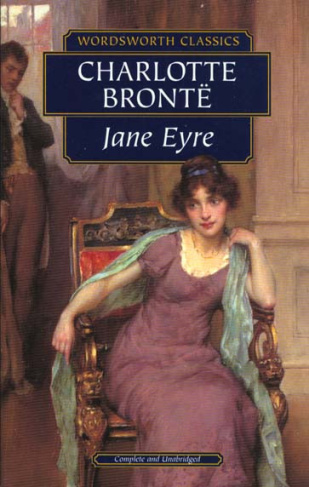
Jane Eyre (VO)
Extrait Chapter OneThere was no possibility of taking a walk that day. We had been wandering, indeed, in the leafless shrubbery an hour in the morning; but since dinner (Mrs. Reed, when there was no company, dined early) the cold winter wind had brought with it clouds so sombre, and a rain so penetrating, that further outdoor exercise was now out of the question.I was glad of it; I never liked long walks, especially on chilly afternoons: dreadful to me was the coming home in the raw twilight, with nipped fingers and toes, and a heart saddened by the chidings of Bessie, the nurse, and humbled by the consciousness of my physical inferiority to Eliza, John, and Georgiana Reed.The said Eliza, John, and Georgiana were now clustered round their mamma in the drawing-room: she lay reclined on a sofa by the fireside, and with her darlings about her (for the time neither quarrelling nor crying) looked perfectly happy. Me, she had dispensed from joining the group, saying, "She regretted to be under the necessity of keeping me at a distance; but that until she heard from Bessie, and could discover by her own observation that I was endeavouring in good earnest to acquire a more sociable and childlike disposition, a more attractive and sprightly manner--something lighter, franker, more natural, as it were--she really must exclude me from privileges intended only for contented, happy little children.""What does Bessie say I have done?" I asked."Jane, I don't like cavillers or questioners; besides, there is something truly forbidding in a child taking up her elders in that manner. Be seated somewhere; and until you can speak pleasantly, remain silent."A small breakfast-room adjoined the drawing-room, I slipped in there. It contained a bookcase; I soon possessed myself of a volume, taking care that it should be one stored with pictures. I mounted into the window-seat: gathering up my feet, I sat crosslegged, like a Turk; and, having drawn the red moreen curtain nearly close, I was shrined in double retirement.Folds of scarlet drapery shut in my view to the right hand; to the left were the clear panes of glass, protecting, but not separating me from the drear November day. At intervals, while turning over the leaves in my book, I studied the aspect of that winter afternoon. Afar, it offered a pale blank of mist and cloud; near, a scene of wet lawn and storm-beat shrub, with ceaseless rain sweeping away wildly before a long and lamentable blast.I returned to my book--Bewick's History of British Birds: the letterpress thereof I cared little for, generally speaking; and yet there were certain introductory pages that, child as I was, I could not pass quite as a blank. They were those which treat of the haunts of sea-fowl; of "the solitary rocks and promontories" by them only inhabited; of the coast of Norway, studded with isles from its southern extremity, the Lindeness, or Naze, to the North Cape--Where the Northern Ocean, in vast whirls,Boils round the naked, melancholy islesOf farthest Thule; and the Atlantic surgePours in among the stormy Hebrides.Nor could I pass unnoticed the suggestion of the bleak shores of Lapland, Siberia, Spitzbergen, Nova Zembla, Iceland, Greenland, with "the vast sweep of the Arctic Zone, and those forlorn regions of dreary space--that reservoir of frost and snow, where firm fields of ice, the accumulation of centuries of winters, glazed in Alpine heights above heights, surround the pole, and concentre the multiplied rigours of extreme cold." Of these death-white realms I formed an idea of my own: shadowy, like all the half-comprehended notions that float dim through children's brains, but strangely impressive. The words in these introductory pages connected themselves with the succeeding vignettes, and gave significance to the rock standing up alone in a sea of billow and spray; to the broken boat stranded on a desolate coast; to the cold and ghastly moon glancing through bars of cloud at a wreck just sinking.I cannot tell what sentiment haunted the quite solitary churchyard, with its inscribed headstone; its gate, its two trees, its low horizon, girdled by a broken wall, and its newly risen crescent, attesting the hour of eventide.The two ships becalmed on a torpid sea, I believed to be marine phantoms.The fiend pinning down the thief's pack behind him, I passed over quickly: it was an object of terror.So was the black, horned thing seated aloof on a rock, surveying a distant crowd surrounding a gallows.Each picture told a story; mysterious often to my undeveloped understanding and imperfect feelings, yet ever profoundly interesting: as interesting as the tales Bessie sometimes narrated on winter evenings, when she chanced to be in good humour; and when, having brought her ironing-table to the nursery-hearth, she allowed us to sit about it, and while she got up Mrs. Reed's lace frills, and crimped her nightcap borders, fed our eager attention with passages of love and adventure taken from old fairy tales and older ballads; or (as at a later period I discovered) from the pages of Pamela, and Henry, Earl of Moreland.With Bewick on my knee, I was then happy: happy at least in my way. I feared nothing but interruption, and that came too soon. The breakfast-room door was opened."Boh! Madam Mope!" cried the voice of John Reed; then he paused: he found the room apparently empty."Where the dickens is she?" he continued. "Lizzy! Georgy! (calling to his sisters) Jane is not here: tell mamma she is run out into the rain--bad animal!""It is well I drew the curtain," thought I, and I wished fervently he might not discover my hiding-place: nor would John Reed have found it out himself; he was not quick either of vision or conception; but Eliza just put her head in at the door, and said at once: "She is in the window-seat, to be sure, Jack."And I came out immediately, for I trembled at the idea of being dragged forth by the said Jack."What do you want?" I asked with awkward diffidence."Say, 'what do you want, Master Reed,' " was the answer. "I want you to come here"; and seating himself in an arm-chair, he intimated by a gesture that I was to approach and stand before him.John Reed was a schoolboy of fourteen years old; four years older than I, for I was but ten; large and stout for his age, with a dingy and unwholesome skin; thick lineaments in a spacious visage, heavy limbs and large extremities. He gorged himself habitually at table, which made him bilious, and gave him a dim and bleared eye with flabby cheeks. He ought now to have been at school; but his mamma had taken him home for a month or two, "on account of his delicate health." Mr. Miles, the master, affirmed that he would do very well if he had fewer cakes and sweetmeats sent him from home; but the mother's heart turned from an opinion so harsh, and inclined rather to the more refined idea that John's sallowness was owing to over-application, and, perhaps, to pining after home.John had not much affection for his mother and sisters, and an antipathy to me. He bullied and punished me; not two or three times in the week, nor once or twice in a day, but continually: every nerve I had feared him, and every morsel of flesh on my bones shrank when he came near. There were moments when I was bewildered by the terror he inspired, because I had no appeal whatever against either his menaces or his inflictions; the servants did not like to offend their young master by taking my part against him, and Mrs. Reed was blind and deaf on the subject: she never saw him strike or heard him abuse me, though he did both now and then in her very presence; more frequently, however, behind her back.Habitually obedient to John, I came up to his chair: he spent some three minutes in thrusting out his tongue at me as far as he could without damaging the roots: I knew he would soon strike, and while dreading the blow, I mused on the disgusting and ugly appearance of him who would presently deal it. I wonder if he read that notion in my face; for, all at once, without speaking, he struck suddenly and strongly. I tottered, and on regaining my equilibrium retired back a step or two from his chair."That is for your impudence in answering mamma a while since," said he, "and for your sneaking way of getting behind curtains, and for the look you had in your eyes two minutes since, you rat!"Accustomed to John Reed's abuse, I never had an idea of replying to it: my care was how to endure the blow which would certainly follow the insult."What were you doing behind the curtain?" he asked."I was reading.""Show the book."I returned to the window and fetched it thence."You have no business to take our books; you are a dependant, mamma says; you have no money; your father left you none; you ought to beg, and not to live here with gentlemen's children like us, and eat the same meals we do, and wear clothes at our mamma's expense. Now, I'll teach you to rummage my bookshelves: for they are mine; all the house belongs to me, or will do in a few years. Go and stand by the door, out of the way of the mirror and the windows."I did so, not at first aware what was his intention; but when I saw him lift and poise the book and stand in act to hurl it, I instinctively started aside with a cry of alarm: not soon enough, however; the volume was flung, it hit me, and I fell, striking my head against the door and cutting it. The cut bled, the pain was sharp: my terror had passed its climax; other feelings succeeded."Wicked and cruel boy!" I said. "You are like a murderer--you are like a slave-driver--you are like the Roman emperors!"I had read Goldsmith's History of Rome, and had formed my opinion of Nero, Caligula, &... --Ce texte fait référence à l'édition Broché .En stockCOMMANDER6,00 €




De la même catégorie
-
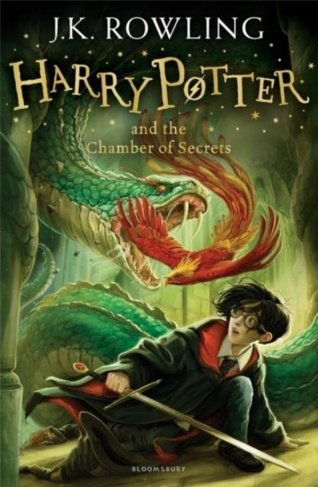
HARRY POTTER AND THE CHAMBER OF SECRETS (REJACKET)
Harry Potter's summer has included the worst birthday ever, doomy warnings from a house-elf called Dobby, and rescue from the Dursleys by his friend Ron Weasley in a magical flying car! Back at Hogwarts School of Witchcraft and Wizardry for his second year, Harry hears strange whispers echo through empty corridors - and then the attacks start. Students are found as though turned to stone . Dobby's sinister predictions seem to be coming true. These new editions of the classic and internationally bestselling, multi-award-winning series feature instantly pick-up-able new jackets by Jonny Duddle, with huge child appeal, to bring Harry Potter to the next generation of readers. It's time to PASS THE MAGIC ON.En stockCOMMANDER12,00 € -
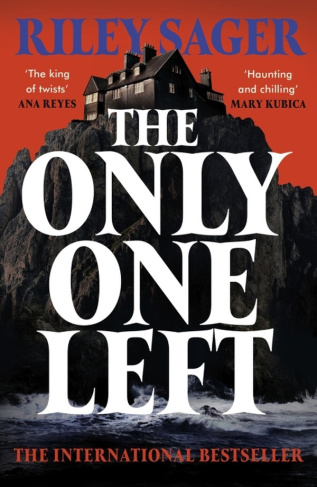
The only one left
**Get the brand new, Agatha Christie-inspired suspense thriller from Riley Sager now - WITH A VENGEANCE**THE HEART-POUNDING GOTHIC THRILLER FROM THE INTERNATIONALLY BESTSELLING AUTHOR Everyone believes that Lenora Hope is a mass murderer. When the Hope family was massacred decades ago, she was the only one left after that tragic night. Mute, paralysed and confined to a wheelchair, Lenora has never been able to tell her side of the story. Until her new live-in caregiver Kit brings her a typewriter. And with one working finger Lenora begins to type: I want to tell you everything. Real readers LOVE The Only One Left:'Plot twists on plot twists! A story that keeps you guessing throughout' ????...'Kept me guessing to the very end' ????...'I literally couldn't leave this story alone' ????...'The tension throughout this book is so intense it is breath taking' ????...'I devoured this in a single sitting' ????...'Laden with an abundance of twists and turns that are truly mind-bending' ????...'The ending though . . . didn't see that one coming!' ????...'Riley never fails to disappoint me, now to wait for the next book...' ????? And your favourite authors love it too...'A master storyteller' ALEX MICHAELIDES'Spine-chilling' RUTH WARE'Twisty' SHARI LAPENA'Addictive' STEPHANIE WROBEL'Propulsive' ELLERY LLOYD'Terrific' KARIN SLAUGHTER'Shocking' LISA GARDNEREn stockCOMMANDER14,00 € -
A Million Kisses In Your Lifetime (VO)
DISCOVER THE DEEPLY ROMANTIC AND UNFORGETTABLE TIKTOK SENSATION THAT WILL GRIP YOU UNTIL THE VERY LAST PAGE'Wren and Crew stole my heart and neither of them will give it back. I cannot explain how much I adore this story . . . Full of angst, drama and steam' 5* READER REVIEW'Addictive, angsty and unforgettable . . . their chemistry was explosive' 5* READER REVIEW'Wren and Crew are perfection and the chemistry they have is sizzling! I was sweating it out with nerves at Chapter 4 and the rollercoaster never ended' 5* READER REVIEW_________Wren Beaumont is a model student. Kind, clever and beautiful, she is loved by everyone at Lancaster Prep.Everyone but brooding campus bad boy Crew Lancaster.Son of the family who own the school, Crew's life seems easy - but with an overbearing father and high expectations, it's anything but.Which is why he has no time for people like Wren.But when their lives unexpectedly collide, Wren discovers there's more to life than good grades - and Crew finally understands what it's like to care about someone other than himself . . .Could they - should they - become the school's most unlikely couple?_________Steamy, romantic and totally addictive, this is a story that proves that true love really does happen when you least expect it . . .'Crew . . . reallyhad me wrapped around his finger by the end of the book' 5* READER REVIEW'I fell madly in love with Wren and Crew. A delightful balance of slow burn and enemies to friends to lovers, and will capture every romance reader's heart' 5* READER REVIEWEn stockCOMMANDER13,00 € -
Portnoy's Complaint
Along with Saul Bellow's Herzog, Philip Roth's Portnoy's Complaint defined Jewish American literature in the 1960s. Roth's masterpiece takes place on the couch of a psychoanalyst, an appropriate jumping-off place for an insanely comical novel about the Jewish American experience. Roth has written several great books--Goodbye, Columbus and When She Was Good among them, but it is perhaps Portnoy's Complaint for which he is best known.Sur commande en 2-4 joursCOMMANDER12,60 €


