

The Little Prince
Antoine de Saint-Exupéry first published The Little Prince in 1943, only a year before his Lockheed P-38 vanished over the Mediterranean during a reconnaissance mission. More than a half century later, this fable of love and loneliness has lost none of its power. The narrator is a downed pilot in the Sahara Desert, frantically trying to repair his wrecked plane. His efforts are interrupted one day by the apparition of a little, well, prince, who asks him to draw a sheep. "In the face of an overpowering mystery, you don't dare disobey," the narrator recalls. "Absurd as it seemed, a thousand miles from all inhabited regions and in danger of death, I took a scrap of paper and a pen out of my pocket." And so begins their dialogue, which stretches the narrator's imagination in all sorts of surprising, childlike directions.The Little Prince describes his journey from planet to planet, each tiny world populated by a single adult. It's a wonderfully inventive sequence, which evokes not only the great fairy tales but also such monuments of postmodern whimsy as Italo Calvino's Invisible Cities. And despite his tone of gentle bemusement, Saint-Exupéry pulls off some fine satiric touches, too. There's the king, for example, who commands the Little Prince to function as a one-man (or one-boy) judiciary:I have good reason to believe that there is an old rat living somewhere on my planet. I hear him at night. You could judge that old rat. From time to time you will condemn him to death. That way his life will depend on your justice. But you'll pardon him each time for economy's sake. There's only one rat. The author pokes similar fun at a businessman, a geographer, and a lamplighter, all of whom signify some futile aspect of adult existence. Yet his tale is ultimately a tender one--a heartfelt exposition of sadness and solitude, which never turns into Peter Pan-style treacle. Such delicacy of tone can present real headaches for a translator, and in her 1943 translation, Katherine Woods sometimes wandered off the mark, giving the text a slightly wooden or didactic accent. Happily, Richard Howard (who did a fine nip-and-tuck job on Stendhal's The Charterhouse of Parma in 1999) has streamlined and simplified to wonderful effect. The result is a new and improved version of an indestructible classic, which also restores the original artwork to full color. "Trying to be witty," we're told at one point, "leads to lying, more or less." But Saint-Exupéry's drawings offer a handy rebuttal: they're fresh, funny, and like the book itself, rigorously truthful. --James Marcus
| EAN | 9781853261589 |
|---|---|
| Titre | The Little Prince |
| ISBN | 1853261580 |
| Auteur | Saint-Exupery Antoine de |
| Editeur | WORDSWORTH |
| Largeur | 0 |
| Poids | 100 |
| Date de parution | 20010405 |
| Nombre de pages | 0,00 € |
| Disponibilité | En stock |
Pourquoi choisir Molière ?
Du même auteur
-
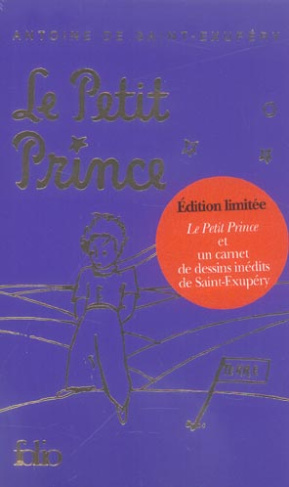
Le Petit Prince Coffret en 2 volumes : Le Petit Prince ; Naissance d'un Prince
Le Petit Prince d'Antoine de Saint-Exupéry (Édition limitée)Le Petit Prince paraît en édition limitée, sous coffret, accompagné d'un carnet de dessins d'Antoine de Saint-Exupéry, extraits de l'album Dessins. Aquarelles, plumes, pastels et crayons.EpuiséVOIR PRODUIT10,00 € -
Le Petit Prince. Fiche de lecture
La collection "Fichebook" vous offre la possibilité de tout savoir du Petit Prince de Saint-Exupéry grâce à une fiche de lecture aussi complète que détaillée. La rédaction, claire et accessible, a été confiée à un spécialiste universitaire. Cette fiche de lecture répond à une charte qualité mise en place par une équipe d'enseignants. Ce livre contient : - La biographie d'Antoine de Saint-Exupéry - La présentation de l'oeuvre - Le résumé détaillé (chapitre par chapitre) - Les raisons du succès - Les thèmes principauxImpression à la demandeCOMMANDER5,10 € -
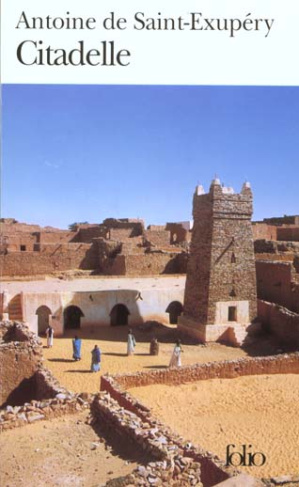
Citadelle
Citadelle, oeuvre posthume publiée en 1948, constitue la "somme" de Saint-Exupéry et rassemble les méditations de toute une vie. Michel Quesnel, avec Pierre Chevrier, avait établi le texte de la première publication. Dans cette nouvelle édition abrégée, il a réussi à distinguer et mettre en lumière les thèmes essentiels qui illustrent cet ouvrage et il nous livre les secrets, les modulations d'une pensée originale et poétique. Saint-Exupéry envisageait la traversée de Citadelle à la façon de ces promenades "dans une campagne étrangère" qu'il évoque au cours même du livre. "Et peu à peu au cours du long pèlerinage, tandis que mon cheval boitait dans les ornières, ou tirait les rênes pour brouter l'herbe rase le long des murs, me vint le sentiment que mon chemin dans ses inflexions subtiles et ses respects et ses loisirs, et son temps perdu comme par l'effet de quelques rites ou d'une antichambre de roi, dessinait le visage d'un prince, et que tous ceux qui l'empruntaient, secoués par leurs carrioles ou balancés par leurs ânes lents, étaient, sans le savoir, exercés à l'amour."En stockCOMMANDER10,50 € -
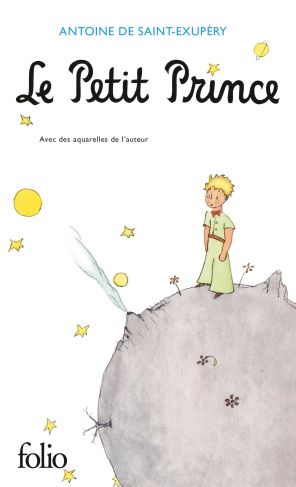
Le Petit Prince
Classique indémodable, le petit prince est un ouvrage qui conviendra tant aux enfants qu’aux adultes. Par le biais des aventures d’un petit garçon venu d’un autre monde, le livre met en exergue certaines incohérences typiquement humaines et nous donne une magnifique leçon sur l’importance de vivre l’instant présent, de poursuivre ses rêves, de créer des liens, et d’aimer sans modération.En stockCOMMANDER7,50 €


Du même éditeur

De la même catégorie
-
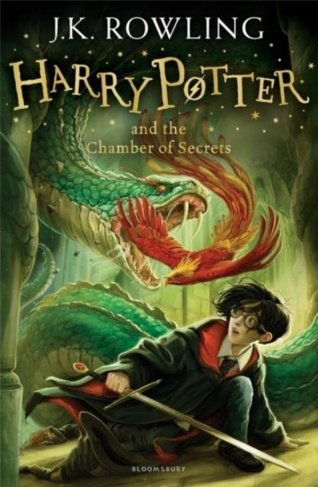
HARRY POTTER AND THE CHAMBER OF SECRETS (REJACKET)
Harry Potter's summer has included the worst birthday ever, doomy warnings from a house-elf called Dobby, and rescue from the Dursleys by his friend Ron Weasley in a magical flying car! Back at Hogwarts School of Witchcraft and Wizardry for his second year, Harry hears strange whispers echo through empty corridors - and then the attacks start. Students are found as though turned to stone . Dobby's sinister predictions seem to be coming true. These new editions of the classic and internationally bestselling, multi-award-winning series feature instantly pick-up-able new jackets by Jonny Duddle, with huge child appeal, to bring Harry Potter to the next generation of readers. It's time to PASS THE MAGIC ON.En stockCOMMANDER12,00 € -
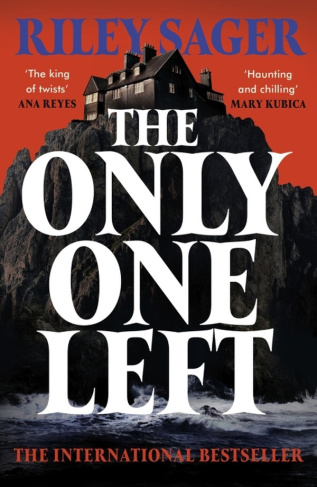
The only one left
**Get the brand new, Agatha Christie-inspired suspense thriller from Riley Sager now - WITH A VENGEANCE**THE HEART-POUNDING GOTHIC THRILLER FROM THE INTERNATIONALLY BESTSELLING AUTHOR Everyone believes that Lenora Hope is a mass murderer. When the Hope family was massacred decades ago, she was the only one left after that tragic night. Mute, paralysed and confined to a wheelchair, Lenora has never been able to tell her side of the story. Until her new live-in caregiver Kit brings her a typewriter. And with one working finger Lenora begins to type: I want to tell you everything. Real readers LOVE The Only One Left:'Plot twists on plot twists! A story that keeps you guessing throughout' ????...'Kept me guessing to the very end' ????...'I literally couldn't leave this story alone' ????...'The tension throughout this book is so intense it is breath taking' ????...'I devoured this in a single sitting' ????...'Laden with an abundance of twists and turns that are truly mind-bending' ????...'The ending though . . . didn't see that one coming!' ????...'Riley never fails to disappoint me, now to wait for the next book...' ????? And your favourite authors love it too...'A master storyteller' ALEX MICHAELIDES'Spine-chilling' RUTH WARE'Twisty' SHARI LAPENA'Addictive' STEPHANIE WROBEL'Propulsive' ELLERY LLOYD'Terrific' KARIN SLAUGHTER'Shocking' LISA GARDNEREn stockCOMMANDER14,00 € -
A Million Kisses In Your Lifetime (VO)
DISCOVER THE DEEPLY ROMANTIC AND UNFORGETTABLE TIKTOK SENSATION THAT WILL GRIP YOU UNTIL THE VERY LAST PAGE'Wren and Crew stole my heart and neither of them will give it back. I cannot explain how much I adore this story . . . Full of angst, drama and steam' 5* READER REVIEW'Addictive, angsty and unforgettable . . . their chemistry was explosive' 5* READER REVIEW'Wren and Crew are perfection and the chemistry they have is sizzling! I was sweating it out with nerves at Chapter 4 and the rollercoaster never ended' 5* READER REVIEW_________Wren Beaumont is a model student. Kind, clever and beautiful, she is loved by everyone at Lancaster Prep.Everyone but brooding campus bad boy Crew Lancaster.Son of the family who own the school, Crew's life seems easy - but with an overbearing father and high expectations, it's anything but.Which is why he has no time for people like Wren.But when their lives unexpectedly collide, Wren discovers there's more to life than good grades - and Crew finally understands what it's like to care about someone other than himself . . .Could they - should they - become the school's most unlikely couple?_________Steamy, romantic and totally addictive, this is a story that proves that true love really does happen when you least expect it . . .'Crew . . . reallyhad me wrapped around his finger by the end of the book' 5* READER REVIEW'I fell madly in love with Wren and Crew. A delightful balance of slow burn and enemies to friends to lovers, and will capture every romance reader's heart' 5* READER REVIEWEn stockCOMMANDER13,00 € -
Portnoy's Complaint
Along with Saul Bellow's Herzog, Philip Roth's Portnoy's Complaint defined Jewish American literature in the 1960s. Roth's masterpiece takes place on the couch of a psychoanalyst, an appropriate jumping-off place for an insanely comical novel about the Jewish American experience. Roth has written several great books--Goodbye, Columbus and When She Was Good among them, but it is perhaps Portnoy's Complaint for which he is best known.Sur commande en 2-4 joursCOMMANDER12,60 €


