

Retour au pays
8,40 €
Sur commande en 2-4 jours
EAN :
9782290021217
Comme tant d'autres venus de l'Est, Lev décide un jour de quitter sa terre natale pour gagner l'Angleterre. Derrière lui flottent les ombres de son passé : celle de sa femme défunte, de sa mère et de sa petite fille laissées au pays. Si Londres se révèle une ville dure et inhospitalière, le périple de Lev réveillera son sens de l'honnêteté, de l'amour, de l'amitié, tant et si bien qu'à aucun moment il ne perdra l'espoir de pouvoir rentrer au pays la tête haute.
Catégories
| Nombre de pages | 570 |
|---|---|
| Date de parution | 10/04/2010 |
| Poids | 306g |
| Largeur | 111mm |
Plus d'informations
| EAN | 9782290021217 |
|---|---|
| Titre | Retour au pays |
| Auteur | Tremain Rose ; Demanuelli Claude ; Demanuelli Jean |
| Editeur | J'AI LU |
| Largeur | 111 |
| Poids | 306 |
| Date de parution | 20100410 |
| Nombre de pages | 570,00 € |
| Disponibilité | Sur commande en 2-4 jours |
Pourquoi choisir Molière ?
Efficacité et rapidité Commandé avant 16h livré demain
Économique et pratique Livraison dès 3,90 €
Facile et sans frais Retrait gratuit en magasin
Du même auteur
-
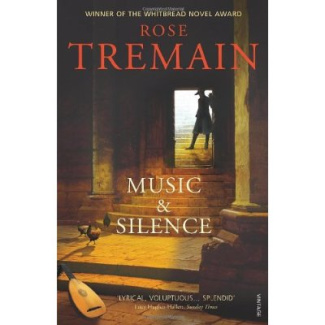
MUSIC AND SILENCE MUSIQUE ET SILENCE
Extrait Lilac and LindenA lamp is lit.Until this moment, when the flame of the lamp flares blue, then settles to steady yellow inside its ornate globe, the young man had been impressed by the profound darkness into which, upon his late-night arrival at the palace of Rosenborg, he had suddenly stepped. Tired from his long sea journey, his eyes stinging, his walk unsteady, he had been questioning the nature of this darkness. For it seemed to him not merely an external phenomenon, having to do with an actual absence of light, but rather as though it emanated from within him, as if he had finally crossed the threshold of his own absence of hope.Now, he is relieved to see the walls of a panelled room take shape around him. A voice says: 'This is the Vinterstue. The Winter Room.'The lamp is lifted up. Held high, it burns more brightly, as though sustained by purer air, and the young man sees a shadow cast onto the wall. It is a long, slanting shadow and so he knows it is his own. It appears to have a deformity, a hump, occurring along its spine from below the shoulder-blades to just above the waist. But this is the shadow's trickery. The young man is Peter Claire, the lutenist, and the curvature on his back is his lute.He is standing near a pair of lions, made of silver. Their eyes seem to watch him in the flickering gloom. Beyond them he can see a table and some tall chairs. But Peter Claire is separate from everything, cannot lean on any object, cannot rest. And now, the lamp moves and he must follow.'It may be', says a tall gentleman, who hurries on, carrying the light, 'that His Majesty, King Christian, will command you to play for him tonight. He is not well and his physicians have prescribed music. Therefore, members of the royal orchestra must be ready to perform at all times, day and night. I thought it best to advise you of this straight away.'Peter Claire's feelings of dismay increase. He begins to curse himself, to berate his own ambition for bringing him here to Denmark, for taking him so far from the places and people he had loved. He is at the end of his journey and yet he feels lost. Within this arrival some terrifying departure lies concealed. And suddenly, with peculiar speed, the lamp moves and everything in the room seems to rearrange itself. Peter Claire sees his shadow on the wall become elongated, stretching upwards for a few seconds towards the ceiling before being swallowed by the darkness, with no trace of it remaining.Then the end of a corridor is reached and the gentleman stops before a door. He knocks and waits, putting a finger to his lips and leaning close against the door to listen for the command from within. It comes at last, a voice deep and slow, and Peter Claire finds himself, in the next minute, standing before King Christian, who is sitting in a chair in his night-shirt. Before him, on a small table, is a pair of scales and by these a clutch of silver coins.The English lutenist bows as the King looks up and Peter Claire will always remember that, as King Christian first glimpses him in this dark middle of a winter's night, there comes into His Majesty's eyes a look of astonishment and, staring intently at the lute player's face, he whispers a single word: 'Bror.''I beg your pardon, Sir ...?' says Peter Claire.'Nothing,' says the King. 'A ghost. Denmark is full of ghosts. Did no one warn you?''No, Your Majesty.''Never mind. You will see them for yourself. We are one of the oldest nations on earth. But you should know that it is a time of storms here, of confusion, of incomprehension, of bitter boiling muddle.''Of muddle, Sir?''Yes. This is why I am weighing silver. I weigh the same pieces over and over again, to ensure that there is no error. No possibility of error. I am trying, piece by piece and day by day, to reimpose order upon chaos.'Peter Claire does not know how to reply to this and he is aware that the tall gentleman, without his noticing, has gone from the room, leaving him alone with the King, who now pushes the scales aside and settles himself more comfortably in the chair.King Christian lifts his head and asks: 'How old are you, Mr Claire? Where do you come from?'A fire is burning in the room, which is the Skrivestue, the King's study, and the small chamber smells sweetly of applewood and leather.Peter Claire replies that he is twenty-seven and that his parents live in the town of Harwich on the east coast of England. He adds that the sea in winter can be unforgiving there.'Unforgiving. Unforgiving!' says the King. 'Well, we must hurry on, pass over or skirt around that word. Unforgiving. But I tell you, lutenist, I am tortured by lice. Do not look alarmed. Not in my hair or on my pillow. I mean by cowards, rascals, liars, sots, cheats and lechers. Where are the philosophers? That is what I constantly ask.'Peter Claire hesitates before answering.'No need to reply,' says the King. 'For they are all gone from Denmark. There is not one left.'Then His Majesty stands up and moves towards the fire where Peter Claire is standing, and takes up a lamp and holds it near the young man's face. He examines the face and Peter Claire lowers his eyes because he has been warned not to stare at the King. This King is ugly. King Charles I of England, King Louis XIII of France, these are handsome men at this perilous moment in history, but King Christian IV of Denmark - all-powerful, brave and cultured as he is reported to be - has a face like a loaf.The lutenist, to whom, by cruel contrast, nature has given an angel's countenance, can smell wine on the King's breath. But he does not dare to move, not even when the King reaches up and tenderly touches his cheek with his hand. Peter Claire, with his blond hair and his eyes the colour of the sea, has been considered handsome from childhood. He wears this handsomeness lightly, frequently forgetting about it, as though almost impatient for time to take it away. He once overheard his sister Charlotte praying to God to be given his face in exchange for hers. He thought, it is really of little value to me; far better it were hers. And yet now, in this unfamiliar place, when his own thoughts are so sombre and dark, the lute player finds that his physical beauty is once again the subject of unexpected scrutiny.'I see. I see,' whispers the King. 'God has exaggerated, as He so often seems to do. Beware the attentions of my wife, Kirsten, who is a fool for yellow hair. I advise a mask when you are in her presence. And all beauty vanishes away, but of course you know that, I needn't underline the self-evident.''I know that beauty vanishes, Sir.''Of course you do. Well, you had better play for me. I suppose you know that we had your Mr Dowland here at court. The conundrum there was that such beautiful music could come from so agitated a soul. The man was all ambition and hatred, yet his ayres were as delicate as rain. We would sit there and blub, and Master Dowland would kill us with his furious look. I told my mother to take him to one side and say: ''Dowland, this will not do and cannot be tolerated,'' but he told her music can only be born out of fire and fury. What do you think about that?'Peter Claire is silent for a moment. For a reason he can't name, this question consoles him and he feels his agitation diminish by a fraction. 'I think that it is born out of fire and fury, Sir,' he says, 'but also out of the antitheses to these - out of cold reason and calm.''This sounds logical. But of course we do not really know where music comes from or why, or when the first note of it was heard. And we shall never know. It is the human soul, speaking without words. But it seems to cure pain - this is an honest fact. I yearn, by the way, for everything to be transparent, honest and true. So why do you not play me one of Dowland's Lachrimae? Economy of means was his gift and this I dote upon. His music leaves no room for exhibitionism on the part of the performer.'Peter Claire unslings his lute from his back and holds it close against his body. His ear (in which he wears a tiny jewel once given to him by an Irish countess) strains to hear, as he plucks and tunes. King Christian sighs, waiting for the sweet melody to begin. He is a heavy man. Any alteration of his body's position seems to cause him a fleeting moment of discomfort.Now Peter Claire arranges his body into the stance he must always adopt when he performs: leaning forward from the hips, head out, chin down, right arm forming a caressing half-circle, so that the instrument is held at the exact centre of his being. Only in this way can he feel that the music emanates from him. He begins to play. He hears the purity of the sound and suspects that this, alone, is what will count with the King of Denmark.When the song is over he glances at the King, but the King doesn't move. His wide hands clutch the arms of the chair. From the left side of his dark head falls a long, thin plait of hair, fastened with a pearl. 'In springtime,' Christian says suddenly, 'Copenhagen used to smell of lilac and of linden. I do not know where this heavenly scent has gone.'Kirsten Munk, Consort of King Christian IV of Denmark: From Her Private PapersWell, for my thirtieth birthday, I have been given a new Looking-glass which I thought I would adore. I thought I would dote upon this new Glass of mine. But there is an error in it, an undoubted fault in its silvering, so that the wicked object makes me look fat. I have sent for a hammer.My birthday gifts, I here record, were not as marvellous as the givers of them pretended they were. My poor old Lord and Master, the King, knowing my fondness for gold, gave me a little gold Statue of himself mounted on a gold horse and bearing a gold tilting pole. The horse, being in a prancing attitude, has his front legs lifted from the ground, so that the foolish thing would fall over, were it not for a small Harlequin pretending to run beside...EpuiséVOIR PRODUIT14,50 € -

Le royaume interdit
A six ans, tandis que l'Angleterre s'incline devant le roi George VI décédé, Mary Ward, fille d'un fermier du Suffolk, comprend que, malgré les apparences, elle n'est pas une petite fille. Dès lors, elle s'efforcera de devenir Martin, un garçon hardi, tendre et viril. Au fil des années, elle poursuit son rêve, du Suffolk à Londres, de l'Angleterre des Beatles à l'Amérique profonde. Rêve impossible ? Peut-être. Mais ceux qui l'entourent, de sa grand-mère, morte en planeur, à Walter, le garçon boucher qui veut devenir chanteur de country, ne sont-ils pas eux aussi à la recherche de leur royaume interdit ? Un roman superbe dans son propos comme dans sa forme. Françoise Giroud, Le Journal du dimanche. Je cherche un autre exemple d'un roman aussi beau, aussi généreux par la noblesse troublante de son regard, la justesse sans faille de son style. Frédéric Vitoux, Le Nouvel Observateur. Une merveille. Anne Walter, Marie Claire. Prix Femina étranger 1994. Traduit de l'anglais par Jean Bourdier.EpuiséVOIR PRODUIT9,09 € -

ISLANDS OF MERCY
In the city of Bath, in the year 1865, an extraordinary young woman renowned for her nursing skills is convinced that some other destiny will one day show itself to her. But when she finds herself torn between a dangerous affair with a female lover and the promise of a conventional marriage to an apparently respectable doctor, her desires begin to lead her towards a future she had never imagined. Meanwhile, on the wild island of Borneo, an eccentric British "rajah", Sir Ralph Savage, overflowing with philanthropy but compromised by his passions, sees his schemes relentlessly undermined by his own fragility, by man's innate greed and by the invasive power of the forest itself. Jane's quest for an altered life and Sir Ralph's endeavours become locked together as the story journeys across the globe ? from the confines of an English tearoom to the rainforests of a tropical island via the slums of Dublin and the transgressive fancy-dress boutiques of Paris. Islands of Mercy is a novel that ignites the senses, and is a bold exploration of the human urge to seek places of sanctuary in a pitiless world.Sur commande en 6-10 joursCOMMANDER19,95 € -

The Gustav Sonata
Gustav Perle grows up lonely and watchful in post-war Switzerland, aching for a closeness his own mother cannot give him. In a small Swiss town still marked by the moral compromises of the Second World War, Gustav finds the companionship he longs for in Anton Zwiebel, a brilliant, fragile boy whose music expresses what neither of them can say aloud. Their bond, forged in childhood in the late 1940s, deepens into an intense attachment that neither fully understands. The Gustav Sonata follows Gustav and Anton through love, disappointment, and the slow realisation of what they have lost as a result of fear and restraint. Set between the 1940s and early 2000s, The Gustav Sonata is a twentieth-century historical novel that asks what it means to love someone you cannot fully claim, and whether tenderness can survive decades of silence. ?A perfect novel about life's imperfection... Tremain is writing at the height of her inimitable powers? Kate Kellaway, Observer ?Tremain has the painterly genius of an Old Master, and she uses it to stunning effect... Glorious? The TimesSur commande en 6-10 joursCOMMANDER12,99 €


Du même éditeur
-

Une année pour devenir riche. Votre plan succès en 52 étapes
Et si la richesse n'était pas une question de chance... mais d'état d'esprit ? Napoleon Hill, l'auteur du best-seller mondial Réfléchissez et devenez riche, révèle ici son plan en 52 étapes pour transformer vos pensées en succès concret. Chaque semaine, découvrez une clé. Chaque clé devient un levier pour penser plus clair, agir plus juste et réussir vraiment. Ce livre n'est pas une théorie de plus, c'est un déclencheur. En y consacrant seulement quelques minutes par semaine, vous activerez une force déjà présente en vous : le pouvoir de créer votre richesse et votre réussite.En stockCOMMANDER7,80 € -

-
-



De la même catégorie
-
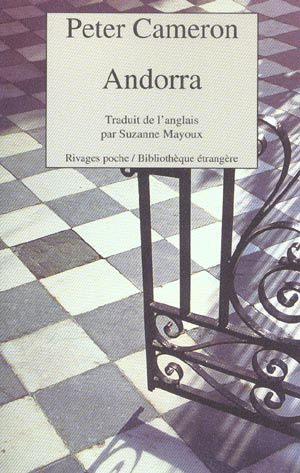
Andorra
L'Andorra du roman obsédant de Peter Cameron est inspiré d'une principauté isolée dans les Pyrénées. Transformée en un paradis éclaboussé de soleil, chacun y a quelque chose à cacher. C'est là que vient Alexander Fox, pensant y trouver réconfort et refuge, alors qu'il n'y rencontre que des souvenirs inquiétants de son passé. Andorra est un roman brillant et inventif sur le mensonge, le désir, et la tromperie de la mémoire.EpuiséVOIR PRODUIT8,15 € -
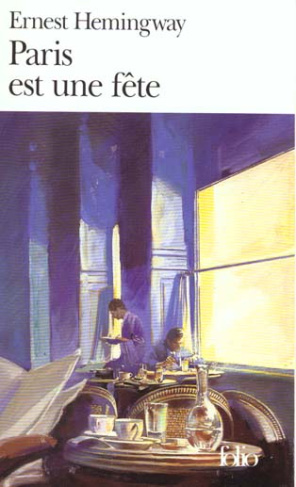
Paris est une fête
Ce volume constitue une occasion de lire un texte à la fois plus complet et plus proche del'original que le manuscrit qui constituait, pour l'auteur, une sorte de mémoire de ses jeunesannées d'écrivain à Paris. Au cours de l'été 1957, il commença à travailler sur les « Vignettes parisiennes », comme il appelait alors le livre. Il y travailla à Cuba et à Ketchum, et emporta même le manuscrit avec lui en Espagne pendant l'été 59, puis à Paris, à l'automne de cette même année. En novembre 59, Hemingway avait terminé la première version d'un texte auquel il ne manquait qu'une introduction et le dernier chapitre. Paris est une fête fut publié de manière posthume en 1964; il concerne les années parisiennes 1921 à 1926. Pendant les trois années, ou presque, qui s'écoulent entre la mort de l'auteur et la première publication de Paris est une fête, le manuscrit subit d'importants amendements de la main des éditeurs, de Mary Hemingway et de la maison Scribner. Quelques textes que Hemingway avait prévu d'inclure dans l'ouvrage ont été supprimés, tandis qu'ont été ajoutés d'autres fragments, qu'il avait certes destinés à cet ouvrage mais n'avait finalement pas retenus. Se trouve aujourd'hui restitué et présenté pour la première fois le texte manuscrit original tel qu'il était au moment de la mort de l'écrivain en 1961.EpuiséVOIR PRODUIT8,60 € -
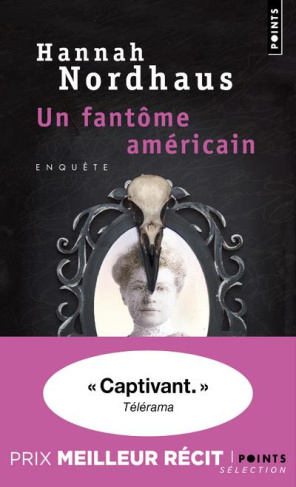
Un fantôme américain
A Santa Fe, les clients de "La Posada" sont formels : l'hôtel est hanté. Le fantôme de Julia Staab, une émigrante juive-allemande ayant vécu au XIXe siècle, existe bel et bien. De son visage blême émane une aura de tristesse. De quel outrage son spectre réclame-t-il justice ? Nul ne le sait. Sauf Hannah Nordhaus, son arrière-arrière-petite-fille qui part sur les traces de son ancêtre et honore sa mémoire. Un dernier hommage qui, peut-être, permettra à Julia de trouver le repos éternel.Sur commande en 2-4 joursCOMMANDER8,00 € -
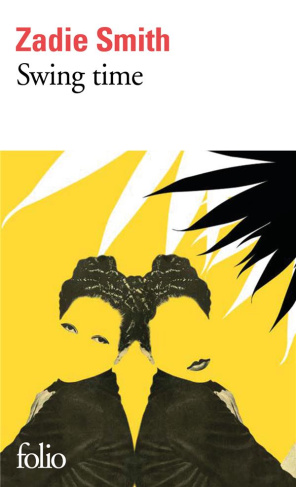
Swing Time
Dans un quartier populaire de Londres, deux petites filles métisses nouent une relation fusionnelle autour d'un même rêve : devenir danseuses. Mais seule Tracey, la plus effrontée, a du talent. L'autre possède des idées : sur le rythme et le temps, les corps et la musique noire, ce que signifie appartenir, ce que signifie être libre. Leur amitié explosive s'interrompt brusquement au début de la vingtaine. Empruntant des chemins différents vers un destin qu'elles imaginent lumineux, chacune s'égarera pourtant en route. Débordant d'énergie, d'humour et d'émotion, Swing Time raconte les espoirs et les désillusions de ceux qui suivent la danse et de ceux qui la mènent.Sur commande en 2-4 joursCOMMANDER10,00 €


