

The Gustav Sonata
Gustav Perle grows up lonely and watchful in post-war Switzerland, aching for a closeness his own mother cannot give him. In a small Swiss town still marked by the moral compromises of the Second World War, Gustav finds the companionship he longs for in Anton Zwiebel, a brilliant, fragile boy whose music expresses what neither of them can say aloud. Their bond, forged in childhood in the late 1940s, deepens into an intense attachment that neither fully understands. The Gustav Sonata follows Gustav and Anton through love, disappointment, and the slow realisation of what they have lost as a result of fear and restraint. Set between the 1940s and early 2000s, The Gustav Sonata is a twentieth-century historical novel that asks what it means to love someone you cannot fully claim, and whether tenderness can survive decades of silence. ?A perfect novel about life's imperfection... Tremain is writing at the height of her inimitable powers? Kate Kellaway, Observer ?Tremain has the painterly genius of an Old Master, and she uses it to stunning effect... Glorious? The Times
| EAN | 9781784700201 |
|---|---|
| Auteur | Tremain Rose |
| Editeur | GARDNERS |
| Date de parution | 20170126 |
| Disponibilité | Sur commande en 6-10 jours |
Pourquoi choisir Molière ?
Du même auteur
-
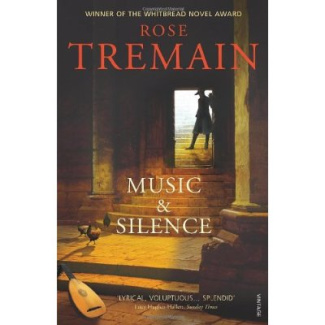
MUSIC AND SILENCE MUSIQUE ET SILENCE
Extrait Lilac and LindenA lamp is lit.Until this moment, when the flame of the lamp flares blue, then settles to steady yellow inside its ornate globe, the young man had been impressed by the profound darkness into which, upon his late-night arrival at the palace of Rosenborg, he had suddenly stepped. Tired from his long sea journey, his eyes stinging, his walk unsteady, he had been questioning the nature of this darkness. For it seemed to him not merely an external phenomenon, having to do with an actual absence of light, but rather as though it emanated from within him, as if he had finally crossed the threshold of his own absence of hope.Now, he is relieved to see the walls of a panelled room take shape around him. A voice says: 'This is the Vinterstue. The Winter Room.'The lamp is lifted up. Held high, it burns more brightly, as though sustained by purer air, and the young man sees a shadow cast onto the wall. It is a long, slanting shadow and so he knows it is his own. It appears to have a deformity, a hump, occurring along its spine from below the shoulder-blades to just above the waist. But this is the shadow's trickery. The young man is Peter Claire, the lutenist, and the curvature on his back is his lute.He is standing near a pair of lions, made of silver. Their eyes seem to watch him in the flickering gloom. Beyond them he can see a table and some tall chairs. But Peter Claire is separate from everything, cannot lean on any object, cannot rest. And now, the lamp moves and he must follow.'It may be', says a tall gentleman, who hurries on, carrying the light, 'that His Majesty, King Christian, will command you to play for him tonight. He is not well and his physicians have prescribed music. Therefore, members of the royal orchestra must be ready to perform at all times, day and night. I thought it best to advise you of this straight away.'Peter Claire's feelings of dismay increase. He begins to curse himself, to berate his own ambition for bringing him here to Denmark, for taking him so far from the places and people he had loved. He is at the end of his journey and yet he feels lost. Within this arrival some terrifying departure lies concealed. And suddenly, with peculiar speed, the lamp moves and everything in the room seems to rearrange itself. Peter Claire sees his shadow on the wall become elongated, stretching upwards for a few seconds towards the ceiling before being swallowed by the darkness, with no trace of it remaining.Then the end of a corridor is reached and the gentleman stops before a door. He knocks and waits, putting a finger to his lips and leaning close against the door to listen for the command from within. It comes at last, a voice deep and slow, and Peter Claire finds himself, in the next minute, standing before King Christian, who is sitting in a chair in his night-shirt. Before him, on a small table, is a pair of scales and by these a clutch of silver coins.The English lutenist bows as the King looks up and Peter Claire will always remember that, as King Christian first glimpses him in this dark middle of a winter's night, there comes into His Majesty's eyes a look of astonishment and, staring intently at the lute player's face, he whispers a single word: 'Bror.''I beg your pardon, Sir ...?' says Peter Claire.'Nothing,' says the King. 'A ghost. Denmark is full of ghosts. Did no one warn you?''No, Your Majesty.''Never mind. You will see them for yourself. We are one of the oldest nations on earth. But you should know that it is a time of storms here, of confusion, of incomprehension, of bitter boiling muddle.''Of muddle, Sir?''Yes. This is why I am weighing silver. I weigh the same pieces over and over again, to ensure that there is no error. No possibility of error. I am trying, piece by piece and day by day, to reimpose order upon chaos.'Peter Claire does not know how to reply to this and he is aware that the tall gentleman, without his noticing, has gone from the room, leaving him alone with the King, who now pushes the scales aside and settles himself more comfortably in the chair.King Christian lifts his head and asks: 'How old are you, Mr Claire? Where do you come from?'A fire is burning in the room, which is the Skrivestue, the King's study, and the small chamber smells sweetly of applewood and leather.Peter Claire replies that he is twenty-seven and that his parents live in the town of Harwich on the east coast of England. He adds that the sea in winter can be unforgiving there.'Unforgiving. Unforgiving!' says the King. 'Well, we must hurry on, pass over or skirt around that word. Unforgiving. But I tell you, lutenist, I am tortured by lice. Do not look alarmed. Not in my hair or on my pillow. I mean by cowards, rascals, liars, sots, cheats and lechers. Where are the philosophers? That is what I constantly ask.'Peter Claire hesitates before answering.'No need to reply,' says the King. 'For they are all gone from Denmark. There is not one left.'Then His Majesty stands up and moves towards the fire where Peter Claire is standing, and takes up a lamp and holds it near the young man's face. He examines the face and Peter Claire lowers his eyes because he has been warned not to stare at the King. This King is ugly. King Charles I of England, King Louis XIII of France, these are handsome men at this perilous moment in history, but King Christian IV of Denmark - all-powerful, brave and cultured as he is reported to be - has a face like a loaf.The lutenist, to whom, by cruel contrast, nature has given an angel's countenance, can smell wine on the King's breath. But he does not dare to move, not even when the King reaches up and tenderly touches his cheek with his hand. Peter Claire, with his blond hair and his eyes the colour of the sea, has been considered handsome from childhood. He wears this handsomeness lightly, frequently forgetting about it, as though almost impatient for time to take it away. He once overheard his sister Charlotte praying to God to be given his face in exchange for hers. He thought, it is really of little value to me; far better it were hers. And yet now, in this unfamiliar place, when his own thoughts are so sombre and dark, the lute player finds that his physical beauty is once again the subject of unexpected scrutiny.'I see. I see,' whispers the King. 'God has exaggerated, as He so often seems to do. Beware the attentions of my wife, Kirsten, who is a fool for yellow hair. I advise a mask when you are in her presence. And all beauty vanishes away, but of course you know that, I needn't underline the self-evident.''I know that beauty vanishes, Sir.''Of course you do. Well, you had better play for me. I suppose you know that we had your Mr Dowland here at court. The conundrum there was that such beautiful music could come from so agitated a soul. The man was all ambition and hatred, yet his ayres were as delicate as rain. We would sit there and blub, and Master Dowland would kill us with his furious look. I told my mother to take him to one side and say: ''Dowland, this will not do and cannot be tolerated,'' but he told her music can only be born out of fire and fury. What do you think about that?'Peter Claire is silent for a moment. For a reason he can't name, this question consoles him and he feels his agitation diminish by a fraction. 'I think that it is born out of fire and fury, Sir,' he says, 'but also out of the antitheses to these - out of cold reason and calm.''This sounds logical. But of course we do not really know where music comes from or why, or when the first note of it was heard. And we shall never know. It is the human soul, speaking without words. But it seems to cure pain - this is an honest fact. I yearn, by the way, for everything to be transparent, honest and true. So why do you not play me one of Dowland's Lachrimae? Economy of means was his gift and this I dote upon. His music leaves no room for exhibitionism on the part of the performer.'Peter Claire unslings his lute from his back and holds it close against his body. His ear (in which he wears a tiny jewel once given to him by an Irish countess) strains to hear, as he plucks and tunes. King Christian sighs, waiting for the sweet melody to begin. He is a heavy man. Any alteration of his body's position seems to cause him a fleeting moment of discomfort.Now Peter Claire arranges his body into the stance he must always adopt when he performs: leaning forward from the hips, head out, chin down, right arm forming a caressing half-circle, so that the instrument is held at the exact centre of his being. Only in this way can he feel that the music emanates from him. He begins to play. He hears the purity of the sound and suspects that this, alone, is what will count with the King of Denmark.When the song is over he glances at the King, but the King doesn't move. His wide hands clutch the arms of the chair. From the left side of his dark head falls a long, thin plait of hair, fastened with a pearl. 'In springtime,' Christian says suddenly, 'Copenhagen used to smell of lilac and of linden. I do not know where this heavenly scent has gone.'Kirsten Munk, Consort of King Christian IV of Denmark: From Her Private PapersWell, for my thirtieth birthday, I have been given a new Looking-glass which I thought I would adore. I thought I would dote upon this new Glass of mine. But there is an error in it, an undoubted fault in its silvering, so that the wicked object makes me look fat. I have sent for a hammer.My birthday gifts, I here record, were not as marvellous as the givers of them pretended they were. My poor old Lord and Master, the King, knowing my fondness for gold, gave me a little gold Statue of himself mounted on a gold horse and bearing a gold tilting pole. The horse, being in a prancing attitude, has his front legs lifted from the ground, so that the foolish thing would fall over, were it not for a small Harlequin pretending to run beside...EpuiséVOIR PRODUIT14,50 € -

Le royaume interdit
A six ans, tandis que l'Angleterre s'incline devant le roi George VI décédé, Mary Ward, fille d'un fermier du Suffolk, comprend que, malgré les apparences, elle n'est pas une petite fille. Dès lors, elle s'efforcera de devenir Martin, un garçon hardi, tendre et viril. Au fil des années, elle poursuit son rêve, du Suffolk à Londres, de l'Angleterre des Beatles à l'Amérique profonde. Rêve impossible ? Peut-être. Mais ceux qui l'entourent, de sa grand-mère, morte en planeur, à Walter, le garçon boucher qui veut devenir chanteur de country, ne sont-ils pas eux aussi à la recherche de leur royaume interdit ? Un roman superbe dans son propos comme dans sa forme. Françoise Giroud, Le Journal du dimanche. Je cherche un autre exemple d'un roman aussi beau, aussi généreux par la noblesse troublante de son regard, la justesse sans faille de son style. Frédéric Vitoux, Le Nouvel Observateur. Une merveille. Anne Walter, Marie Claire. Prix Femina étranger 1994. Traduit de l'anglais par Jean Bourdier.EpuiséVOIR PRODUIT9,09 € -

ISLANDS OF MERCY
In the city of Bath, in the year 1865, an extraordinary young woman renowned for her nursing skills is convinced that some other destiny will one day show itself to her. But when she finds herself torn between a dangerous affair with a female lover and the promise of a conventional marriage to an apparently respectable doctor, her desires begin to lead her towards a future she had never imagined. Meanwhile, on the wild island of Borneo, an eccentric British "rajah", Sir Ralph Savage, overflowing with philanthropy but compromised by his passions, sees his schemes relentlessly undermined by his own fragility, by man's innate greed and by the invasive power of the forest itself. Jane's quest for an altered life and Sir Ralph's endeavours become locked together as the story journeys across the globe ? from the confines of an English tearoom to the rainforests of a tropical island via the slums of Dublin and the transgressive fancy-dress boutiques of Paris. Islands of Mercy is a novel that ignites the senses, and is a bold exploration of the human urge to seek places of sanctuary in a pitiless world.Sur commande en 6-10 joursCOMMANDER19,95 € -
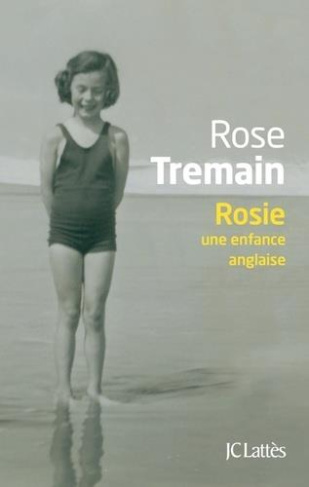
Rosie. Une enfance anglaise
Dans ce récit charmant, intime, souvent émouvant, l'auteur retrace ses plus jeunes années jusqu'à ce qu'à l'âge de dix-sept ans elle s'émancipe de sa famille et vienne vivre à Paris. Son enfance n'a pas toujours été heureuse. La petite Rosie et sa soeur Jo, ont été éduquées par leur Nanny adorée, Véra, seule adulte à leur avoir réellement donné l'affection et l'amour que leurs parents n'ont pas su leur offrir. Le père est absent, la mère, Jamie, au tempérament autoritaire, est distante, elle ne veut pas être dérangée. Pendant les longs séjours à la campagne, les adultes fument, boivent, jouent aux cartes, lisent le Times, font des mots croisés, en attendant les repas servis par les domestiques. Heureusement, les vacances chez les grands-parents, dans la demeure du Hampshire, se déroulent dans la joie. Le lieu est un véritable paradis, les deux petites filles jouissent d'une grande libert. Il y a les cousins Jonathan et Rober et le jardinier, qui leur fait découvrir les beautés et les secrets du jardin. Mais à l'âge de dix ans, tout change pour la petite Rosie. Elle perd son père, il faut quitter l'appartement de Londres, l'école, les amies, et le plus douloureux, sa chère Véra, qui lui a tenu lieu de mère. Adolescente, elle part en pension en Suisse, apprend le français, fait les vendanges, apprend la sténo et la dactylo, fait du ski. Son éducation si parfaite la prépare à épouser un homme riche... elle ne songe pas encore à l'écriture, mais plutôt au dessin. Son voeu le plus cher : " Aller quelque part et trouver sa place dans le monde ". En 1961, elle vient à Paris et s'inscrit à la Sorbonne. Son destin est tracé.EpuiséVOIR PRODUIT21,60 €


Du même éditeur
-

The Man in the High Castle
Revue de presse The most brilliant sci-fi mind on any planet (Rolling Stone)California's own William Blake. Visionary and prophet (Daily Telegraph)Sur commande en 6-10 joursCOMMANDER11,30 € -

The water knife
From the international bestselling author of the Hugo and Nebula award-winning The Windup Girl, comes an electrifying thriller set in a world on the edge of collapse.WATER IS POWERThe American Southwest has been decimated by drought, Nevada and Arizona skirmish over dwindling shares of the Colorado River, while California watches.When rumors of a game-changing water source surface in Phoenix, Las Vegas water knife Angel Velasquez is sent to investigate.With a wallet full of identities and a tricked-out Tesla, Angel arrows south, hunting for answers that seem to evaporate as the heat index soars and the landscape becomes more and more oppressive. There, Angel encounters Lucy Monroe, a hardened journalist who knows far more about Phoenix's water secrets than she admits, and Maria Villarosa, a young Texas migrant who dreams of escaping north to those places where water still falls from the sky.As bodies begin to pile up and bullets start flying, the three find themselves pawns in a game far bigger, more corrupt, and dirtier than any of them could have imagined. With Phoenix teetering on the verge of collapse and time running out, their only hope for survival rests in one another's hands.But when water is more valuable than gold, alliances shift like sand, and the only truth in the desert is that someone will have to bleed if anyone hopes to drink.Sur commande en 6-10 joursCOMMANDER11,25 € -

-

In Pale battalions
Extrait Chapter OneChildhood memories fit their own intricate pattern. They cannot be made to conform to the version of our past we try to impose upon them. Thus I could say that Lord and Lady Powerstock and the home they gave me at Meongate more than compensated for being an orphan, that a silver spoon easily took the place of my mother's smile. I could say it--but every recollection of my early years would deny it.Meongate must once have been the crowded, bustling house of a cheerful family, as the Hallowses must once have been that family. Every favour of nature in its setting where the Hampshire downs met the pastures of the Meon valley, every effort of man in its spacious rooms and landscaped park, had been bestowed on the home of one small child.Yet it was not enough. When I was growing up at Meongate in the early 1920s, most of its grandeur had long since departed. Many of the rooms were shut up and disused, much of the park turned over to farmland. And all the laughing, happy people I imagined filling its empty rooms and treading its neglected lawns had vanished into a past beyond my reach.I grew up with the knowledge that my parents were both dead, my father killed on the Somme, my mother carried off by pneumonia a few days after my birth. It was not kept from me. Indeed, I was constantly reminded of it, constantly confronted with the implication that I must in some way bear the blame for the shadow of grief, or of something worse, that hung over their memory. That shadow, cast by the unknown, lay at the heart of the cold, dark certainty that also grew within me: I was not wanted at Meongate, not welcomed there, not loved.It might have been different had my grandfather not been the grave, withdrawn, perpetually melancholic man that he was. I, who never knew him when he was young, cannot imagine him as anything other than the wheelchair-bound occupant of his ground-floor rooms, deprived by his own morbidity, as much as by the lingering effects of a stroke, of all warmth and fondness. When Nanny Hiles took me, as she regularly did, to kiss him goodnight, all I wanted to do was escape from the cold, fleeting touch of his flesh. When, playing on the lawn, I would look up and see him watching me from his window, all I wanted to do was run away from the mournful, questing sadness in his eyes. Later, I came to sense that he was waiting, waiting for me to be old enough to understand him, waiting in the hope that he would live to see that day.Lady Powerstock, twenty years his junior, was not my real grandmother. She was buried in the village churchyard, another ghost whom I did not know and who could do nothing to help me. I imagined her as everything her successor was not--kind, loving and generous--but it did me no good. Olivia, the woman I was required to address as Grandmama in her place, had once been beautiful and, at fifty, her looks were still with her, her figure still fine, her dress sense impeccable. That we were not related by blood explained, to my satisfaction, why she did not love me. What I could not explain was why she went so far as to hate me, but hate me she undoubtedly did. She did not trouble to disguise the fact. She let it hover, menacing and unspoken, at the edge of all our exchanges, let it grow as an awareness between us, a secret confirmation that she too was only waiting, waiting for death to remove her husband and with him any lingering restraint on her conduct towards me. There was an air of practised vice about her that was to draw men all her life, an air of voluptuous pleasure at her own depravity that made her hatred of me seem merely instinctive. Yet there was always more to it than that. She had drawn some venom from whatever part she had played in the past of that house and had reserved it for me.My only friend in those days, my only guide through Meongate's hidden perils, was Fergus, the taciturn and undemonstrative major-domo, "shifty" as Olivia described him and certainly not as deferential as he should have been, but none the less my sole confidant. Sally, the sullen maid, and humourless Nanny Hiles both went in awe of Olivia, but Fergus treated her with an assurance, bordering on disrespect, that made him my immediate ally. A cautious, solitary, pessimistic man who had expected little from life and consequently been spared many disappointments, perhaps he took pity on a lonely child whose plight he understood better than she did herself. He would take me on covert expeditions through the grounds, or down to the wooded reach of the Meon where he fished of a quiet afternoon, or into Droxford in the trap, when he would buy me a twist of sherbet and leave me sitting on the wall outside Wilsmer's saddlery whilst he went in to haggle over a new bridle for the pony. For such brief moments as those, kicking my heels on Mr. Wilsmer's wall and eating my sherbet in the sunshine, I was happy. But such moments did not last.It was Fergus who first showed me my father's name, recorded with the other war dead of the village, on a plaque at the church. Their Name Liveth for Evermore, the inscription said, and his name--Captain the Honourable John Hallows--is all that did live for me. I would stare at it for what seemed like hours trying to conjure up the real living and breathing father that he had never been to me, seeing only those stiff, expressionless, uniformed figures preserved by photographs in back copies of the Illustrated London News, glimpsing no part of his true self beyond the neatly carved letters of his name.As for my mother, of her there was no record at all, no grave, no memorial of any kind. Fergus, when I questioned him, prevaricated. My mother's grave, if she had one, was far away--and he did not know where. There were, I was to understand, limits to what even he could tell me. Whether he suggested it or not I cannot remember, but, for some reason, I decided to ask Olivia. I cannot recall how old I was when it happened, but I had followed her into the library, where she often went to look at a painting that hung there."Where is my mother's grave?" I said bluntly, partly intending the question to be a challenge. All hatred is, in time, reciprocated and I had come to hate Olivia as much as she hated me; I did not then appreciate how dangerous an enemy she could be.She did not answer in words. She turned aside from that great, high, dark painting and hit me so hard across the face that I nearly fell over. I stood there, clutching the reddening bruise, too shocked by the pain of it to cry, and she stooped over me, her eyes blazing. "If you ever ask that question again," she said, "if you ever mention your mother again, I'll make you suffer."The mystery of my mother thenceforth became the grand and secret obsession of my childhood. My father's death, after all, had a comforting simplicity about it. Every November there was an Armistice Parade in the village to commemorate the sacrifice of Captain the Honourable John Hallows and the many others like him. Though not permitted to join the Brownie troop that took part in the parade, I was allowed to go and watch and could imagine myself marching with all the little girls who, like me, had lost their father. But, at the end of the parade, they went home to their mothers; I could not even remember mine.Sometimes, though, I thought I could remember her. It was impossible, of course, if what I had been told of her was true, but Olivia had succeeded in making me doubt everything I had not personally experienced, and there was one dim, early memory, seemingly at the very dawn of my recollection, to sustain what I so wanted to believe.I was standing on the platform at Droxford railway station. It was a hot summer's day: I could feel the heat of the gravel seeping up through my shoes. A train was standing at the platform, great billows of smoke rising as the engine gathered steam. The man standing beside me, who had been holding my hand, stooped and lifted me up, cradling me in his arms to watch the train pull out. He was stout and white-haired. I remember the rumble of his voice and the brim of his straw hat touching my head as he raised his free hand to wave. And I was waving too, at a woman aboard the train who had wound down the window and was leaning out, waving also and smiling and crying as she did so. She was dressed in blue and held a white handkerchief in her right hand. And the train carried her away. And then I cried too and the stout old man hugged me, the brass buttons on his coat cold against my face.I recounted the memory to Fergus one day, when we were returning from a mushrooming expedition. When I had finished, I asked him who he thought the old man was."Sounds like old Mr. Gladwin," he replied. "The first Lady Powerstock's father. He lived here . . . till she sent him away." By she Fergus always meant Olivia."Why did she do that?""She'd have had her reasons, I don't doubt.""When did he go?""The summer of 1920, when you were three. Back to Yorkshire, so they say. A proper caution, was Mr. Gladwin.""Who was the pretty lady, Fergus?""That I don't know.""Was she . . . my mother?"He pulled up and looked down at me with a frown. "That she was not," he said with deliberate slowness. "Your mother passed away a few days after she had you. You know that. No amount of wanting is going to make you remember her.""Then . . . who was the pretty lady?"His frown became less kindly. "I told you: I don't know. That Mr. Gladwin, he was a close one. Now, look to that napkin or you'll pitch your breakfast into the lane--and mine with it."If the pretty lady wasn't my mother, who was she? What was old Mr. Gladwin, my great-grandfather, to her? There were no answers within my reach, just the secret hope I went on harbouring that maybe my mother wasn't really dead at all, just ....Sur commande en 6-10 joursCOMMANDER12,50 €




De la même catégorie
-

HARRY POTTER AND THE CHAMBER OF SECRETS (REJACKET)
Harry Potter's summer has included the worst birthday ever, doomy warnings from a house-elf called Dobby, and rescue from the Dursleys by his friend Ron Weasley in a magical flying car! Back at Hogwarts School of Witchcraft and Wizardry for his second year, Harry hears strange whispers echo through empty corridors - and then the attacks start. Students are found as though turned to stone . Dobby's sinister predictions seem to be coming true. These new editions of the classic and internationally bestselling, multi-award-winning series feature instantly pick-up-able new jackets by Jonny Duddle, with huge child appeal, to bring Harry Potter to the next generation of readers. It's time to PASS THE MAGIC ON.En stockCOMMANDER12,00 € -
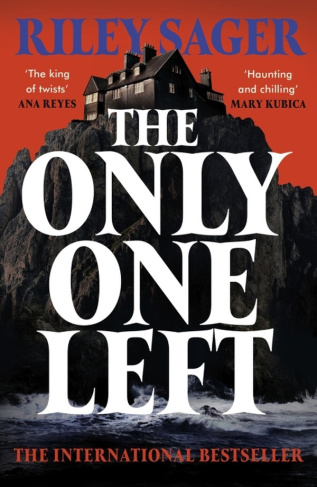
The only one left
**Get the brand new, Agatha Christie-inspired suspense thriller from Riley Sager now - WITH A VENGEANCE**THE HEART-POUNDING GOTHIC THRILLER FROM THE INTERNATIONALLY BESTSELLING AUTHOR Everyone believes that Lenora Hope is a mass murderer. When the Hope family was massacred decades ago, she was the only one left after that tragic night. Mute, paralysed and confined to a wheelchair, Lenora has never been able to tell her side of the story. Until her new live-in caregiver Kit brings her a typewriter. And with one working finger Lenora begins to type: I want to tell you everything. Real readers LOVE The Only One Left:'Plot twists on plot twists! A story that keeps you guessing throughout' ????...'Kept me guessing to the very end' ????...'I literally couldn't leave this story alone' ????...'The tension throughout this book is so intense it is breath taking' ????...'I devoured this in a single sitting' ????...'Laden with an abundance of twists and turns that are truly mind-bending' ????...'The ending though . . . didn't see that one coming!' ????...'Riley never fails to disappoint me, now to wait for the next book...' ????? And your favourite authors love it too...'A master storyteller' ALEX MICHAELIDES'Spine-chilling' RUTH WARE'Twisty' SHARI LAPENA'Addictive' STEPHANIE WROBEL'Propulsive' ELLERY LLOYD'Terrific' KARIN SLAUGHTER'Shocking' LISA GARDNEREn stockCOMMANDER14,00 € -
A Million Kisses In Your Lifetime (VO)
DISCOVER THE DEEPLY ROMANTIC AND UNFORGETTABLE TIKTOK SENSATION THAT WILL GRIP YOU UNTIL THE VERY LAST PAGE'Wren and Crew stole my heart and neither of them will give it back. I cannot explain how much I adore this story . . . Full of angst, drama and steam' 5* READER REVIEW'Addictive, angsty and unforgettable . . . their chemistry was explosive' 5* READER REVIEW'Wren and Crew are perfection and the chemistry they have is sizzling! I was sweating it out with nerves at Chapter 4 and the rollercoaster never ended' 5* READER REVIEW_________Wren Beaumont is a model student. Kind, clever and beautiful, she is loved by everyone at Lancaster Prep.Everyone but brooding campus bad boy Crew Lancaster.Son of the family who own the school, Crew's life seems easy - but with an overbearing father and high expectations, it's anything but.Which is why he has no time for people like Wren.But when their lives unexpectedly collide, Wren discovers there's more to life than good grades - and Crew finally understands what it's like to care about someone other than himself . . .Could they - should they - become the school's most unlikely couple?_________Steamy, romantic and totally addictive, this is a story that proves that true love really does happen when you least expect it . . .'Crew . . . reallyhad me wrapped around his finger by the end of the book' 5* READER REVIEW'I fell madly in love with Wren and Crew. A delightful balance of slow burn and enemies to friends to lovers, and will capture every romance reader's heart' 5* READER REVIEWEn stockCOMMANDER13,00 € -
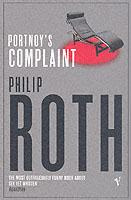
Portnoy's Complaint
Along with Saul Bellow's Herzog, Philip Roth's Portnoy's Complaint defined Jewish American literature in the 1960s. Roth's masterpiece takes place on the couch of a psychoanalyst, an appropriate jumping-off place for an insanely comical novel about the Jewish American experience. Roth has written several great books--Goodbye, Columbus and When She Was Good among them, but it is perhaps Portnoy's Complaint for which he is best known.Sur commande en 2-4 joursCOMMANDER12,60 €


