THE HOMECOMING
Teddy, a philosophy professor in an American university, brings his wife Ruth to visit his father, uncle and two brothers at his old London home, after years of estrangement. In the intense conflict that follows, it is Ruth who becomes the focus of their struggle for supremacy.'An exultant night - a man in total command of his talent.' Observer'The most intense expression of compressed violence to be found anywhere in Pinter's plays.' The Times'The Homecoming can be seen as a Freudian play about sons filled with subconscious Oedipal desires. It can equally be seen as an ethological study of a group of human animals fighting over territory. Precisely because Pinter never moralises about or resolves the situation, it is a play that, when impeccably acted, continues to haunt our dreams.' Michael Billington, GuardianThe Homecoming premiered at the Aldwych Theatre, London, 1965.
| Date de parution | 01/04/2001 |
|---|---|
| Poids | 300g |
| EAN | 9780571160808 |
|---|---|
| Titre | THE HOMECOMING |
| ISBN | 0571160808 |
| Auteur | PINTER |
| Editeur | FABER ET FABER |
| Largeur | 0 |
| Poids | 300 |
| Date de parution | 20010401 |
| Nombre de pages | 0,00 € |
| Disponibilité | Epuisé |
Pourquoi choisir Molière ?
Du même auteur
-

CARETAKER
You remind me of my uncle's brother. He was always on the move, that man. Never without his passport. Had an eye for the girls. Very much your build. Bit of an athlete. Long-jump specialist. He had a habit of demonstrating different run-ups in the drawing-room round about Christmas time. Had a penchant for nuts.In a dilapidated house in West London, three men - kind but damaged Aston, the shambling tramp he invites to stay, and Aston's violently unpredictable brother Mick - fall into an unsettling and darkly funny tussle for power.The Caretaker was first performed at the Arts Theatre, London, in April 1960.'There's such craft and concision to Pinter's depiction of a triangular territorial battle in a run-down West London attic that it still sets the bar inspirationally high. The play is both of its period and timeless, conveying the wider human condition in its tightly particular evocation of hardship and dispossession, its dialogue so wryly attuned to the way ordinary speech can be loaded and weaponised that it even got its own classification: "the comedy of menace".' Daily Telegraph'A modern classic, a spiritual shocker, tough, cruel and brutally funny . . . Pinter transfixes the modern human condition in which people are both intruders and prisoners, aggressors and victims, pushers and fantasists. This is your life.' Sunday TimesEpuiséVOIR PRODUIT15,11 € -

-

No man's land suivi de Le monte-plats, Une petite douleur, Paysage et de dix sketches
Le théâtre de Harold Pinter découvre un univers singulier, à la fois comique et terrifiant, fait de sous-entendus, de mal-entendus et de pas-entendus du tout. On y voit, comme à travers un microscope, des personnages qui végètent confusément, dont on ne sait presque rien et qui sont soudain - le temps de la pièce - agressés, violés et réduits à un autre néant. On y parle un dialogue quotidien, savoureusement banal, d'une économie précise et pourtant sibylline, qui débouche sur un impitoyable affrontement dans lequel les mots sont des armes mortelles. On prêche le faux pour savoir un vrai qui est encore plus faussé. Les questions que l'on pose ne sont pas celles qu'on a en tête, et la réponse, ou le refus de répondre, ne fait qu'accroître le gouffre d'incompréhension. La pudeur se fait violence, le sourire menace, le désir impuissance, la victoire défaite. Le choix des oeuvres qui composent ce recueil montre bien le parcours accompli par Pinter. Les premières oeuvres (Une petite douleur, Le monte-plats) appartiennent à ce qu'on a appelé le théâtre de la menace : un micro-univers calfeutré, apparemment serein, qui est ravagé par un envahisseur mal défini, tout ensemble jovial et terrifiant. Les oeuvres plus récentes (Paysage, No man's land) ajoutent un nouvel élément : la mémoire. Les souvenirs avec lesquels on jongle, ceux que l'on retrouve ou que l'on modifie ou que l'on invente, ceux qu'on vole à autrui, ceux qu'on mélange délibérément et qui se télescopent et se contredisent, jusqu'à l'effondrement du ou des jongleurs. Et le rire s'étrangle, ripe comme un saphir sur un disque usé, et se change en cri d'agonie.EpuiséVOIR PRODUIT21,00 € -
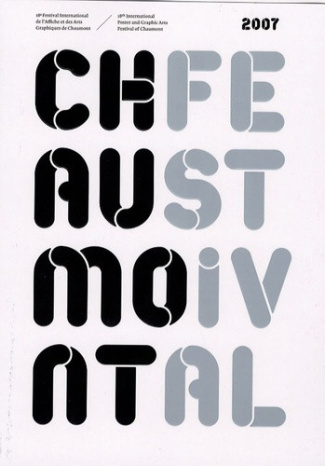
Chaumont festival 2007
En 2007, la 18` édition du Festival International de l'Affiche et des Arts Graphiques de Chaumont (France) rend hommage à Paul Rand, figure emblématique de la modernité nord-américaine et invite le jeune néerlandais Richard Niessen à exposer ses créations graphiques expérimentales et poétiques. La diversité et le foisonnement de la scène contemporaine française est à l'honneur à travers une sélection de plus d'une centaine d'objets graphiques produits par les jeunes générations de créateurs. Par ailleurs, 115 affiches de plus de 5o pays sont présentées parmi les 2300 reçues pour le Concours International.EpuiséVOIR PRODUIT35,50 €




Du même éditeur
-
-
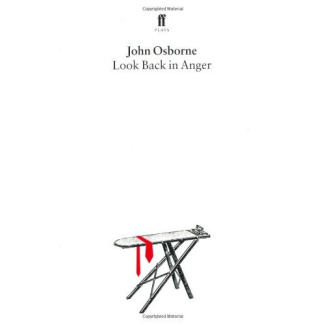
LOOK BACK IN ANGER
Anyone who's never watched someone die is suffering from a pretty bad case of virginity.Look Back in Anger premiered at the Royal Court Theatre, London, in 1956. 'John Osborne didn't contribute to British theatre: he set off a landmine called Look Back in Anger and blew most of it up.' Alan Sillitoe 'A story of youthful insecurity inflamed by lack of opportunity and the terrifying, destabilizing force of love . . . Jimmy Porter could fill an opera house with his bellowing hunger for a bigger, better life and a loyal love to share it with.' New York Times 'Look Back in Anger presents post-war youth as it really is. To have done this at all would be a signal achievement; to have done it in a first play is a minor miracle. All the qualities are there, qualities one had despaired of ever seeing on the stage - the drift towards anarchy, the instinctive leftishness, the automatic rejection of "official" attitudes, the surrealist sense of humour, the casual promiscuity, the sense of lacking a crusade worth fighting for and, underlying all these, the determination that no one who dies shall go unmourned . . . I doubt if I could love anyone who did not wish to see Look Back in Anger. It is the best young play of its decade.' Kenneth Tynan, Observer'How bracing, and, yes, even shocking, its white-hot fury remains.' The Times This edition includes an introduction by Michael Billington and an afterword by David Hare.EpuiséVOIR PRODUIT15,20 € -
-