Frank Gehry. The Masterpieces
From his home in Santa Monica to the Guggenheim Museum in Bilbao, Frank Gehry (1929-2025) created consequential works of contemporary architecture all over the world, transforming the cities in which they were built. Gehry, an unclassifiable and groundbreaking architect, continually responded with finesse to the challenges of complex programming and building within particularly delicate urban frameworks. A pioneer in computer-aided design, he harnessed technology to conjure surprising and poetic forms. In this world tour, Jean-Louis Cohen-acclaimed historian, critic, and curator of architecture and urban design-drew upon his deep familiarity with the architect to present some forty spectacular buildings, from the Walt Disney Concert Hall to the Louis Vuitton Foundation, from the Nationale-Nederlanden Building to the Vitra Design Museum, and from the Pierre Boulez Saal to the Luma Foundation.
| Nombre de pages | 384 |
|---|---|
| Date de parution | 14/10/2026 |
| Poids | 2 510g |
| Largeur | 249mm |
| EAN | 9782080165817 |
|---|---|
| Auteur | Cohen Jean-Louis |
| Editeur | FLAMMARION |
| Largeur | 249 |
| Date de parution | 20261014 |
| Nombre de pages | 384,00 € |
| Disponibilité | Sur commande en 2-4 jours |
Pourquoi choisir Molière ?
Du même auteur
-
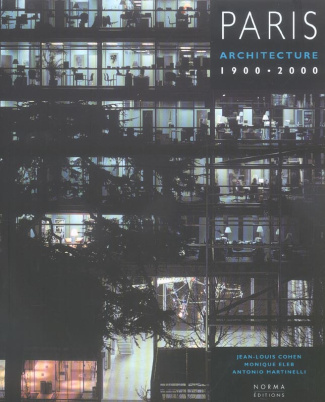
Paris architecture 1900-2000
Avec cet ouvrage, Jean-Louis Cohen, architecte et historien, et Monique Eleb, psychologue et sociologue, proposent une promenade architecturale dans le Paris intra-muros et sa proche banlieue. Trente-trois bâtiments photographiés par Antonio Martinelli sont visités parmi la multitude de réalisations qui ont marqué le XXe siècle. Ils ont été choisis en fonction de leur contribution au paysage urbain, de leur force esthétique et de leur rôle dans la transformation des modes de vie. Des architectes du début du siècle à qui les découvertes techniques ont permis de se libérer des conventions à la génération actuelle qui a retrouvé une dimension intellectuelle après la crise architecturale des années 1960-1970, on suit dans le Paris d'aujourd'hui les transformations d'identité d'une ville dont le centre dense est enserré dans une agglomération de plus de dix millions d'habitants. Par la succession et la mise en correspondance d'édifices en apparence étrangers les uns aux autres, des ossatures de béton des frères Perret aux prismes transparents de Jean Nouvel, Jean-Louis Cohen et Monique Eleb révèlent combien l'idéal d'une architecture rationnelle et lisible aura marqué l'architecture du siècle. This book takes the form of an architectural promenade devised by the architect and historian Jean-Louis Cohen and the psychologist and sociologist Monique Eleb. Thirty-three buildings in Paris and the inner suburbs are presented with photographs by Antonio Martinelli. Selected from the multitude of buildings which have marked the 20th century, each has been chosen for the contribution it makes to the cityscape, for its aesthetic value and for the role it has played in transforming life-styles. From the technical discoveries which enabled architects to break free from conventions in the early 20th century, to the rediscovery of an intellectual dimension by the present generation of architects in the wake of the architectural crisis of the 1960s and 1970s, this itinerary through today's Paris reveals transformations in the identity of the densely-built capital city at the center of an agglomeration populated by over ten million people. By explaining the connections between a sequence of buildings which look very different from one archer, ran no from the Perret brothers' concrete frames to Jean Nouvel's transparent prisms, Jean-Louis Cohen and Monique Eleb reveal the extent to which the long-established French architectural ideal of rationality and legibility has marked the architecture of the 20th centuryEpuiséVOIR PRODUIT31,01 € -
-
-
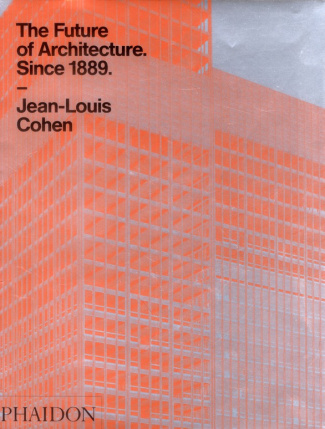
The Future of Architecture. Since 1889
The most comprehensive and far-ranging single-volume history of twentieth-century architecture. Written by a trusted authority in the fields of architecture and urbanism and a prominent writer, critic, curator and teacher. Exhaustively illustrated with buildings, projects, plans, drawings, and publications by well-known masters and rediscovered figures. Covers all parts of the globe better than any comparable history of the period. Destined to become the standard reference on this time period for every student of architecture.EpuiséVOIR PRODUIT59,95 €


Du même éditeur
-
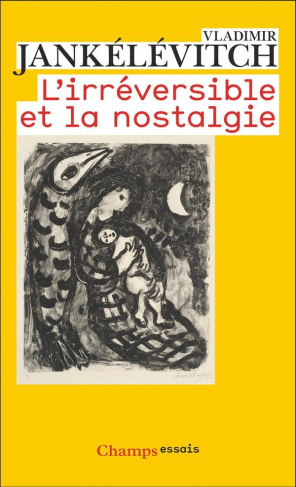
L'Irréversible et la nostalgie
Qu'est-ce que la nostalgie sinon une mélancolie humaine rendue possible par la conscience de quelque chose d'autre, d'un ailleurs, d'un contraste entre passé et présent ? Et cette nostalgie n'est-elle pas aussi provoquée essentiellement par l'irréversibilité du temps ? Car on ne saurait remonter le cours du temps, tel est l'obstacle insurmontable qu'il oppose à nos entreprises. C'est notre impuissance devant cette impossibilité qui fait toute l'amertume de la nostalgie et l'absurdité des chimères du rajeunissement. La nostalgie n'est pas le mal du retour : on peut toujours revenir à son point de départ, à son lieu natal (l'espace se prête docilement à toutes nos allées et venues) mais il est impossible de redevenir celui qu'on était au moment du départ. Mais si le temps s'oppose irréductiblement à la rétrogradation il ouvre devant nous une carrière infinie à la liberté. L'homme peut s'ouvrir à l'idée du futur et confirmer ce que le temps affirme. Se servant d'exemples tirés de la vie quotidienne aussi bien que d'oeuvres poétiques, philosophiques ou musicales, Vladimir Jankélévitch démontre en fin de compte que l'irréversible n'admet qu'un seul remède : le consentement joyeux de l'homme à l'avenir, au futur.Sur commande en 2-4 joursCOMMANDER12,70 € -

-
-