

How to grow your own nuts
35,00 €
Sur commande en 6-10 jours
EAN :
9780857843937
Plus d'informations
| EAN | 9780857843937 |
|---|---|
| Auteur | Crawford |
| Editeur | GARDNERS |
| Date de parution | 20161001 |
| Disponibilité | Sur commande en 6-10 jours |
Pourquoi choisir Molière ?
Efficacité et rapidité Commandé avant 16h livré demain
Économique et pratique Livraison dès 3,90 €
Facile et sans frais Retrait gratuit en magasin
Du même auteur
-
Le monde de demain
Apprendre au plus grand nombre un savoir menacé de se perdre en le fixant par l'image : ce fut, il y a deux siècles, le pari des Encyclopédistes. Aujourd'hui, la photographie permet d'aller plus loin dans l'indispensable transfert des connaissances. Mais il faut que l'objectif soit vraiment objectif et que la qualité de la reproduction soit à la hauteur de cette ambition pour que l'attrait esthétique devienne en même temps une pédagogie.EpuiséVOIR PRODUIT14,20 € -

Eloge du carburateur. Essai sur le sens et la valeur du travail
À partir du récit de son étonnante reconversion professionnelle, un brillant universitaire américain devenu réparateur de motos livre dans cet ouvrage aussi intelligent que drôle l'une des réflexions les plus fines sur le sens et la valeur du travail dans les sociétés occidentales. Ce grand succès de librairie, devenu un classique, paraît enfin en poche." La génération actuelle de révolutionnaires du management considère l'éthos artisanal comme un obstacle à éliminer. On lui préfère de loin l'exemple du consultant en gestion, vibrionnant d'une tâche à l'autre et fier de ne posséder aucune expertise spécifique. Tout comme le consommateur idéal, le consultant en gestion projette une image de liberté triomphante au regard de laquelle les métiers manuels passent volontiers pour misérables et étriqués. Imaginez à côté le plombier accroupi sous l'évier, la raie des fesses à l'air. "Matthew B. Crawford était un brillant universitaire, bien payé pour travailler dans un think tank à Washington. Au bout de quelques mois, déprimé, il démissionne pour ouvrir... un atelier de réparation de motos. À partir du récit de son étonnante reconversion, il livre dans cet ouvrage intelligent et drôle une réflexion particulièrement fine sur le sens et la valeur du travail dans les sociétés occidentales.Mêlant anecdotes, récit, et réflexions philosophiques et sociologiques, il montre que ce " travail intellectuel ", dont on nous rebat les oreilles, se révèle pauvre et déresponsabilisant. À l'inverse, il restitue l'expérience de ceux qui, comme lui, s'emploient à fabriquer ou réparer des objets ? dans un monde où l'on ne sait plus qu'acheter, jeter et remplacer. Le travail manuel peut même se révéler beaucoup plus captivant d'un point de vue intellectuel que tous les nouveaux emplois de l'" économie du savoir ".Table des matières : Introduction1. Bref plaidoyer pour les arts mécaniquesLes bénéfices psychiques du travail manuelLes exigences cognitives du travail manuelLes arts et métiers et la chaîne de montageL'avenir du travail : retour vers le passé ?2. Faire et penser : la grande divergenceLa dégradation du travail ouvrierLa dégradation du travail de bureauTout le monde peut être EinsteinPortrait de l'homme de métier en philosophe stoïque3. Prendre les choses en mainPortrait de la motocyclette en monture rétivePetit traité de lubrification : de la pompe manuelle à la loupiote du crétinResponsabilité active ou autonomie ?Nostalgie précuisinée Le décentrement du faire4. L'éducation d'un mécanoL'apprenti apprentiLa théorie du lacetLe mentorLa mécanique comme diagnostic médico-légalUn savoir personnaliséPercer le voile de la conscience égoïsteL'idiotie en tant qu'idéal5. L'éducation d'un mécano (suite) : d'amateur à professionnelFred l'antiquaireShockoe MotoL'art de la factureHonda Magna et métaphysique6. Les contradictions du travail de bureauIndexer et résumerL'apprentissage de l'irresponsabilitéInterlude : à quoi sert l'université ?Le travail en équipeL'équipe et le chantier7. La pensée en actionEntre la loi d'Ohm et une paire de chaussures boueusesLe savoir tacite du pompier et du maître d'échecsTechnologie intellectuelle et connaissance personnelleLe manuel de service en tant que technologie sociale8. Travail, loisir et engagementLe monde du speed shopTravail et communautéLa plénitude de l'engagementEn guise de conclusion, solidarité et indépendanceSolidarité et éthos aristocratiqueL'importance de l'échecL'agir individuel dans un monde communRemerciements.Sur commande en 2-4 joursCOMMANDER13,00 € -
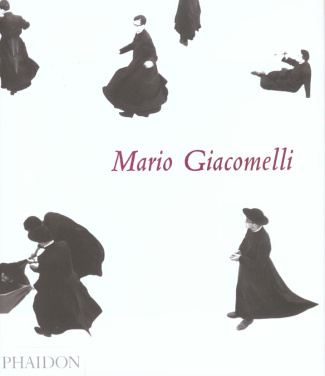
Mario Giacomelli
Mario Giacomelli (1925-2000) est l'une des grandes figures de la photographie européenne. Typographe de formation, Mario Giacomelli a développé un goût pour l'effet graphique qui aura un rôle primordial dans son travail photographique. Récompensé par de multiples prix, il acquit une renommée internationale grâce à des expositions en Europe, aux Etats Unis et au Japon. Cette monographie est l'ouvrage le plus complet consacré à l'ouvre de Mario Giacomelli. Chaque chapitre, dédié à un thème photographique, témoigne du regard personnel, à la fois acéré et stimulant, que le photographe n'a cessé de porter sur les paysages (pour n'en retenir que les formes linéaires et abstraites), les villages, les scènes de rue, les natures mortes et l'Italie. Les quelque six cents photographies bichromes rassemblées ici traduisent une connaissance approfondie d'un pays et d'un peuple, ainsi qu'une réelle maîtrise des formes.EpuiséVOIR PRODUIT75,00 € -



Du même éditeur
-

The Man in the High Castle
Revue de presse The most brilliant sci-fi mind on any planet (Rolling Stone)California's own William Blake. Visionary and prophet (Daily Telegraph)Sur commande en 6-10 joursCOMMANDER11,30 € -

The water knife
From the international bestselling author of the Hugo and Nebula award-winning The Windup Girl, comes an electrifying thriller set in a world on the edge of collapse.WATER IS POWERThe American Southwest has been decimated by drought, Nevada and Arizona skirmish over dwindling shares of the Colorado River, while California watches.When rumors of a game-changing water source surface in Phoenix, Las Vegas water knife Angel Velasquez is sent to investigate.With a wallet full of identities and a tricked-out Tesla, Angel arrows south, hunting for answers that seem to evaporate as the heat index soars and the landscape becomes more and more oppressive. There, Angel encounters Lucy Monroe, a hardened journalist who knows far more about Phoenix's water secrets than she admits, and Maria Villarosa, a young Texas migrant who dreams of escaping north to those places where water still falls from the sky.As bodies begin to pile up and bullets start flying, the three find themselves pawns in a game far bigger, more corrupt, and dirtier than any of them could have imagined. With Phoenix teetering on the verge of collapse and time running out, their only hope for survival rests in one another's hands.But when water is more valuable than gold, alliances shift like sand, and the only truth in the desert is that someone will have to bleed if anyone hopes to drink.Sur commande en 6-10 joursCOMMANDER11,25 € -

-

In Pale battalions
Extrait Chapter OneChildhood memories fit their own intricate pattern. They cannot be made to conform to the version of our past we try to impose upon them. Thus I could say that Lord and Lady Powerstock and the home they gave me at Meongate more than compensated for being an orphan, that a silver spoon easily took the place of my mother's smile. I could say it--but every recollection of my early years would deny it.Meongate must once have been the crowded, bustling house of a cheerful family, as the Hallowses must once have been that family. Every favour of nature in its setting where the Hampshire downs met the pastures of the Meon valley, every effort of man in its spacious rooms and landscaped park, had been bestowed on the home of one small child.Yet it was not enough. When I was growing up at Meongate in the early 1920s, most of its grandeur had long since departed. Many of the rooms were shut up and disused, much of the park turned over to farmland. And all the laughing, happy people I imagined filling its empty rooms and treading its neglected lawns had vanished into a past beyond my reach.I grew up with the knowledge that my parents were both dead, my father killed on the Somme, my mother carried off by pneumonia a few days after my birth. It was not kept from me. Indeed, I was constantly reminded of it, constantly confronted with the implication that I must in some way bear the blame for the shadow of grief, or of something worse, that hung over their memory. That shadow, cast by the unknown, lay at the heart of the cold, dark certainty that also grew within me: I was not wanted at Meongate, not welcomed there, not loved.It might have been different had my grandfather not been the grave, withdrawn, perpetually melancholic man that he was. I, who never knew him when he was young, cannot imagine him as anything other than the wheelchair-bound occupant of his ground-floor rooms, deprived by his own morbidity, as much as by the lingering effects of a stroke, of all warmth and fondness. When Nanny Hiles took me, as she regularly did, to kiss him goodnight, all I wanted to do was escape from the cold, fleeting touch of his flesh. When, playing on the lawn, I would look up and see him watching me from his window, all I wanted to do was run away from the mournful, questing sadness in his eyes. Later, I came to sense that he was waiting, waiting for me to be old enough to understand him, waiting in the hope that he would live to see that day.Lady Powerstock, twenty years his junior, was not my real grandmother. She was buried in the village churchyard, another ghost whom I did not know and who could do nothing to help me. I imagined her as everything her successor was not--kind, loving and generous--but it did me no good. Olivia, the woman I was required to address as Grandmama in her place, had once been beautiful and, at fifty, her looks were still with her, her figure still fine, her dress sense impeccable. That we were not related by blood explained, to my satisfaction, why she did not love me. What I could not explain was why she went so far as to hate me, but hate me she undoubtedly did. She did not trouble to disguise the fact. She let it hover, menacing and unspoken, at the edge of all our exchanges, let it grow as an awareness between us, a secret confirmation that she too was only waiting, waiting for death to remove her husband and with him any lingering restraint on her conduct towards me. There was an air of practised vice about her that was to draw men all her life, an air of voluptuous pleasure at her own depravity that made her hatred of me seem merely instinctive. Yet there was always more to it than that. She had drawn some venom from whatever part she had played in the past of that house and had reserved it for me.My only friend in those days, my only guide through Meongate's hidden perils, was Fergus, the taciturn and undemonstrative major-domo, "shifty" as Olivia described him and certainly not as deferential as he should have been, but none the less my sole confidant. Sally, the sullen maid, and humourless Nanny Hiles both went in awe of Olivia, but Fergus treated her with an assurance, bordering on disrespect, that made him my immediate ally. A cautious, solitary, pessimistic man who had expected little from life and consequently been spared many disappointments, perhaps he took pity on a lonely child whose plight he understood better than she did herself. He would take me on covert expeditions through the grounds, or down to the wooded reach of the Meon where he fished of a quiet afternoon, or into Droxford in the trap, when he would buy me a twist of sherbet and leave me sitting on the wall outside Wilsmer's saddlery whilst he went in to haggle over a new bridle for the pony. For such brief moments as those, kicking my heels on Mr. Wilsmer's wall and eating my sherbet in the sunshine, I was happy. But such moments did not last.It was Fergus who first showed me my father's name, recorded with the other war dead of the village, on a plaque at the church. Their Name Liveth for Evermore, the inscription said, and his name--Captain the Honourable John Hallows--is all that did live for me. I would stare at it for what seemed like hours trying to conjure up the real living and breathing father that he had never been to me, seeing only those stiff, expressionless, uniformed figures preserved by photographs in back copies of the Illustrated London News, glimpsing no part of his true self beyond the neatly carved letters of his name.As for my mother, of her there was no record at all, no grave, no memorial of any kind. Fergus, when I questioned him, prevaricated. My mother's grave, if she had one, was far away--and he did not know where. There were, I was to understand, limits to what even he could tell me. Whether he suggested it or not I cannot remember, but, for some reason, I decided to ask Olivia. I cannot recall how old I was when it happened, but I had followed her into the library, where she often went to look at a painting that hung there."Where is my mother's grave?" I said bluntly, partly intending the question to be a challenge. All hatred is, in time, reciprocated and I had come to hate Olivia as much as she hated me; I did not then appreciate how dangerous an enemy she could be.She did not answer in words. She turned aside from that great, high, dark painting and hit me so hard across the face that I nearly fell over. I stood there, clutching the reddening bruise, too shocked by the pain of it to cry, and she stooped over me, her eyes blazing. "If you ever ask that question again," she said, "if you ever mention your mother again, I'll make you suffer."The mystery of my mother thenceforth became the grand and secret obsession of my childhood. My father's death, after all, had a comforting simplicity about it. Every November there was an Armistice Parade in the village to commemorate the sacrifice of Captain the Honourable John Hallows and the many others like him. Though not permitted to join the Brownie troop that took part in the parade, I was allowed to go and watch and could imagine myself marching with all the little girls who, like me, had lost their father. But, at the end of the parade, they went home to their mothers; I could not even remember mine.Sometimes, though, I thought I could remember her. It was impossible, of course, if what I had been told of her was true, but Olivia had succeeded in making me doubt everything I had not personally experienced, and there was one dim, early memory, seemingly at the very dawn of my recollection, to sustain what I so wanted to believe.I was standing on the platform at Droxford railway station. It was a hot summer's day: I could feel the heat of the gravel seeping up through my shoes. A train was standing at the platform, great billows of smoke rising as the engine gathered steam. The man standing beside me, who had been holding my hand, stooped and lifted me up, cradling me in his arms to watch the train pull out. He was stout and white-haired. I remember the rumble of his voice and the brim of his straw hat touching my head as he raised his free hand to wave. And I was waving too, at a woman aboard the train who had wound down the window and was leaning out, waving also and smiling and crying as she did so. She was dressed in blue and held a white handkerchief in her right hand. And the train carried her away. And then I cried too and the stout old man hugged me, the brass buttons on his coat cold against my face.I recounted the memory to Fergus one day, when we were returning from a mushrooming expedition. When I had finished, I asked him who he thought the old man was."Sounds like old Mr. Gladwin," he replied. "The first Lady Powerstock's father. He lived here . . . till she sent him away." By she Fergus always meant Olivia."Why did she do that?""She'd have had her reasons, I don't doubt.""When did he go?""The summer of 1920, when you were three. Back to Yorkshire, so they say. A proper caution, was Mr. Gladwin.""Who was the pretty lady, Fergus?""That I don't know.""Was she . . . my mother?"He pulled up and looked down at me with a frown. "That she was not," he said with deliberate slowness. "Your mother passed away a few days after she had you. You know that. No amount of wanting is going to make you remember her.""Then . . . who was the pretty lady?"His frown became less kindly. "I told you: I don't know. That Mr. Gladwin, he was a close one. Now, look to that napkin or you'll pitch your breakfast into the lane--and mine with it."If the pretty lady wasn't my mother, who was she? What was old Mr. Gladwin, my great-grandfather, to her? There were no answers within my reach, just the secret hope I went on harbouring that maybe my mother wasn't really dead at all, just ....Sur commande en 6-10 joursCOMMANDER12,50 €




De la même catégorie
-
Jardins-forêts. Un nouvel art de vivre et de produire
En édifiant des paysages comestibles en trois dimensions, il est possible de retrouver abondance et autonomie tout en prenant soin de la nature. Née du mariage de la permaculture et de l'agroforesterie, la technique du "jardin-forêt" , qui imite le fonctionnement d'un jeune espace boisé, fait déjà des émules aux quatre coins de la Terre, dans les campagnes comme dans les villes, autour de projets collectifs ou privés, à but professionnel, pédagogique, esthétique ou vivrier. Premier titre sur un retour d'expérience française, cet ouvrage renseigne sur les techniques de conception - ou design - comme sur les flores associées en fonction des climats et des paysages que vous souhaitez créer. Pratique et illustré, il présente une centaine d'arbres, arbustes, lianes et herbacées originaux, souvent méconnus, complémentaires de fruitiers et de légumes classiques. Les jardins-forêts apparaissent plus que jamais comme une passionnante aventure à vivre et à partager !IndisponibleVOIR PRODUIT28,01 € -
100 fiches arbres fruitiers
Résumé : Pour obtenir une belle récolte de fruits délicieux, il est essentiel de bien choisir les plantes, la période et le lieu de plantation. Un entretien régulier au fil des ans maintiendra la santé et la productivité de votre verger. 240 pages d'idées, de bonnes pratiques et d'astuces de pro.EpuiséVOIR PRODUIT7,50 € -
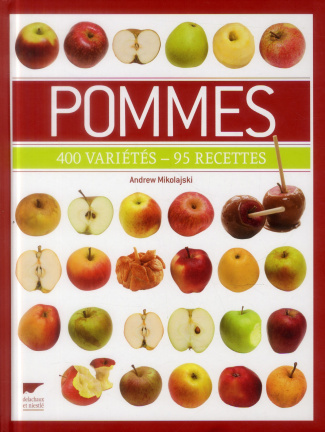
Pommes. 400 variétés - 95 recettes
400 variétés de pommes du monde entier sont décrites: pommes à croquer ou à cuire, origine, date de premier inventaire, nombreuses informations sur la texture et la saveur, etc. Cette encyclopédie propose aussi des conseils pratiques pour les cultiver, les soigner et les récolter. Ainsi que 95 recettes, classiques ou surprenantes, pour découvrir leurs saveurs: recettes sucrées ou salées, classiques, basiques ou novatrices. Enfin, un rappel historique décrit l'importance de la pomme, objet de plusieurs mythes et traditions dans de nombreuses civilisations.EpuiséVOIR PRODUIT29,00 € -
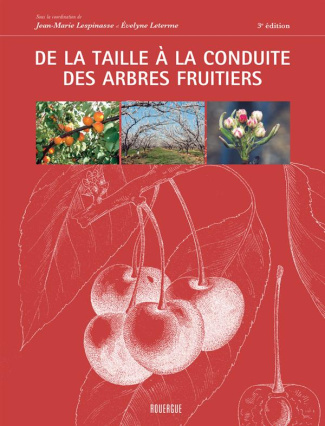
De la taille à la conduite des arbres fruitiers. 3e édition
En observant bien les variétés d'arbres fruitiers, on découvre qu'elles sont toutes différentes et que chacune d'entre elles possède un type de ramification puis de fructification particulier. Cette organisation naturelle, libre est la plus harmonieuse et la plus efficace en matière d?édification de l'arbre puis d'induction de la fructification (rapidité de la mise à fruit et équilibre entre croissance annuelle et fructification). La volonté de faire rentrer de force la variété dans une forme géométrique détruit sa façon naturelle et particulière de ramifier et de fructifier. Elle oblige l'homme à maintenir chaque année, artificiellement, un équilibre précaire entre les lieux où s'expriment la croissance et les lieux où se développent la fructification qui se dissocient au lieu de collaborer. Plus sévère est la taille, plus dominant est « l'arbre » alors que la formation de la fleur, son induction puis son évolution vers le fruit, seront incertains et incomplets. Si nous respectons cette construction naturelle de l'arbre puis son mode de fructification, nous n'imposerons plus de tailles artificielles de formation puis de fructification. Nous interviendrons comme des éducateurs, en favorisant les caractéristiques de chaque variété. Cette vision doit provoquer en nous un contrôlede nos « réflexes sécateurs » que nous avons acquis par atavisme. Vouloir ramener systématiquement le fruit sur le centre de l'arbre ou arrêter l'arbre en hauteur avec le sécateur sont autant de pratiques, d'interventions instinctives et destructrices, non respectueuses de la nature et qui n'ont aucune signification physiologique. Dans cet ouvrage, 15 espèces différentes sont traitées. Ne plus tailler les arbres fruitiers pour obtenir en priorité une forme géométrique et structurée mais les accompagner dans leur développement naturel pour obtenir une mise à fruit rapide et de bonne qualité est le but que se sont assignés 24 auteurs et collaborateurs qui se sont regroupés pour traiter chacun d'une espèce particulière sur laquelle leur expérience est irremplaçable.EpuiséVOIR PRODUIT34,50 €


