

Pride and prejudice (VO)
It is a truth universally acknowledged, that a single man in possession of a good fortune, must be in want of a wife."Next to the exhortation at the beginning of Moby-Dick, "Call me Ishmael," the first sentence of Jane Austen's Pride and Prejudice must be among the most quoted in literature. And certainly what Melville did for whaling Austen does for marriage--tracing the intricacies (not to mention the economics) of 19th-century British mating rituals with a sure hand and an unblinking eye. As usual, Austen trains her sights on a country village and a few families--in this case, the Bennets, the Philips, and the Lucases. Into their midst comes Mr. Bingley, a single man of good fortune, and his friend, Mr. Darcy, who is even richer. Mrs. Bennet, who married above her station, sees their arrival as an opportunity to marry off at least one of her five daughters. Bingley is complaisant and easily charmed by the eldest Bennet girl, Jane; Darcy, however, is harder to please. Put off by Mrs. Bennet's vulgarity and the untoward behavior of the three younger daughters, he is unable to see the true worth of the older girls, Jane and Elizabeth. His excessive pride offends Lizzy, who is more than willing to believe the worst that other people have to say of him; when George Wickham, a soldier stationed in the village, does indeed have a discreditable tale to tell, his words fall on fertile ground.Having set up the central misunderstanding of the novel, Austen then brings in her cast of fascinating secondary characters: Mr. Collins, the sycophantic clergyman who aspires to Lizzy's hand but settles for her best friend, Charlotte, instead; Lady Catherine de Bourgh, Mr. Darcy's insufferably snobbish aunt; and the Gardiners, Jane and Elizabeth's low-born but noble-hearted aunt and uncle. Some of Austen's best comedy comes from mixing and matching these representatives of different classes and economic strata, demonstrating the hypocrisy at the heart of so many social interactions. And though the novel is rife with romantic misunderstandings, rejected proposals, disastrous elopements, and a requisite happy ending for those who deserve one, Austen never gets so carried away with the romance that she loses sight of the hard economic realities of 19th-century matrimonial maneuvering. Good marriages for penniless girls such as the Bennets are hard to come by, and even Lizzy, who comes to sincerely value Mr. Darcy, remarks when asked when she first began to love him: "It has been coming on so gradually, that I hardly know when it began. But I believe I must date it from my first seeing his beautiful grounds at Pemberley." She may be joking, but there's more than a little truth to her sentiment, as well. Jane Austen considered Elizabeth Bennet "as delightful a creature as ever appeared in print". Readers of Pride and Prejudice would be hard-pressed to disagree. --Alix Wilber
| EAN | 9781853260001 |
|---|---|
| Auteur | Austen Jane |
| Editeur | WORDSWORTH |
| Date de parution | 20241121 |
| Disponibilité | En stock |
Pourquoi choisir Molière ?
Du même auteur
-
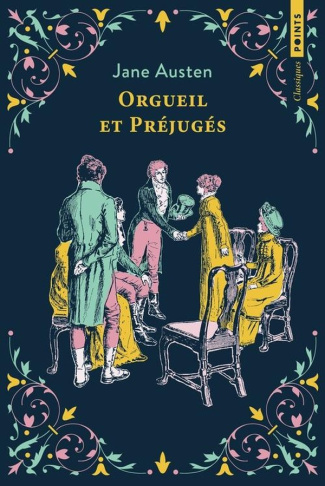
Orgueil et Préjugés
Les premières apparences sont souvent trompeuses... (Re)découvrez l'une des plus grandes histoires d'amour de la littérature anglaise. Le quotidien d'Élisabeth Bennet et de ses s'urs, que leur mère ne songe qu'à marier, est bouleversé par l'installation à Netherfield de Mr Bingley ? et l'arrivée du froid Mr Darcy provoque d'autres turbulences? Or, dans le petit monde de l'aristocratie, où les premières impressions sont reines, un scandale peut naître au moindre faux pas ! Jane Austen (1775-1817) grandit au sein d'une famille de la petite noblesse anglaise. Elle se dédie à l'écriture et publie plusieurs romans de son vivant qui rencontrent un vif succès critique et public, dans lesquels elle dissèque avec ironie les m'urs de l'aristocratie. Orgueil et Préjugés est l'une des plus grandes histoires d'amour de la littérature britannique. Traduit de l'anglais (Royaume-Uni) par Éloïse PerksEn stockCOMMANDER10,20 € -
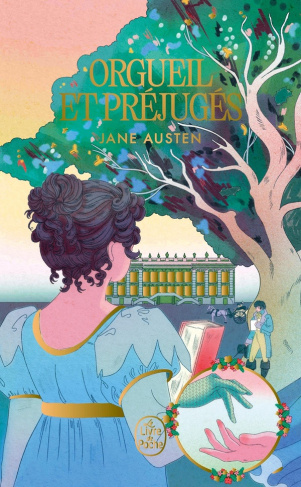
Orgueil et préjugés - Édition Collector
« S’étant retourné, Mr Darcy considéra un instant Élisabeth puis, après avoir croisé son regard, il détourna le sien avant de répondre froidement :— Elle n’est pas mal ; mais pas assez belle pour me tenter. Et, pour l’heure, je ne suis pas d’humeur à m’occuper de celles qui font tapisserie. »TRADUCTION DE SOPHIE CHIARI.En stockCOMMANDER9,55 € -
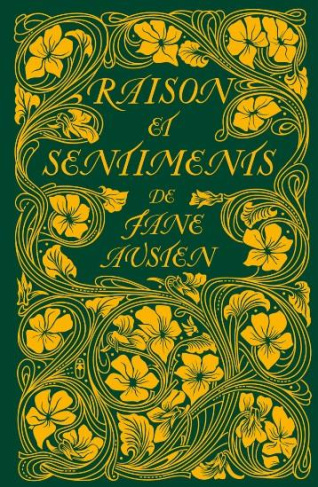
Raison et sentiments. Edition collector
Redécouvrez l'un des plus grands classiques de la littérature anglaise grâce à une édition inédite en France. Publiée en 1899 en Angleterre, cette édition comporte des illustrations de Chris Hammond, célèbre illustratrice victorienne. Elinor et Marianne Dashwood sont deux soeurs aux caractères bien différents. Privées de leur héritage à la mort de leur père, elles doivent quitter le Sussex en compagnie de leur cadette Margaret et de leur mère. Dans le Devon, elles ne tardent pas à s'habituer à leur désormais modeste quotidien au contact de leurs nouveaux voisins. Mais lorsqu'elles tombent amoureuses, Elinor et Marianne se retrouvent tiraillées entre ce que leur impose la raison et ce que leur dicte leur coeur. Premier roman publié de Jane Austen, Raison et Sentiments est considéré comme l'un des plus grands chefs-d'oeuvre du XIXe siècle. Il annonçait déjà le talent de son autrice à brosser des galeries de personnages authentiques, et à peindre avec ironie et justesse les moeurs de son temps.En stockCOMMANDER25,60 € -
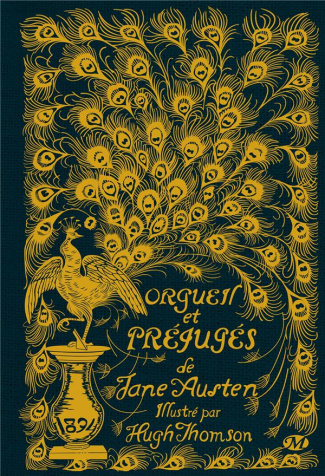
Orgueil et préjugés. Edition de luxe
Le chef-d'oeuvre de Jane Austen. Issue d'une famille de la petite gentry, Elizabeth Bennet ne manque ni d'humour ni de malice. Lors d'un bal, elle rencontre le hautain Mr Darcy, l'un des hommes les plus riches d'Angleterre, mais aussi l'un des plus orgueilleux, qu'elle méprise aussitôt. Après avoir mal jugé le charme de la jeune femme, il tombera amoureux d'elle et mènera une longue lutte intérieure entre ce que lui dicte son coeur et ce qui convient à son rang. Comment réussiront-ils à vaincre leurs préjugés et à faire taire leur orgueil pour connaître l'amour ?En stockCOMMANDER22,25 €


Du même éditeur
-

The Little Prince
Antoine de Saint-Exupéry first published The Little Prince in 1943, only a year before his Lockheed P-38 vanished over the Mediterranean during a reconnaissance mission. More than a half century later, this fable of love and loneliness has lost none of its power. The narrator is a downed pilot in the Sahara Desert, frantically trying to repair his wrecked plane. His efforts are interrupted one day by the apparition of a little, well, prince, who asks him to draw a sheep. "In the face of an overpowering mystery, you don't dare disobey," the narrator recalls. "Absurd as it seemed, a thousand miles from all inhabited regions and in danger of death, I took a scrap of paper and a pen out of my pocket." And so begins their dialogue, which stretches the narrator's imagination in all sorts of surprising, childlike directions.The Little Prince describes his journey from planet to planet, each tiny world populated by a single adult. It's a wonderfully inventive sequence, which evokes not only the great fairy tales but also such monuments of postmodern whimsy as Italo Calvino's Invisible Cities. And despite his tone of gentle bemusement, Saint-Exupéry pulls off some fine satiric touches, too. There's the king, for example, who commands the Little Prince to function as a one-man (or one-boy) judiciary:I have good reason to believe that there is an old rat living somewhere on my planet. I hear him at night. You could judge that old rat. From time to time you will condemn him to death. That way his life will depend on your justice. But you'll pardon him each time for economy's sake. There's only one rat. The author pokes similar fun at a businessman, a geographer, and a lamplighter, all of whom signify some futile aspect of adult existence. Yet his tale is ultimately a tender one--a heartfelt exposition of sadness and solitude, which never turns into Peter Pan-style treacle. Such delicacy of tone can present real headaches for a translator, and in her 1943 translation, Katherine Woods sometimes wandered off the mark, giving the text a slightly wooden or didactic accent. Happily, Richard Howard (who did a fine nip-and-tuck job on Stendhal's The Charterhouse of Parma in 1999) has streamlined and simplified to wonderful effect. The result is a new and improved version of an indestructible classic, which also restores the original artwork to full color. "Trying to be witty," we're told at one point, "leads to lying, more or less." But Saint-Exupéry's drawings offer a handy rebuttal: they're fresh, funny, and like the book itself, rigorously truthful. --James MarcusEn stockCOMMANDER6,00 € -
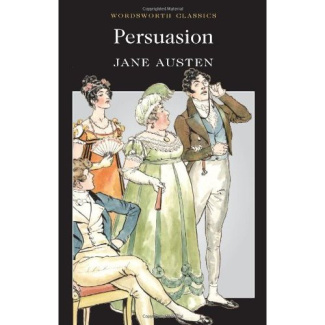
Persuasion (VO)
Extrait Sir Walter Elliot, of Kellynch Hall, in Somersetshire, was a man who, for his own amusement, never took up any book but the Baronetage; there he found occupation for an idle hour, and consolation in a distressed one; there his faculties were roused into admiration and respect by contemplating the limited remnant of the earliest patents; there any unwelcome sensations arising from domestic affairs changed naturally into pity and contempt as he turned over the almost endless creations of the last century; and there, if every other leaf were powerless, he could read his own history with an interest which never failed. This was the page at which the favourite volume always opened:--'ELLIOT OF KELLYNCH HALL''Walter Elliot, born March 1, 1760, married July 15, 1784, Elizabeth, daughter of James Stevenson, Esq., of South Park, in the county of Gloucester; by which lady (who died 1800) he has issue, Elizabeth, born June 1, 1785; Anne, born August 9, 1787; a still-born son, November 5, 1789; Mary, born November 20, 1791.'Precisely such had the paragraph originally stood from the printer's hands; but Sir Walter had improved it by adding, for the information of himself and his family, these words, after the date of Mary's birth:--'Married, December 16, 1810, Charles, son and heir of Charles Musgrove, Esq., of Uppercross, in the county of Somerset,' and by inserting most accurately the day of the month on which he had lost his wife. Then followed the history and rise of the ancient and respectable family in the usual terms; how it had been first settled in Cheshire, how mentioned in Dugdale, serving the office of high sheriff, representing a borough in three successive parliaments, exertions of loyalty, and dignity of baronet, in the first year of Charles II with all the Marys and Elizabeths they had married; forming altogether two handsome quarto pages, and concluding with the arms and motto:--'Principal seat, Kellynch Hall, in the county of Somerset,' and Sir Walter's handwriting again in this finale:--'Heir presumptive, William Walter Elliot, Esq., great-grandson of the second Sir Walter.''Vanity was the beginning and end of Sir Walter Elliot's character: vanity of person and of situation. He had been remarkably handsome in his youth, and at fifty-four was still a very fine man. Few women could think more of their personal appearance than he did, nor could the valet of any new-made lord be more delighted with the place he held in society. He considered the blessing of beauty as inferior only to the blessing of a baronetcy; and the Sir Walter Elliot, who united these gifts, was the constant object of his warmest respect and devotion. His good looks and his rank had one fair claim on his attachment, since to them he must have owed a wife of very superior character to anything deserved by his own. Lady Elliot had been an excellent woman, sensible and amiable, whose judgment and conduct, if they might be pardoned the youthful infatuation which made her Lady Elliot, had never required indulgence afterwards. She had humoured, or softened, or concealed his failings, and promoted his real respectability for seventeen years; and though not the very happiest being in the world herself, had found enough in her duties, her friends, and her children, to attach her to life, and make it no matter of indifference to her when she was called on to quit them. Three girls, the two eldest sixteen and fourteen, was an awful legacy for a mother to bequeath, an awful charge rather, to confide to the authority and guidance of a conceited, silly father. She had, however, one very intimate friend, a sensible, deserving woman, who had been brought, by strong attachment to herself, to settle close by her, in the village of Kellynch; and on her kindness and advice Lady Elliot mainly relied for the best help and maintenance of the good principles and instruction which she had been anxiously giving her daughters. This friend and Sir Walter did not marry, whatever might have been anticipated on that head by their acquaintance. Thirteen years had passed away since Lady Elliot's death, and they were still near neighbours and intimate friends, and one remained a widower, the other a widow. That Lady Russell, of steady age and character, and extremely well provided for, should have no thought of a second marriage, needs no apology to the public, which is rather apt to be unreasonably discontented when a woman does marry again, than when she does not; but Sir Walter's continuing in singleness requires explanation. Be it known, then, that Sir Walter, like a good father (having met with one or two private disappointments in very unreasonable applications), prided himself on remaining single for his dear daughter's sake. For one daughter, his eldest, he would really have given up anything, which he had not been very much tempted to do. Elizabeth had succeeded at sixteen to all that was possible of her mother's rights and consequence; and being very handsome, and very like himself, her influence had always been great, and they had gone on together most happily. His two other children were of very inferior value. Mary had acquired a little artificial importance by becoming Mrs. Charles Musgrove; but Anne, with an elegance of mind and sweetness of character, which must have placed her high with any people of real understanding, was nobody with either father or sister; her word had no weight, her convenience was always to give way--she was only Anne. To Lady Russell, indeed, she was a most dear and highly valued goddaughter, favourite, and friend. Lady Russell loved them all, but it was only in Anne that she could fancy the mother to revive again. A few years before Anne Elliot had been a very pretty girl, but her bloom had vanished early; and as, even in its height, her father had found little to admire in her (so totally different were her delicate features and mild dark eyes from his own), there could be nothing in them, now that she was faded and thin, to excite his esteem. He had never indulged much hope, he had now none, of ever reading her name in any other page of his favourite work. All equality of alliance must rest with Elizabeth, for Mary had merely connected herself with an old country family of respectability and large fortune, and had, therefore, given all the honour and received none: Elizabeth would, one day or other, marry suitably. It sometimes happens that a woman is handsomer at twenty-nine than she was ten years before; and, generally speaking, if there has been neither ill-health nor anxiety, it is a time of life at which scarcely any charm is lost. It was so with Elizabeth, still the same handsome Miss Elliot that she had begun to be thirteen years ago, and Sir Walter might be excused, therefore, in forgetting her age, or, at least, be deemed only half a fool, for thinking himself and Elizabeth as blooming as ever, amidst the wreck of the good looks of everybody else; for he could plainly see how old all the rest of his family and acquaintance were growing. Anne haggard, Mary coarse, every face in the neighbourhood worsting, and the rapid increase of the crow's foot about Lady Russell's temples had long been a distress to him. Elizabeth did not quite equal her father in personal contentment. Thirteen years had seen her mistress of Kellynch Hall, presiding and directing with a self-possession and decision which could never have given the idea of her being younger than she was. For thirteen years had she been doing the honours, and laying down the domestic law at home, and leading the way to the chaise and four, and walking immediately after Lady Russell out of all the drawing-rooms and dining-rooms in the country. Thirteen winters' revolving frosts had seen her opening every ball of credit which a scanty neighbourhood afforded, and thirteen springs shown their blossoms, as she travelled up to London with her father, for a few weeks' annual enjoyment of the great world. She had the remembrance of all this, she had the consciousness of being nine-and-twenty to give her some regrets and some apprehensions; she was fully satisfied of being still quite as handsome as ever, but she felt her approach to the years of danger, and would have rejoiced to be certain of being properly solicited by baronet-blood within the next twelvemonth or two. Then might she again take up the book of books with as much enjoyment as in her early youth, but now she liked it not. Always to be presented with the date of her own birth and see no marriage follow but that of a youngest sister, made the book an evil; and more than once, when her father had left it open on the table near her, had she closed it, with averted eyes, and pushed it away. She had had a disappointment, moreover, which that book and especially the history of her own family, must ever present the remembrance of. The heir presumptive, the very William Walter Elliot, Esq., whose rights had been so generally supported by her father, had disappointed her. She had, while a very young girl, as soon as she had known him to be, in the event of her having no brother, the future baronet, meant to marry him, and her father had always meant that she should. He had not been known to them as a boy; but soon after Lady Elliot's death, Sir Walter had sought the acquaintance, and though his overtures had not been met with any warmth, he had persevered in seeking it, making allowance for the modest drawing-back of youth; and, in one of their spring excursions to London, when Elizabeth was in her first bloom, Mr. Elliot had been forced into the introduction. He was at that time a very young man, just engaged in the study of the law; and Elizabeth found him extremely agreeable, and every plan in his favour was confirmed. He was invited to Kellynch Hall; he was talked of and expected all the rest of the year; but he never came. The following spring he was seen again in town, found equally agreeable, again encouraged, invited, and expected, and again he did not come; and the next tidings were tha... --Ce texte fait référence à l'édition Broché .En stockCOMMANDER6,00 € -

The picture of Dorian Gray (VO)
Extrait CHAPTER IThe studio was filled with the rich odour of roses, and when the light summer wind stirred amidst the trees of the garden, there came through the open door the heavy scent of the lilac, or the more delicate perfume of the pink-flowering thorn.From the corner of the divan of Persian saddle-bags on which he was lying, smoking, as was his custom, innumerable cigarettes, Lord Henry Wotton could just catch the gleam of the honey-sweet and honey-coloured blossoms of a laburnum, whose tremulous branches seemed hardly able to bear the burden of a beauty so flame-like as theirs; and now and then the fantastic shadows of birds in flight flitted across the tussore-silk curtains that were stretched in front of the huge window, producing a kind of momentary Japanese effect, and making him think of those pallid jade-faced painters of Tokio who, through the medium of an art that is necessarily immobile, seek to convey the sense of swiftness and motion. The sullen murmur of the bees shouldering their way through the long unmown grass, or circling with monotonous insistence round the dusty gilt horns of the straggling woodbine, seemed to make the stillness more oppressive. The dim roar of London was like the bourdon note of a distant organ.In the centre of the room, clamped to an upright easel, stood the full-length portrait of a young man of extraordinary personal beauty, and in front of it, some little distance away, was sitting the artist himself, Basil Hallward, whose sudden disappearance some years ago caused, at the time, such public excitement, and gave rise to so many strange conjectures.As the painter looked at the gracious and comely form he had so skilfully mirrored in his art, a smile of pleasure passed across his face, and seemed about to linger there. But he suddenly started up, and, closing his eyes, placed his fingers upon the lids, as though he sought to imprison within his brain some curious dream from which he feared he might awake."It is your best work, Basil, the best thing you have ever done," said Lord Henry, languidly. "You must certainly send it next year to the Grosvenor. The Academy is too large and too vulgar. Whenever I have gone there, there have been either so many people that I have not been able to see the pictures, which was dreadful, or so many pictures that I have not been able to see the people, which was worse. The Grosvenor is really the only place." "I don't think I shall send it anywhere," he answered, tossing his head back in that odd way that used to make his friends laugh at him at Oxford. "No: I won't send it anywhere."Lord Henry elevated his eyebrows, and looked at him in amazement through the thin blue wreaths of smoke that curled up in such fanciful whorls from his heavy opium-tainted cigarette. "Not send it anywhere? My dear fellow, why? Have you any reason? What odd chaps you painters are! You do anything in the world to gain a reputation. As soon as you have one, you seem to want to throw it away. It is silly of you, for there is only one thing in the world worse than being talked about, and that is not being talked about. A portrait like this would set you far above all the young men in England, and make the old men quite jealous, if old men are ever capable of any emotion.""I know you will laugh at me," he replied, "but I really can't exhibit it I have put too much of myself into it."Lord Henry stretched himself out on the divan and laughed. "Yes, I knew you would; but it is quite true, all the same.""Too much of yourself in it! Upon my word, Basil, I didn't know you were so vain; and I really can't see any resemblance between you, with your rugged strong face and your coal-black hair, and this young Adonis, who looks as if he was made out of ivory and rose-leaves. Why, my dear Basil, he is a Narcissus, and you — well, of course you have an intellectual expression, and all that. But beauty, real beauty, ends where an intellectual expression begins. Intellect is in itself a mode of exaggeration, and destroys the harmony of any face. The moment one sits down to think, one becomes all nose, or all forehead, or something horrid. Look at the successful men in any of the learned professions. How perfectly hideous they are! Except, of course, in the Church. But then in the Church they don't think. A bishop keeps on saying at the age of eighty what he was told to say when he was a boy of eighteen, and as a natural consequence he always looks absolutely delightful. Your mysterious young friend, whose name you have never told me, but whose picture really fascinates me, never thinks. I feel quite sure of that. He is some brainless, beautiful creature, who should be always here in winter when we have no flowers to look at, and always here in summer when we want something to chill our intelligence. Don't flatter yourself, Basil: you are not in the least like him."You don't understand me, Harry," answered the artist. "Of course I am not like him. I know that perfectly well. Indeed, I should be sorry to look like him. You shrug your shoulders? I am telling you the truth. There is a fatality about all physical and intellectual distinction, the sort of fatality that seems to dog through history the faltering steps of kings. It is better not to be different from one's fellows. The ugly and the stupid have the best of it in this world. They can sit at their ease and gape at the play. If they know nothing of victory, they are at least spared the knowledge of defeat. They live as we all should live, undisturbed, indifferent, and without disquiet. They neither bring ruin upon others, nor ever receive it from alien hands. Your rank and wealth, Harry; my brains, such as they are — my art, whatever it may be worth; Dorian Gray's good looks — we shall all suffer for what the gods have given us, suffer terribly.""Dorian Gray? Is that his name?" asked Lord Henry, walking across the studio towards Basil Hallward."Yes, that is his name. I didn't intend to tell it to you.""But why not?""Oh, I can't explain. When I like people immensely I never tell their names to any one. It is like surrendering a part of them. I have grown to love secrecy. It seems to be the one thing that can make modern life mysterious or marvellous to us. The commonest thing is delightful if one only hides it. When I leave town now I never tell my people where I am going. If I did, I would lose all my pleasure. It is a silly habit, I dare say, but somehow it seems to bring a great deal of romance to one's life. I suppose you think me awful foolish about it?""Not at all," answered Lord Henry, "not at all, my dear Basil. You seem to forget that I am married, and the one charm of marriage is that it makes a life of deception absolutely necessary for both parties. I never know where my wife is, and my wife never knows what I am doing. When we meet — we do meet occasionally, when we dine out together, or go down to the Duke's — we tell each other the most absurd stories with the most serious faces. My wife is very good at it, much better, in fact, than I am. She never gets confused over her dates, and I always do. But when she does find me out, she makes no row at all. I sometimes wish she would; but she merely laughs at me.""I hate the way you talk about your married life, Harry," said Basil Hallward, strolling towards the door that led into the garden. "I believe that you are really a very good husband, but that you are thoroughly ashamed of your own virtues. You are an extraordinary fellow. You never say a moral thing, and you never do a wrong thing. Your cynicism is simply a pose.""Being natural is simply a pose, and the most irritating pose I know," cried Lord Henry, laughing; and the two young men went out into the garden together, and ensconced themselves on a long bamboo seat that stood in the shade of a tall laurel bush. The sunlight slipped over the polished leaves. In the grass, white daisies were tremulous.After a pause, Lord Henry pulled out his watch. "I am afraid I must be going, Basil," he murmured, "and before you go, I insist on your answering a question I put to you some time ago.""What is that?" said the painter, keeping his eyes fixed on the ground."You know quite well.""I do not, Harry.""Well, I will tell you what it is. I want you to explain to me why you won't exhibit Dorian Gray's picture. I want the real reason.""I told you the real reason.""No you did not. You said it was because there was too much of yourself in it. Now, that is childish.""Harry," said Basil Hallward, looking him straight in the face, "every portrait that is painted with feeling is a portrait of the artist, not of the sitter. The sitter is merely the accident, the occasion. It is not he who is revealed by the painter; it rather the painter who, on the coloured canvas, reveals himself. The reason I will not exhibit the picture is that I am afraid that I have shown in it the secret of my soul."Lord Henry laughed. "And what is that?" he asked."I will tell you," said Hallward; but an expression of perplexity came over his face."I am all expectation, Basil," continued his companion, glancing at him."Oh, there is really very little to tell, Harry," answered the painter; "and I am afraid you will hardly understand it. Perhaps you will hardly believe it."Lord Henry smiled, and, leaning down, plucked a pink-petalled daisy from the grass, and examined it. "I am quite sure I shall understand it," he replied, gazing intently at the little golden white-feathered disk, "and as for believing things, I can believe anything, provided that it is quite incredible."The wind shook some blossoms from the trees, and the heavy lilac-blooms, with their clustering stars, moved to and fro in the languid air. A grasshopper began to chirrup by the wall, and like a blue thread a long thing dragon-fly floated past on its brown gauze wings. Lord Henry felt as if he could hear Basil Hallward's heart beating, ... --Ce texte fait référence à l'édition Relié .En stockCOMMANDER6,00 € -
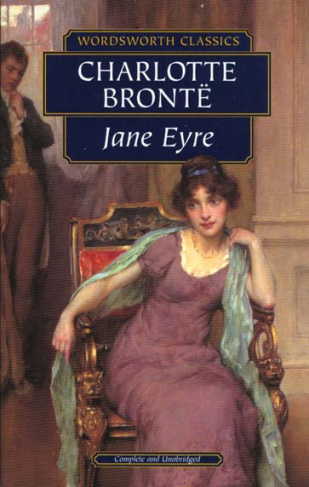
Jane Eyre (VO)
Extrait Chapter OneThere was no possibility of taking a walk that day. We had been wandering, indeed, in the leafless shrubbery an hour in the morning; but since dinner (Mrs. Reed, when there was no company, dined early) the cold winter wind had brought with it clouds so sombre, and a rain so penetrating, that further outdoor exercise was now out of the question.I was glad of it; I never liked long walks, especially on chilly afternoons: dreadful to me was the coming home in the raw twilight, with nipped fingers and toes, and a heart saddened by the chidings of Bessie, the nurse, and humbled by the consciousness of my physical inferiority to Eliza, John, and Georgiana Reed.The said Eliza, John, and Georgiana were now clustered round their mamma in the drawing-room: she lay reclined on a sofa by the fireside, and with her darlings about her (for the time neither quarrelling nor crying) looked perfectly happy. Me, she had dispensed from joining the group, saying, "She regretted to be under the necessity of keeping me at a distance; but that until she heard from Bessie, and could discover by her own observation that I was endeavouring in good earnest to acquire a more sociable and childlike disposition, a more attractive and sprightly manner--something lighter, franker, more natural, as it were--she really must exclude me from privileges intended only for contented, happy little children.""What does Bessie say I have done?" I asked."Jane, I don't like cavillers or questioners; besides, there is something truly forbidding in a child taking up her elders in that manner. Be seated somewhere; and until you can speak pleasantly, remain silent."A small breakfast-room adjoined the drawing-room, I slipped in there. It contained a bookcase; I soon possessed myself of a volume, taking care that it should be one stored with pictures. I mounted into the window-seat: gathering up my feet, I sat crosslegged, like a Turk; and, having drawn the red moreen curtain nearly close, I was shrined in double retirement.Folds of scarlet drapery shut in my view to the right hand; to the left were the clear panes of glass, protecting, but not separating me from the drear November day. At intervals, while turning over the leaves in my book, I studied the aspect of that winter afternoon. Afar, it offered a pale blank of mist and cloud; near, a scene of wet lawn and storm-beat shrub, with ceaseless rain sweeping away wildly before a long and lamentable blast.I returned to my book--Bewick's History of British Birds: the letterpress thereof I cared little for, generally speaking; and yet there were certain introductory pages that, child as I was, I could not pass quite as a blank. They were those which treat of the haunts of sea-fowl; of "the solitary rocks and promontories" by them only inhabited; of the coast of Norway, studded with isles from its southern extremity, the Lindeness, or Naze, to the North Cape--Where the Northern Ocean, in vast whirls,Boils round the naked, melancholy islesOf farthest Thule; and the Atlantic surgePours in among the stormy Hebrides.Nor could I pass unnoticed the suggestion of the bleak shores of Lapland, Siberia, Spitzbergen, Nova Zembla, Iceland, Greenland, with "the vast sweep of the Arctic Zone, and those forlorn regions of dreary space--that reservoir of frost and snow, where firm fields of ice, the accumulation of centuries of winters, glazed in Alpine heights above heights, surround the pole, and concentre the multiplied rigours of extreme cold." Of these death-white realms I formed an idea of my own: shadowy, like all the half-comprehended notions that float dim through children's brains, but strangely impressive. The words in these introductory pages connected themselves with the succeeding vignettes, and gave significance to the rock standing up alone in a sea of billow and spray; to the broken boat stranded on a desolate coast; to the cold and ghastly moon glancing through bars of cloud at a wreck just sinking.I cannot tell what sentiment haunted the quite solitary churchyard, with its inscribed headstone; its gate, its two trees, its low horizon, girdled by a broken wall, and its newly risen crescent, attesting the hour of eventide.The two ships becalmed on a torpid sea, I believed to be marine phantoms.The fiend pinning down the thief's pack behind him, I passed over quickly: it was an object of terror.So was the black, horned thing seated aloof on a rock, surveying a distant crowd surrounding a gallows.Each picture told a story; mysterious often to my undeveloped understanding and imperfect feelings, yet ever profoundly interesting: as interesting as the tales Bessie sometimes narrated on winter evenings, when she chanced to be in good humour; and when, having brought her ironing-table to the nursery-hearth, she allowed us to sit about it, and while she got up Mrs. Reed's lace frills, and crimped her nightcap borders, fed our eager attention with passages of love and adventure taken from old fairy tales and older ballads; or (as at a later period I discovered) from the pages of Pamela, and Henry, Earl of Moreland.With Bewick on my knee, I was then happy: happy at least in my way. I feared nothing but interruption, and that came too soon. The breakfast-room door was opened."Boh! Madam Mope!" cried the voice of John Reed; then he paused: he found the room apparently empty."Where the dickens is she?" he continued. "Lizzy! Georgy! (calling to his sisters) Jane is not here: tell mamma she is run out into the rain--bad animal!""It is well I drew the curtain," thought I, and I wished fervently he might not discover my hiding-place: nor would John Reed have found it out himself; he was not quick either of vision or conception; but Eliza just put her head in at the door, and said at once: "She is in the window-seat, to be sure, Jack."And I came out immediately, for I trembled at the idea of being dragged forth by the said Jack."What do you want?" I asked with awkward diffidence."Say, 'what do you want, Master Reed,' " was the answer. "I want you to come here"; and seating himself in an arm-chair, he intimated by a gesture that I was to approach and stand before him.John Reed was a schoolboy of fourteen years old; four years older than I, for I was but ten; large and stout for his age, with a dingy and unwholesome skin; thick lineaments in a spacious visage, heavy limbs and large extremities. He gorged himself habitually at table, which made him bilious, and gave him a dim and bleared eye with flabby cheeks. He ought now to have been at school; but his mamma had taken him home for a month or two, "on account of his delicate health." Mr. Miles, the master, affirmed that he would do very well if he had fewer cakes and sweetmeats sent him from home; but the mother's heart turned from an opinion so harsh, and inclined rather to the more refined idea that John's sallowness was owing to over-application, and, perhaps, to pining after home.John had not much affection for his mother and sisters, and an antipathy to me. He bullied and punished me; not two or three times in the week, nor once or twice in a day, but continually: every nerve I had feared him, and every morsel of flesh on my bones shrank when he came near. There were moments when I was bewildered by the terror he inspired, because I had no appeal whatever against either his menaces or his inflictions; the servants did not like to offend their young master by taking my part against him, and Mrs. Reed was blind and deaf on the subject: she never saw him strike or heard him abuse me, though he did both now and then in her very presence; more frequently, however, behind her back.Habitually obedient to John, I came up to his chair: he spent some three minutes in thrusting out his tongue at me as far as he could without damaging the roots: I knew he would soon strike, and while dreading the blow, I mused on the disgusting and ugly appearance of him who would presently deal it. I wonder if he read that notion in my face; for, all at once, without speaking, he struck suddenly and strongly. I tottered, and on regaining my equilibrium retired back a step or two from his chair."That is for your impudence in answering mamma a while since," said he, "and for your sneaking way of getting behind curtains, and for the look you had in your eyes two minutes since, you rat!"Accustomed to John Reed's abuse, I never had an idea of replying to it: my care was how to endure the blow which would certainly follow the insult."What were you doing behind the curtain?" he asked."I was reading.""Show the book."I returned to the window and fetched it thence."You have no business to take our books; you are a dependant, mamma says; you have no money; your father left you none; you ought to beg, and not to live here with gentlemen's children like us, and eat the same meals we do, and wear clothes at our mamma's expense. Now, I'll teach you to rummage my bookshelves: for they are mine; all the house belongs to me, or will do in a few years. Go and stand by the door, out of the way of the mirror and the windows."I did so, not at first aware what was his intention; but when I saw him lift and poise the book and stand in act to hurl it, I instinctively started aside with a cry of alarm: not soon enough, however; the volume was flung, it hit me, and I fell, striking my head against the door and cutting it. The cut bled, the pain was sharp: my terror had passed its climax; other feelings succeeded."Wicked and cruel boy!" I said. "You are like a murderer--you are like a slave-driver--you are like the Roman emperors!"I had read Goldsmith's History of Rome, and had formed my opinion of Nero, Caligula, &... --Ce texte fait référence à l'édition Broché .En stockCOMMANDER6,00 €


De la même catégorie
-

Harry Potter and the Philosopher's Stone
Commentaires .halfspace { padding-top: 0.5em; } a.product { font-weight: bold; } ul { list-style-type: none; margin: 0px; padding: 0px; } ul li { margin: 0.5em 0em; } ul li ul { list-style-type: none; margin-left: 25px; } ul li ul li { margin: 0em; } hr { border-top: 1px dashed #999999; height: 1px; color: #FFFFFF; margin: 3px 0px; } div.bucket { padding: 5px 0em; } div.bucket div.content { margin: 0.5em 0px 0em 25px; } img.icon { display: none; } hr { margin-left: 0px; } a.buyAction { font-weight: bold; } h2 { color: #CC6600; font-size: small; margin: 0px 0px 0.25em; } .bucket h3 { color: #000; font-size: 1em; font-weight: bold; margin: 0px 0px 0.25em 0px; } table.productImageGrid { margin: 0px 15px 15px 0px; background-color: #FFFFFF; text-align: center; background-image: url(http://g-ec2.images-Commentaires/images/G/08/icons/white1px._V52078521_.jpg); } table.buyingDetailsGrid { margin: 0px 0px 15px 15px; background-color: #FFFFFF; } .price { font-family: verdana,arial,helvetica,sans-serif; } div.extendedBuyBox { padding: 4px 0px; } hr.EBBdivider { margin: 0px; } div.buying { padding: 0.25em 0em; font-size: .86em; } #asinRedirect, #firstDimension { font-size: .95em; width: 215px; } div.buying table { font-size: x-small; } div.buying table td { font-size: .86em; } div.buying table td.tiny { font-size: xx-small; } .buying .subTitle { font-size: x-small; line-height: 1.45em; margin: .5em 0; } #priceBlock, #priceBlock table td, #primaryUsedAndNew, #primaryClubPrice, #secondaryUsedAndNew, #secondaryClubPrice, #adultWarning, #violenceWarning { font-size: x-small; } #primaryUsedAndNew { padding: 1em 0em; } #newShorts table { font-size: x-small; } #newShorts table td.promo { font-size: .86em; } #newShorts .price { font-size: .86em; } #specialContent br, #specialContent img { display: none; } #specialOffers { font-size: .86em; } #specialOffers table { font-size: x-small; } #specialOffers table td.promo { font-size: .86em; padding: .25em 0em; } #specialOffers table td.small { font-size: .86em; } #specialOffers font { font-size: .86em; } #promoGrid img { display: none; } #promoGrid .amabot_widget img { display: none; } #promoGrid .flashPlayer { clear: left; } .quickPromo br, .quickPromo img { display: none; } .quickPromo .flashPlayer { clear: left; } .quickPromo ul li { margin: 0.25em 0em; } .halfspace { padding-top: 0.5em; } #a9message hr { display: none; } #a9message { padding-top: 6px; width: 190px; } hr.bucketDivider { clear: left; } div.bucket { padding: 5px 0em; } td.bucket { padding: 5px 0em; } td.bucket div.content { margin: 0.5em 0px 0em 25px; } div.content form { margin: 0px; } div.endcap div.content { text-align: center; } table.endcapGrid { padding: 1.5em 0em 0.25em; } #bookCitations img { display: none; } div.looseDiamondBox { clear: both; } table.buyBox td.topLeft { background-image: url("http://g-ec2.images-Commentaires/images/G/08/nav2/dp/box-tl._V52173762_.gif"); background-repeat: no-repeat; padding-top: 12px; padding-left: 12px; } table.buyBox td.topRight { background-image: url("http://g-ec2.images-Commentaires/images/G/08/nav2/dp/box-tr._V52173762_.gif"); background-repeat: no-repeat; } table.buyBox td.bottomLeft { background-image: url("http://g-ec2.images-Commentaires/images/G/08/nav2/dp/box-bl._V52173763_.gif"); background-repeat: no-repeat; font-size: 4px; } table.buyBox td.bottomRight { background-image: url("http://g-ec2.images-Commentaires/images/G/08/nav2/dp/box-br._V52173763_.gif"); background-repeat: no-repeat; font-size: 4px; } table.castWithPhotos { margin: 0; padding: 0; } table.castWithPhotos td { padding: 0 8px 3px 0; text-align: center; width: 20%; } table.castWithPhotos tr.castPhoto { vertical-align: bottom; } table.castWithPhotos tr.castName { vertical-align: top; } table.moreBuyingChoices td.topLeft { background-image: url("http://g-ec2.images-Commentaires/images/G/08/nav2/dp/box-line-tl2._V52173763_.gif"); background-repeat: no-repeat; padding-top: 6px; padding-left: 12px; } table.moreBuyingChoices td.topRight { background-image: url("http://g-ec2.images-Commentaires/images/G/08/nav2/dp/box-line-tr2._V52173763_.gif"); background-repeat: no-repeat; } table.moreBuyingChoices td.bottomLeft { background-image: url("http://g-ec2.images-Commentaires/images/G/08/nav2/dp/box-line-bl._V52173763_.gif"); background-repeat: no-repeat; font-size: 4px; } table.moreBuyingChoices td.bottomRight { background-image: url("http://g-ec2.images-Commentaires/images/G/08/nav2/dp/box-line-br._V52173763_.gif"); background-repeat: no-repeat; font-size: 4px; } table.otherEditions td.topLeft { background-image: url("http://g-ec2.images-Commentaires/images/G/08/nav2/dp/box-line-tl._V52173763_.gif"); background-repeat: no-repeat; padding-top: 12px; padding-left: 12px; } table.otherEditions td.topRight { background-image: url("http://g-ec2.images-Commentaires/images/G/08/nav2/dp/box-line-tr._V52173762_.gif"); background-repeat: no-repeat; } table.otherEditions td.bottomLeft { background-image: url("http://g-ec2.images-Commentaires/images/G/08/nav2/dp/box-line-bl._V52173763_.gif"); background-repeat: no-repeat; } table.otherEditions td.bottomRight { background-image: url("http://g-ec2.images-Commentaires/images/G/08/nav2/dp/box-line-br._V52173763_.gif"); background-repeat: no-repeat; } table.otherEditions { margin: 0.25em 0em; } table.otherEditions th { font-size: xx-small; text-align: left; padding-right: 10px; } table.otherEditions td { font-size: xx-small; } table.otherEditions .listprice { font-size: xx-small; } table.otherEditions .price { font-size: xx-small; } .caretback { color: #CC6600; font-size: 1.2em; font-weight: bold; text-decoration: none; } .caretnext { color: #CC6600; font-size: 1.2em; font-weight: bold; text-decoration: none; } .disabled { color: #666; } .listRowEven { background-color: #FFFFFF; vertical-align: middle; } .listRowOdd { background-color: #EEF1F6; vertical-align: middle; } .pagination { font-size: .89em; margin-top: 2em; text-align: center; white-space: nowrap; } .pagination a { text-decoration: none; } .pagination a:hover { color: #c60; text-decoration: none; } .pagination .next { margin-left: 1em; } .pagination .numberofresults { margin-bottom: .66em; } .pagination .pages { margin-bottom: 1em; } .pagination .on { color: #000; font-weight: bold; } .pagination .previous { margin-left: 1em; } .productThumbnail { width: 32px; height: 32px; border: 1px solid #999999; text-align: center; } .productThumbnail table { width: 32px; height: 32px; } .productThumbnail table td { text-align: center; } #purchaseSimilarities .product, #sessionSimilarities .product { font-weight: normal; } #purchaseSimilarities .author, #sessionSimilarities .author { font-style: italic; } #productDescription ul, #technicalProductFeatures ul { list-style-type: disc; margin: 1.12em 0; margin-left: 20px; } #productDescription ul li { margin: 0 0 0 20px; } #productDescription ul li ul { list-style-type: disc; margin-left: 20px; } #productDescription ul li ul li { margin: 0 0 0 20px; } .smallFontSize { font-size: x-small; } .amabot_endcap .amabot_widget { text-align: center; } .amabot_endcap .amabot_widget { border: 1px solid #CCCC99; color: #000000; padding-top: 5px; padding-bottom: 5px; padding-left: 5px; padding-right: 5px; } .amabot_endcap .amabot_widget .h1 {color: #000000; font-size: x-small; } table.offersAndRebates { margin: 0 0 2em 0; } table.offersAndRebates th { font-size: x-small; font-weight: bold; text-align: right; padding-left: 8px; } table.offersAndRebates td.offerName { width: 55%; } table.offersAndRebates td.offerTotal { text-align: right; font-weight: bold; } table.offersAndRebates td.rebateAmount { font-weight: bold; } table.offersAndRebates td.purchasedBy, table.offersAndRebates td.postMarkedBy, table.offersAndRebates td.rebateAmount { text-align: right; width: 15%; } .listRowEven { background-color: #FFFFFF; vertical-align: middle; } .listRowOdd { background-color: #EEF1F6; vertical-align: middle; } div.centerColumnSpace { width: 650px; } .avgCustReviewDetailPage { margin-right:30px; } .avgCustReviewDetailPage img { margin-left:-5px; } .rateThisItem { white-space:nowrap; } .writeReview { white-space:nowrap; margin-top:.35em; } Commentaires : Harry Potter and the Half-Blood Prince: Livres en anglais: J. K. Rowling,Mary GrandPre Visit the Harry Potter Store Our Harry Potter Store features all things Harry, including books, audio CDs, DVDs, soundtracks, games, and more. Begin at the Beginning Adult editions Harry Potter and the Philosopher's Stone (Book 1) Paperback HardbackEn stockCOMMANDER12,00 € -
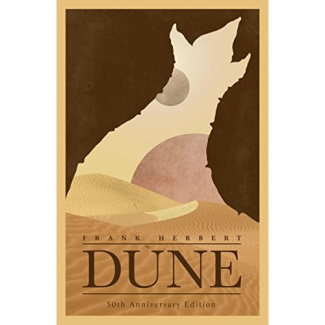
DUNE 1 (VO)
'An astonishing science fiction phenomenon' WASHINGTON POST'I know nothing comparable to it except The Lord of the Rings' Arthur C Clarke Before The Matrix, before Star Wars, before Ender's Game and Neuromancer, there was Dune, the first book in one of the greatest science fiction series ever written.A game of power, only those who can conquer their fear will survive.Melange, or 'spice', is the most valuable - and rarest - element in the universe. And it can only be found on a single planet: the inhospitable desert world Arrakis.Whoever controls Arrakis controls the spice. And whoever controls the spice controls the universe.When stewardship of Arrakis is transferred to his house, Paul Atreides must travel to the planet's dangerous surface to ensure the future of his family and his people. But as malevolent forces explode into conflict around him, Paul is thrust into a great destiny beyond his understanding. Read the first installment that inspired the major blockbuster films starring Timothée Chalamet, Zendaya, Florence Pugh and Austin Butler.WINNER of the NEBULA AWARD for best novel, 1965JOINT WINNER of the HUGO AWARD for best novel, 1966 READERS LOVE IT'Dune had me hooked! [...] Authentic world building' ????...'The complexity and depth of the creation is staggering' ????...'This is a phenomenal classic of literature' ????...'There's just so much brilliance here. The balance is perfect' ????...'Dune is every bit to science-fiction what Lord of the Rings is to fantasy' ?????En stockCOMMANDER14,00 € -

HARRY POTTER AND THE CHAMBER OF SECRETS (REJACKET)
Harry Potter's summer has included the worst birthday ever, doomy warnings from a house-elf called Dobby, and rescue from the Dursleys by his friend Ron Weasley in a magical flying car! Back at Hogwarts School of Witchcraft and Wizardry for his second year, Harry hears strange whispers echo through empty corridors - and then the attacks start. Students are found as though turned to stone . Dobby's sinister predictions seem to be coming true. These new editions of the classic and internationally bestselling, multi-award-winning series feature instantly pick-up-able new jackets by Jonny Duddle, with huge child appeal, to bring Harry Potter to the next generation of readers. It's time to PASS THE MAGIC ON.En stockCOMMANDER12,00 € -

The witch
A brand-new, haunting thriller from Freida McFadden, #1 Sunday Times bestselling author of The Housemaid! Some secrets don't die?they wait. When Julia Barlow loses her job and her apartment, she has nowhere left to go but Pemberton, her family's sprawling seventeenth-century estate in rural Massachusetts. Officially, she's there to check in on her aging grandmother. Unofficially, she's hoping the old house will give her a place to disappear. Instead, Pemberton begins to unravel her. Every night, the grandfather clock stops at exactly 3:41 a.m. The lights flicker without warning. And a disembodied voice cries for help outside Julia's bedroom door. As Julia digs into the house's dark history, she uncovers the story of a woman executed for witchcraft in 1692?and realizes the past may not be finished with Pemberton yet. When decades of family lies begin to surface, Julia must confront a terrifying truth: Pemberton may be haunted by women whose voices refuse to stay silent. From #1 Sunday Times bestselling author Freida McFadden comes The Witch, a chilling, twist-filled thriller about secrets?those we inherit, those we bury, and those people will burn to keep silent.En stockCOMMANDER19,00 €


