Fuseli and the Modern Woman. Fashion, Fantasy, Fetishism
This catalogue accompanies the first exhibition devoted to a fascinating group of drawings by the Anglo-Swiss Henry Fuseli (1741-1825), one of eighteenth-century Europe's most idiosyncratic, original and controversial artists. Best known for his notoriously provocative painting The Nightmare, Fuseli energetically cultivated a reputation for eccentricity, with vividly stylised images of supernatural creatures, muscle-bound heroes, and damsels in distress. While these convinced some viewers of the greatness of his genius, others dismissed him as a charlatan, or as completely mad. Fuseli's contemporaries might have thought him even crazier had they been aware that in private he harboured an obsessive preoccupation with the figure of the modern woman, which he pursued almost exclusively in his drawings. Where one might have expected idealised bodies with the grace and proportions of classical statues, here instead we encounter figures whose anatomies have been shaped by stiff bodices, waistbands, puffed sleeves, and pointed shoes, and whose heads are crowned by coiffures of the most bizarre and complicated sort. Often based on the artist's wife Sophia Rawlins, the women who populate Fuseli's graphic work tend to adopt brazenly aggressive attitudes, either fixing their gaze directly on the viewer or ignoring our presence altogether. Usually they appear on their own, in isolation on the page ; sometimes they are grouped together to form disturbing narratives, erotic fantasies that may be mysterious, vaguely menacing, or overtly transgressive, but where women always play a dominant role. Among the many intriguing questions raised by these works is the extent to which his wife Sophia was actively involved in fashioning her appearance for her own pleasure, as well as for the benefit of her husband. By bringing together more than fifty of these studies (roughly a third of the known total), The Courtauld Gallery will give audiences an unprecedented opportunity to see one of the finest Romantic-period draughtsmen at his most innovative and exciting. Visitors to the show and readers of the lavishly illustrated catalogue will further be invited to consider how Fuseli's drawings of women, as products of the turbulent aftermath of the American and French Revolutions, speak to concerns about gender and sexuality that have never been more relevant than they are today. The exhibition showcases drawings brought together from international collections, including the Kunsthaus in Zurich, the Auckland Art Gallery in New Zealand, and from other European and North American institutions.
| Nombre de pages | 160 |
|---|---|
| Date de parution | 02/12/2022 |
| Poids | 610g |
| Largeur | 217mm |
| EAN | 9781913645298 |
|---|---|
| Titre | Fuseli and the Modern Woman. Fashion, Fantasy, Fetishism |
| Auteur | Solkin David ; Beyer Jonas ; Fend Mechthild ; Gott |
| Editeur | HOLBERTON |
| Largeur | 217 |
| Poids | 610 |
| Date de parution | 20221202 |
| Nombre de pages | 160,00 € |
| Disponibilité | Sur commande en 4-6 jours |
Pourquoi choisir Molière ?
Du même auteur
-

Turner et ses peintres
Joseph Mallord William Turner (1775-1851) est aujourd'hui considéré ~-: comme le plus grand - car le plus novateur, sans doute - des peintres anglais de paysages et l'un des maîtres de la peinture européenne au xixe siècle. En effet, il a su opérer dans ses tableaux, et particulièrement dans ses oeuvres ultimes, un dépassement radical de la forme et de la fonction classiques du paysage par une dilution dans la lumière. "Oui, mon style, c'est l'atmosphère", a-t-il pu déclarer! Cependant, ce révolutionnaire est aussi bien un héritier, un continuateur et un compagnon de route. La profonde singularité de son oeuvre s'est en effet constamment nourrie de son dialogue avec les autres peintres, tant les maîtres anciens que ses contemporains. L'exposition "Turner et ses peintres" - fruit et aboutissement des travaux de nombreux chercheurs depuis plusieurs années - propose pour la première fois une remarquable confrontation entre l'artiste britannique et "ses" peintres. Dans ce catalogue, on trouvera en regard de ses productions les oeuvres des maîtres qui l'ont inspiré - Claude Lorrain, évidemment, mais encore Canaletto, Poussin, Rembrandt, Rubens, Ruisdael, Téniers, Titien, Watteau -, ainsi que celles de ses contemporains, Bonington, Constable, Girtin et Wilkie.EpuiséVOIR PRODUIT24,99 € -
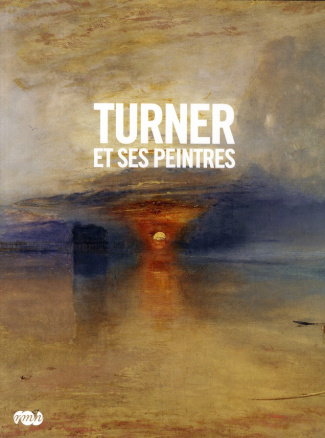
Turner et ses peintres
Joseph Mallord William Turner (1775-1851) est aujourd'hui considéré comme le plus grand - car le plus novateur, sans doute - des peintres anglais de paysages et l'un des maîtres de la peinture européenne au XIXe siècle. En effet, il a su opérer dans ses tableaux, et particulièrement dans ses oeuvres ultimes, un dépassement radical de la forme et de la fonction classiques du paysage par une dilution dans la lumière. "Oui, mon style, c'est l'atmosphère", a-t-il pu déclarer! Cependant, ce révolutionnaire est aussi bien un héritier, un continuateur et un compagnon de route. La profonde singularité de son oeuvre s'est en effet constamment nourrie de son dialogue avec les autres peintres, tant les maîtres anciens que ses contemporains. L'exposition "Turner et ses peintres" - fruit et aboutissement des travaux de nombreux chercheurs depuis plusieurs années - propose pour la première fois une remarquable confrontation entre l'artiste britannique et "ses" peintres. Dans ce catalogue, on trouvera en regard de ses productions les oeuvres des maîtres qui l'ont inspiré - Claude Lorrain, évidemment, mais encore Canaletto, Poussin, Rembrandt, Rubens, Ruisdael, Téniers, Titien, Watteau -, ainsi que celles de ses contemporains, Bonington, Constable, Girtin et Wilkie.EpuiséVOIR PRODUIT20,00 €