What do we owe to each other
?This magnificent book?opens up a novel, arresting position on matters that have been debated for thousands of years.? ?Times Literary Supplement How do we judge whether an action is morally right or wrong? If an action is wrong, what reason does that give us not to do it? Why should we give such reasons priority over our other concerns and values? In this book, T. M. Scanlon offers new answers to these questions, as they apply to the central part of morality that concerns what we owe to each other. According to his contractualist view, thinking about right and wrong is thinking about what we do in terms that could be justified to others and that they could not reasonably reject. He shows how the special authority of conclusions about right and wrong arises from the value of being related to others in this way, and he shows how familiar moral ideas such as fairness and responsibility can be understood through their role in this process of mutual justification and criticism. Scanlon bases his contractualism on a broader account of reasons, value, and individual well-being that challenges standard views about these crucial notions. He argues that desires do not provide us with reasons, that states of affairs are not the primary bearers of value, and that well-being is not as important for rational decision-making as it is commonly held to be. Scanlon is a pluralist about both moral and non-moral values. He argues that, taking this plurality of values into account, contractualism allows for most of the variability in moral requirements that relativists have claimed, while still accounting for the full force of our judgments of right and wrong.
| Date de parution | 09/10/2000 |
|---|---|
| Poids | 300g |
| EAN | 9780674004238 |
|---|---|
| Auteur | Scanlon TM |
| Editeur | HARVARD UNIVERSITY PRESS |
| Date de parution | 20001009 |
| Disponibilité | Sur commande en 6-10 jours |
Pourquoi choisir Molière ?
Du même auteur
-
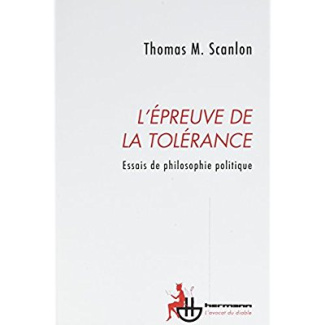
L'épreuve de la tolérance. Essais de philosophie politique
Devons-nous tolérer les conduites qui menacent notre mode de vie ? L'Etat peut-il limiter la liberté d'expression lorsque ce qui est exprimé est jugé inacceptable ? Le système pénal doit-il nécessairement rendre aux coupables la monnaie de leur pièce ? Au nom de quoi dénoncer les inégalités sociales et économiques ? Thomas M. Scanlon élabore une théorie contractualiste originale pour répondre à ces questions. Il montre comment concilier, dans l'évaluation des institutions politiques, deux exigences : respecter les droits des individus et promouvoir leur bien-être. Il éclaire aussi ce qui fait de la tolérance une épreuve : tolérer, c'est accepter que les évolutions sociales puissent faire disparaître ce à quoi nous tenons le plus. Les essais de philosophie politique, morale et juridique réunis dans ce recueil, traduits pour la première fois en français, ont contribué à faire de Scanlon l'un des plus importants philosophes de notre temps.Sur commande en 2-4 joursCOMMANDER38,15 € -
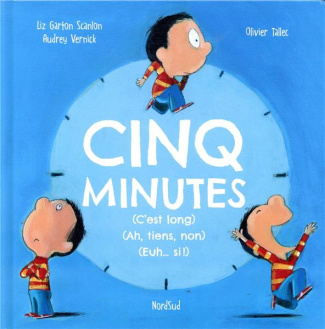
Cinq minutes. (C'est long) (Ah, tiens, non) (Euh... si !)
Allez! Encore juste cinq minutes! Cinq minutes, c'est très court ! Ou très long... tout dépend de ce qu'on est en train de faire. Toutes les familles se reconnaîtront dans les situations évoquées ici avec humour.Notes Biographiques : Olivier Tallec a suivi des cours à l'École supérieure des arts appliqués Duperré à Paris. Il a notamment illustré de nombreux articles de presse (Libération, Le Monde, Elle, XXI, etc.) et a publié également un nombre important d'albums jeunesse, traduits dans de nombreux pays. Il illustre plusieurs séries dont Rita et Machin (série écrite par Jean-Philippe Arrou-Vignod), aux Éditions Gallimard (adaptée à l'écran pour la chaine japonaise NHK); Grand Loup, Petit Loup aux Éditions Flammarion/Père Castor; la série des QuiQuoi aux Éditions Actes Sud, ou encore la série Cake & Monkey avec Drew Daywalt chez l'éditeur américain Scholastic. Il se lance également dans le dessin d'humour avec Bonne journée et Bonne continuation parus aux Éditions Rue de Sèvres. Il vit et travaille à Paris.Sur commande en 2-4 joursCOMMANDER12,00 € -

The Horus Heresy Tome 6 : Le retour des anges : loyauté et honneur
Tandis qu'une flotte impériale redécouvre la planète Caliban, l'empereur a enfin retrouvé son fils Lion El'Jonson. Les Dark angels vétérans et des nouvelles recrues se joignent à la grande croisade et des événements tragiques se succèdent.EpuiséVOIR PRODUIT17,10 € -
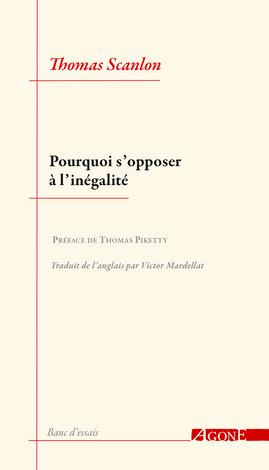
Pourquoi s'opposer à l'inégalité
Disposer d'une conception claire des raisons pour lesquelles les inégalités doivent être combattues permet de faire apparaître en quoi sont contestables les lois et les institutions qui les promeuvent, et pourquoi il peut être justifié de les modifier. L'une des thèses fortes de ce livre : toutes les inégalités ne s'exposent pas aux mêmes objections, qu'il faut parvenir à distinguer pour fournir à ceux qui veulent les combattre les meilleures raisons de le faire.Sur commande en 4-6 joursCOMMANDER24,99 €


Du même éditeur
-

A Theory of Justice : Revised Edition
?A milestone in political and moral philosophy, as groundbreaking as the theories of Bentham and Kant and arguably the most important and influential piece of contemporary philosophy of the last century.? ?The GuardianThe principles of justice that Rawls set forth in this book are those that free and rational people would accept in an ?original position? of equality. In this hypothetical situation, which corresponds to the state of nature in social contract theory, no one knows their place in society; their class or social status; their fortune in the distribution of natural assets and abilities?their intelligence, strength, and the like?or even their conception of the good. Deliberating behind this ?veil of ignorance,? people naturally determine their proper rights and duties. Thus, as Rawls writes, ?each person possesses an inviolability founded on justice that even the welfare of society as a whole cannot override....Incorporating the ideas of Rousseau, Kant, Emerson, and Lincoln, Rawls?s theory is as powerful today as it was when first published in 1971. For more than half a century, A Theory of Justice has been taught and debated, celebrated and translated into more than thirty languages. This revised edition includes changes, discussed in the preface, that Rawls considered to be significant, especially to the discussions of liberty and primary social goods.Sur commande en 6-10 joursCOMMANDER53,05 € -

-
Basic Income : A Radical Proposal for a Free Society and a Sane Economy
Sur commande en 6-10 joursCOMMANDER34,00 € -
The Radical Spanish Empire : How Paperwork Politics Remade the New World
Sur commande en 6-10 joursCOMMANDER55,00 €