
The happiness Project
15,39 €
Sur commande en 6-10 jours
EAN :
9780062414854
| Date de parution | 14/12/2015 |
|---|---|
| Poids | 300g |
Plus d'informations
| EAN | 9780062414854 |
|---|---|
| Auteur | Rubin Gretchen |
| Editeur | GARDNERS |
| Date de parution | 20151214 |
| Disponibilité | Sur commande en 6-10 jours |
Pourquoi choisir Molière ?
Efficacité et rapidité Commandé avant 16h livré demain
Économique et pratique Livraison dès 3,90 €
Facile et sans frais Retrait gratuit en magasin
Du même auteur
-

Les 4 profils. L'outil indispensable pour enfin se comprendre et vivre mieux
Dans cette analyse révolutionnaire des profils de personnalité, Gretchen Rubin, auteure à succès traduite dans plus de 19 pays, vous pose une question qui peut changer votre vie personnelle et professionnelle : Comment répondez-vous aux attentes des autres et aux objectifs que vous vous fixez ? En fonction de votre réponse, vous vous inscrivez dans un des quatre profils de personnalité : Discipliné, Pointilleux, Dévoué ou Rebelle, et vous allez découvrir que cela impacte tous les aspects de votre comportement et votre rapport aux autres. Les 4 profils vous apporteront des réponses concrètes si vous vous demandez : Comment arrêter cette mauvaise habitude ? Les gens peuvent compter sur moi, mais pas l'inverse. Que puis-je y faire ? Comment aider quelqu'un à suivre mes conseils ? Comment travailler avec quelqu'un qui refuse de faire ce que je demande ? Cette connaissance de vous-même et des autres va vous aider à prendre de meilleures décisions, à mieux comprendre et communiquer avec autrui, à réduire votre stress... bref, à vivre mieux !EpuiséVOIR PRODUIT22,34 € -

Ma vie en mieux ! Parce que je le veux bien !
Vous voulez vivre mieux ? être plus heureux ? mieux ajusté à vos valeurs et à vos envies ? plus disponible pour vos proches ? Alors commencez par changer vos habitudes. 40 % de notre vie quotidienne est faite d'habitudes. Changez vos habitudes, et vous changerez de vie. C'est merveilleusement simple, n'est-ce pas ? Alors pourquoi n'y arrivons-nous pas ? Pourquoi buttons-nous tous sur ces bonnes résolutions du Nouvel An tenues moins d'une semaine ? Parce que changer d'habitudes demande avant tout de bien se connaître - et aussi une solide méthode : celle de la psychologue Gretchen Rubin, qui a prouvé ses bienfaits et a déjà aidé deux millions de personnes à changer. Car à côté des voeux pieux il y a des techniques qui fonctionnent, fondées sur les dernières découvertes scientifiques relatives à la volonté et aux prises de décision. Elles vous permettront d'améliorer votre sommeil, votre alimentation, votre vie au bureau, de vous libérer de vos écrans, de mener vos projets à terme... Bref, de réussir, même là où, avant, vous aviez échoué. Avec son style bien à elle, mêlant recherche rigoureuse et amour de la narration, Gretchen Rubin répond à toutes vos questions. Combien de temps faut-il pour modifier un automatisme ? Que faire pour tenir un engagement ? Pourquoi est-ce si difficile de pratiquer avec régularité un sport qu'on aime ? Comment aider un proche à changer d'habitude ? Ouvrez vite ce livre et laissez-vous guider par ses précieux conseils. La vie en mieux, c'est possible. Si vous le voulez bien.Sur commande en 2-4 joursCOMMANDER18,00 € -

Ma vie en mieux. 2 millions de personnes ont déjà changé !
Vous voulez vivre mieux, être plus heureux ? Vous prenez toujours de bonnes résolutions mais n'arrivez pas à vous y tenir ? Il suffit d'y aller pas à pas, de changer ses habitudes en se fixant des objectifs réalisables ! Gretchen Rubin nous offre une méthode facile et efficace qui s'appuie sur les dernières découvertes scientifiques portant sur la volonté et la prise de décision. Non seulement vous y parviendrez, mais vous améliorerez aussi votre sommeil, votre alimentation, votre vie au travail. Vous (re)découvrirez la satisfaction d'aller au bout de vos résolutions grâce au pouvoir des habitudes. La vie en mieux, c'est possible si vous le voulez bien !EpuiséVOIR PRODUIT7,60 € -
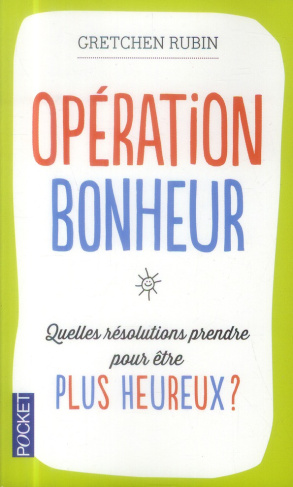
Opération bonheur
Dites "Stop" au surmenage! Il est temps de respirer. L'Opération bonheur est lancée: 12 mois pour retrouver la sérénité. Gretchen Rubin jonglait entre son mari, ses enfants, sa carrière. Epuisée, elle a décidé de réévaluer ses priorités. Voici la chronique de son itinéraire: étape par étape, elle vous livre ses astuces, ses conseils avisés et ses anecdotes amusantes pour rompre la routine, dire adieu aux frustrations et décupler votre énergie.EpuiséVOIR PRODUIT9,00 €


Du même éditeur
-

The Man in the High Castle
Revue de presse The most brilliant sci-fi mind on any planet (Rolling Stone)California's own William Blake. Visionary and prophet (Daily Telegraph)Sur commande en 6-10 joursCOMMANDER11,30 € -

The water knife
From the international bestselling author of the Hugo and Nebula award-winning The Windup Girl, comes an electrifying thriller set in a world on the edge of collapse.WATER IS POWERThe American Southwest has been decimated by drought, Nevada and Arizona skirmish over dwindling shares of the Colorado River, while California watches.When rumors of a game-changing water source surface in Phoenix, Las Vegas water knife Angel Velasquez is sent to investigate.With a wallet full of identities and a tricked-out Tesla, Angel arrows south, hunting for answers that seem to evaporate as the heat index soars and the landscape becomes more and more oppressive. There, Angel encounters Lucy Monroe, a hardened journalist who knows far more about Phoenix's water secrets than she admits, and Maria Villarosa, a young Texas migrant who dreams of escaping north to those places where water still falls from the sky.As bodies begin to pile up and bullets start flying, the three find themselves pawns in a game far bigger, more corrupt, and dirtier than any of them could have imagined. With Phoenix teetering on the verge of collapse and time running out, their only hope for survival rests in one another's hands.But when water is more valuable than gold, alliances shift like sand, and the only truth in the desert is that someone will have to bleed if anyone hopes to drink.Sur commande en 6-10 joursCOMMANDER11,25 € -

-

In Pale battalions
Extrait Chapter OneChildhood memories fit their own intricate pattern. They cannot be made to conform to the version of our past we try to impose upon them. Thus I could say that Lord and Lady Powerstock and the home they gave me at Meongate more than compensated for being an orphan, that a silver spoon easily took the place of my mother's smile. I could say it--but every recollection of my early years would deny it.Meongate must once have been the crowded, bustling house of a cheerful family, as the Hallowses must once have been that family. Every favour of nature in its setting where the Hampshire downs met the pastures of the Meon valley, every effort of man in its spacious rooms and landscaped park, had been bestowed on the home of one small child.Yet it was not enough. When I was growing up at Meongate in the early 1920s, most of its grandeur had long since departed. Many of the rooms were shut up and disused, much of the park turned over to farmland. And all the laughing, happy people I imagined filling its empty rooms and treading its neglected lawns had vanished into a past beyond my reach.I grew up with the knowledge that my parents were both dead, my father killed on the Somme, my mother carried off by pneumonia a few days after my birth. It was not kept from me. Indeed, I was constantly reminded of it, constantly confronted with the implication that I must in some way bear the blame for the shadow of grief, or of something worse, that hung over their memory. That shadow, cast by the unknown, lay at the heart of the cold, dark certainty that also grew within me: I was not wanted at Meongate, not welcomed there, not loved.It might have been different had my grandfather not been the grave, withdrawn, perpetually melancholic man that he was. I, who never knew him when he was young, cannot imagine him as anything other than the wheelchair-bound occupant of his ground-floor rooms, deprived by his own morbidity, as much as by the lingering effects of a stroke, of all warmth and fondness. When Nanny Hiles took me, as she regularly did, to kiss him goodnight, all I wanted to do was escape from the cold, fleeting touch of his flesh. When, playing on the lawn, I would look up and see him watching me from his window, all I wanted to do was run away from the mournful, questing sadness in his eyes. Later, I came to sense that he was waiting, waiting for me to be old enough to understand him, waiting in the hope that he would live to see that day.Lady Powerstock, twenty years his junior, was not my real grandmother. She was buried in the village churchyard, another ghost whom I did not know and who could do nothing to help me. I imagined her as everything her successor was not--kind, loving and generous--but it did me no good. Olivia, the woman I was required to address as Grandmama in her place, had once been beautiful and, at fifty, her looks were still with her, her figure still fine, her dress sense impeccable. That we were not related by blood explained, to my satisfaction, why she did not love me. What I could not explain was why she went so far as to hate me, but hate me she undoubtedly did. She did not trouble to disguise the fact. She let it hover, menacing and unspoken, at the edge of all our exchanges, let it grow as an awareness between us, a secret confirmation that she too was only waiting, waiting for death to remove her husband and with him any lingering restraint on her conduct towards me. There was an air of practised vice about her that was to draw men all her life, an air of voluptuous pleasure at her own depravity that made her hatred of me seem merely instinctive. Yet there was always more to it than that. She had drawn some venom from whatever part she had played in the past of that house and had reserved it for me.My only friend in those days, my only guide through Meongate's hidden perils, was Fergus, the taciturn and undemonstrative major-domo, "shifty" as Olivia described him and certainly not as deferential as he should have been, but none the less my sole confidant. Sally, the sullen maid, and humourless Nanny Hiles both went in awe of Olivia, but Fergus treated her with an assurance, bordering on disrespect, that made him my immediate ally. A cautious, solitary, pessimistic man who had expected little from life and consequently been spared many disappointments, perhaps he took pity on a lonely child whose plight he understood better than she did herself. He would take me on covert expeditions through the grounds, or down to the wooded reach of the Meon where he fished of a quiet afternoon, or into Droxford in the trap, when he would buy me a twist of sherbet and leave me sitting on the wall outside Wilsmer's saddlery whilst he went in to haggle over a new bridle for the pony. For such brief moments as those, kicking my heels on Mr. Wilsmer's wall and eating my sherbet in the sunshine, I was happy. But such moments did not last.It was Fergus who first showed me my father's name, recorded with the other war dead of the village, on a plaque at the church. Their Name Liveth for Evermore, the inscription said, and his name--Captain the Honourable John Hallows--is all that did live for me. I would stare at it for what seemed like hours trying to conjure up the real living and breathing father that he had never been to me, seeing only those stiff, expressionless, uniformed figures preserved by photographs in back copies of the Illustrated London News, glimpsing no part of his true self beyond the neatly carved letters of his name.As for my mother, of her there was no record at all, no grave, no memorial of any kind. Fergus, when I questioned him, prevaricated. My mother's grave, if she had one, was far away--and he did not know where. There were, I was to understand, limits to what even he could tell me. Whether he suggested it or not I cannot remember, but, for some reason, I decided to ask Olivia. I cannot recall how old I was when it happened, but I had followed her into the library, where she often went to look at a painting that hung there."Where is my mother's grave?" I said bluntly, partly intending the question to be a challenge. All hatred is, in time, reciprocated and I had come to hate Olivia as much as she hated me; I did not then appreciate how dangerous an enemy she could be.She did not answer in words. She turned aside from that great, high, dark painting and hit me so hard across the face that I nearly fell over. I stood there, clutching the reddening bruise, too shocked by the pain of it to cry, and she stooped over me, her eyes blazing. "If you ever ask that question again," she said, "if you ever mention your mother again, I'll make you suffer."The mystery of my mother thenceforth became the grand and secret obsession of my childhood. My father's death, after all, had a comforting simplicity about it. Every November there was an Armistice Parade in the village to commemorate the sacrifice of Captain the Honourable John Hallows and the many others like him. Though not permitted to join the Brownie troop that took part in the parade, I was allowed to go and watch and could imagine myself marching with all the little girls who, like me, had lost their father. But, at the end of the parade, they went home to their mothers; I could not even remember mine.Sometimes, though, I thought I could remember her. It was impossible, of course, if what I had been told of her was true, but Olivia had succeeded in making me doubt everything I had not personally experienced, and there was one dim, early memory, seemingly at the very dawn of my recollection, to sustain what I so wanted to believe.I was standing on the platform at Droxford railway station. It was a hot summer's day: I could feel the heat of the gravel seeping up through my shoes. A train was standing at the platform, great billows of smoke rising as the engine gathered steam. The man standing beside me, who had been holding my hand, stooped and lifted me up, cradling me in his arms to watch the train pull out. He was stout and white-haired. I remember the rumble of his voice and the brim of his straw hat touching my head as he raised his free hand to wave. And I was waving too, at a woman aboard the train who had wound down the window and was leaning out, waving also and smiling and crying as she did so. She was dressed in blue and held a white handkerchief in her right hand. And the train carried her away. And then I cried too and the stout old man hugged me, the brass buttons on his coat cold against my face.I recounted the memory to Fergus one day, when we were returning from a mushrooming expedition. When I had finished, I asked him who he thought the old man was."Sounds like old Mr. Gladwin," he replied. "The first Lady Powerstock's father. He lived here . . . till she sent him away." By she Fergus always meant Olivia."Why did she do that?""She'd have had her reasons, I don't doubt.""When did he go?""The summer of 1920, when you were three. Back to Yorkshire, so they say. A proper caution, was Mr. Gladwin.""Who was the pretty lady, Fergus?""That I don't know.""Was she . . . my mother?"He pulled up and looked down at me with a frown. "That she was not," he said with deliberate slowness. "Your mother passed away a few days after she had you. You know that. No amount of wanting is going to make you remember her.""Then . . . who was the pretty lady?"His frown became less kindly. "I told you: I don't know. That Mr. Gladwin, he was a close one. Now, look to that napkin or you'll pitch your breakfast into the lane--and mine with it."If the pretty lady wasn't my mother, who was she? What was old Mr. Gladwin, my great-grandfather, to her? There were no answers within my reach, just the secret hope I went on harbouring that maybe my mother wasn't really dead at all, just ....Sur commande en 6-10 joursCOMMANDER12,50 €