ARCHITECTURE ET HUMAN RIGHTS - A BOOK ON URBAN THINKING
In an ideal world this book would not need to be written... The striking inequalities in living conditions in today's cities and metropolises reveal one of the greatest humanitarian challenges of our time. Ascertaining that architecture can never be neutral, those involved in this field of design are called on to recognize and to act on their social responsibility - not only - in the city-making process. Their work should therefore not be limited to creating living space as questions of the distribution of resources, so closely interwoven with architectural design, must also play a role. This book is conceived as a collage of narratives, photos and critical conversations on the link between human rights and architecture. In its hybrid form, all of the people involved at every level are given a voice and encouraged to question whether the architecture of the towns, streets and buildings for which they are responsible contributes to the protection and advancement of human rights. The ultimate goal is that the consideration of human rights become an architect's powerful tool for better and fairer urban planning. With a contribution by Saskia Sassen Based on the inhabitants of Addis Abeba, Ethiopia Thematizing different aspects of architecture in the context of human rights Important focus on architect's responsibility
| Date de parution | 08/02/2018 |
|---|---|
| Poids | 614g |
| Largeur | 158mm |
| EAN | 9783721209808 |
|---|---|
| Titre | ARCHITECTURE ET HUMAN RIGHTS - A BOOK ON URBAN THINKING |
| Auteur | KASSAHUN/DE LUIGI |
| Editeur | NIGGLI |
| Largeur | 158 |
| Poids | 614 |
| Date de parution | 20180208 |
| Nombre de pages | 0,00 € |
| Disponibilité | Sur commande en 2-4 jours |
Pourquoi choisir Molière ?
Du même éditeur
-
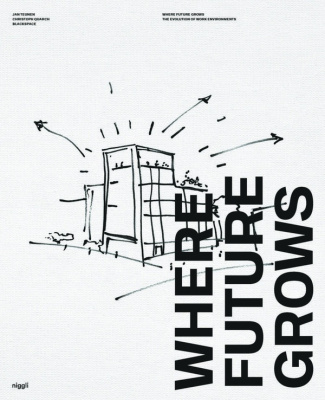
WHERE FUTURE GROWS - CHANGING WORKING ENVIRONMENTS
Même si de plus en plus de tâches sont prises en charge par des machines et l'intelligence artificielle, l'homme reste l'élément central du monde du travail. Pour les travailleurs du savoir en particulier, le choix du lieu de travail dépendra de plus en plus de l'endroit où ils pourront mettre à profit leurs compétences de manière optimale, trouver un sens à leur activité et vivre leur environnement de travail de manière positive. Où l'avenir grandit se penche sur ce changement et sur la question de savoir comment les environnements de travail devraient être conçus à l'avenir. Un environnement qui tient compte à la fois des aspects fonctionnels et esthétiques fera l'objet d'une attention accrue à l'avenir. Les auteurs proposent une vision d'un monde du travail qui comble le fossé entre la vie et le travail et qui permet de développer au mieux le potentiel humain. Après une analyse détaillée des futurs environnements de travail et une série d'interviews, des exemples de bonnes pratiques montrent comment les lieux de travail devraient être conçus pour favoriser le développement tant professionnel que personnel.Sur commande en 2-4 joursCOMMANDER49,90 € -

-
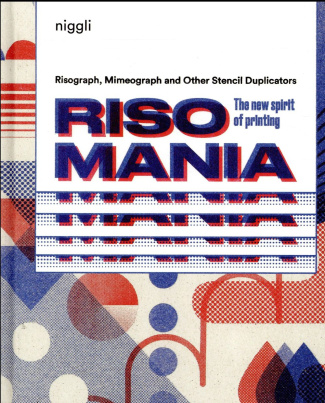
RISOMANIA - THE NEW SPIRIT OF PRINTING. RISOGRAPHE, MIMEOGRAPH AND OTHER STENCIL DUPLICATORS.
La risographie, nom qui renvoie à l'entreprise japonaise Riso, est un procédé de duplication utilisant un pochoir qui assura la transition entre l'impression mécanique et les techniques modernes d'impression numérique. Bien que la machine utilisée ressemble à un duplicateur classique, le transfert des couleurs sur le papier se fait sans produit chimique ni source de chaleur, de sorte que la risographie peut être considérée comme un procédé écologique. Cette technique d'impression analogique connaît une véritable renaissance depuis que les graphistes et d'autres artistes s'y intéressent. L'ouvrage Risomania débute par une introduction détaillée consacrée au passé, au présent et à l'avenir de la risographie. Viennent ensuite un texte consacré aux personnes à l'origine du regain d'intérêt pour la cette technique, puis un chapitre intitulé Risoworld qui présente les principaux acteurs du mouvement au niveau mondial (éditeurs, imprimeurs et graphistes). L'ouvrage inclut évidemment la reproduction de très nombreuses risographies (cartes postales, magazines, posters, prospectus et imprimés expérimentaux) dont les couleurs, la texture inimitable et surtout l'authenticité " impeccablement imparfaite " soulignent la valeur particulière de cette technique.Sur commande en 2-4 joursCOMMANDER39,90 € -
WHO THE HELL IS MULLER-BROCKMANN? - CONVERSATIONS ABOUT THE SWISS STYLE
Sur commande en 2-4 joursCOMMANDER17,90 €