

KLIMONAS
Klimonas An Early Pre-Pottery Neolithic Village in Cyprus Un village néolithique pré-céramique ancien à Chypre Klimonas is the oldest Mediterranean island village. Occupied ca. 8 800 cal BC, it postpones by several centuries the Neolithic presence in Cyprus, at that time located more than 80 km offshore. The village extended over more than 5, 500 mC, facing the sea, 2 km from the famous pre-pottery site of Shillourokambos and near rich flint outcrops. Excavations (2009-2016) revealed that it was composed of circular or oval earthen buildings 3-6 m in diameter, notched into the slope, modestly fitted out and organised around a semi-buried 10 m communal building. The construction techniques, the abundance of either knapped or polished stone material, together with ornaments, symbolic objects, and plants and animal remains, as well as the 52 radiometric dates, point to the end of the Levantine Pre-Pottery Neolithic A (PPNA). The presence of a communal building, rebuilt numerous times over the course of several decades, also points to the same conclusion. The villagers gathered seeds and fruits and cultivated wild starch and einkorn, recently imported from the continent. They primarily hunted small endemic wild boar, the only large mammal species attested on the island at that time and, secondarily, birds. They did not eat fish or marine shellfish. Domestic dogs, mice and cats brought from the continent also lived in the village. The remains of this cultivator-hunter community testify to the early extension of the Near Eastern Neolithic and to unsuspected seafaring skills, substantially improving our knowledge of the Neolithic transition in the Mediterranean. Klimonas est le plus ancien village insulaire de Méditerranée. Occupé autour de 8 800 av. n. è. , il recule de plusieurs siècles le début de la présence néolithique à Chypre, à cette époque déjà située à plus de 80 km du continent. Le village s'étendait sur 5 500 mC au moins, face à la mer, à 2 km du célèbre site pré-céramique de Shillourokambos et au contact de riches sources de silex. Les fouilles (2009-2016) ont montré qu'il était composé d'édifices de terre crue (bauge) de 3 à 6 m de diamètre, circulaires ou ovalaires, encochés dans la pente, modestement aménagés, organisés autour d'un bâtiment communautaire semi-enterré de 10 m de diamètre. Les techniques de construction, l'abondant mobilier de pierre taillée, le macro-outillage, les parures et objets symboliques, les restes de plantes et les ossements animaux, tout comme les 52 datations radiométriques renvoient à la fin du Néolithique pré-céramique A levantin (PPNA). La présence d'un bâtiment communautaire, plusieurs fois reconstruit en quelques décennies, le confirme. Les villageois pratiquaient la cueillette et cultivaient l'amidonnier et l'engrain sauvages, récemment importés du continent. Ils chassaient un petit sanglier endémique, seule espèce de grand mammifère attestée sur l'île à cette époque, et, secondairement, des oiseaux. Poissons et coquillages marins n'étaient pas consommés. Des chiens domestiques, des souris et des chats de souche continentale vivaient dans le village. Les vestiges de cette communauté d'agriculteurs-chasseurs témoignent de l'extension précoce du premier Néolithique du Proche-Orient et d'une maîtrise insoupçonnée de la navigation. Il enrichit de manière substantielle nos connaissances sur la transition néolithique en Méditerranée.
| Nombre de pages | 300 |
|---|---|
| Date de parution | 13/07/2023 |
| Poids | 1 938g |
| Largeur | 230mm |
| EAN | 9782271139535 |
|---|---|
| Titre | KLIMONAS |
| Auteur | GUILAINE/BRIOIS |
| Editeur | CNRS EDITIONS |
| Largeur | 230 |
| Poids | 1938 |
| Date de parution | 20230713 |
| Nombre de pages | 300,00 € |
| Disponibilité | Sur commande en 2-4 jours |
Pourquoi choisir Molière ?
Du même auteur
-
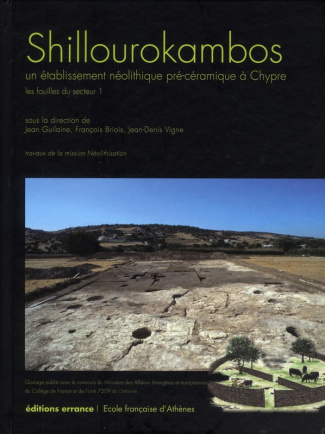
Shillourokambos. Un établissement néolithique pré-céramique à Chypre, les fouilles du secteur 1
Shillourokambos est l'un des plus anciens sites néolithiques de l'île de Chypre. Il a été fondé vers 8500 avant notre ère et occupé peu ou prou sans interruption jusqu'aux alentours de - 7000. Consacré au secteur 1 de la localité, cet ouvrage en décrit les divers aménagements, pour la plupart attribuables aux plus anciennes phases d'occupation, ainsi que les matériaux archéologiques correspondants. Ce site-clé apporte une contribution essentielle à la connaissance des processus de sédentarisation et de domestication au Proche-Orient et dans le bassin oriental de la Méditerranée. Sur cet établissement se trouvent un étonnant système de puits néolithiques ainsi que les plus vieux témoins anthropologiques de l'île. Il offre par ailleurs l'un des premiers scénarios de la naissance de l'élevage des animaux sur une durée de 1 500 ans.Sur commande en 2-4 joursCOMMANDER49,70 € -
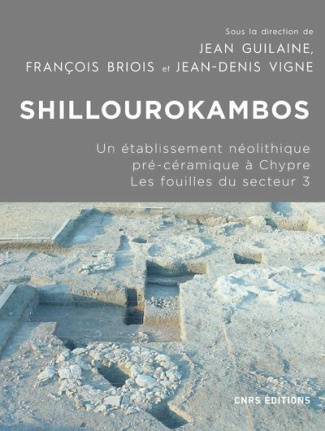
Shillourokambos. Un établissement néolithique pré-céramique à Chypre - Les fouilles du secteur 3
SHILLOUROKAMBOSLes fouilles du secteur 3The excavations in sector 3 Après être apparue sur le continent asiatique à partir du Xe millénaire av. n.-è., la " néolithisation " s'est largement propagée. Le site de Shillourokambos à Chypre fait référence pour comprendre les tout débuts de ce processus de diffusion et la première extension des caractères néolithiques en Méditerranée. Fondé vers le milieu du IXe millénaire av. n.-è., il a été occupé jusqu'à la fin du VIIIe, soit sur une durée d'environ 1500 ans, couvrant tout le Néolithique pré-céramique B du Levant (PPNB).Les zones fouillées entre 1991 et 2004 par la mission " Néolithisation ", avec l'appui de l'École Française d'Athènes, se présentent en deux parties : l'une, au Nord, dénommée " secteur 1 ", l'autre, au Sud, dite" secteur 3 ". La seconde a été fouillée essentiellement entre 1999 et 2003. C'est cette aire qui est aujourd'hui publiée, là où les vestiges des étapes moyenne et récente de l'occupation étaient les mieux attestés et pouvaient se prêter à une certaine analyse spatiale. Elle permet une étude détaillée des périodes évoluées du site, entre 7600 et 7000 av. n.-è. et une approche de ces moments essentiels dans la formation de la culture qui s'épanouira au VIIe millénaire à Khirokitia. Outre l'introduction de certaines espèces animales (le daim, le mouton et probablement le renard), l'émergence massive de l'élevage ovin et bovin et le développement de l'agriculture au tournant des IXe-VIIIe millénaires, on y repère les mutations techniques dans la construction, les outillages lithiques, osseux ou les productions symboliques. C'est dans ce secteur 3 que fut découverte la plus ancienne preuve connue de la domestication du chat. D'importantes informations concernent les perspectives économiques perçues à partir de l'évolution des faunes et des artéfacts. Est aussi abordé l'état sanitaire des populations de l'établissement.Après la publication du secteur 1 en 2011, la communauté archéologique dispose désormais de l'ensemble des données documentaires issues des fouilles de la mission " Néolithisation " à Shillourokambos. After it appeared on the Asian continent from the 10th millennium BC onwards, Neolithisation spread widely. The site of Shillourokambos in Cyprus is a reference to understand the very beginnings of this diffusion process and the first extension of the Neolithic wave in the Mediterranean. Founded around the middle of the 9th millennium BC, it was occupied until the end of the 8th millennium, i.e. over a period of about 1,500 years, covering the entire Pre-Pottery Neolithic B of the Levant (PPNB).The areas excavated between 1991 and 2004 by the "Neolithisation' project, with the support of the French School at Athens, are presented in two parts: one, in the north, "sector 1', the other, in the south, "sector 3'. The latter was excavated mainly between 1999 and 2003, and it is this area which is now being published. Here, the remains of the middle and recent phases of occupation were best attested and could lend themselves to spatial analysis, enabling a detailed study of the more recent periods of the site, between 7600 and7000 BC, and of the essential moments in the formation of the culture that flourished in the 7th millennium in Khirokitia. In addition to the introduction of certain animal species (fallow deer, sheep and probably foxes), the massive emergence of sheep and cattle breeding and the development of agriculture at the turn of the 9th?8th millennia, we can also see technical changes in construction, lithic and bone tools and symbolic productions. It is in sector 3 that the earliest known evidence of cat domestication was discovered. Important information concerns the economic perspectives perceived from the evolution of the fauna and artefacts. The health status of the populations in the establishment is also documented and discussed.After the publication of sector 1 in 2011, the archaeological community now has all the documentary data from the excavations of the "Neolithisation' project in Shillourokambos. Ci-dessus : Figurine de picrolite représentant une souris (longueur = 4,3 cm). En couverture : Vue générale de la fouille du secteur 3 en 2001.Sur commande en 2-4 joursCOMMANDER49,00 € -
La mer partagée. La Méditerranée avant l'écriture 7000-2000 avant Jésus-Christ
Consacré à la Méditerranée entre 7000 et 2000 avant notre ère, ce livre propose une synthèse de nos connaissances sur la préhistoire récente de ce vaste espace culturel. Avant les brillantes civilisations qui se succéderont (égyptienne, mésopotamienne, crétoise, hittite, mycénienne, étrusque, phénicienne et enfin gréco-romaine), la Méditerranée est déjà le théâtre de profondes transformations et d'accomplissements considérables: développement de l'agriculture et de l'élevage, passage des communautés "égalitaires" à des sociétés hiérarchisées, transition des villages aux cités, et, parfois, apparition des premiers Etats... Telles sont les principales innovations à l'?uvre dans cet espace. Des inventions et des réalisations techniques diverses jalonnent ces mutations: terre cuite, métallurgie, véhicules à roues, grande architecture de pierre des bâtiments de prestige. Qu'il étudie les paysans à la conquête de la mer, les sociétés et leurs rythmes collectifs, ou encore le monde des hypogées et les écoles mégalithiques, l'auteur allie à une érudition impressionnante un art du récit qui fait revivre pour nous le berceau des civilisations.EpuiséVOIR PRODUIT17,15 € -
Pourquoi j'ai construit une maison carrée
A travers cette fiction, j'ai souhaité écrire une comédie autour de ce grand tournant de l'histoire de l'humanité que l'on nomme " Néolithique ". Au Proche-Orient, il y a 10000 ans, l'homme abandonne son style de vie multimillénaire fondé sur la chasse, la pêche et la cueillette pour produire désormais son alimentation, végétale et carnée, par le recours à l'agriculture et à l'élevage. De prédateur, le voilà dès lors métamorphosé en villageois, en cultivateur et en pasteur. Les gains de cette nouvelle vie sont indiscutables, mais surgissent alors des difficultés inattendues: disettes, maladies nouvelles, invasions de rongeurs, problèmes de cohabitation et de relations sociales, etc. C'est à travers le récit de vie d'un adolescent devenu, au fil du temps, un homme, Cando, plein d'espoir dans les nouveautés de l'époque, que se tisse le scénario. dans le conflit perpétuel entre tradition et progrès.EpuiséVOIR PRODUIT23,20 €


Du même éditeur
-

LE SACRE DU MUSICIEN. La référence à l'Antiquité chez Beethoven
Beethoven se pensait aède révélateur d'un' monde meilleur. Cette fonction sacrée de guide de l'humanité vers le bonheur a conféré à ses ?uvres une organisation musicale particulière. Celle-ci répond aux catégories éthiques et esthétiques du temps, notamment l'initiation par la Bildung, et à celles élaborées, à la fin du XVIIIe siècle, sur le modèle antique : la simplicité et la grandeur, la jeunesse et la liberté, l'éducation esthétique et le bouleversement émotionnel, la République. La présente étude de la culture antique de Beethoven, qui n'avait pas encore été prise en considération de manière systématique, permet de mettre en évidence un aspect essentiel, mais le plus souvent passé sous silence, du compositeur : au-delà de l'identification au héros ou même au grand homme (celui qui infléchit l'Histoire dans un sens nouveau), Beethoven a cherché par sa musique et ses différentes ?uvres, à offrir à ses concitoyens l'équivalent des "exercices spirituels" proposés par la philosophie antique.EpuiséVOIR PRODUIT24,50 € -
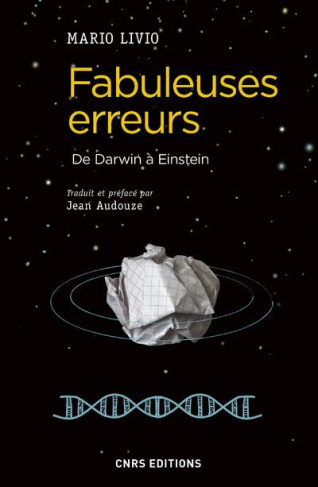
Fabuleuses erreurs. De Darwin à Einstein
Charles Darwin, Lord William Kelvin, Linus Pauling, Fred Hoyle, Albert Einstein : cinq scientifiques hors du commun qui ont accompli des découvertes scientifiques considérables. Mais également cinq hommes qui se sont aussi, souvent en même temps, parfois lourdement, fourvoyés sur certains sujets. Charles Darwin n'a pas bien évalué les effets de " dilution " dans la transmission des caractères génétiques ; Lord Kelvin a largement sous-évalué l'âge de la Terre ; Linus Pauling s'est fait " coiffer au poteau " dans la découverte de la structure de l'ADN par Jim Watson et Francis Crick ; Fred Hoyle fut un partisan irréductible de la théorie de l'Univers stationnaire ; enfin, Einstein créa une constante cosmologique pour une mauvaise raison. Il ne s'agit pas d'énumérer les erreurs de ces grands hommes, mais bien plutôt de constater et d'analyser les conséquences bénéfiques de ces errements : la théorie de l'évolution de Darwin fonde la génétique moderne ; Kelvin enseigne à ses successeurs comment utiliser la thermodynamique en astronomie et en géologie ; Linus Pauling introduit superbement les considérations chimiques en biologie ; Fred Hoyle démontre les bienfaits et les limites des approches scientifiques qui se démarquent des théories " à la mode " et, curieusement, au lieu d'être une erreur, l'introduction de la constante cosmologique par Einstein s'avère extraordinairement bénéfique. C'est à une véritable enquête policière, qui dévoile de nombreux aspects jusque-là ignorés de l'histoire des sciences, que s'est consacré l'astrophysicien Mario Livio, qui expose ici de façon originale et vivante les chemins parfois tortueux empruntés par la recherche scientifique.Sur commande en 2-4 joursCOMMANDER23,00 € -

Etonnant vivant. Découvertes et promesses du XXIe siècle
Qu'est-ce que la vie ? Quelles sont ses origines ? Quelle est la frontière entre le "soi" et le "non-soi" ? Quel est le propre de l'homme ? Ce livre invite à un voyage au coeur du vivant qui plonge le lecteur depuis les toutes premières formes de vie sur terre jusqu'au sein de la complexité du vivant. Il donne à voir les applications étonnantes qui en découlent dans les domaines biotechnologiques et médicaux. Le lecteur parcourra ainsi l'immensité insoupçonnée de la biodiversité et les capacités extraordinaires des êtres vivants à s'adapter aux conditions les plus extrêmes. Il découvrira les liens de parenté entre organismes qui définissent l'arbre de la vie, les interactions entre les composants de tout être vivant, l'impact de l'environnement sur l'évolution et le fonctionnement des organismes, et les promesses d'innovations contenues dans ces révolutions scientifiques et technologiques Ce livre est le témoignage passionné d'une communauté de chercheurs en sciences de la vie qui espèrent donner le goût de la nature et susciter la curiosité vis-à-vis des terrains inconnus et immenses qu'il reste à explorer. C'est au prix d'une recherche qui requiert du temps, des prises de risque, de l'imagination, de la créativité et de la liberté que les grands tournants des sciences de la vie du XXIe siècle ont pris corps. Et c'est à ce prix que ces sciences continueront à être porteuses d'avenir et de progrès. Ce livre est le témoignage passionné d'une centaine de scientifiques qui ont contribué à sa rédaction pour partager leur émerveillement face aux découvertes et aux promesses portées par les sciences du vivant de ce début de siècle.Sur commande en 2-4 joursCOMMANDER22,00 € -

La question d'Orient
En bref A l'heure où les islams se déchirent, et où les frontières d'Orient volent en éclat, une plongée dans l'histoire de la Question d'Orient. Le livre Depuis le XVIIIe siècle et jusqu'à aujourd'hui, la zone qui s'étend des Balkans à l'Afghanistan cristallise des tensions aussi bien internationales que propres à l'"Orient". Ce sont ces tensions que Jacques Frémeaux analyse dans cette synthèse innovante, en les replaçant dans le temps long. De la volonté de contrôle de la route des Indes à la convoitise des hydrocarbures qu'elle recèle, cette région n'a en effet cessé de faire l'objet d'affrontements entre les grandes puissances. Ce vaste espace a ainsi constitué, depuis l'entrée des flottes de la tsarine Catherine II en Méditerranée (1770), un champ disputé par la Russie et l'Angleterre, avant de se retrouver, après 1945, au cour du conflit opposant la Russie et les Etats-Unis. Mais, d'ouest en est, ce sont surtout des peuples qui se succèdent, qui se cherchent et se déchirent entre les séductions de la modernité et le refus que lui oppose la tradition. L'"Orient", qui s'affirme toujours plus comme exclusivement musulman, devient alors un objet de fascination et de peur pour un "Occident" dominateur et manipulateur. Après le temps des empires (ottoman, persan et moghol des Indes) est venu celui des Etats-nations, souvent nés dans la douleur. Mais aucun changement n'a mis fin au "grand jeu" géopolitique, jalonné d'épisodes majeurs, de l'occupation de l'Egypte par Bonaparte à la dernière guerre du Golfe, et dont de nouveaux chapitres s'écrivent sous nos yeux. Auteur Jacques Frémeaux, professeur à l'université Paris-Sorbonne (Paris-IV) est membre de l'Institut universitaire de France et de l'Académie des Sciences d'Outre-Mer. Il a notamment publié, parmi une vingtaine de titres, De quoi fut fait l'Empire. Les guerres coloniales au XIXe siècle (CNRS Editions, coll. Biblis, 2014) et La conquête de l'Algérie (2016). Arguments - Programme de l'agrégation en histoire contemporaine. - Clés pour décrypter les crises du Moyen Orient.EpuiséVOIR PRODUIT12,00 €


