

MIG-15, MIG-17 (GB)
It was in 1950 at the start of the Korean War that the West discovered the MiG-15, the first jet-propelled fighter mass-produced by the Soviet Union. This fast, powerfully armed little machine, especially its improved version, the MiG-15bis, quickly turned out to be a formidable adversary for the United Nations forces since it could outdo all the fighters that they were able to put up into the air, a situation which lasted until the more developed variants of the famous F-86 Sabre arrived and wrested air supremacy back for the United States. In ail, more than 13 000 "Fagots" - the official NATO code-name - were built, of which 3 440 were MiG-15UTI "Midget" two-seaters. The fighter was also licence-built in large numbers in Czechoslovakia, Poland and China. The "Fagot" had barely entered service before MiG designed its successor, the MiG-17 "Fresco", which performed better and had different wings and of which more than 11 000 examples were built up tilt 1958, including several hundred in China and Czechoslovakia. Although the MiG-17 was withdrawn f rom service at the end of the sixties, it was very successful abroad, the "Fresco" being the most exported Soviet fighter until the arrivai of its indirect successor the MiG-21.
| Date de parution | 10/07/2014 |
|---|---|
| Poids | 501g |
| EAN | 9782352503309 |
|---|---|
| Titre | MIG-15, MIG-17 (GB) |
| Auteur | GERARD PALOQUE |
| Editeur | HISTOIRE COLLEC |
| Largeur | 0 |
| Poids | 501 |
| Date de parution | 20140710 |
| Nombre de pages | 0,00 € |
| Disponibilité | Epuisé |
Pourquoi choisir Molière ?
Du même auteur
-
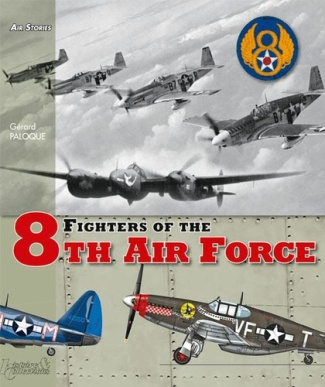
Fighters of the 8th air force
Ce ouvrage est consacré à tous les groupes de chasse de la 8th Air Force, basés en Grande-Bretagne de 1943 à 1945 et passe en revue leurs appareils : Spitfire, P-38, P-47 et P-51 à l'aide de nombreux profils en couleurs, en détaillant particulièrement les insignes et marquages spécifiques. Un outil précieux pour tous les maquettistes avions.EpuiséVOIR PRODUIT24,95 € -

DOUGLAS A4 SKYHAWK 1955-2015 (GB)
Conçu à l'origine pour remplacer le célèbre Skyraider, l'A-4 Skyhawk connut une remarquable carrière pendant près d'un demi-siècle. C'est d'abord l'US Navy et l'US Marine Corps qui employèrent intensivement cet avion, les nombreux squadrons les mettant en oeuvre notamment pendant la guerre du Vietnam avant de les transformer en "agresseurs" au sein des unités d'entraînement, dont le célèbre "Top Gun", rôle qu'ils tinrent jusqu'au début du présent siècle. Au total, ce sont près de 3000 Skyhawk qui furent fabriqués jusqu'en 1979 et le succès de cet appareil à voilure delta et aux dimensions réduites dépassa les seules frontières des Etats Unis puisque sept nations l'utilisèrent de par le monde. Parmi elles figurent Israël, dont les A-4 firent leurs débuts lors de la guerre du Kippour, en 1973 et , plus récemment, l'Argentine, dont les Skyhawk remportèrent plusieurs succès contre les forces britanniques pendant la guerre des Malouines, en 1982.EpuiséVOIR PRODUIT19,95 € -
NORTHROP F-5 (GB)
Although it was originally intended to provide the USAF with a lightweight fighter, in the end the Northrop F-5 had rather a marginal career in the United States, which used it mainly for training pilots in aerial combat. On the other hand it was a real success in the export market, with more than twenty countries around the world choosing this little effective twin-engined fighter which above all was cheap, particularly when it was partly subsidized by the United States. Its success continued with the improved version, the Tiger II, so much so that in all more than 2 600 examples of all versions of the F-5 came of the production fines with a few of them stil! flying nowadays in some air forces, thanks to the various update programmes which have permitted air forces to envisage prolonging their use until 2015-20.EpuiséVOIR PRODUIT19,95 € -
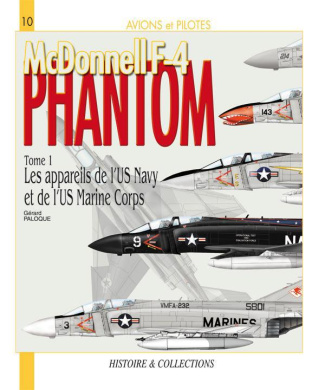
McDonnell F-4 Phantom II. Tome 1, Les appareils de l'US Navy et de l'USMC
Sur commande en 4-6 joursCOMMANDER16,50 €



Du même éditeur
-
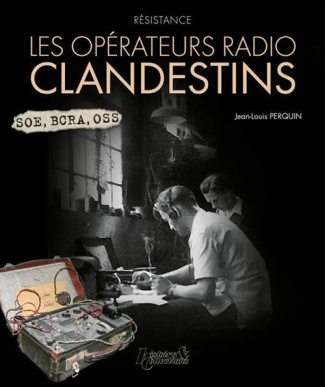
Résistance. Les opérateurs radios clandestins
Attendu, tant par les passionnés de la Résistance que par les radioamateurs, cet ouvrage abondamment illustré (300 photos dont 70 en couleur) présente de manière exhaustive les véritables Croisés de la France Libre que furent les opérateurs radio clandestins alliés parachutés en France occupée. Objet dune lutte impitoyable de la part des Allemands, les opérateurs radio avaient une espérance de vie de six mois Pour la première fois, la formation reçue en Angleterre est présentée en détail et cinq histoires vécues décrivent le quotidien de ces héros. La plupart des matériels radio, dont certains très rares, sont présentés pour la première fois en photo couleur.Sur commande en 4-6 joursCOMMANDER24,95 € -
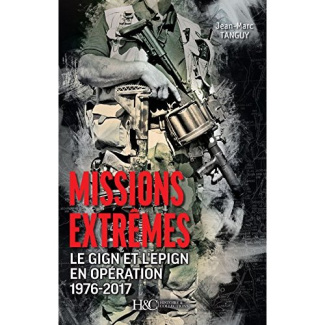
Missions extrêmes. Le GIGN et l'EPIGN en opération, 1976-2017
Février 1976, la gendarmerie se déploie pour libérer des otages à Djibouti avec le Groupe d'Intervention de la Gendarmerie Nationale (GIGN) créé par le lieutenant Christian Prouteau. Son unité soeur, l'Escadron Parachutiste d'Intervention de la Gendarmerie Nationale (EPIGN), développe ensuite une compétence de protection de diplomates en zone de guerre. En 2007, GIGN et EPIGN sont fondus dans un seul et unique GIGN de 400 hommes et femmes, dont le niveau d'emploi à l'étranger s'est encore densifié. Ce livre inédit éclaire la face la moins éclairée du GIGN, c'est-à-dire celle des missions menées à l'étranger. Ces dernières sont pourtant tout aussi risquées que celles réalisées en France du fait de l'isolement des gendarmes en zone de guerre et sont surtout bien plus nombreuses. Protection de diplomates en zone de guerre, traque de criminels de guerre dans les Balkans ou de mercenaires aux Comores, libération d'otages à Djibouti et en océan Indien, poursuite de djihadistes en Afghanistan... le GIGN et l'EPIGN ont participé à tout cela depuis leur création, et ce, le plus souvent dans la plus grande discrétion. Jean-Marc Tanguy a rencontré plusieurs dizaines d'anciens du GIGN et de L'EPIGN depuis 1996, certains lui confiant quelques anecdotes et d'autres livrant beaucoup plus sous le couvert de l'anonymat afin que l'engagement de leurs camarades soit connu. Parmi ceux qui ont pu témoigner à visage découvert, les anciens chefs Denis Favier et Frédéric Gallois.EpuiséVOIR PRODUIT19,00 € -
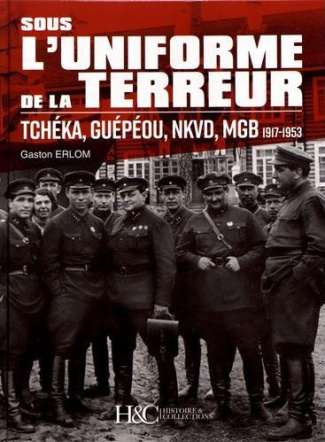
Sous l'uniforme de la terreur. Tchéka, Guépéou, NKVD, MGB (1917-1953)
Après avoir récemment publié un premier livre traitant du système répressif soviétique " Au Goulag ! La police politique sous Lénine et Staline " dans notre maison d'édition, l'auteur présente non plus le Goulag lui-même, mais la police politique soviétique, les différents services de la Sécurité d'Etat, les fameux " organes " de sinistre réputation, quelle que soit leur dénomination au fil des années de pouvoir communiste : Tchéka, Guépéou, OGPOu, NKVD, NKGB, MVD, MGB et KGB) et leurs ramifications à travers l'URSS. Mais aussi les différentes institutions placées sous leur tutelle et chargées d'élaborer la doctrine ou de mettre en oeuvre l'action de cette police politique et d'appliquer ses directives : Conférence spéciale, troïkas extra-judiciaires, etc. Les hommes qui permirent à l'appareil répressif d'atteindre son rendement maximum, et notamment ceux qui alimentèrent et firent fonctionner les prisons et les camps, sont donc au coeur de cet ouvrage. Ce livre présente aussi les uniformes, marques de grade et insignes distinctifs des fonctionnaires des " organes ". Ces insignes, très rares et longtemps cachés, sont des symboles d'appartenance portés en général sur l'uniforme ou, plus rarement, sur la tenue civile des officiers, sous-officiers et soldats des administrations centrales et locales des organes de sécurité et des troupes ou unités spéciales qui en dépendent. Le regard de l'auteur est porté principalement sur l'appareil répressif lui-même, sur les rouages du " hachoir humain " et les " tchékistes ", - un terme générique employé jusqu'à nos jours pour désigner les auteurs de cet holocauste -, organisateurs et agents d'exécution.Sur commande en 4-6 joursCOMMANDER39,95 € -
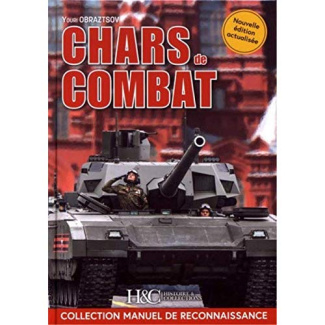
Chars de combat. Edition revue et augmentée
Le char reste l'engin le plus puissant de l'arsenal de l'armée de Terre. Un système d'arme qui englobe une formidable puissance de feu, une importante mobilité tout terrain et une protection balistique à toute épreuve. Le présent ouvrage regroupe les chars modernes du monde entier et leurs nombreuses modifications et modernisations, avec un tableau chronologique de leur mise en service. Il fait suite à la première édition sortie en 2009 et inclut tous les chars de combat développés durant la dernière décennie. Le livre définit clairement les générations des chars de combat actuellement en service. Riche de plus de 350 photographies, méthodique, il révèle l'historique de chaque char avec des dates précises et présente les capacités et les caractéristiques techniques des différents modèles. Les dimensions sont indiquées d'une manière pratique et visuelle. Réalisé par un spécialiste dans le domaine de l'identification, en collaboration avec les industriels et les forces armées, l'ouvrage fait partie d'une série de manuels de reconnaissance dans le domaine des matériels militaires. Les autres volumes de la série sont : Véhicules blindés de combat d'infanterie, Véhicules blindés de combat à roues 8x8 et Chars légers et véhicules à armement lourd. Ce manuel est un outil indispensable pour les forces armée et tous les passionnés d'engins blindés et d'histoire militaire.EpuiséVOIR PRODUIT19,95 €


