

Journal de l'Année de la Peste
En 1665, pour la quatrième fois dans le siècle, la peste ravage Londres où elle fait en un an 70 000 morts. En 1720 elle est de nouveau à Marseille. Journaliste toujours à l'affût d'une grande affaire, Defoe voit là l'occasion d'un livre qui rappelle un drame très proche et mêlera les conseils prophylactiques aux réflexions morales sur les décrets de la Providence. S'aidant peut-être de ses souvenirs mais réunissant surtout avec une rigueur toute scientifique témoignages et documents, Defoe a laissé de la peste une description digne des grands cliniciens du XIXe siècle. Description médicale et aussi description sociologique : comme il y a une société du crime, il y a une société de la peste qui a pesé très lourd dans l'histoire des mentalités.
| Nombre de pages | 378 |
|---|---|
| Date de parution | 14/04/1982 |
| Poids | 192g |
| Largeur | 107mm |
| EAN | 9782070373727 |
|---|---|
| Titre | Journal de l'Année de la Peste |
| Auteur | Defoe Daniel ; Mollaret Henri-Hubert |
| Editeur | FOLIO |
| Largeur | 107 |
| Poids | 192 |
| Date de parution | 19820414 |
| Nombre de pages | 378,00 € |
| Disponibilité | Sur commande en 2-4 jours |
Pourquoi choisir Molière ?
Du même auteur
-
Les Aventures de Robinson Crusoé
RESUME : "Les Aventures de Robinson Crusoé" est un récit captivant de survie et de résilience écrit par Daniel Defoe. Publié pour la première fois en 1719, ce roman raconte l'histoire de Robinson Crusoé, un jeune homme avide d'aventures maritimes. Après un naufrage, il se retrouve échoué sur une île déserte, où il doit apprendre à survivre seul, loin de toute civilisation. Crusoé construit un abri, cultive la terre et élève des animaux pour subvenir à ses besoins. Au fil des années, il développe des compétences de survie impressionnantes et adopte une routine qui lui permet de maintenir sa santé physique et mentale. La solitude de l'île pousse Crusoé à réfléchir sur sa vie, sa foi et son existence. Sa rencontre avec Vendredi, un indigène qu'il sauve des cannibales, marque un tournant dans son isolement. Ensemble, ils forment un lien de camaraderie et d'entraide. Le roman explore des thèmes complexes tels que la colonisation, la religion, et la nature humaine, tout en offrant une critique subtile de la société européenne de l'époque. Defoe parvient à capturer l'essence de l'esprit humain face à l'adversité, rendant ce livre intemporel et universellement apprécié. A travers les péripéties de Crusoé, le lecteur est invité à réfléchir sur la capacité de l'homme à s'adapter et à triompher des défis les plus ardus. L'AUTEUR : Daniel Defoe, né en 1660 à Londres, est un écrivain et journaliste anglais, souvent considéré comme l'un des pionniers du roman moderne. Fils d'un boucher, il reçoit une éducation qui le prépare à une carrière dans le commerce, mais il choisit finalement de se consacrer à l'écriture. Defoe écrit sur une variété de sujets, allant de la politique à l'économie, en passant par la religion. Son oeuvre la plus célèbre, "Robinson Crusoé", est souvent citée comme le premier véritable roman en langue anglaise. En plus de ses contributions littéraires, Defoe est également connu pour ses pamphlets politiques, qui lui valent parfois des ennuis avec les autorités. Son style journalistique et son sens du détail réaliste confèrent à ses écrits une authenticité qui séduit les lecteurs de son temps. Au-delà de "Robinson Crusoé", Defoe a écrit de nombreux autres romans, dont "Moll Flanders" et "Journal de l'année de la peste", qui témoignent de son talent à capturer la complexité de la condition humaine. Daniel Defoe meurt en 1731, laissant derrière lui un héritage littéraire qui continue d'influencer les écrivains contemporains.Impression à la demandeCOMMANDER19,50 € -
Aventures de Robinson Crusoé
Les ""Aventures de Robinson Crusoé"" de Daniel Defoe est un roman captivant qui raconte l'histoire extraordinaire d'un homme naufragé sur une île déserte. Publié pour la première fois en 1719, ce livre est devenu un classique de la littérature anglaise. L'histoire commence lorsque Robinson Crusoé, un jeune homme avide d'aventure, décide de quitter sa vie confortable en Angleterre pour partir en mer. Cependant, son voyage tourne rapidement au cauchemar lorsqu'il est victime d'une tempête dévastatrice et se retrouve seul survivant sur une île isolée. Le roman relate les efforts incroyables de Robinson pour survivre dans cet environnement hostile. Il apprend à chasser, à pêcher et à cultiver ses propres aliments. Il construit également un abri et fabrique des outils à partir des ressources limitées de l'île. Au fil des années, il développe des compétences et une résilience remarquables, devenant ainsi un véritable Robinson Crusoé. Pendant son séjour sur l'île, Robinson fait également la rencontre d'un indigène qu'il nomme Vendredi. Ensemble, ils forment une amitié profonde et apprennent à se comprendre malgré leurs différences culturelles. Les ""Aventures de Robinson Crusoé"" est bien plus qu'un simple récit d'aventures. C'est une réflexion sur la solitude, la survie et la capacité de l'homme à s'adapter à des situations extrêmes. Le roman explore également des thèmes tels que la religion, la morale et la nature humaine. Avec son style d'écriture captivant et son personnage principal inoubliable, ""Les Aventures de Robinson Crusoé"" est un livre qui continue de fasciner les lecteurs du monde entier depuis plus de trois siècles. C'est un récit intemporel qui nous rappelle la force de la volonté humaine et la capacité de l'homme à surmonter les obstacles les plus difficiles. Extrait : ""En peu de temps je commençai à lui parler et à lui apprendre à me parler. D'abord je lui fis savoir que son nom serait Vendredi ; c'était le jour où je lui avais sauvé la vie, et je l'appelai ainsi en mémoire de ce jour."""Impression à la demandeCOMMANDER16,99 € -
THE FORTUNES AND MISFORTUNES OF THE FAMOUS MOLL FLANDERS - COMPLEMENTED WITH THE BIOGRAPHY OF THE AU
The Fortunes and Misfortunes of the Famous Moll Flanders tells the story of the fall and eventual redemption of a lone woman in 17th-century England. It purports to be the true account of the life of the eponymous Moll, detailing her exploits from birth until old age. The titular heroine appears as a whore, bigamist, and thief, lives in The Mint, commits adultery and incest, and yet manages to retain the reader's sympathy.Impression à la demandeCOMMANDER19,95 € -
ROBINSON CRUSOE
Extrait I was born in the Year 1632, in the City of York, of a good Family, tho not of that Country, my Father being a Foreigner of Bremen, who settled first at Hull: He got a good Estate by Merchandise, and leaving off his Trade, lived afterward at York, from whence he had married my Mother, whose Relations were named Robinson, a very good Family in that Country, and from whom I was called Robinson Kreutznaer; but by the usual Corruption of Words in England, we are now called, nay we call our selves, and write our Name Crusoe, and so my Companions always call’d me.I had two elder Brothers, one of which was Lieutenant Collonel to an English Regiment of Foot in Flanders, formerly commanded by the famous Coll. Lockhart, and was killed at the Battle near Dunkirk against the Spaniards: What became of my second Brother I never knew any more than my Father or Mother did know what was become of me.Being the third Son of the Family, and not bred to any Trade, my Head began to be fill’d very early with rambling Thoughts: My Father, who was very ancient, had given me a competent Share of Learning, as far as House-Education, and a Country Free-School generally goes, and design’d me for the Law; but I would be satisfied with nothing but going to Sea, and my Inclination to this led me so strongly against the Will, nay the Commands of my Father, and against all the Entreaties and Perswasions of my Mother and other Friends, that there seem’d to be something fatal in that Propension of Nature tending directly to the Life of Misery which was to be-fal me.My Father, a wise and grave Man, gave me serious and excellent Counsel against what he foresaw was my Design. He call’d me one Morning into his Chamber, where he was confined by the Gout, and expostulated very warmly with me upon this Subject: He ask’d me what Reasons more than a meer wandring Inclination I had for leaving my Father’s House and my native Country, where I might be well introduced, and had a Prospect of raising my Fortunes by Application and Industry, with a Life of Ease and Pleasure. He told me it was for Men of desperate Fortunes on one Hand, or of aspiring, superior Fortunes on the other, who went abroad upon Adventures, to rise by Enterprize, and make themselves famous in Undertakings of a Nature out of the common Road; that these things were all either too far above me, or too far below me; that mine was the middle State, or what might be called the upper Station of Low Life, which he had found by long Experience was the best State in the World, the most suited to human Happiness, not exposed to the Miseries and Hardships, the Labour and Sufferings of the mechanick Part of Mankind, and not embarass’d with the Pride, Luxury, Ambition and Envy of the upper Part of Mankind. He told me, I might judge of the Happiness of this State, by this one thing, viz. That this was the State of Life which all other People envied, that Kings have frequently lamented the miserable Consequences of being born to great things, and wish’d they had been placed in the Middle of the two Extremes, between the Mean and the Great; that the wise Man gave his Testimony to this as the just Standard of true Felicity, when he prayed to have neither Poverty or Riches.He bid me observe it, and I should always find, that the Calamities of Life were shared among the upper and lower Part of Mankind; but that the middle Station had the fewest Disasters, and was not expos’d to so many Vicissitudes as the higher or lower Part of Mankind; nay, they were not subjected to so many Distempers and Uneasinesses either of Body or Mind, as those were who, by vi-cious Living, Luxury and Extravagancies on one Hand, or by hard Labour, Want of Necessaries, and mean or insufficient Diet on the other Hand, bring Distempers upon themselves by the natural Consequences of their Way of Living; That the middle Station of Life was calculated for all kind of Vertues and all kinds of Enjoyments; that Peace and Plenty were the Hand-maids of a middle Fortune; that Temperance, Moderation, Quietness, Health, Society, all agreeable Diversions, and all desirable Pleasures, were the Blessings attending the middle Station of Life; that this Way Men went silently and smoothly thro’ the World, and comfortably out of it, not embarass’d with the Labours of the Hands or of the Head, not sold to the Life of Slavery for daily Bread, or harrast with perplex’d Circumstances, which rob the Soul of Peace, and the Body of Rest; not enrag’d with the Passion of Envy, or secret burning Lust of Ambition for great things; but in easy Circumstances sliding gently thro the World, and sensibly tasting the Sweets of living, without the bitter, feeling that they are happy, and learning by every Day’s Experience to know it more sensibly.After this, he press’d me earnestly, and in the most affectionate manner, not to play the young Man, not to precipitate my self into Miseries which Nature and the Station of Life I was born in, seem’d to have provided against; that I was under no Necessity of seeking my Bread; that he would do well for me, and endeavour to enter me fairly into the Station of Life which he had been just recommending to me; and that if I was not very easy and happy in the World, it must be my meer Fate or Fault that must hinder it, and that he should have nothing to answer for, having thus discharg’d his Duty in warning me against Measures which he knew would be to my Hurt: In a word, that as he would do very kind things for me if I would stay and settle at Home as he directed, so he would not have so much Hand in my Misfortunes, as to give me any Encouragement to go away: And to close all, he told me I had my elder Brother for an Example, to whom he had used the same earnest Perswasions to keep him from going into the Low Country Wars, but could not prevail, his young Desires prompting him to run into the Army where he was kill’d; and tho’ he said he would not cease to pray for me, yet he would venture to say to me, that if I did take this foolish Step, God would not bless me, and I would have Leisure hereafter to reflect upon having neglected his Counsel when there might be none to assist in my Recovery.I observed in this last Part of his Discourse, which was truly Prophetick, tho’ I suppose my Father did not know it to be so himself; I say, I observed the Tears run down his Face very plentifully, and especially when he spoke of my Brother who was kill’d; and that when he spoke of my having Leisure to repent, and none to assist me, he was so mov’d, that he broke off the Discourse, and told me, his Heart was so full he could say no more to me.I was sincerely affected with this Discourse, as indeed who could be otherwise; and I resolv’d not to think of going abroad any more, but to settle at home according to my Father’s Desire. But alas! a few Days wore it all off; and in short, to prevent any of my Father’s farther Importunities, in a few Weeks after, I resolv’d to run quite away from him. However, I did not act so hastily neither as my first Heat of Resolution prompted, but I took my Mother, at a time when I thought her a little pleasanter than ordinary, and told her, that my Thoughts were so entirely bent upon seeing the World, that I should never settle to any thing with Resolution enough to go through with it, and my Father had better give me his Consent than force me to go without it; that I was now Eighteen Years old, which was too late to go Apprentice to a Trade, or Clerk to an Attorney; that I was sure if I did, I should never serve out my time, and I should certainly run away from my Master before my Time was out, and go to Sea; and if she would speak to my Father to let me go but one Voyage abroad, if I came home again and did not like it, I would go no more, and I would promise by a double Diligence to recover that Time I had lost. --Ce texte fait référence à l'édition Poche .EpuiséVOIR PRODUIT16,80 €


Du même éditeur
-

Le monde à côté
Après avoir raconté, dans le premier tome de ses Mémoires, son enfance dans le Maroc d'avant-guerre et son arrivée en France en 1945, Driss Chraïbi reprend le fil de son récit autobiographique. Au début des années 50, il découvre une autre planète, l'Alsace, et s'y installe avec sa femme dans une sorte d'ermitage amoureux voué à l'écriture. Puis ses premiers succès d'écrivain le ramènent à Paris et la communauté maghrébine trouve en lui l'une de ses premières voix dans le milieu littéraire. Défilent ensuite les années France Culture, les années canadiennes, les années à l'Ile d'Yeu, les amis et les rencontres (François Mitterrand, Lucien Bodard...), les paysages, les livres et les femmes de sa vie.EpuiséVOIR PRODUIT8,10 € -

Jour de ressac
Oui, j'y avais repensé. Qu'est-ce qu'il s'imaginait. Je n'avais pratiquement fait que penser à ça depuis ce matin, mais y penser avait fini par prendre la forme d'une ville, d'un premier amour, la forme d'un porte-conteneurs." Le corps d'un homme est retrouvé au pied de la digue Nord du Havre, avec, dans sa poche, griffonné sur un ticket de cinéma, un numéro de téléphone, celui de la narratrice. Convoquée par la police, elle prend le train pour Le Havre, ville de son enfance, de sa jeunesse, qu'elle a quittée il y a longtemps. Durant ce jour de retour, cherchant à comprendre ce qui la lie à ce mort dont elle ignore tout, elle va exhumer ses souvenirs mais aussi la mémoire de cette ville traumatisée par la guerre, ce qui a disparu, ce qui a survécu, et raviver les vestiges d'un amour adolescent.En stockCOMMANDER8,60 € -

Les marécages
Dans l'East Texas profond de la Grande Dépression, la pauvreté règne et dévaste la région comme une tornade. Le jeune Harry Crane découvre le corps mutilé d'une femme noire sur le bord de la rivière Sabine. Il est convaincu que le meurtre est l'oeuvre de l'Homme-chèvre, un monstre de légende. Le nombre de victimes s'alourdit, un homme est lynché et le père de Harry, l'homme de loi local, enquête.EpuiséVOIR PRODUIT10,50 € -
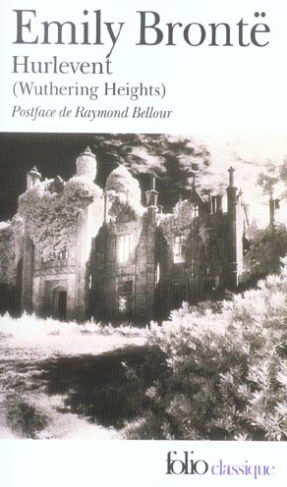
Hurlevent
Emily Brontë possède donc le plus singulier des pouvoirs : celui de sa dépendance à l'égard des faits. Avec quelques touches, elle sait évoquer l'âme d'un visage et rendre le corps superflu ; en parlant de la lande, elle fait souffler le vent et gronder le tonnerre. Virginia Woolf. Quand, parmi tous les arbres, je cherche celui dont la forme s'harmonise le mieux avec le cadre du roman tragique d'Emily Brontë, c'est l'image d'un vieux robinier tortueux qui me vient à l'esprit, d'un vieux robinier tordu par le vent qui souffle toujours dans la même direction ; l'écorce est noire, le tronc est creux et, dans ce creux, la pluie a formé une petite flaque où baignent quelques feuilles mortes. John Cowper PowysEpuiséVOIR PRODUIT8,60 €



De la même catégorie
-

Andorra
L'Andorra du roman obsédant de Peter Cameron est inspiré d'une principauté isolée dans les Pyrénées. Transformée en un paradis éclaboussé de soleil, chacun y a quelque chose à cacher. C'est là que vient Alexander Fox, pensant y trouver réconfort et refuge, alors qu'il n'y rencontre que des souvenirs inquiétants de son passé. Andorra est un roman brillant et inventif sur le mensonge, le désir, et la tromperie de la mémoire.EpuiséVOIR PRODUIT8,15 € -
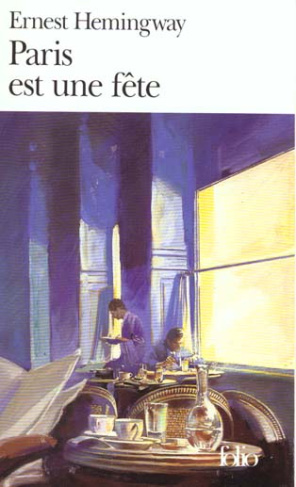
Paris est une fête
Ce volume constitue une occasion de lire un texte à la fois plus complet et plus proche del'original que le manuscrit qui constituait, pour l'auteur, une sorte de mémoire de ses jeunesannées d'écrivain à Paris. Au cours de l'été 1957, il commença à travailler sur les « Vignettes parisiennes », comme il appelait alors le livre. Il y travailla à Cuba et à Ketchum, et emporta même le manuscrit avec lui en Espagne pendant l'été 59, puis à Paris, à l'automne de cette même année. En novembre 59, Hemingway avait terminé la première version d'un texte auquel il ne manquait qu'une introduction et le dernier chapitre. Paris est une fête fut publié de manière posthume en 1964; il concerne les années parisiennes 1921 à 1926. Pendant les trois années, ou presque, qui s'écoulent entre la mort de l'auteur et la première publication de Paris est une fête, le manuscrit subit d'importants amendements de la main des éditeurs, de Mary Hemingway et de la maison Scribner. Quelques textes que Hemingway avait prévu d'inclure dans l'ouvrage ont été supprimés, tandis qu'ont été ajoutés d'autres fragments, qu'il avait certes destinés à cet ouvrage mais n'avait finalement pas retenus. Se trouve aujourd'hui restitué et présenté pour la première fois le texte manuscrit original tel qu'il était au moment de la mort de l'écrivain en 1961.EpuiséVOIR PRODUIT8,60 € -

Un fantôme américain
A Santa Fe, les clients de "La Posada" sont formels : l'hôtel est hanté. Le fantôme de Julia Staab, une émigrante juive-allemande ayant vécu au XIXe siècle, existe bel et bien. De son visage blême émane une aura de tristesse. De quel outrage son spectre réclame-t-il justice ? Nul ne le sait. Sauf Hannah Nordhaus, son arrière-arrière-petite-fille qui part sur les traces de son ancêtre et honore sa mémoire. Un dernier hommage qui, peut-être, permettra à Julia de trouver le repos éternel.Sur commande en 2-4 joursCOMMANDER8,00 € -
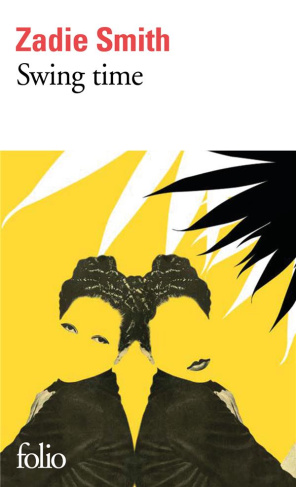
Swing Time
Dans un quartier populaire de Londres, deux petites filles métisses nouent une relation fusionnelle autour d'un même rêve : devenir danseuses. Mais seule Tracey, la plus effrontée, a du talent. L'autre possède des idées : sur le rythme et le temps, les corps et la musique noire, ce que signifie appartenir, ce que signifie être libre. Leur amitié explosive s'interrompt brusquement au début de la vingtaine. Empruntant des chemins différents vers un destin qu'elles imaginent lumineux, chacune s'égarera pourtant en route. Débordant d'énergie, d'humour et d'émotion, Swing Time raconte les espoirs et les désillusions de ceux qui suivent la danse et de ceux qui la mènent.Sur commande en 2-4 joursCOMMANDER10,00 €


