

FLEURS ET ORNEMENTS. Ma racine est au fond des bois, Nancy, Musée de l'Ecole de Nancy 24 avril-26 ju
12,00 €
Epuisé
EAN :
9782711838448
| Nombre de pages | 141 |
|---|---|
| Date de parution | 06/05/1999 |
| Poids | 610g |
| Largeur | 211mm |
Plus d'informations
| EAN | 9782711838448 |
|---|---|
| Titre | L'ECOLE DE NANCY - FLEURS ET ORNEMENTS - MA RACINE EST AU FOND DES BOIS |
| Auteur | Bouillon Jean-Paul ; Bouvet Mireille-Benédicte ; M |
| Editeur | RMN |
| Largeur | 211 |
| Poids | 610 |
| Date de parution | 19990506 |
| Nombre de pages | 141,00 € |
| Disponibilité | Epuisé |
Pourquoi choisir Molière ?
Efficacité et rapidité Commandé avant 16h livré demain
Économique et pratique Livraison dès 3,90 €
Facile et sans frais Retrait gratuit en magasin
Du même auteur
-
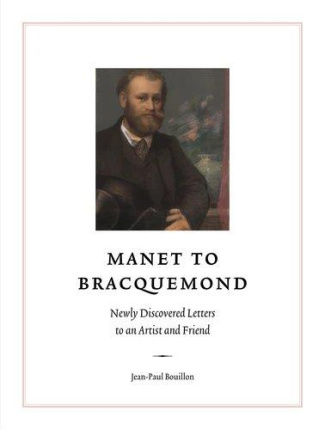
MANET TO BRACQUEMOND - NEWLY DISCOVERED LETTERS TO AN ARTIST AND FRIEND
This new edition publishes the letters adressed by Édouard Manet (1832?1883) to his friend, the artist Félix Bracquemond (1833?1914). The correspondence, for the most part unknown, surfaced at a sale in Paris in June 2016 and was acquired the next year by the Fondation Custodia with the generous help of Jean-Luc Baroni. It is edited here for the first time by Jean-Paul Bouillon, whose lifelong occupation with Bracquemond?s life and work has enabled him to situate the mostly undated letters accurately and discuss their contents in the context of both artist?s careers. The letters are presented in their original French language, accompanied by meticulous comments on their dating and subject matter, whereas illustrations reproduce most of the works alluded to in the texts. They are preceded by a comprehensive introduction on the friendship between the two men which highlights the principal subjects and themes around which the correspondence revolves over the years. Bracquemond and Manet probably met around 1860, at a time when Manet was beginning to take an interest in the potential of printmaking for disseminating his work. Both were among the founders of the ?Société des Aquafortistes? in 1862 and in these years Manet must have relied heavily on Bracquemond, the outstanding engraver of his generation, for his first attempts in the technique. The new interest in etching had a fierce supporter in Charles Baudelaire, who figures besides the two artists in Henri Fantin-Latour?s Homage to Delacroix of 1864, the year Bracquemond portrayed his friend in an important pastel which is here reproduced for the first time in its original form. Many of the letters attest to the frequent, at times almost daily, contacts between the two men, who met in Manet?s studio, at artist?s cafés like the café de Bade and the Guerbois, and at dinners with Manet, his wife and his mother. Others concern joint projects, such as the illustration of Émile Zola?s brochure issued at the occasion of Manet?s solo exhibition of 1867, or Manet?s ex-libris designed by Bracquemond in 1875. Their strong bond emerges perhaps most clearly from two longer letters in which Manet, writing from Arcachon ? where, awaiting the end of the Commune, he tried to recover from the privations he suffered during the Siege of Paris in 1870 ? poured his heart out to Bracquemond about the country?s political situation. Laconic in form as most of the letters are, the correspondence will certainly prove to be an important source for our knowledge of Manet?s life and dealings which, after more than a century of intense scholarship, still presents many a gap. This book is published by Ad Ilissum as the second volume in the series The Fondation Custodia Studies in the History of Art, which reflects and continues forward into the present the scholarly interests of the institution?s founder, Frits Lugt.Sur commande en 4-6 joursCOMMANDER40,00 € -
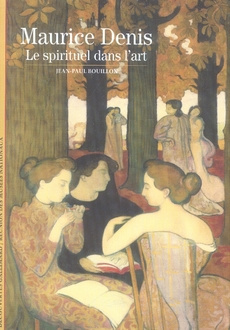
Maurice Denis . Le spirituel dans l'art
À 15 ans, Maurice Denis écrit dans son Journal : « Oui, il faut que je sois peintre chrétien [...], je sens qu'il le faut. [...] D'abord j'écrirai mes notes [...]. Et puis je ferai de l'Art, de l'Art en masse, en tout et partout. Je me gorgerai, je m'enivrerai de cette pure et sainte jouissance, de cette douce vie, si désirée, d'artiste. » Une vocation incoercible, où la foi, l'art et l'amour - sa femme Marthe est au coeur de son oeuvre - composent une sainte trinité qu'analyse avec brio Jean-Paul Bouillon. Après avoir créé le groupe des nabis dont il se fait le théoricien, Denis pose dès 1890 les fondations du néo-traditionnisme. Des Muses à l'Hommage à Cézanne, de ses lieux familiers, Saint-Germain-en-Laye sa ville natale, la Bretagne sa terre d'élection, aux nombreuses scènes de plages, Maurice Denis ne cesse de peindre, entre joie de vivre et méditation chrétienne. Avec le XXe siècle, s'ouvre pour lui une période de production intense : il illustre de nombreux ouvrages, renoue avec la tradition de la grande peinture monumentale, et devient l'un des plus importants décorateurs de son temps.En stockCOMMANDER16,20 € -
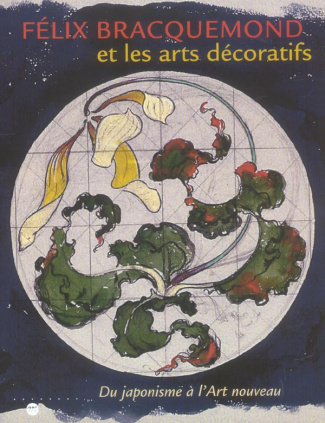
Felix Braquemond et les arts décoratifs. Du japonisme à l'Art nouveau
Félix Bracquemond (1833-1914) apparaît aujourd'hui comme le plus grand graveur de son époque, mais son travail, non moins considérable dans le domaine des arts décoratifs, reste presque entièrement à redécouvrir. Cette première rétrospective étendue, largement composée d'inédits, apporte la révélation d'un art dont Henri Focillon rappelait qu'il " abonde en vérités terribles et en grandes leçons ", chez un artiste que Gustave Geffroy estimait de son côté " le plus perspicace et le plus grand décorateur de son temps " et rien moins que " l'un des plus grands artistes décorateurs des XIXe et XXe siècles "EpuiséVOIR PRODUIT20,00 €



Du même éditeur
-
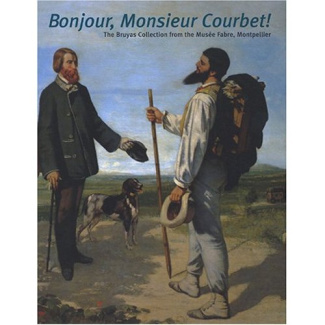
Bonjour, Monsieur Courbet ! The Bruyas Collection from the Musée Fabre, Montpellier
Some of the most iconic and influential images of nineteenth-century French painting, including Gustave Courbet's famous The Meeting ("Bonjour, Monsieur Courbet!"), highlight the celebrated Bruyas Collection from the Musée Fabre in Montpellier. With tastes ranging from romanticism to realism, Alfred Bruyas (1821-1877) collected both traditional and what was then avant-garde art. Featuring nine masterpieces by Courbet, as well as important painting, drawings, and sculptures by such leading artists of the period as Delacroix, Ingres, Géricault, Millet, Corot, Rousseau, and Barye, this book examines Bruyas's role as one of the foremost collectors of contemporary art in France, and the significance of his patronage of living artists.Sur commande en 2-4 joursCOMMANDER40,00 € -
-
-
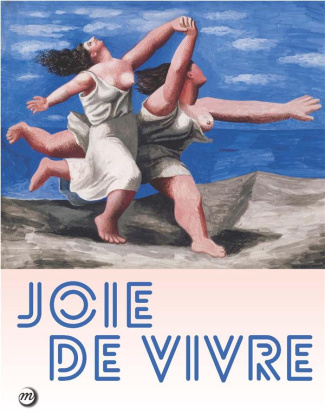
Joie de vivre
La nature éphémère de la joie de vivre, presque indéfinissable, explique sans doute la rareté de cette notion dans la philosophie et a contrario la fréquence de ses représentations dans l'art. Il est plus simple en effet pour un peintre que pour un philosophe de saisir un bonheur fugitif. Quelles images les artistes donnent-ils de la joie de vivre ? La plupart d'entre eux célèbrent la grâce et la spontanéité de l'instant présent. La joie est vécue ici et maintenant. Elle est plus attachée à l'être qu'à l'avoir, à l'être ensemble qu'à la possession ou la consommation de richesses. C'est ainsi qu'à travers les siècles en Occident, depuis l'Antiquité jusqu'à nos jours, parfois en dépassant les interdits, le soleil, le jeu, l'amitié, la famille, la fête, le corps, l'amour et le rire sont célébrés par les artistes. Réunies pour l'exposition du Palais des Beaux-Arts de Lille, une centaine d'oeuvres d'art, de la peinture au cinéma, tentent d'illustrer l'art du bonheur.Sur commande en 2-4 joursCOMMANDER15,00 €


