
HANS HOFMANN: FURY: PAINTING AFTER THE WAR
Accompagnant une exposition au BASTIAN, à Londres, cette étonnante publication présente les oeuvres de l'artiste américain d'origine allemande, Hans Hofmann (1880-1966), réalisées à la fin de la Seconde Guerre Mondiale et après. Les oeuvres abstraites et angulaires de Hofmann (tel que Fury No.1) personnifient les insécurités de l'époque. C'est aussi le moment où il évolua vers des formes floues et ambiguës qui devinrent la marque de fabrique du mouvement de l'Expressionnisme Abstrait. Renowned as both an artist and teacher, Hofmann established his first art school in Munich in 1915. Built on the contemporary ideas regarding colour and form of Cézanne, the Cubists and Kandinsky, his work laid the foundations for his reputation as a forward-thinking artist. After relocating to the United States in 1932, he then opened schools in both New York and Provincetown, immersing himself within America?s growing avantgarde art scene. His teaching had a significant influence on post-War American artists, including Helen Frankenthaler, Lee Krasner and Joan Mitchell ... artists who would later lead the Abstract Expressionism movement. The works presented here span from 1942 to 1946. Whilst demonstrating Hofmann?s development towards abstraction, the paintings still reveal an identifiably representational quality which nod to his figurative beginnings; linear paintings such as The Virgin (1946) particularly emphasise this artistic trajectory. Primarily known for his expressive use of bold, often primary colours, the palette used in these paintings consists predominantly of vivid, bright colours and contrasting dark tones, epitomizing the conflicted post-War feeling. Hofmann?s work during the 1940s also saw him garner the support of several key figures in the artistic scene, including the renowned gallerists and dealers Peggy Guggenheim, Betty Parsons, and Samuel M. Kootz. A particularly important moment in his career ? aged 64 at the time ? was his first solo exhibition in New York in 1944 at Peggy Guggenheim?s gallery Art of This Century, considered ?a breakthrough in painterly versus geometric abstraction that heralded abstract expressionism? by the influential art critic Clement Greenberg.
| Date de parution | 19/06/2020 |
|---|---|
| Poids | 392g |
| Largeur | 240mm |
| EAN | 9781911300908 |
|---|---|
| Titre | HANS HOFMANN: FURY: PAINTING AFTER THE WAR |
| Auteur | ANFAM DAVID |
| Editeur | HOLBERTON |
| Largeur | 240 |
| Poids | 392 |
| Date de parution | 20200619 |
| Nombre de pages | 0,00 € |
| Disponibilité | Sur commande en 4-6 jours |
Pourquoi choisir Molière ?
Du même auteur
-
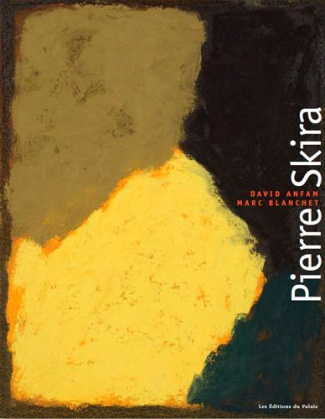
Pierre Skira. Pastels, Edition bilingue français-anglais
Pierre Skira, né en 1938, est l'un des rares peintres dont l'oeuvre toute entière soit consacrée au pastel (il y en a deux en France et une dizaine dans le monde). Ce livre est le premier qui rassemble ses peintures abstraitesEpuiséVOIR PRODUIT20,00 € -
-
Anish Kapoor
Les sculptures d'Anish Kapoor Cloud Gate, Mirror, Taratantara sont aussi mystérieuses que belles. Frôlant souvent le gigantesque, elles forment un ensemble à la fois varié et uni et bien qu'elles emploient une très grande variété de matériaux traditionnels et non-traditionnels, leur sujet réel est souvent immatériel et impalpable: un abîme, un reflet invisible, une colonne d'air. Kapoor est né à Bombay en 1954. Il vit et travaille à Londres et appartient à une génération de sculpteurs britanniques (Tony Cragg, Richard Deacon, Antony Gormley) qui ont rénové la sculpture en y injectant une nouvelle vitalité, voire même du jeu. Dès lors, il n'est pas étonnant qu il soit devenu l'un des artistes les plus aimés aujourd hui et le très vif succès qu'a rencontré sa dernière exposition à la Royal Academy of Arts à Londres, à l'automne dernier, en est la preuve. Figure majeure de la sculpture contemporaine, Kapoor a connu la reconnaissance internationale au début des années 1980 et a remporté le Turner Prize en 1991. L'oeuvre de Kapoor a fait l'objet de nombreuses expositions, notamment au Capc-Musée d'art contemporain de Bordeaux en 1998 et au MAC's Grand-Hornu (Belgique) en 2004. Depuis plusieurs années, Anish Kapoor présente des installations monumentales telles Marsyas pour le Turbine Hall de la Tate Modern de Londres (2002) et plus récemment, Svayambh pour le musée des beaux-arts de Nantes (2007). Cet ouvrage est la première monographie aussi complète et détaillée consacrée à Kapoor. David Anfam, historien de l'art, critique et conservateur, entremêle avec une grande maîtrise les différents thèmes abordés à travers le travail de l'artiste, notamment sa relation à l'espace et au corps humain. Donna De Salvo, conservatrice au Whitney Museum of Contemporary Art de New York, visite son atelier et discute avec l'artiste du processus de création et de la notion d'échelle. Johanna Burton, critique, historienne de l'art et professeur à Bard College, Annandale-on-Hudson, New York, examine, d'un point de vue linguistique, le travail de l'artiste.EpuiséVOIR PRODUIT75,00 € -
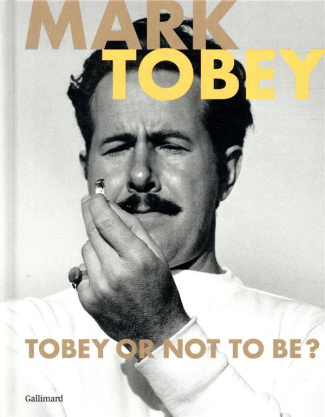
Mark Tobey. Tobey or not to be ? Edition bilingue français-anglais
Sur les pavés des rues et sur les écorces des arbres, j'ai découvert des univers entiers. Je suis très peu au fait de ce que l'on appelle généralement "abstrait". L'abstraction pure serait pour moi une peinture dans laquelle on ne trouverait aucune affinité avec la vie, une chose pour moi impossible. J'ai cherché un monde "un" dans mes peintures mais pour le réaliser j'ai utilisé comme une masse tourbillonnante. Je n'assume aucune position définie. Peut-être que ceci explique la remarque faite par quelqu'un qui regardait une de mes peintures : Où est le centre ? " Mark Tobey, 1955 "I have discovered many a universe on paving stones and tree barks. I know very little about what is generally called "abstract" painting. Pure abstraction would mean a type of painting completely unrelated to life, which is unacceptable to me. I have sought to make my painting "whole" but to attain this I have used a whirling mass. I take up no definite position. Maybe this explains someone's remark while looking at one of my paintings : Where is the center ? " Mark Tobey, 1955Sur commande en 2-4 joursCOMMANDER35,00 €


Du même éditeur
-

'A Perfect Eye and Steady Hand'. Goldsmithing in Tudor & Stuart London
This handsomely illustrated book is published to mark the opening of the Goldsmiths' Gallery at the new London Museum in Smithfield. Showcasing the Cheapside Hoard alongside historic treasures from the Goldsmiths' Company's collection, it takes readers on a global journey in the wake of plate, jewels and gemstones - and the people who made, traded and treasured them. Gold and silver are precious - prized as a form of portable capital, essential for the mints and coinage, used to express power and status. Yet great skill was needed in the buying, the fashioning and the selling of either metal. As fashions changed, much early modern plate and jewellery was melted down when sentiment gave way to market value. This makes the survival of the Goldsmiths' Company's holdings exceptional - and the Cheapside Hoard, unearthed by workmen in 1912 after lying undisturbed for nearly 300 years - nothing short of extraordinary. Comprising over 500 pieces - made of emeralds, diamonds and sapphires sourced from across the world, worked into mesmerising brooches, buttons, necklaces and rings - the Cheapside Hoard is the greatest single collection of Elizabethan and Stuart jewellery in the world. The book places the Hoard in its historical and global context, celebrating it alongside highlights from the Goldsmiths' Company's collection. It offers four main chapters on Elizabethan and early Stuart London, the goldsmiths' trade, the Hoard itself, and the city's global networks. Interwoven thematic sections explore craftsmanship, personal stories, trade practices, taste and fashion - bringingtogether jewels and plate to reveal a rich tapestry of skill, style and exchange.PréventePRÉCOMMANDER35,00 € -

-
-