

La plénitude de la vie
7,65 €
Epuisé
EAN :
9782743625436
Les trois premières nouvelles d'Edith Wharton - La vue de Mme Manstey, La plénitude de la vie et La lampe de Psyché - marquent l'entrée en littérature de l'une des plus grandes auteures américaines du XXe siècle.
Catégories
| Nombre de pages | 154 |
|---|---|
| Date de parution | 15/05/2013 |
| Poids | 102g |
| Largeur | 110mm |
Plus d'informations
| EAN | 9782743625436 |
|---|---|
| Titre | La plénitude de la vie |
| Auteur | Wharton Edith ; Rovere Maxime |
| Editeur | RIVAGES |
| Largeur | 110 |
| Poids | 102 |
| Date de parution | 20130515 |
| Nombre de pages | 154,00 € |
| Disponibilité | Epuisé |
Pourquoi choisir Molière ?
Efficacité et rapidité Commandé avant 16h livré demain
Économique et pratique Livraison dès 3,90 €
Facile et sans frais Retrait gratuit en magasin
Du même auteur
-

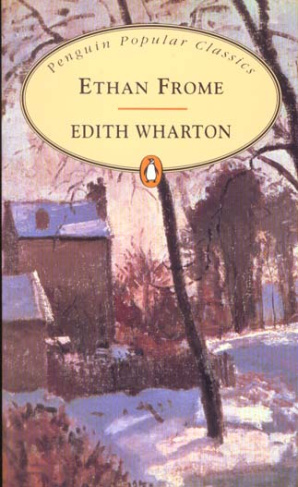
THE AGE OF INNOCENCE
?On a January evening of the early seventies, Christine Nilsson was singing in Faust at the Academy of Music in New York...? The Age of Innocence is Edith Wharton´s twelfth novel, initially serialized in four parts in the Pictorial Review magazine in 1920, and later released by D. Appleton and Company as a book in New York and in London. It won the 1921 Pulitzer Prize for Fiction, making Wharton the first woman to win the prize. The story is set in upper-class New York City in the 1870s, during the so-called Gilded Age. The Age of Innocence centers on an upper-class couple´s impending marriage, and the introduction of the bride´s cousin, plagued by scandal, whose presence threatens their happiness. Though the novel questions the assumptions and morals of 1870s New York society, it never develops into an outright condemnation of the institution. The title is an ironic comment on the polished outward manners of New York society when compared to its inward machinations.Sur commande en 4-6 joursCOMMANDER5,00 € -
-

HOUSE OF MIRTH (THE)
Extrait Chapter 1Selden paused in surprise. In the afternoon rush of the Grand Central Station his eyes had been refreshed by the sight of Miss Lily Bart.It was a Monday in early September, and he was returning to his work from a hurried dip into the country; but what was Miss Bart doing in town at that season? If she had appeared to be catching a train, he might have inferred that he had come on her in the act of transition between one and another of the country-houses which disputed her presence after the close of the Newport season; but her desultory air perplexed him. She stood apart from the crowd, letting it drift by her to the platform or the street, and wearing an air of irresolution which might, as he surmised, be the mask of a very definite purpose. It struck him at once that she was waiting for some one, but he hardly knew why the idea arrested him. There was nothing new about Lily Bart, yet he could never see her without a faint movement of interest: it was characteristic of her that she always roused speculation, that her simplest acts seemed the result of far-reaching intentions.An impulse of curiosity made him turn out of his direct line to the door, and stroll past her. He knew that if she did not wish to be seen she would contrive to elude him; and it amused him to think of putting her skill to the test."Mr. Selden -- what good luck!"She came forward smiling, eager almost, in her resolve to intercept him. One or two persons, in brushing past them, lingered to look; for Miss Bart was a figure to arrest even the suburban traveller rushing to his last train.Selden had never seen her more radiant. Her vivid head, relieved against the dull tints of the crowd, made her more conspicuous than in a ball-room, and under her dark hat and veil she regained the girlish smoothness, the purity of tint, that she was beginning to lose after eleven years of late hours and indefatigable dancing. Was it really eleven years, Selden found himself wondering, and had she indeed reached the nine-and-twentieth birthday with which her rivals credited her..."What luck!" she repeated. "How nice of you to come to my rescue!"He responded joyfully that to do so was his mission in life, and asked what form the rescue was to take."Oh, almost any -- even to sitting on a bench and talking to me. One sits out a cotillion -- why not sit out a train? It isn't a bit hotter here than in Mrs. Van Osburgh's conservatory -- and some of the women are not a bit uglier."She broke off, laughing, to explain that she had come up to town from Tuxedo, on her way to the Gus Trenors' at Bellomont, and had missed the three-fifteen train to Rhinebeck."And there isn't another till half-past five." She consulted the little jewelled watch among her laces. "Just two hours to wait. And I don't know what to do with myself. My maid came up this morning to do some shopping for me, and was to go on to Bellomont at one o'clock, and my aunt's house is closed, and I don't know a soul in town." She glanced plaintively about the station. "It is hotter than Mrs. Van Osburgh's, after all. If you can spare the time, do take me somewhere for a breath of air."He declared himself entirely at her disposal: the adventure struck him as diverting. As a spectator, he had always enjoyed Lily Bart; and his course lay so far out of her orbit that it amused him to be drawn for a moment into the sudden intimacy which her proposal implied."Shall we go over to Sherry's for a cup of tea?"She smiled assentingly, and then made a slight grimace."So many people come up to town on a Monday -- one is sure to meet a lot of bores. I'm as old as the hills, of course, and it ought not to make any difference; but if I'm old enough, you're not," she objected gaily. "I'm dying for tea -- but isn't there a quieter place?"He answered her smile, which rested on him vividly. Her discretions interested him almost as much as her imprudences: he was so sure that both were part of the same carefully-elaborated plan. In judging Miss Bart, he had always made use of the "argument from design.""The resources of New York are rather meagre," he said; "but I'll find a hansom first, and then we'll invent something."He led her through the throng of returning holiday-makers, past sallow-faced girls in preposterous hats, and flat-chested women struggling with paper bundles and palm-leaf fans. Was it possible that she belonged to the same race? The dinginess, the crudity of this average section of womanhood made him feel how highly specialized she was.A rapid shower had cooled the air, and clouds still hung refreshingly over the moist street."How delicious! Let us walk a little," she said as they emerged from the station.They turned into Madison Avenue and began to stroll northward. As she moved beside him, with her long light step, Selden was conscious of taking a luxurious pleasure in her nearness: in the modelling of her little ear, the crisp upward wave of her hair -- was it ever so slightly brightened by art? -- and the thick planting of her straight black lashes. Everything about her was at once vigorous and exquisite, at once strong and fine. He had a confused sense that she must have cost a great deal to make, that a great many dull and ugly people must, in some mysterious way, have been sacrificed to produce her. He was aware that the qualities distinguishing her from the herd of her sex were chiefly external: as though a fine glaze of beauty and fastidiousness had been applied to vulgar clay. Yet the analogy left him unsatisfied, for a coarse texture will not take a high finish; and was it not possible that the material was fine, but that circumstance had fashioned it into a futile shape...As he reached this point in his speculations the sun came out, and her lifted parasol cut off his enjoyment. A moment or two later she paused with a sigh."Oh, dear, I'm so hot and thirsty -- and what a hideous place New York is!" She looked despairingly up and down the dreary thoroughfare. "Other cities put on their best clothes in summer, but New York seems to sit in its shirtsleeves." Her eyes wandered down one of the side streets. "Some one has had the humanity to plant a few trees over there. Let us go into the shade.""I am glad my street meets with your approval," said Selden as they turned the corner."Your street? Do you live here?"She glanced with interest along the new brick and limestone house-fronts, fantastically varied in obedience to the American craving for novelty, but fresh and inviting with their awnings and flower-boxes."Ah, yes -- to be sure: The Benedick. What a nice-looking building! I don't think I've ever seen it before." She looked across at the flat-house with its marble porch and pseudo-Georgian facade. "Which are your windows? Those with the awnings down?""On the top floor -- yes.""And that nice little balcony is yours? How cool it looks up there!"He paused a moment. "Come up and see," he suggested. "I can give you a cup of tea in no time -- and you won't meet any bores."Her colour deepened -- she still had the art of blushing at the right time -- but she took the suggestion as lightly as it was made."Why not? It's too tempting -- I'll take the risk," she declared."Oh, I'm not dangerous," he said in the same key. In truth, he had never liked her as well as at that moment. He knew she had accepted without afterthought: he could never be a factor in her calculations, and there was a surprise, a refreshment almost, in the spontaneity of her consent.On the threshold he paused a moment, feeling for his latchkey."There's no one here; but I have a servant who is supposed to come in the mornings, and it's just possible he may have put out the tea-things and provided some cake."He ushered her into a slip of a hall hung with old prints. She noticed the letters and notes heaped on the table among his gloves and sticks; then she found herself in a small library, dark but cheerful, with its walls of books, a pleasantly faded Turkey rug, a littered desk, and, as he had foretold, a tea-tray on a low table near the window. A breeze had sprung up, swaying inward the muslin curtains, and bringing a fresh scent of mignonette and petunias from the flower-box on the balcony.Lily sank with a sigh into one of the shabby leather chairs."How delicious to have a place like this all to one's self! What a miserable thing it is to be a woman." She leaned back in a luxury of discontent.Selden was rummaging in a cupboard for the cake."Even women," he said, "have been known to enjoy the privileges of a flat.""Oh, governesses -- or widows. But not girls -- not poor, miserable, marriageable girls!""I even know a girl who lives in a flat."She sat up in surprise. "You do?""I do," he assured her, emerging from the cupboard with the sought-for cake."Oh, I know -- you mean Gerty Farish." She smiled a little unkindly. "But I said marriageable -- and besides, she has a horrid little place, and no maid, and such queer things to eat. Her cook does the washing and the food tastes of soap. I should hate that, you know.""You shouldn't dine with her on wash-days," said Selden, cutting the cake.They both laughed, and he knelt by the table to light the lamp under the kettle, while she measured out the tea into a little tea-pot of green glaze. As he watched her hand, polished as a bit of old ivory, with its slender pink nails, and the sapphire bracelet slipping over her wrist, he was struck with the irony of suggesting to her such a life as his cousin Gertrude Farish had chosen. She was so evidently the victim of the civilization which had produced her, that the links of her bracelet seemed like manacles chaining her to her fate.She seemed to read his thought. "It was horrid of me to say that of Gerty," she said with charming compunction. "I forgot she was your cousin. But we... --Ce texte fait référence à une édition épuisée ou non disponible de ce titre.EpuiséVOIR PRODUIT15,11 € -

THE AGE OF INNOCENCE
In the upper-class New York of the 1870s, Newland Archer is happily engaged to marry the pretty May Welland. His perfectly harmonious existence is disturbed when he discovers passion after meeting "poor Ellen Ollenska" in his cousins' Opera box.EpuiséVOIR PRODUIT11,15 €


Du même éditeur
-
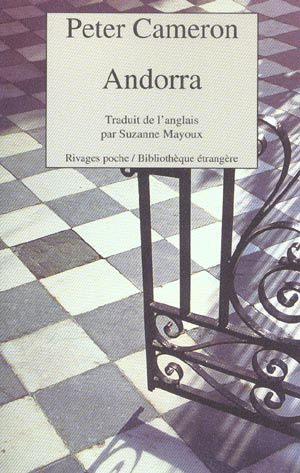
Andorra
L'Andorra du roman obsédant de Peter Cameron est inspiré d'une principauté isolée dans les Pyrénées. Transformée en un paradis éclaboussé de soleil, chacun y a quelque chose à cacher. C'est là que vient Alexander Fox, pensant y trouver réconfort et refuge, alors qu'il n'y rencontre que des souvenirs inquiétants de son passé. Andorra est un roman brillant et inventif sur le mensonge, le désir, et la tromperie de la mémoire.EpuiséVOIR PRODUIT8,15 € -

Punch créole
Un trafiquant d'armes de Miami veut rapatrier clandestinement aux États-Unis l'argent qu'il a placé aux Bahamas. Il charge Jackie Burke, une hôtesse de l'air qui a déjà pas mal d'heures de vol, de rapporter à chacun de ses voyages quelques paquets de dollars. Jusqu'au jour où, arrêtée par des agents du FBI, elle est incarcérée pour importation illégale de devises. Contre sa libération, elle accepte d'aider les fédéraux à coincer le trafiquant. Mais afin de se ménager une autre porte de sortie, elle sympathise avec Max, venu verser sa caution, et lui propose un plan pour gruger police et truand. Ce récit plein d'humour d'un des maîtres du roman noir a inspiré Jackie Brown, le film de Quentin Tarantino. À cinquante ans passés, Jackie et Max, attirés l'un vers l'autre, retrouvent leur candeur d'adolescents pour s'engager dans un gros coup joyeusement immoral. Cette histoire d'arnaque, qui reste un modèle du genre, est soutenue par des dialogues réalistes et brillants. --Claude MesplèdeEpuiséVOIR PRODUIT9,15 € -

Contes de fées queer
Ce petit recueil de 4 contes nous permet de découvrir différents aspects de l’œuvre de Madame de Murat qui explore, à travers le merveilleux, les limites du genre et contrebalancent les caractéristiques du féminin et masculin. Une liberté d’expression et une rébellion face aux archétypes sociétaux qui est à l’image de sa vie que nous pouvons découvrir grâce à la préface de Sylvie Robic. Savoureux, ces Contes de fées queer démontrent une modernité absente des contes classiques et nous rappellent le pouvoir subversif de l’imaginaire.En stockCOMMANDER8,00 € -

Nudités
Nudités rassemble en une série de brefs essais les motifs au coeur de la recherche de Giorgio Agamben : depuis la fête, qu'il met de manière inattendue en relation avec le phénomène contemporain de la boulimie, jusqu'à la nudité, dont les implications théologiques cachées sont soumises à l'enquête archéologique ; depuis le problème du corps glorieux des béats, qui ont un estomac et des organes sexuels mais qui ne mangent pas et ne font pas l'amour, jusqu'à la figure nouvelle d'une identité impersonnelle imposée à l'humanité par les dispositifs de la biométrie. Le point de fuite vers lequel convergent tous ces thèmes est le désoeuvrement. Non comme oisiveté ou comme inertie, mais comme le paradigme de l'action humaine et celui d'une nouvelle politique.Sur commande en 2-4 joursCOMMANDER7,90 €


De la même catégorie
-
Andorra
L'Andorra du roman obsédant de Peter Cameron est inspiré d'une principauté isolée dans les Pyrénées. Transformée en un paradis éclaboussé de soleil, chacun y a quelque chose à cacher. C'est là que vient Alexander Fox, pensant y trouver réconfort et refuge, alors qu'il n'y rencontre que des souvenirs inquiétants de son passé. Andorra est un roman brillant et inventif sur le mensonge, le désir, et la tromperie de la mémoire.EpuiséVOIR PRODUIT8,15 € -
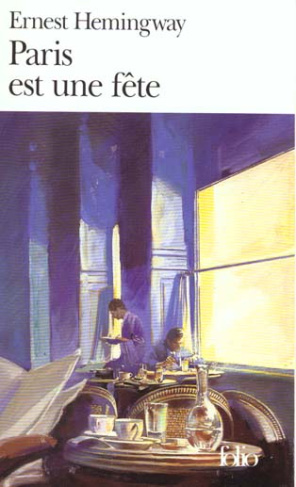
Paris est une fête
Ce volume constitue une occasion de lire un texte à la fois plus complet et plus proche del'original que le manuscrit qui constituait, pour l'auteur, une sorte de mémoire de ses jeunesannées d'écrivain à Paris. Au cours de l'été 1957, il commença à travailler sur les « Vignettes parisiennes », comme il appelait alors le livre. Il y travailla à Cuba et à Ketchum, et emporta même le manuscrit avec lui en Espagne pendant l'été 59, puis à Paris, à l'automne de cette même année. En novembre 59, Hemingway avait terminé la première version d'un texte auquel il ne manquait qu'une introduction et le dernier chapitre. Paris est une fête fut publié de manière posthume en 1964; il concerne les années parisiennes 1921 à 1926. Pendant les trois années, ou presque, qui s'écoulent entre la mort de l'auteur et la première publication de Paris est une fête, le manuscrit subit d'importants amendements de la main des éditeurs, de Mary Hemingway et de la maison Scribner. Quelques textes que Hemingway avait prévu d'inclure dans l'ouvrage ont été supprimés, tandis qu'ont été ajoutés d'autres fragments, qu'il avait certes destinés à cet ouvrage mais n'avait finalement pas retenus. Se trouve aujourd'hui restitué et présenté pour la première fois le texte manuscrit original tel qu'il était au moment de la mort de l'écrivain en 1961.EpuiséVOIR PRODUIT8,60 € -

Un fantôme américain
A Santa Fe, les clients de "La Posada" sont formels : l'hôtel est hanté. Le fantôme de Julia Staab, une émigrante juive-allemande ayant vécu au XIXe siècle, existe bel et bien. De son visage blême émane une aura de tristesse. De quel outrage son spectre réclame-t-il justice ? Nul ne le sait. Sauf Hannah Nordhaus, son arrière-arrière-petite-fille qui part sur les traces de son ancêtre et honore sa mémoire. Un dernier hommage qui, peut-être, permettra à Julia de trouver le repos éternel.Sur commande en 2-4 joursCOMMANDER8,00 € -

Swing Time
Dans un quartier populaire de Londres, deux petites filles métisses nouent une relation fusionnelle autour d'un même rêve : devenir danseuses. Mais seule Tracey, la plus effrontée, a du talent. L'autre possède des idées : sur le rythme et le temps, les corps et la musique noire, ce que signifie appartenir, ce que signifie être libre. Leur amitié explosive s'interrompt brusquement au début de la vingtaine. Empruntant des chemins différents vers un destin qu'elles imaginent lumineux, chacune s'égarera pourtant en route. Débordant d'énergie, d'humour et d'émotion, Swing Time raconte les espoirs et les désillusions de ceux qui suivent la danse et de ceux qui la mènent.Sur commande en 2-4 joursCOMMANDER10,00 €


