

WALLACE COLLECTION (THE) - CATALOGUE OF ITALIAN SCULPTURE 2VOL
The new catalogue of Italian sculpture in the Wallace Collection by Jeremy Warren, author of the award-winning catalogue of Medieval and Renaissance Sculpture in the Ashmolean Museum, Oxford, puts onto the map a part of the Wallace Collection which has hitherto been relatively little-known. The 159 entries cover works in bronze, marble, terracotta and wood dating from c. 1400 to 1900, and by or associated with some of the most famous names in Italian sculpture, such as Donatello, Pietro Torrigiani, Giovanni Bologna (Giambologna) and Alessandro Algardi. Each entry is packed with information, with a comprehensive description and bibliography followed by a commentary exploring attribution, dating, function and social and historical context. An introductory essay explores the origins of the Italian sculpture collection in the Wallace Collection, whilst in her technical essay Seoyoung Kim examines some of the results of the programme of alloy analysis of the scultures in bronze and other metals. The painstaking conservation of Pietro Torrigiani's moving head of Christ, once in Westminster Abbey, is described by Alexandra Kosinova. New photography by Cassandra Parsons allows full appreciation of the many outstandingly beautiful pieces in the collection. The research carried out for this groundbreaking new catalogue led to numerous important discoveries, which reconnect many of the sculptures with their origins in Renaissance and Baroque Italy. New archival discoveries in Padua illuminate the life and work of the hitherto mysterious Francesco da Sant'Agata, maker of the Wallace Collection's celebrated boxwood statuette of Herceules. An astonishingly vivid small bronze portrait head, in store for decades, is here published as a portrait of father Antonio Trombetta, the most famous abbot in the long history of the Paduan Basilica of Saint Anthony, by the greatest early Renaissance sculptor of the small bronze, Andrea Riccio. An exquisite but mysterious small cannon turned out to be designed by a 16th century Paduan nobleman, whose chapel and grave in the Basilica are here re-identifi ed. There have too been many discoveries in the later history of the works. A stunning large bronze group of Nessus and Deianira by Giambologna is now known to have once belonged to Sir Joshua Reynolds, whilst a satyr's head in red marble, restored in Rome c. 1630, once belonged to none other than Cardinal Richelieu. The new Wallace Collection catalogue of Italian sculpture will become an indispensable reference work, which will also be read with pleasure by specialists and anybody with a love of this wonderful and varied art form.
| Date de parution | 20/04/2016 |
|---|---|
| Poids | 5 768g |
| Largeur | 355mm |
| EAN | 9780900785764 |
|---|---|
| Titre | WALLACE COLLECTION (THE) - CATALOGUE OF ITALIAN SCULPTURE 2VOL |
| Auteur | WARREN JEREMY |
| Editeur | HOLBERTON |
| Largeur | 355 |
| Poids | 5768 |
| Date de parution | 20160420 |
| Nombre de pages | 0,00 € |
| Disponibilité | Epuisé |
Pourquoi choisir Molière ?
Du même auteur
-

-
-
-
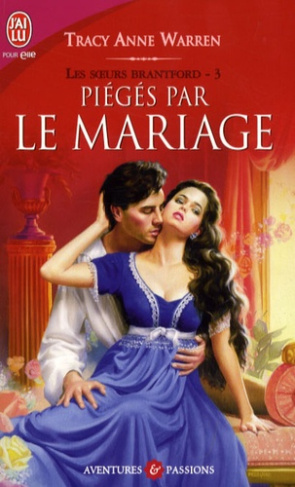
Les soeurs Brantford Tome 3 : Piégés par le mariage
Sans enthousiasme, Eliza Hammonde aborde sa cinquième saison londonienne, consciente que sa fortune personnelle fait d'elle la proie rêvée des coureurs de dot. Comment faire le tri parmi tous les gentilshommes candidats au mariage? Timide et ignorante, Eliza aurait besoin d'un guide pour la piloter dans la haute société. C'est son amie, Violet Brantford, qui va lui trouver l'homme de la situation en la personne de son beau-frère, lord Christopher Winter. Il connaît les secrets et les travers de tout un chacun, il saura éliminer les canailles et les rapaces. Sous l'égide d'un tel mentor, Eliza va devenir la plus en vue des débutantes, certaine d'épouser un beau parti. Il n'y a qu'un seul hic: depuis toujours, dans le secret de son coeur, Eliza est amoureuse de Christopher... Biographie de l'auteur Après des études d'histoire, Tracy Anne Warren a exercé différents métiers dans la finance puis s'est lancé dans l'écriture, sa véritable passion. Elle vit dans le Maryland avec ses trois chats. Piégés par le mariage est le troisième tome des aventures des Soeurs Brantford.EpuiséVOIR PRODUIT6,50 €


Du même éditeur
-

'A Perfect Eye and Steady Hand'. Goldsmithing in Tudor & Stuart London
This handsomely illustrated book is published to mark the opening of the Goldsmiths' Gallery at the new London Museum in Smithfield. Showcasing the Cheapside Hoard alongside historic treasures from the Goldsmiths' Company's collection, it takes readers on a global journey in the wake of plate, jewels and gemstones - and the people who made, traded and treasured them. Gold and silver are precious - prized as a form of portable capital, essential for the mints and coinage, used to express power and status. Yet great skill was needed in the buying, the fashioning and the selling of either metal. As fashions changed, much early modern plate and jewellery was melted down when sentiment gave way to market value. This makes the survival of the Goldsmiths' Company's holdings exceptional - and the Cheapside Hoard, unearthed by workmen in 1912 after lying undisturbed for nearly 300 years - nothing short of extraordinary. Comprising over 500 pieces - made of emeralds, diamonds and sapphires sourced from across the world, worked into mesmerising brooches, buttons, necklaces and rings - the Cheapside Hoard is the greatest single collection of Elizabethan and Stuart jewellery in the world. The book places the Hoard in its historical and global context, celebrating it alongside highlights from the Goldsmiths' Company's collection. It offers four main chapters on Elizabethan and early Stuart London, the goldsmiths' trade, the Hoard itself, and the city's global networks. Interwoven thematic sections explore craftsmanship, personal stories, trade practices, taste and fashion - bringingtogether jewels and plate to reveal a rich tapestry of skill, style and exchange.PréventePRÉCOMMANDER35,00 € -
-
-
