

Villa Design. Edition français-anglais-allemand
Entourées d'un flair magique, les villas sont depuis l'antiquité le diamant étincelant du design résidentiel, caractérisé par la générosité, la représentation et l'individualité. Cette forme d'habitation classique est synonyme de particularité architecturale avec le nimbe d'un mode de vie raffiné et d'une culture de construction sophistiquée, quel que soit le style. Pour les architectes et les décorateurs d'intérieur, la nouvelle construction et la transformation d'une villa représentent le défi passion- nant de réinterpréter cette tâche de construction avec des concepts individuels. Ce volume présente le travail d'architectes de renom ainsi que des créations de jeunes studios de design en plein essor. Une pensée novatrice et un raffinement créatif sont nécessaires pour réaliser les souhaits et les rêves du client. Minimaliste ou opulente, traditionnelle ou extravagante, chaque villa offre une solution design différente.
| Nombre de pages | 304 |
|---|---|
| Date de parution | 03/09/2020 |
| Poids | 1 816g |
| Largeur | 245mm |
| EAN | 9783037682630 |
|---|---|
| Titre | Villa Design. Edition français-anglais-allemand |
| Auteur | Toromanoff Agata |
| Editeur | BRAUN |
| Largeur | 245 |
| Poids | 1816 |
| Date de parution | 20200903 |
| Nombre de pages | 304,00 € |
| Disponibilité | Sur commande en 2-4 jours |
Pourquoi choisir Molière ?
Du même auteur



Du même éditeur
-

COMPANY GARDENS - GREEN SPACES FOR RETREAT ET INSPIRATION
Sur commande en 2-4 joursCOMMANDER44,00 € -
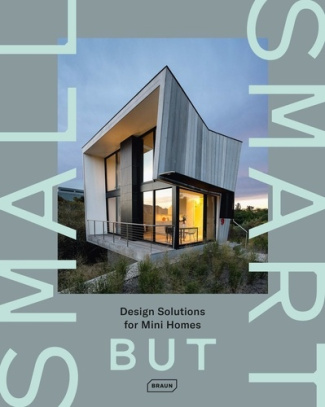
Small but smart. Design solutions for mini homes
By living in a large ceramic tub, Ancient Greek philosopher Diogenes was one of the first people to promote a simple lifestyle as a protest against a corrupt society - one could call him an unwitting pioneer of the current tiny-house movement. However, today small living is not necessarily connected to an alternative or even anarchic lifestyle - it simply makes things easier, more economic and eco-friendly to focus on what is really needed in life without compromising quality. This volume presents a large variety of sophisticated solutions for mini houses in terms of architectural style, construction method and interior design. Whether portable or prefabricated, newly built or reused, rural or urban, they all meet the highest technological and sustainable standards to literally reduce their owners' ecological footprint.EpuiséVOIR PRODUIT39,90 € -
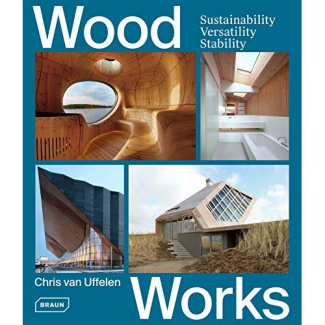
WOOD WORKS - SUSTAINABILITY, VERSATILITY, STABILITY
Wood is nature's most remarkable resource, embedded in the history, culture and life of humans worldwide. For the architecture world it is ingenious: malleable and at the same time resilient, fully recyclable and environmentally friendly as it reduces greenhouse gases, universally applicable and locally available. Today, new processing technologies extend the spectrum of its possible applications and the combinability with other building materials, enabling innovative technical and design solutions. In short, anything is possible when it comes to timber, whatever designers conceive can be realized. The traditional building material has become ultra-contemporary and increasingly cutting-edge, offering exciting possibilities for architectural design.EpuiséVOIR PRODUIT39,90 € -
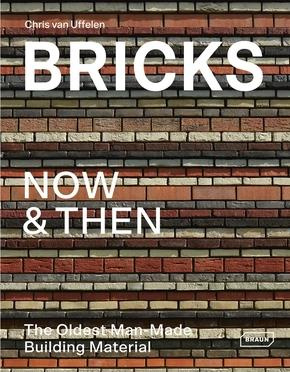
BRICKS NOW ET THEN - THE OLDEST MAN-MADE - BUILDING MATERIAL
Buildings made of brick are found in very different epochs and cultures all over the world. Always astonishing, the qualities of brickwork continue to be explored by the world's best architects until today. A key characteristic of the material's success since time immemorial has always been the ease of planning due to its standardized production and the resulting harmonized building processes. In addition to longevity, amazing constructive possibilities as well as inexpensive and at the same time environmentally friendly production are among the qualities that are particularly valued today. Using computer software solutions, and even robots in some cases, today's architects are deploying brick in inventive ways: perforated, pixelated, undulating and more. The featured works from the past and present are a demonstration of how the use and popularity of bricks has not diminished one bit over the millennia, and is even gaining popularity today.Sur commande en 2-4 joursCOMMANDER39,90 €


