Toward a Topography of the Parallel UniversePeople ask, How did you get in there? What they really want to know is if they are likely to end up in there as well. I can't answer the real question. All I can tell them is, It's easy.And it is easy to slip into a parallel universe. There are so many of them: worlds of the insane, the criminal, the cnp-pled, the dying, perhaps of the dead as well. These worlds exist alongside this world and resemble it, but are not in it.My roommate Georgina came in swiftly and totally, dur-ing her junior year at Vassar. She was in a theater watching a movie when a tidal wave of blackness broke over her head. The entire world was obliterated--for a few minutes. She knew she had gone crazy. She looked around the theater to see if it had happened to everyone, but all the other people were engrossed in the movie. She rushed out, because the darkness in the theater was too much when combined with the darkness in her head.And after that? I asked her.A lot of darkness, she said.But most people pass over incrementally, making a series of perforations in the membrane between here and there until an opening exists. And who can resist an opening? In the parallel universe the laws of physics are suspended. What goes up does not necessarily come down1 a body at rest does not tend to stay at rest1 and not every action can be counted on to provoke an equal and opposite reaction. Time, too, is different. It may run in circles, flow backward, skip about from now to then. The very arrangement of molecules is fluid: Tables can be clocks; faces, flowers.These are facts you find out later, though.Another odd feature of the parallel universe is that al-though it is invisible from this side, once you are in it you can easily see the world you came from. Sometimes the world you came from looks huge and menacing, quivering like a vast pile of jelly1 at other times it is miniaturized and alluring, a-spin and shining in its orbit. Either way, it can't be discounted.Every window on Alcatraz has a view of San Francisco. The Taxi"You have a pimple," said the doctor. I'd hoped nobody would notice."You've been picking it," he went on.When I'd woken that morning--early, so as to get to this appointment--the pimple had reached the stage of hard expectancy in which it begs to be picked. It was yearning for release. Freeing it from its little white dome, pressing until the blood ran, I felt a sense of accomplishment: I'd done all that could be done for this pimple."You've been picking at yourself," the doctor said.I nodded. He was going to keep talking about it until I agreed with him, so I nodded."Have a boyfriend?" he asked.I nodded to this too.'Trouble with the boyfriend?" It wasn't a question, actu-ally1 he was already nodding for me. "Picking at yourself," he repeated. He popped out from behind his desk and lunged toward me. He was a taut fat man, tight-bellied and dark."You need a rest," he announced.I did need a rest, particularly since I'd gotten up so early that morning in order to see this doctor, who lived out in the suburbs. I'd changed trains twice. And I would have to retrace my steps to get to my job. Just thinking of it made me tired."Don't you think?" He was still standing in front of me. "Don't you think you need a rest..."Yes," I said.He strode off to the adjacent room, where I could hear him talking on the phone.I have thought often of the next ten minutes--my last ten minutes. I had the impulse, once, to get up and leave through the door I'd entered, to walk the several blocks to the trolley stop and wait for the train that would take me back to my troublesome boyfriend, my job at the kitchen store. But I was too tired.He strutted back into the room, busy, pleased with himself."I've got a bed for you," he said. "It'll be a rest. Just for a couple of weeks, okay?" He sounded conciliatory, or plead-ing, and I was afraid."I'll go Friday," I said. It was Tuesday, maybe by Friday I wouldn't want to go.He bore down on me with his belly. "No. You go now.I thought this was unreasonable. "I have a lunch date," I said."Forget it," he said. "You aren't going to lunch. You're going to the hospital." He looked triumphant.It was very quiet out in the suburbs before eight in the morning. And neither of us had anything more to say. I heard the taxi pulling up in the doctor's driveway.He took me by the elbow--pinched me between his large stout fingers--and steered me outside. Keeping hold of my arm, he opened the back door of the taxi and pushed me in. His big head was in the backseat with me for a moment. Then he slammed the door shut.The driver rolled his window down halfway."Where to?"Coatless in the chilly morning, planted on his sturdy legs in his driveway, the doctor lifted one arm to point at me.'Take her to McLean," he said, "and don't let her out till you get there."I let my head fall back against the seat and shut my eyes. I was glad to be riding in a taxi instead of having to wait for the train.EtiologyThis person is (pick one):1. on a perilous journey from which we can learn much when he or she returns,2. possessed by (pick one):a) the gods,b) God (that is, a prophet),c) some bad spirits, demons, or devils,d) the Devil13. a witchVelocity vs. ViscosityInsanity comes in two basic varieties: slow and fast. I'm not talking about onset or duration. I mean the quality of the insanity, the day-to-day business of being nuts.There are a lot of names: depression, catatonia, mania, anxiety, agitation. They don't tell you much.The predominant quality of the slow form is viscosity.Experience is thick. Perceptions are thickened and dulled. Time is slow, dripping slowly through the clogged filter of thickened perception. The body temperature is low. The pulse is sluggish. The immune system is half-asleep. The organism is torpid and brackish. Even the reflexes are di-minished, as if the lower leg couldn't be bothered to jerk itself out of its stupor when the knee is tapped.Viscosity occurs on a cellular level. And so does velocity.In contrast to viscosity's cellular coma, velocity endows every platelet and muscle fiber with a mind of its own, a means of knowing and commenting on its own behavior. There is too much perception, and beyond the plethora of perceptions, a plethora of thoughts about the perceptions and about the fact of having perceptions. Digestion could kill you! What I mean is the unceasing awareness of the processes of digestion could exhaust you to death. And digestion is just an involuntary sideline to thinking, which is where the real trouble begins.Take a thought--anything1 it doesn't matter. I'm tired of sitting here in front of the nursing station: a perfectly rea-sonable thought. Here's what velocity does to it.First, break down the sentence: I'm tired--well, are you really tired, exactly? Is that like sleepy? You have to check all your body parts for sleepiness, and while you're doing that, there's a bombardment of images of sleepiness, along these lines: head falling onto pillow, head hitting pillow, Wynken, Blynken, and Nod, Little Nemo rubbing sleep from his eyes, a sea monster. Uh-oh, a sea monster. If you're lucky, you can avoid the sea monster and stick with sleep-iness. Back to the pillow, memories of having mumps at age five, sensation of swollen cheeks on pillows and pain on salivation--stop. Go back to sleepiness.But the salivation notion is too alluring, and now there's an excursion into the mouth. You've been here before and it's bad. It's the tongue: Once you think of the tongue it becomes an intrusion. Why is the tongue so large? Why is it scratchy on the sides? Is that a vitamin deficiency? Could you remove the tongue? Wouldn't your mouth be less both-ersome without it? There'd be more room in there. The tongue, now, every cell of the tongue, is enormous. It's a vast foreign object in your mouth.Trying to diminish the size of your tongue, you focus your attention on its components: tip, smooth, back, bumpy, sides, scratchy, as noted earlier (vitamin defi-ciency), roots--trouble. There are roots to the tongue. You've seen them, and if you put your finger in your mouth you can feel them, but you can't feel them with the tongue. It's a paradox.Paradox. The tortoise and the hare. Achilles and the what? The tortoise? The tendon? The tongue...Back to tongue. While you weren't thinking of it, it got a little smaller. But thinking of it makes it big again. Why is it scratchy on the sides? Is that a vitamin deficiency? You've thought these thoughts already, but now these thoughts have been stuck onto your tongue. They adhere to the existence of your tongue.All of that took less than a minute, and there's still the rest of the sentence to figure out. And all you wanted, really, was to decide whether or not to stand up.Viscosity and velocity are opposites, yet they can look the same. Viscosity causes the stillness of disinclination, velocity causes the stillness of fascination. An observer can't tell if a person is silent and still because inner life has stalled or because inner life is transfixingly busy.Something common to both is repetitive thought. Expe-riences seem prerecorded...
Date de parution
01/04/2001
Poids
300g
Plus d'informations
Plus d'informations
EAN
9781860497926
Titre
GIRL INTERRUPTED
ISBN
1860497926
Auteur
SUSANNA KAYSEN
Editeur
LITTLE BROWN UK
Largeur
0
Poids
300
Date de parution
20010401
Nombre de pages
0,00 €
Disponibilité
Epuisé
Pourquoi choisir Molière ?
Efficacité et rapiditéCommandé avant 16hlivré demain
Économique et pratiqueLivraison dès 3,90 €
Facile et sans fraisRetrait gratuiten magasin
Disponibilité et écouteContactez-nous sur WhatsApp
Crazy isn't being broken or swallowing a dark secret. It's you or me amplified. If you ever told a lie and enjoyed it. If you ever wished you could be a child forever. In 1967, after a session with a psychiatrist she'd never seen before, eighteen-year-old Susanna Kaysen was put in a taxi and sent to McLean Hospital to be treated for depression. She spent most of the next two years on the ward for teenage girls in a psychiatric hospital renowned for its famous clientele - Sylvia Plath, Robert Lowell, James Taylor and Ray Charles. Unflinchingly honest and darkly funny, this bestselling memoir is a sharply vivid portrait of Susanna's fellow patients, the kaleidoscopically shifting world of the late sixties, and how sometimes the only way to stay sane is to go a little crazy. 'Girl, Interrupted is a beautiful, complex story that truly led the way on opening up a new, brave, nuanced approach to talking about women's mental health. An intense and personal story that taps into a universal truth about how the world responds to complicated young women' SCARLETT CURTIS 'Poignant, honest and triumphantly funny . . . A compelling and heartbreaking story' NEW YORK TIMES'Not since Sylvia Plath's The Bell Jar has a personal account of life in a mental hospital achieved as much popularity and acclaim' TIME'A cool, elegant and unexpectedly funny memoir' SUNDAY TIMES'Memorable and stirring' VOGUE
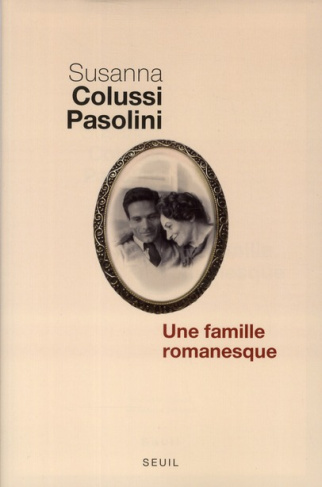
Susanna Colussi Pasolini raconte l'histoire et les exploits de quelques personnages familiaux entre le début du XIXe siècle, pendant les guerres napoléoniennes, et le début du XXe siècle (juste avant la grande guerre). Elle-même étant née en 1891, il est également question de sa jeunesse jusqu'en 1910 à peu près. Susanna commence par rapporter les propos de sa propre grand-mère sur les ancêtres: Visens qui a fait la guerre en Russie, dans l'armée de Napoléon, et a ramené de Pologne une jeune femme qui lui a sauvé la vie, puis Beputi, Clementina, Sabina, Elvira et Centi (le frère de Susanna). Chacun a vécu des drames sentimentaux. Visens pour échapper à la mort de froid, éventre un cheval et c'est dans ce reste de chaleur qu'il est retrouvé par celle qui sera sa femme et qu'il enlève à son fiancé. Beputti est une sorte de saint, homme profondément bon, mais qui quitte sa femme et va vivre en Amérique, où il trouvera la mort en voulant sauver un homme qui se noie, sur le chantier d'un pont. Clementina, abandonnée, devient une femme perdue, allant de liaison en liaison, perdant un enfant qu'elle a d'un inconnu. Sabina mène une double vie. Elvira sera la maîtresse de Centi. Ce dernier, frère aîné de Susanna qui l'adorait, après avoir fait les quatre cents coups (il a volé dans la caisse de la distillerie familiale, il a failli avoir la siphylis, il a eu une maîtresse mariée) a suivi des études de physique, puis est parti pour San Francisco, comme son ancêtre. Susanna est devenue institutrice, en partie pour payer les études de son frère. Elle raconte avec beaucoup de détails émouvants leur enfance et ses propres études qui lui ont permis d'acquérir une grande culture et un rapport profond avec la littérature et la psychologie, comme le révèle ce texte remarquable, quoique inachevé. L'influence de ce livre sur l'imaginaire amoureux et sur l'esthétique littéraire de Pasolini est évidente. Plusieurs épisodes se retrouvent, en effet, dans "Romancero", une section du recueil (1953) La meilleure jeunesse. Et le style même de Susanna a influencé celui du premier livre de Pasolini, Actes impurs.
Pour tous ceux qui veulent découvrir et comprendre les manifestations de la Terre en colère.Quels sont les différents types de volcans ? Comment se forment-ils ? Quelles ont été les plus grosses éruptions de l'histoire ? Dans quelles régions du monde se produisent les séismes les plus redoutables ? Explorez les profondeurs de la Terre et les cratères bouillonnants des volcans d'où sortent des gaz et des coulées de lave incandescente. Partagez la science des vulcanologues : les moyens de prévision, de mesure et de protection. Découvrez les manifestations les plus impressionnantes de la Terre en colère, des tremblements de terre aux éruptions volcaniques.