Europe and the Other and Europe as the Other
This book contributes to the debate on what Europe means by demonstrating the complexities and contradictions inherent in the concept. They are seen most clearly when Europe is viewed from a long historical perspective. During the closing decades of the twentieth century Europe emerged as one of the main points of reference in both the cultural and the political constructs of the global community. An obsession with the concept of European identity is readily discernible. This process of identity construction provokes critical questions which the book aims to address. At the same time the book explores the opportunities offered by the concept of Europe to see how it may be used in the construction of the future. The approach is one of both deconstruction and reconstruction. The issue of Europe is closely related in the book to more general issues concerning the cultural construction of community. The book should therefore be seen as the companion of Myth and Memory in the Construction of Community, which is also published by PIE-Peter Lang in the series Multiple Europes. The book appears within the framework of a research project on the cultural construction of community in modernisation processes in comparison. This project is a joint enterprise of the European University Institute in Florence and the Humboldt University in Berlin sponsored by the Bank of Sweden Tercentenary Fund.
| Nombre de pages | 517 |
|---|---|
| Date de parution | 07/11/2007 |
| Poids | 695g |
| Largeur | 220mm |
| EAN | 9789052016504 |
|---|---|
| Titre | Europe and the Other and Europe as the Other |
| Auteur | Strath Bo |
| Editeur | PETER LANG AG |
| Largeur | 220 |
| Poids | 695 |
| Date de parution | 20071107 |
| Nombre de pages | 517,00 € |
| Disponibilité | Sur commande en 2-4 jours |
Pourquoi choisir Molière ?
Du même éditeur
-

Georges Pompidou Études... - T16 - François-Xavier Ortoli : entre enjeux nationaux et européens...
Sur commande en 2-4 joursCOMMANDER39,65 € -
Le concept de paria et les défis de l'édification du monde commun chez Hannah Arendt...
Sur commande en 2-4 joursCOMMANDER71,05 € -
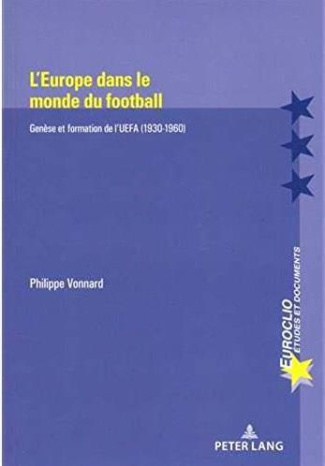
L'Europe dans le monde du football - Genèse et formation de l'UEFA (1930-1960)
Comment expliquer la popularité du football à l'échelle européenne ? Une des pistes pour répondre à cette question est d'étudier le rôle de l'Union des associations européennes de football (UEFA) qui n'a eu de cesse d'agir en vue de renforcer les échanges footballistiques au niveau européen. À partir du dépouillement d'archives inédites, ce livre répond à un vide historiographique en proposant de retracer la genèse et la formation de l'UEFA dans une perspective globale et qui privilégie le long terme. Nous défendons ici la thèse que la mise en place de cette organisation au milieu des années 1950 est un tournant dans l'histoire du football européen. Trois axes principaux complémentaires sont développés tout au long de cet ouvrage. Le premier traite du rôle de la FIFA (Fédération internationale de football association), puis de l'UEFA dans le développement d'une dynamique européenne du jeu. Le deuxième questionne la possibilité qu'ont les dirigeants du football de créer un organisme qui transcende les barrières de la Guerre froide (à sa fondation, l'UEFA compte une trentaine de pays européens). Finalement, le troisième interroge les raisons de la constitution de l'UEFA durant les années 1950 ainsi que le modèle d'organisation choisi par ses promoteurs.Sur commande en 2-4 joursCOMMANDER72,60 € -
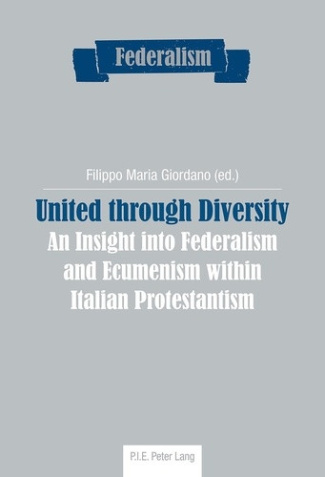
United through Diversity - An Insight into Federalism and Ecumenism within Italian Protestantism
The book analyses the Europeanist and federalist effort of Italian Protestants in the struggle for European unification. This investigation revolves around two distinct guiding arguments : a political one, focused on the analysis of political thought ; and a historical one reconstructing the most recent events about the Italian Protestants' activism for the political unification of Europe. The essay retraces the developments of federalism within the Protestant world from the 16th to the 20th century by referring to the bond between federalism and ecumenism. The volume is divided into three parts and provides a historical overview of federal thought within the Protestant world from the Reformation to the Enlightenment. It also addresses a series of projects aimed at the political unification of the European continent, and analyses the similarities between ecclesiastical constitutionalism and institutional federalism. This theoretical background paves the way for the contribution of Italian Protestants to the international peace movement and the confessional reconciliation among the Churches in the 19th and 20th centuries. Finally, this essay highlights the practical and theoretical contribution of the Italian Protestants to the cause of United States of Europe, according to the principles of the Ventotene Manifesto.Sur commande en 2-4 joursCOMMANDER65,90 €