Copley and West in England 1775-1815
This beautifully and thoroughly illustrated book, which constitutes the first serious investigation of the relationship between Benjamin West and John Singleton Copley, will be of considerable interest to both British and American art historians, and appeal to art lovers from both countries. West and Copley have always and properly been viewed as the two pre-eminent eighteenth-century American artists, despite the fact that, at the age of twenty-one, West left his native shores in 1760, never to return. He went on to become immensely successful in England, becoming, among other things, the second president of the Royal Academy of Arts. Copley spent half his working life also in England. However, before making the move across the Atlantic, he made his mark as an exceptionally talented artist, who, without any real training, painted likenesses of fellow Bostonians, including ones of fi gures such as John Hancock and Paul Revere, that have become icons of American history. While those portraits remain his most widely admired works, after 1775 and his resettling in England, he started painting distinctly diff erent types of pictures, initially showing modern historical subjects in emulation of the model provided him by West, following, for example, West?s celebrated Death of General Wolfe, exhibited in 1771, with his own Death of the Earl of Chatham, begun in 1779. For a brief span of time, the two expatriate Americans had a close working relationship, that we can see substantially refl ected in both the formal language and the subject matter of many of their best works, but it eventually and inevitably turned into rivalry. The book begins with a brief prologue discussing the earliest of West?s depictions of recent historical events and of subjects set in America, painted prior to Copley?s arrival in England. It then follows the year-by-year evolution of Copley?s painting from 1775 to his death in 1815, with an underlying focus upon his ongoing give-and-take with West, and it ends with examination of hitherto little-known and unstudied major late paintings, from after 1800, by both artists.
| Nombre de pages | 176 |
|---|---|
| Date de parution | 11/06/2021 |
| Poids | 1 444g |
| Largeur | 250mm |
| EAN | 9781916237803 |
|---|---|
| Titre | Copley and West in England 1775-1815 |
| Auteur | Staley Allen |
| Editeur | HOLBERTON |
| Largeur | 250 |
| Poids | 1444 |
| Date de parution | 20210611 |
| Nombre de pages | 176,00 € |
| Disponibilité | Sur commande en 4-6 jours |
Pourquoi choisir Molière ?
Du même auteur
-
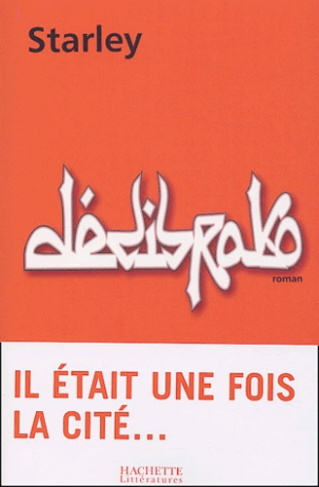
Dédibrako. Il était une fois la Cité...
Dédibrako est un conte urbain qui met en scène un jeune homme de 23 ans, Ace, dans une cité de la banlieue parisienne. partir de sa rencontre avec Laura, sa vie devient un véritable rapport de forces entre son envie de construire un nid de bonheur et le business de banlieue, dans lequel Tony, son ami de toujours, a introduit le marché de l'héroïne. Dans cette saga, son point de vue, teinté d'humour et de détresse, décrit au scalpel le biotope urbain. Chanson de geste moderne de la majorité silencieuse du XXIe siècle, l'ouvrage respire la fraîcheur et l'insolence d'une jeunesse bien plus intelligente que sa guignolisation veut bien le laisser penser. Dédibrako est une dédicace (c'est la signification du terme) comme il en fleurissait sur les ondes avec les radios libres de 1981. Au sujet de la langue: "C'est un français assez remarquable qui s'entend aujourd'hui dans les cités [...], parole explosive qu'a produite, depuis deux décennies, cette vie marginale de groupes très divers, qu'unit un commun besoin d'affirmer leur identité par le biais d'une sorte de parler véhiculaire traversant les ethnies et cimentant leur solidarité. [...] Cette langue devient, par malaxage et torsion du français refaçonné, la propriété de ses usagers. Le traitement des monosyllabes, soumis à verlanisations successives, atteste ce phénomène [...]. On peut souhaiter qu'un large public en prenne connaissance, quand ce ne serait que pour acquérir une information, sur une langue dont la floraison dans un cadre humain très particulier est un phénomène important de la société française d'aujourd'hui." Claude Hagège, professeur au Collège de France, Chaire de Théologie Linguistique.Impression à la demandeCOMMANDER32,75 €

Du même éditeur
-

'A Perfect Eye and Steady Hand'. Goldsmithing in Tudor & Stuart London
This handsomely illustrated book is published to mark the opening of the Goldsmiths' Gallery at the new London Museum in Smithfield. Showcasing the Cheapside Hoard alongside historic treasures from the Goldsmiths' Company's collection, it takes readers on a global journey in the wake of plate, jewels and gemstones - and the people who made, traded and treasured them. Gold and silver are precious - prized as a form of portable capital, essential for the mints and coinage, used to express power and status. Yet great skill was needed in the buying, the fashioning and the selling of either metal. As fashions changed, much early modern plate and jewellery was melted down when sentiment gave way to market value. This makes the survival of the Goldsmiths' Company's holdings exceptional - and the Cheapside Hoard, unearthed by workmen in 1912 after lying undisturbed for nearly 300 years - nothing short of extraordinary. Comprising over 500 pieces - made of emeralds, diamonds and sapphires sourced from across the world, worked into mesmerising brooches, buttons, necklaces and rings - the Cheapside Hoard is the greatest single collection of Elizabethan and Stuart jewellery in the world. The book places the Hoard in its historical and global context, celebrating it alongside highlights from the Goldsmiths' Company's collection. It offers four main chapters on Elizabethan and early Stuart London, the goldsmiths' trade, the Hoard itself, and the city's global networks. Interwoven thematic sections explore craftsmanship, personal stories, trade practices, taste and fashion - bringingtogether jewels and plate to reveal a rich tapestry of skill, style and exchange.PréventePRÉCOMMANDER35,00 € -

-
-