Corse, l'inéluctable liberté
Il y a bien en Corse un Peuple, une nation - c'est-à-dire une volonté collective de vivre un avenir commun -, dans le cadre de la République Française et de l'Union Européenne, synthétisée par la revendication du statut d'Autonomie interne. Aujourd'hui le véritable challenge n'est plus de revendiquer la reconnaissance du Peuple corse ou le statut d'Autonomie interne - cela viendra en son temps -, quand Paris aura enfin compris la nécessité impériale du dialogue-, mais de construire les bases solides dans tous les domaines : gouvernance, gestion rigoureuse, secteurs économique, social culturel, avec en toile de fond une démocratie exigeante et omniprésente et les principes de l'humanisme. Edmond Simeoni retrace la trame de ce combat historique, qui puise sa force et dans la légitimité historique de la lutte et dans le soutien toujours croissant des Corses de l'île et de la diaspora.
| Nombre de pages | 156 |
|---|---|
| Date de parution | 14/11/2018 |
| Poids | 293g |
| Largeur | 165mm |
| EAN | 9782364790926 |
|---|---|
| Titre | Corse, l'inéluctable liberté |
| Auteur | Simeoni Edmond |
| Editeur | ALAIN PIAZZOLA |
| Largeur | 165 |
| Poids | 293 |
| Date de parution | 20181114 |
| Nombre de pages | 156,00 € |
| Disponibilité | Epuisé |
Pourquoi choisir Molière ?
Du même auteur
-
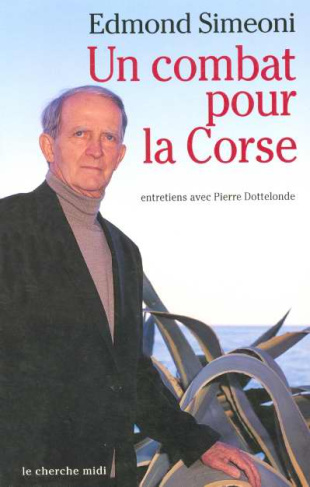
Un combat pour la Corse
Depuis ce jour d'août 1975 où il prit les armes à Aleria pour défier Paris, Edmond Simeoni symbolise plus que tout autre la contestation corse. Aujourd'hui, celui que par respect, amitié ou admiration, les Corses appellent tout simplement " Edmond " évoque pour la première fois, avec la franchise qui lui est propre, les temps forts d'un combat commencé dès les années soixante. Un engagement total pour l'émancipation de la Corse qui l'a conduit à rencontrer François Mitterrand, Jacques Chirac, Lionel Jospin et tant d'autres personnalités, ou encore les responsables du FLNC. Par-delà cette évocation qui offre un éclairage inédit sur les principaux épisodes connus et méconnus de la question corse ", Edmond Simeoni porte ici un regard sans concession sur ceux qui, à Paris, ont eu en charge le dossier corse mais aussi sur ses compatriotes. Pour mieux pointer les responsabilités des uns et des autres dans une situation qui aurait pu connaître une tout autre évolution et dessiner les conditions d'une solution prochaine au problème corse. Un livre indispensable pour comprendre comment la Corse a basculé dans la contestation violente et est devenue le talon d'Achille de la France.EpuiséVOIR PRODUIT18,25 € -
-
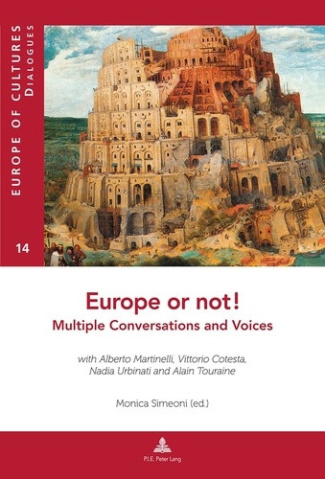
Europe or Not! Multiple Conversations and Voices. With Alberto Martinelli, Vittorio Cotesta, Nadia U
Europe is in crisis and the EU project risks disintegration. The refugee and Brexit issues, as well as recent events in Turkey, demonstrate how serious matters really are. In a EurActiv interview, in February 2016, Edgar Morin, the French sociologist and philosopher, speaks of a "planetary crisis" and the need "to change civilisation" in order to respond to the complexity of today's world. Furthermore, the drama of terrorism, a new phenomenon for contemporary western democracies requires serious reflection regarding jihadism and its radicalisation. These are but some of the issues addressed during the multiple conversations held with the three sociologists, Alberto Martinelli, Vittorio Cotesta and Alain Touraine and with the political scientist, Nadia Urbinati. All the interviewees are leading experts on European issues and institutions, as well as on democracy put to the test currently by rampant populism in almost all the EU countries. Alain Touraine fervently holds that "it is madness" not to want a united Europe at a moment when we need a new political and economic project capable of defeating the nationalism, walls and separation between states that now seem to prevail. Europe finds itself in a dramatic position : it must choose innovation and construction, or disintegration, with all the unpredictable consequences this may entail.Sur commande en 2-4 joursCOMMANDER50,10 € -
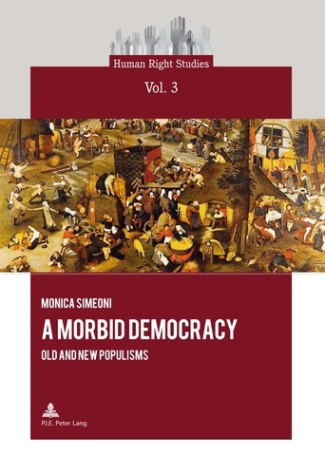
A Morbid Democracy. Old and New Populisms
The crisis of democracy in Europe and the inability of the political parties and élites to adequately meet the challenges of globalisation exposes the increasingly fragmented middle classes to the temptations of Euroscepticism, and, in some cases, xenophobia. This appears to be a portrait of contemporary reality, but the current crisis has deep roots. The Spanish thinker José Ortega y Gasset described the pathologies of the mass man and of the nascent democratic system as far back as the beginning of the twentieth century, in a significant text entitled Una democracia morbosa, which appears to foreshadow the present state of affairs. The crisis of the average man, the degradation and devaluation of culture appear to be the distinctive traits of the new, post-ideological democracy of our times, known as "audience democracy". The political parties, faced with this profound crisis, in some cases seek dangerous shortcuts through demagogic and rhetorical use of the term "people", while the charismatic figure of the leader gains in prestige as a reference model. Resentment, caused by lack of representation of the just demands of the citizens, can turn to anger and destabilise the institutions of democracy. There is therefore an urgent need for an inclusive Europe with a renewed welfare system, based around the citizenry and not the masses.Sur commande en 2-4 joursCOMMANDER52,75 €


Du même éditeur
-

-
-

-
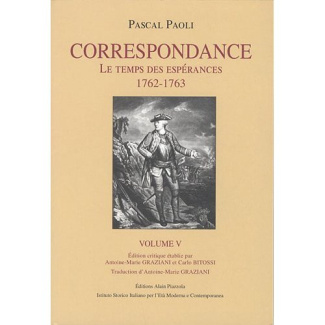
Correspondance. Volume 5, Le temps des espérances (1762-1763), Edition bilingue français-italien
Sur commande en 4-6 joursCOMMANDER15,00 €