GIAMBOLOGNA: COURT SCULPTOR TO FERDINANDO
Recently discovered documents show that Giambologna, the great sculptor at the court of the Medici whose bronzes delighted all Europe, made six large garden sculptures for King Henri IV of France, otherwise unknown. This book describes the garden project and discusses three bronzes identified as from the project, in particular a hitherto unknown Venus. Ferdinando I de? Medici, Grand Duke of Florence, built up his relationship with the French crown with numerous diplomatic gifts, including the creation of new gardens at St-German-en-Laye laid out for the King of France by the engineer and designer Tommaso Francini, who had designed and built Ferdinando?s own Pratolino gardens, and sculptures by Giambologna that would adorn them. This was in the years 1597?1600, and preparatory to the marriage of his daughter Maria to Henri IV in 1600 in the most spectacular wedding celebrations ever seen in Europe. Blanca Troyols describes the nature of Henri IV?s beauitiful gardens ? in the latest Mannerist style, using a host of materials (stone, shell, crystal) and rare plants, the extravagant water features in which Francini was a specialist, and an array of statuary. She places this important garden in context and also discusses the diplomatic manoeuvring between the respectively larger and poorer and smaller and richer states of France and Tuscany. Alexander Rudigier examines the surviving works by Giambologna associated with the gardens, including a hitherto unknown Venus in a private collection that has been the object of some controversy. He compares this to the Mercury in the Louvre and the Triton in the Metropolitan Museum in New York also originally for the gardens, as well as with Giambologna?s work as a whole. He shows that probably Giambologna?s pupil Hans Reichle was his major assistant, and traces the career of the German founder, Gerhard Meyer, working in Florence, who signed the Venus. This leads to an important discussion of Gimabologna?s late work in general. Lars Olof Larson provides a technical report on the new Venus. The distinguished bronze specialist Bertrand Jestaz provides an introduction and overview.
| Date de parution | 10/01/2020 |
|---|---|
| Poids | 2 890g |
| Largeur | 250mm |
| EAN | 9781912168149 |
|---|---|
| Titre | GIAMBOLOGNA: COURT SCULPTOR TO FERDINANDO |
| Auteur | RUDIGIER/TRUYOLS |
| Editeur | HOLBERTON |
| Largeur | 250 |
| Poids | 2890 |
| Date de parution | 20200110 |
| Nombre de pages | 0,00 € |
| Disponibilité | Sur commande en 4-6 jours |
Pourquoi choisir Molière ?
Du même auteur
-
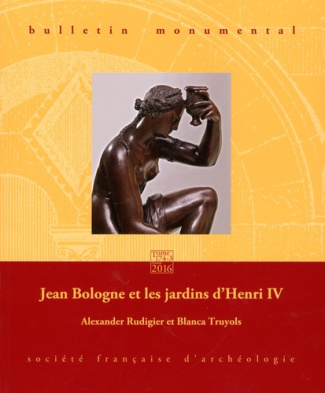
Bulletin monumental N° 174-3, septembre 2016 : Jean Bologne et les jardins d'Henri IV
Ce bulletin monumental est consacré aux jardins de Henri IV et à Jean Bologne, sculpteur à la Renaissance. Sommaire : Bertrand Jestaz, Avant-propos Emmanuel Lurin, "Faire plaisir à l'ami" : réflexions sur les présents de Ferdinand Ier de Médicis et les premiers travaux de Tommaso Francini en France Blanca Truyols, Les présents de Ferdinand Ier de Médicis à Henri IV pour ses jardins de Saint-Germain en Laye. Documents inédits sur Tommaso Francini et Jean Bologne Alexander Rudigier, Les bronzes envoyés de Florence à Saint-Germain-en-Laye, la Vénus de 1597, et les dernières oeuvres de Jean Bologne.EpuiséVOIR PRODUIT30,00 €

Du même éditeur
-

'A Perfect Eye and Steady Hand'. Goldsmithing in Tudor & Stuart London
This handsomely illustrated book is published to mark the opening of the Goldsmiths' Gallery at the new London Museum in Smithfield. Showcasing the Cheapside Hoard alongside historic treasures from the Goldsmiths' Company's collection, it takes readers on a global journey in the wake of plate, jewels and gemstones - and the people who made, traded and treasured them. Gold and silver are precious - prized as a form of portable capital, essential for the mints and coinage, used to express power and status. Yet great skill was needed in the buying, the fashioning and the selling of either metal. As fashions changed, much early modern plate and jewellery was melted down when sentiment gave way to market value. This makes the survival of the Goldsmiths' Company's holdings exceptional - and the Cheapside Hoard, unearthed by workmen in 1912 after lying undisturbed for nearly 300 years - nothing short of extraordinary. Comprising over 500 pieces - made of emeralds, diamonds and sapphires sourced from across the world, worked into mesmerising brooches, buttons, necklaces and rings - the Cheapside Hoard is the greatest single collection of Elizabethan and Stuart jewellery in the world. The book places the Hoard in its historical and global context, celebrating it alongside highlights from the Goldsmiths' Company's collection. It offers four main chapters on Elizabethan and early Stuart London, the goldsmiths' trade, the Hoard itself, and the city's global networks. Interwoven thematic sections explore craftsmanship, personal stories, trade practices, taste and fashion - bringingtogether jewels and plate to reveal a rich tapestry of skill, style and exchange.PréventePRÉCOMMANDER35,00 € -

-
-