Hogarth's Britons
Hogarth's Britons explores how the English painter and graphic satirist William Hogarth (1697-1764) set out to define British nationhood and identity at a time of division at home and conflict abroad. With notions of community cohesion, good citizenship and patriotism, wrapped up in a unifying idea of British national character and spirit in all its variety, and set alongside the ongoing national debate on Britain's past, present and future within European and World affairs, Hogarth and his art has never been more relevant. In the summer of 1745, Prince Charles Edward Stuart 'Bonnie Prince Charlie' landed with his supporters, the 'Jacobites', in a remote corner of Scotland. This signalled the start of his audacious military campaign, with the backing of Britain's global adversary France and during a Europe-wide war, to topple the Hanoverian, Protestant monarch George II and restore the Catholic Stuarts, exiled in France and then Rome since 1688, to the throne. The country descended into turmoil, with regional, local and family loyalty for these rival royal dynasties severely tested, and opposing visions for the new nation of Great Britain - since the Union of England and Scotland in 1707 - laid bare. By early December the prince and his 6, 000 troops arrived in Derby, just 120 miles and five days' march from London. For both sides everything was at stake. From the 1720s, through the crises of the early 1740s, to the civil war called the 1745 Jacobite Rebellion or Rising, Prince Charles's defeat at Culloden in April 1746 and beyond, Hogarth created some of the most iconic images in British and European art, including Marriage A-La-Mode, O the Roast Beef of Old England (The Gate of Calais) and The March of the Guards to Finchley. Through such vibrant scenes, rich in topical commentary, he conveyed a sense of external threat (real and imagined) from foreign powers and internal political, social and cultural upheaval. At the same time he offered his fellow Britons a confident, reassuring idea of the rights and liberties they enjoyed under King George and his government : a flawed status quo, as Hogarth would readily admit, yet certainly better, he would argue, than the regime that would replace it under the 'popish' Stuarts as client monarchs of the self-serving French king, Louis XV. With British society and politics in flux, and the Union between Scotland and England arguably more vulnerable now than at any moment since 1746, the themes explored in Hogarth's Britons have profound resonance with our own time.
| Nombre de pages | 96 |
|---|---|
| Date de parution | 02/06/2023 |
| Poids | 432g |
| Largeur | 210mm |
| EAN | 9781913645458 |
|---|---|
| Titre | Hogarth's Britons |
| Auteur | Riding Jacqueline |
| Editeur | HOLBERTON |
| Largeur | 210 |
| Poids | 432 |
| Date de parution | 20230602 |
| Nombre de pages | 96,00 € |
| Disponibilité | Sur commande en 4-6 jours |
Pourquoi choisir Molière ?
Du même auteur
-
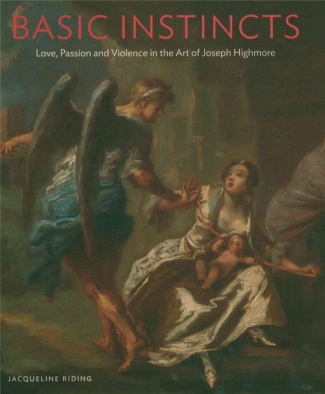
BASIC INSTINCTS - LOVE, LUST AND VIOLENCE IN THE ART OF...
Joseph Highmore (1692-1780) is best known as a portrait painter of the Georgian middle class. During the 1740s, however, his art radically shifted, reflecting his involvement with London's new Foundling Hospital - of which he was a governor - and its mission as a refuge for 'exposed and deserted young children". Through his art and writings Highmore explored the circumstances - from the trauma of sexual assault to the terror of public disgrace - by which parents, particularly unmarried mothers, would be driven to abandon or even murder their new-born infants. This culminated in a work of exceptional power, The Angel of Mercy, the centrepiece of this book.Sur commande en 4-6 joursCOMMANDER30,00 € -
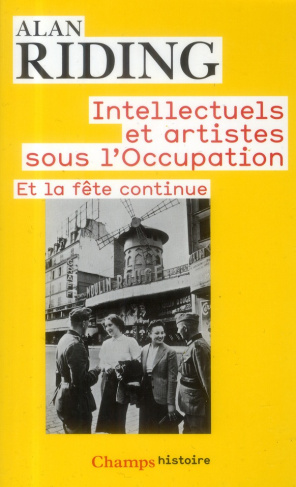
Intellectuels et artistes sous l'Occupation. Et la fête continue
Alan Riding a été le correspondant culturel européen du New York Times pendant douze ans. Il vità Paris.Sur commande en 2-4 joursCOMMANDER12,00 € -
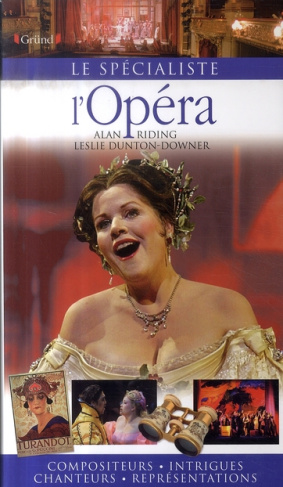
L'Opéra
Les compositeurs : de Monteverdi à Adams, apprenez davantage sur les vies des maîtres de l'Opéra. Les représentations : découvrez des centaines d'interprétations d'opéras classiques et modernes grâce à des photographies stupéfiantes. Les opéras : des résumés de plus de 160 opéras du monde entier. Un guide complet et illustré : : explorez 400 ans de drames musicaux, de la fin de la Renaissance italienne jusqu'à aujourd'hui.EpuiséVOIR PRODUIT24,95 € -

Deals, mensonges et mousse au chocolat
Une rom-com légère et délicieuse, mais porteuse de messages forts. Un New Adult green flag que tout le monde devrait lire.Un faux petit ami, la voilà la solution ! Léa rêve de sauver le restaurant où elle a passé son enfance, c'est là qu'est née et a grandi sa passion pour la cuisine. Malheureusement, elle se heurte au refus systématique des banques. Ses vingt-quatre ans et son statut de célibataire sont un frein pour obtenir le Graal, un prêt bancaire qui ferait décoller sa carrière. Elle est dans une impasse, mais quand son frère lui propose un drôle de deal, elle accepte. Faire croire à son banquier qu'elle a un petit ami, facile, non ? Surtout qu'en échange, elle a juste à l'héberger? Alex n'en peut plus : partager un appart avec son ex est un calvaire. Pas le choix, il est fauché et doit tenir le temps de passer son concours. Les relations sérieuses, pour lui, c'est terminé. Alors, quand son meilleur ami lui propose de squatter chez sa s'ur, en échange d'un petit service, il accepte. Après tout, jouer au faux petit ami devant un banquier récalcitrant, ce n'est pas la mer à boire, n'est-ce pas ? Dans cette colocation forcée, un simple deal risque de devenir l'étincelle qui peut tout changer. Entre mensonges, quiproquos et désirs inavoués, Léa et Alex oseront-ils jouer cartes sur table ?Sur commande en 4-6 joursCOMMANDER17,90 €


Du même éditeur
-

'A Perfect Eye and Steady Hand'. Goldsmithing in Tudor & Stuart London
This handsomely illustrated book is published to mark the opening of the Goldsmiths' Gallery at the new London Museum in Smithfield. Showcasing the Cheapside Hoard alongside historic treasures from the Goldsmiths' Company's collection, it takes readers on a global journey in the wake of plate, jewels and gemstones - and the people who made, traded and treasured them. Gold and silver are precious - prized as a form of portable capital, essential for the mints and coinage, used to express power and status. Yet great skill was needed in the buying, the fashioning and the selling of either metal. As fashions changed, much early modern plate and jewellery was melted down when sentiment gave way to market value. This makes the survival of the Goldsmiths' Company's holdings exceptional - and the Cheapside Hoard, unearthed by workmen in 1912 after lying undisturbed for nearly 300 years - nothing short of extraordinary. Comprising over 500 pieces - made of emeralds, diamonds and sapphires sourced from across the world, worked into mesmerising brooches, buttons, necklaces and rings - the Cheapside Hoard is the greatest single collection of Elizabethan and Stuart jewellery in the world. The book places the Hoard in its historical and global context, celebrating it alongside highlights from the Goldsmiths' Company's collection. It offers four main chapters on Elizabethan and early Stuart London, the goldsmiths' trade, the Hoard itself, and the city's global networks. Interwoven thematic sections explore craftsmanship, personal stories, trade practices, taste and fashion - bringingtogether jewels and plate to reveal a rich tapestry of skill, style and exchange.PréventePRÉCOMMANDER35,00 € -

-
-