The European Union: A Very Short Introduction
The European Union (EU) stands out as a fascinatingly unique political organisation. On the one hand, it has shown the potential for developing deep and wide-ranging cooperation between member states, going far beyond that found anywhere else in the world. On the other, it is currently in the throes of a phase of profound uncertainty about its viability and future. Showing how and why the EU has developed from 1950 to the present day, this Very Short Introduction covers a range of topics, including the Union's early history, the workings of its institutions and what they do, the interplay between 'eurosceptics' and federalists, and the role of the Union beyond Europe in international affairs and as a peace-keeper. In this fully updated fourth edition, Pinder and Usherwood cover the migrant crisis and the UK's decision to leave the Union, set in the context of a body that is now involved in most areas of public policy. Discussing how the EU continues to draw in new members, they conclude by considering the future of the Union and the choices and challenges that may lie ahead. ABOUT THE SERIES: The Very Short Introductions series from Oxford University Press contains hundreds of titles in almost every subject area. These pocket-sized books are the perfect way to get ahead in a new subject quickly. Our expert authors combine facts, analysis, perspective, new ideas, and enthusiasm to make interesting and challenging topics highly readable.
| Date de parution | 25/01/2018 |
|---|---|
| Poids | 180g |
| EAN | 9780198808855 |
|---|---|
| Auteur | Pinder John, Usherwoord |
| Editeur | OXFORD UNIVERSITY PRESS |
| Date de parution | 20180125 |
| Disponibilité | Sur commande en 6-10 jours |
Pourquoi choisir Molière ?
Du même auteur
-
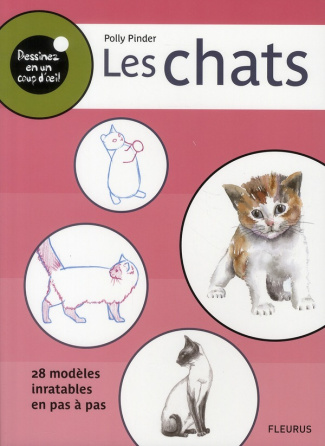
Les chats
Résumé : Un bon dessin vaut mieux qu'un long discours ! Et la sûreté du trait est avant tout une question de regard... Laissez-vous guider dans la réalisation et la mise en couleur de 28 jolis modèles en pas à pas. Des premières esquisses à la touche finale, observez les étapes pour représenter votre animal favori dans toutes ses attitudes. Suivez simplement les images et découvrez comment dessiner en un coup d'oeil !EpuiséVOIR PRODUIT4,95 € -
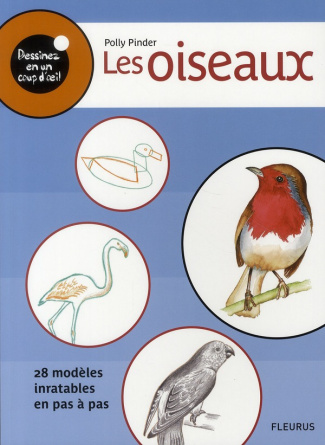
Les oiseaux
Résumé : Un bon dessin vaut mieux qu'un long discours ! Et la sûreté du trait est avant tout une question de regard... Laissez-vous guider dans la réalisation et la mise en couleur de 28 jolis modèles en pas à pas. Des premières esquisses à la touche finale, observez les étapes pour représenter votre animal favori dans toutes ses attitudes. Suivez simplement les images et découvrez comment dessiner en un coup d'oeil !EpuiséVOIR PRODUIT4,95 € -
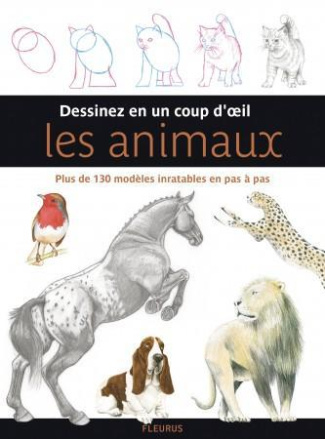
Dessiner en un coup d'oeil les animaux
Un bon dessin vaut mieux qu'un long discours! Dans cetouvrage, pas d'explications superflues: il vous suffit de suivrel'évolution du dessin étape par étape pour représenter votremodèle favori dans une attitude typique. Laissez-vous guiderpas à pas pour dessiner et mettre en couleur animaux sauvagesou domestiques, oiseaux, chevaux... Plus de 130 modèles voussont proposés. Des premières esquisses à la touche finale,apprenez à dessiner en un coup d'oeil!EpuiséVOIR PRODUIT14,95 € -
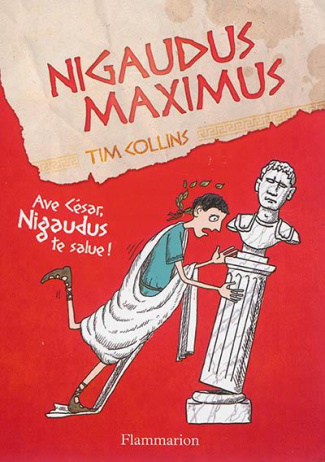
Nigaudus Maximus. Ave César, Nigaudus te salue !
Moi, c'est Nigaudus Maximus. Un jour, je serai le plus grand héros romain de tous les temps ! Bon, pour l'instant, ce n'est pas gagné. Mon père ne veut pas que j'apprenne à me battre, et ma mère ne s'occupe que de ses poulets sacrés. Sans parler de mes amis qui passent leur temps à se moquer de moi. Mais je vais leur montrer ! Je sais qu'un féroce guerrier sommeille en moi. J'espère juste qu'il va bientôt se réveiller...EpuiséVOIR PRODUIT12,00 €


Du même éditeur
-

Democracy without Shortcuts : A Participatory Conception of Deliberative Democracy
This book articulates a participatory conception of deliberative democracy that takes the democratic ideal of self-government seriously. It aims to improve citizens' democratic control and vindicate the value of citizens' participation against conceptions that threaten to undermine it. The book critically analyzes deep pluralist, epistocratic, and lottocratic conceptions of democracy. Their defenders propose various institutional ''shortcuts'' to help solve problems of democratic governance such as overcoming disagreements, citizens' political ignorance, or poor-quality deliberation. However, all these shortcut proposals require citizens to blindly defer to actors over whose decisions they cannot exercise control. Implementing such proposals would therefore undermine democracy. Moreover, it seems naive to assume that a community can reach better outcomes 'faster' if it bypasses the beliefs and attitudes of its citizens. Unfortunately, there are no 'shortcuts' to make a community better than its members. The only road to better outcomes is the long, participatory road that is taken when citizens forge a collective will by changing one another's hearts and minds. However difficult the process of justifying political decisions to one another may be, skipping it cannot get us any closer to the democratic ideal. Starting from this conviction, the book defends a conception of democracy ''without shortcuts''. This conception sheds new light on long-standing debates about the proper scope of public reason, the role of religion in politics, and the democratic legitimacy of judicial review. It also proposes new ways to unleash the democratic potential of institutional innovations such as deliberative minipublics.Sur commande en 6-10 joursCOMMANDER81,01 € -

Read with Oxford: Stage 2: Biff, Chip and Kipper: Wet Feet and Other Stories
Sur commande en 6-10 joursCOMMANDER14,99 € -
Read with Oxford: Stage 3: Biff, Chip and Kipper: Dolphin Rescue and Other Stories
Sur commande en 6-10 joursCOMMANDER14,99 € -
Read with Oxford: Stage 2: Julia Donaldson's Songbirds: Singing Dad and Other Stories
Sur commande en 6-10 joursCOMMANDER14,99 €