

Architecture for Health - Architectur für Gesundheit
L'architecture hospitalière reflète la société dans un état d'évolution. Comment nous occupons-nous de nos patients ? Quels environnements de travail offrons-nous aux aidants naturels ? Comment l'hôpital s'intègre-t-il dans notre ville ? Lorsqu'il s'agit de planifier un hôpital, les architectes ne sont pas seulement confrontés au défi de combiner de manière significative la fonction et la construction. Ils conçoivent également des salles qui servent temporairement d'environnement de travail et de vie pour les patients, le personnel et les proches. Christine Nickl-Weller et Hans Nickl travaillent dans le domaine de la construction hospitalière depuis 40 ans. Forts de leur riche expérience pratique et de leur recherche universitaire, ils voient l'hôpital à différents niveaux. Cette vision holistique est enrichie par les contributions d'auteurs renommés issus de disciplines aussi diverses que la psychologie, la gestion de la santé, l'architecture du paysage et l'histoire de l'art.
| Nombre de pages | 270 |
|---|---|
| Date de parution | 25/02/2021 |
| Poids | 1 102g |
| Largeur | 225mm |
| EAN | 9783037682586 |
|---|---|
| Titre | ARCHITECTURE FOR HEALTH - ARCHITECTUR FUR GESUNDHEIT |
| Auteur | Nickl-Weller Christine ; Nickl Hans |
| Editeur | BRAUN |
| Largeur | 225 |
| Poids | 1102 |
| Date de parution | 20210225 |
| Nombre de pages | 270,00 € |
| Disponibilité | Epuisé |
Pourquoi choisir Molière ?
Du même auteur
-
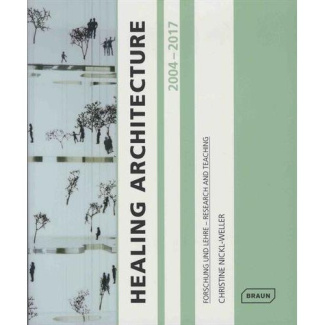
Healing Architecture 2004-2017 - Forschung und lehre - Research and Teaching
What does architecture have to do with health? Can architecture support the healing process? At the Technical University of Berlin, the department "Architecture for Health" researches and teaches how architecture could influence health. Applying the variable "health" to all areas of life is the focus of the department's teaching and research work. The term "Healing Architecture" represents the courage to think outside the box, to explore and to go beyond conventional conceptions of architecture. Tetxt in English and German Projects: Auguste-Viktoria Hospital Berlin, Germany Campus Milano, Italy Aquaponic Tower Beijing, China ... Topics: Evidence-based design research Building Neighborhood Health Ecosystems Architectural Psychology in Design EducationEpuiséVOIR PRODUIT39,90 € -
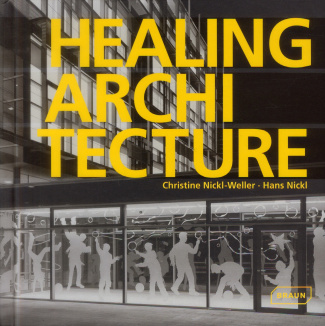
Healing Architecture
In what way can architecture contribute to healing and recovery? And how do our surroundings - both built and unbuilt - influence our prospects of staying healthy? Healing Architecture addresses the development and design of spaces for hospitals and other healthcare institutions, how they are perceived, and their overall impact on combating illnesses. This volume presents in detail the principles of this field of study and all the major issues involved, using a range of international projects as illustrative examples. In order to present a comprehensively interdisciplinary analysis of the subject matter, architects, medical practitioners, economists, artists, urban planners and communication scientists discuss the various aspects of Healing Architecture. This book thus makes an important contribution to achieving an ar-chitecture that is attuned to people's needs and helps to promote the recovery process. Ouvrage bilingue anglais-allemandEpuiséVOIR PRODUIT44,90 € -




Du même éditeur
-
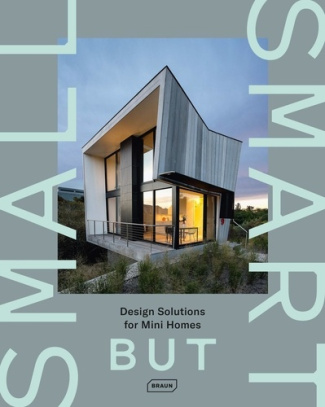
Small but smart. Design solutions for mini homes
By living in a large ceramic tub, Ancient Greek philosopher Diogenes was one of the first people to promote a simple lifestyle as a protest against a corrupt society - one could call him an unwitting pioneer of the current tiny-house movement. However, today small living is not necessarily connected to an alternative or even anarchic lifestyle - it simply makes things easier, more economic and eco-friendly to focus on what is really needed in life without compromising quality. This volume presents a large variety of sophisticated solutions for mini houses in terms of architectural style, construction method and interior design. Whether portable or prefabricated, newly built or reused, rural or urban, they all meet the highest technological and sustainable standards to literally reduce their owners' ecological footprint.EpuiséVOIR PRODUIT39,90 € -
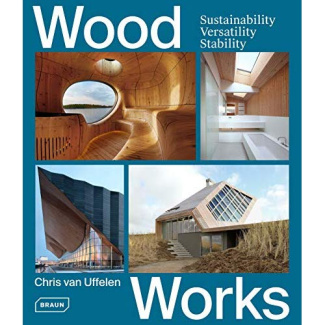
WOOD WORKS - SUSTAINABILITY, VERSATILITY, STABILITY
Wood is nature's most remarkable resource, embedded in the history, culture and life of humans worldwide. For the architecture world it is ingenious: malleable and at the same time resilient, fully recyclable and environmentally friendly as it reduces greenhouse gases, universally applicable and locally available. Today, new processing technologies extend the spectrum of its possible applications and the combinability with other building materials, enabling innovative technical and design solutions. In short, anything is possible when it comes to timber, whatever designers conceive can be realized. The traditional building material has become ultra-contemporary and increasingly cutting-edge, offering exciting possibilities for architectural design.EpuiséVOIR PRODUIT39,90 € -
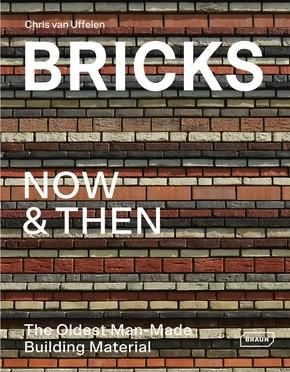
Bricks now et then - The oldest man-made - Building material
Buildings made of brick are found in very different epochs and cultures all over the world. Always astonishing, the qualities of brickwork continue to be explored by the world's best architects until today. A key characteristic of the material's success since time immemorial has always been the ease of planning due to its standardized production and the resulting harmonized building processes. In addition to longevity, amazing constructive possibilities as well as inexpensive and at the same time environmentally friendly production are among the qualities that are particularly valued today. Using computer software solutions, and even robots in some cases, today's architects are deploying brick in inventive ways: perforated, pixelated, undulating and more. The featured works from the past and present are a demonstration of how the use and popularity of bricks has not diminished one bit over the millennia, and is even gaining popularity today.EpuiséVOIR PRODUIT39,90 €


