LATE MEDIEVAL PANEL PAINTINGS II - MATERIALS METHODS MEANINGS
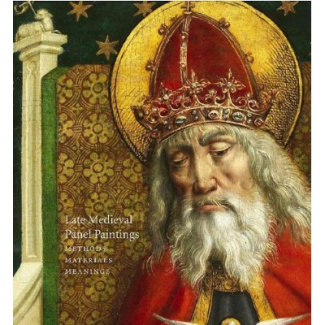
This beautiful and extensively illustrated catalogue presents in-depth case studies of twenty-four rare and remarkable Late Medieval panel paintings, many from the German-speaking regions of Europe, but also from Spain, France and the Southern Netherlands. These works - often fragments of larger altarpieces designed for liturgical performance and communal or private devotion - can be monumental and dramatic or small and intimate, but all on close examination prove to be rich in meaning - even in cases where the painters remain anonymous, and the precise contexts of their creation have become obscured or fragmented. The collected essays will encompass a broad spectrum of artistic styles, techniques, and interests, including in some instances the works' original frames, and the attendant meanings they give to the imagery housed within. The group will also be augmented by a rare and important small-scale tapestry altarpiece with close links to panel painting. The inclusion of such a piece, one of the many newly resurfaced works to be included in the catalogue, will off er an innovative approach to the scholarship of Medieval paintings, and enrich our understanding of the cross-pollination of ideas between mediums and the role played by painters in tapestry production at the turn of the sixteenth century. The book, a follow-up to Susie Nash's important 2011 catalogue, considers the physical history, original form, condition and technique of the assembled works, using wood analysis and dendrochronology, paint samples, infra-red, x-rays and macro photography to document the materials and methods involved in their making and the alterations and transformations they have undergone with time. This new information is combined with close readings of their imagery and its presentation to explore issues of meaning, creative process, patronal intervention and artistic intention, leading in many cases to new reconstructions, attributions, dates and iconographic readings. The text is extensively illustrated with a series of images of all of the works, along with technical photographs and comparative material.
| Date de parution | 10/05/2016 |
|---|---|
| Poids | 2 000g |
| Largeur | 245mm |
| EAN | 9781907372919 |
|---|---|
| Titre | LATE MEDIEVAL PANEL PAINTINGS II - MATERIALS METHODS MEANINGS |
| Auteur | NASH SUSIE |
| Editeur | HOLBERTON |
| Largeur | 245 |
| Poids | 2000 |
| Date de parution | 20160510 |
| Nombre de pages | 0,00 € |
| Disponibilité | Epuisé |
Pourquoi choisir Molière ?
Du même auteur
-
-
-

La pierre de Srha Tome 4 : Le paradis des Enfers
La pierre de Srha ROMAN Syrah est bien de retour. Dans cette nouvelle aventure, je vais rencontrer Elysion, le Maitre des Ombres et le Gardien de la Porte. Le Paradis des Enfers, c'est là où vont les âmes suicidées des réincarnations de Xina, et c'est là que Xina elle-même réside. Je dois y aller à tout prix, pour comprendre et faire connaissance avec elles. Mais Elysion ne me laissera pas passer, il est en colère contre Syrah, je dois découvrir ce que ça cache. Nous avons tous le même but : en finir avec l'ennemi...Impression à la demandeCOMMANDER18,00 € -
Profession : sauver des vies. 24 heures dans la vie de 12 héros du quotidien
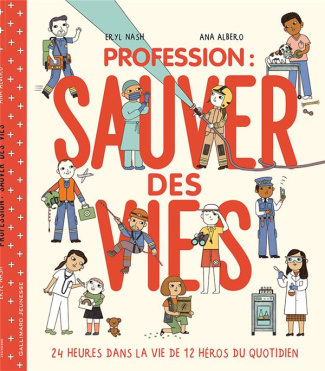
Pompier, secouriste, infirmière en pédiatrie, sauveteur en montagne, psychologue, policier, vétérinaire, docteur volant, chirurgien, cancérologue, travailleuse humanitaire et nageur-sauveteur sont les 12 professions que vous découvrirez dans cet album qui rend hommage aux personnes qui dédient leur vie à aider les autres. Chaque métier est présenté sur une double page à travers le portrait de personnes réelles provenant du monde entier. Une journée type est décrite et illustrée par une courte BD, l'accent est mis sur le matériel utilisé par chacun grâce à un kit illustré.Sur commande en 2-4 joursCOMMANDER13,90 €


Du même éditeur
-

'A Perfect Eye and Steady Hand'. Goldsmithing in Tudor & Stuart London
This handsomely illustrated book is published to mark the opening of the Goldsmiths' Gallery at the new London Museum in Smithfield. Showcasing the Cheapside Hoard alongside historic treasures from the Goldsmiths' Company's collection, it takes readers on a global journey in the wake of plate, jewels and gemstones - and the people who made, traded and treasured them. Gold and silver are precious - prized as a form of portable capital, essential for the mints and coinage, used to express power and status. Yet great skill was needed in the buying, the fashioning and the selling of either metal. As fashions changed, much early modern plate and jewellery was melted down when sentiment gave way to market value. This makes the survival of the Goldsmiths' Company's holdings exceptional - and the Cheapside Hoard, unearthed by workmen in 1912 after lying undisturbed for nearly 300 years - nothing short of extraordinary. Comprising over 500 pieces - made of emeralds, diamonds and sapphires sourced from across the world, worked into mesmerising brooches, buttons, necklaces and rings - the Cheapside Hoard is the greatest single collection of Elizabethan and Stuart jewellery in the world. The book places the Hoard in its historical and global context, celebrating it alongside highlights from the Goldsmiths' Company's collection. It offers four main chapters on Elizabethan and early Stuart London, the goldsmiths' trade, the Hoard itself, and the city's global networks. Interwoven thematic sections explore craftsmanship, personal stories, trade practices, taste and fashion - bringingtogether jewels and plate to reveal a rich tapestry of skill, style and exchange.PréventePRÉCOMMANDER35,00 € -

-
-