
The Art of Conservation
This fascinating volume presents a wide-ranging overview of one of the lesser known yet fundamental disciplines of Art History : conservation. What happens when art ages ? By bringing together some of the leading experts in the field, the essays chart a journey through the theoretical, aesthetic and technical debates surrounding the conservation of Old Masters. The problem of how to look after paintings as they grow old is a historically complex one. Should they be 'restored' to their original glory, or should the patina of time be acknowledged ? What is to be done with damp and dirt, with rotten panels and yellowing varnishes ? The development of conservation is profoundly entwined with the development of Art History itself, as both deal in the interpretation of the past and its preservation for the future. The seventeen essays collected by editors Jane Martineau and David Bomford, which originally appeared in The Burlington Magazine, explore how these questions have been answered from the mid-sixteenth century to the present day. Masterpieces like Jan and Hubert van Eyck's Ghent Altarpiece or Rembrandt's Night Watch have been treated and mis-treated many times in their long lives. By the nineteenth century, the growing knowledge of the techniques employed by the old masters had a profound influence on the treatments applied to their works. In the same period, the birth of national galleries as public institutions entrusted with the collective heritage led to the need to preserve large numbers of paintings and establish conservation departments rooted in scientific research. By the mid-twentieth century, the materials and techniques of painting were utterly transformed, demanding fresh approaches to their preservation. A discipline that sits uniquely at the crossroads of art, science, philosophy and technology, modern conservation is the result of an ongoing collaboration between conservators, scientists and art historians following rigorous ethical standards and training programmes.
| Nombre de pages | 504 |
|---|---|
| Date de parution | 10/05/2024 |
| Poids | 1 808g |
| Largeur | 180mm |
| EAN | 9781916237841 |
|---|---|
| Titre | The Art of Conservation |
| Auteur | Martineau Jane ; Bomford David |
| Editeur | HOLBERTON |
| Largeur | 180 |
| Poids | 1808 |
| Date de parution | 20240510 |
| Nombre de pages | 504,00 € |
| Disponibilité | Sur commande en 4-6 jours |
Pourquoi choisir Molière ?
Du même auteur
-
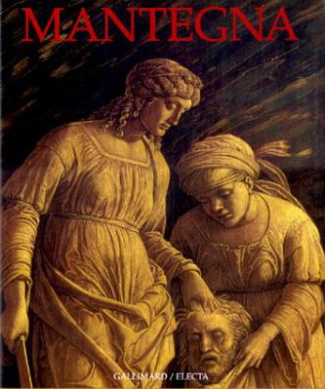
Andrea Mantegna
Andrea Mantegna (vers 1431-1506) fut l'un des plus grands artistes de la première Renaissance italienne. Fils d'un charpentier, il arriva enfant à Padoue, où l'on pouvait voir les ruines de l'ancienne cité romaine, où l'université était un centre de cours humanistes, où d'importants personnages collectionnaient des oeuvres antiques... C'est là que sa passion pour la civilisation de la Rome ancienne est née. Autour de 1460, Mantegna devint peintre à la cour des Gonzague à Mantoue, et c'est sous leur patronage qu'il produisit ses plus grands chefs-d'oeuvre.Cet ouvrage retrace le développement du génie inventif de Mantegna à travers ses peintures, dessins et gravures. Il est écrit par les plus grand spécialistes mondiaux de l'artiste, dont Laurence Gowing, Keith Christiansen, David Landau, Jane Martineau et Suzanne Boorsch.EpuiséVOIR PRODUIT71,00 € -
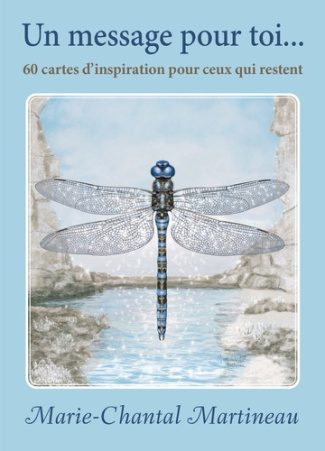
Un message pour toi. 60 cartes d'inspiration pour ceux qui restent
Que ce soit celle d'un conjoint, d'un enfant ou d'un parent, la mort d'un être cher s'avère une expérience difficile à traverser. Une telle perte nous plonge dans le deuil, avec toutes les émotions qui viennent avec, dont l'ennui, le manque et le chagrin. Les endeuillés sont bien souvent désemparés devant le vide laissé par le départ de leur être cher. Durant ses consultations, Marie-Chantal Martineau contacte régulièrement les « envolés » et délivre leurs messages à leurs êtres chers restés sur terre. Chaque fois, ces messages sont réconfortants, rassurants et apaisants, allégeant ainsi la peine de ceux qui restent. Constatant le bien-être qu'ils apportent, elle a réuni des messages typiques des envolés qu'elle offre sous le format de 60 cartes d'inspiration. Pour ceux qui traversent un deuil mais aussi pour tous les intervenants reliés à cet aspect difficile de la vie, Un message pour toi? s'avère un baume bienfaiteur pour le c'ur.En stock (dernières pièces)COMMANDER27,00 € -
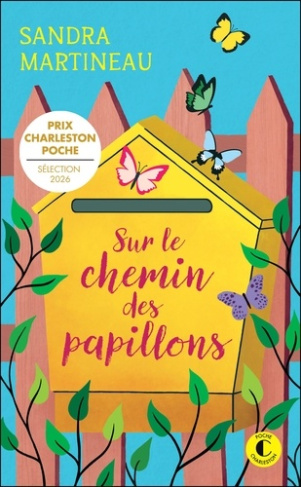
Sur le chemin des papillons
L'autrice qui transforme la vie ordinaire en aventure extraordinaireJacques, veuf et retraité de l'armée, coule une vie paisible et solitaire à Maintenant, un petit village sarthois. Jusqu'au jour où sa fille Joanna, aux abonnés absents depuis vingt ans, débarque chez lui à l'improviste. Prétextant des questions délicates à gérer, elle abandonne ses trois enfants et leurs valises pour deux semaines. Dès les premiers jours, la cohabitation s'annonce difficile. Mais c'est sans compter sur Madeleine, Chloé et d'autres habitants du village qui ne manquent pas d'animer, à leur manière, cette aventure déjà mouvementée? Entre choc des générations, secrets de famille et rencontres inattendues, Sandra Martineau nous offre une véritable ode à l'amitié et à la famille. « Un ton à la fois doux, rythmé et haletant. » Ouest-France Née à Saint-Brieuc d'une mère ch?ti et d'un père zaïrois, Sandra Martineau a quitté sa Bretagne natale pour s'installer dans la Sarthe. De son métissage et de sa jeunesse dans une cité des Côtes-d'Armor, elle a tiré une grande ouverture d'esprit et une empathie que l'on retrouve dans ses romans.En stockCOMMANDER8,90 € -

130 recettes pour diabétiques
L'alimentation qui convient à une personne diabétique est simplement une alimentation équilibrée, permettant de contrôler son poids et d'éviter les fluctuations de glycémie. Alors, diabétique ou non, faites-vous plaisir sans culpabiliser ! Cet ouvrage vous présente : les clés de l'équilibre alimentaire ; les principes de choix des aliments en fonction de leur index glycémique ; des exemples d'équivalence de plats composés ; 130 recettes savoureuses (entrées, viandes, poissons, desserts, sandwichs...) avec pour chacune te nombre de calories, les quantités de protéines, de lipides et de glucides, ainsi que l'index glycémique.En stockCOMMANDER7,55 €


Du même éditeur
-

'A Perfect Eye and Steady Hand' - Goldsmithing in Tudor & Stuart London
This handsomely illustrated book is published to mark the opening of the Goldsmiths' Gallery at the new London Museum in Smithfield. Showcasing the Cheapside Hoard alongside historic treasures from the Goldsmiths' Company's collection, it takes readers on a global journey in the wake of plate, jewels and gemstones - and the people who made, traded and treasured them. Gold and silver are precious - prized as a form of portable capital, essential for the mints and coinage, used to express power and status. Yet great skill was needed in the buying, the fashioning and the selling of either metal. As fashions changed, much early modern plate and jewellery was melted down when sentiment gave way to market value. This makes the survival of the Goldsmiths' Company's holdings exceptional - and the Cheapside Hoard, unearthed by workmen in 1912 after lying undisturbed for nearly 300 years - nothing short of extraordinary. Comprising over 500 pieces - made of emeralds, diamonds and sapphires sourced from across the world, worked into mesmerising brooches, buttons, necklaces and rings - the Cheapside Hoard is the greatest single collection of Elizabethan and Stuart jewellery in the world. The book places the Hoard in its historical and global context, celebrating it alongside highlights from the Goldsmiths' Company's collection. It offers four main chapters on Elizabethan and early Stuart London, the goldsmiths' trade, the Hoard itself, and the city's global networks. Interwoven thematic sections explore craftsmanship, personal stories, trade practices, taste and fashion - bringing together jewels and plate to reveal a rich tapestry of skill, style and exchange.Sur commande en 4-6 joursCOMMANDER35,00 € -

-
-