CONTES.
111,00 €
Sur commande en 4-6 jours
EAN :
9782745311580
| Date de parution | 03/11/2005 |
|---|---|
| Poids | 800g |
| Largeur | 140mm |

Plus d'informations
| EAN | 9782745311580 |
|---|---|
| Titre | CONTES. |
| ISBN | 2745311581 |
| Auteur | LUBERT MELLE |
| Editeur | CHAMPION |
| Largeur | 140 |
| Poids | 800 |
| Date de parution | 20051103 |
| Disponibilité | Sur commande en 4-6 jours |
Pourquoi choisir Molière ?
Efficacité et rapidité Commandé avant 16h livré demain
Économique et pratique Livraison dès 3,90 €
Facile et sans frais Retrait gratuit en magasin
Du même auteur
-
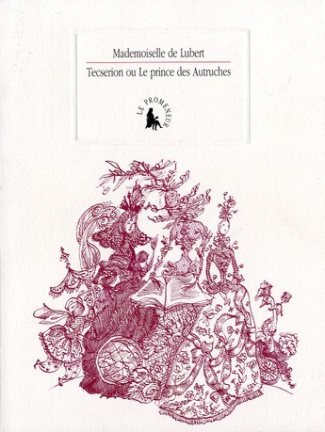
Sec et Noir ou La princesse des Fleurs et le prince des Autruches. Suivi d'un Petit almanach pratiqu
Si tout conte est une machine à métamorphoser, celui-ci l'est particulièrement : on y devient naturellement autruche ou perroquet, dragon ou tilleul.Il était donc une fois un roi fort laid et fort méchant et une princesse si belle qu'elle était la merveille de son siècle ; ils vivaient au pays des Autruches et dans l'empire des Fleurs. L'un, Tecserion, ne peut "donner" de l'amour en raison de sa laideur, mais il peut en "prendre", et s'y faire prendre. Il en prend donc pour Belzamine, la princesse des Fleurs ; celle-ci, qui n'en prend pas pour lui, en prend pour son neveu Melidor, lequel, s'il en prend pour Belzamine, se fait prendre d'amour par Myrrha...De change en change, les êtres s'échangent, et leurs amours. Ainsi le conte à pas de plume parcourt la forêt imaginaire. De toute évidence, il se soucie de la raison et du bon goût comme aile de mouche.Sur commande en 2-4 joursCOMMANDER13,95 € -
-
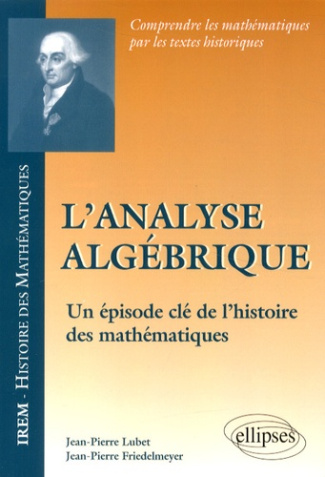
L'analyse algébrique. Un épisode clé de l'histoire des mathématiques
D'où nous viennent les notions de fonction dérivée ? de primitive ? Comment s'est répandu l'usage des notations f', f", pour représenter les dérivées successives ? Quels résultats pouvait-on obtenir en manipulant des sommes infinies sans se préoccuper de leur convergence, comme c'était souvent le cas au XVIIIe siècle ? De quels moyens disposait-on pour faire face aux problèmes issus de la physique mathématique naissante ? A quelle occasion les termes commutatif ou distributif qui faisaient partie du vocabulaire juridique et moral ont-ils été introduits en mathématiques ? Pour répondre à toutes ces questions il faut lire des auteurs illustres comme Euler ou Lagrange, mais aussi bien d'autres, souvent méconnus tels Arbogast, Brisson ou Servois. Cet ouvrage permet un contact avec les textes originaux, il s'adresse à toute personne intéressée par la culture scientifique : étudiant, enseignant, formateur, amateur curieux de comprendre le développement des idées en mathématiques... Une mise en perspective générale, des introductions et des commentaires sont là pour situer le contexte, lever les principales difficultés, signaler les enjeux. Les errements et les incertitudes sont examinés avec précision, ils rendent manifestes quelques-uns des obstacles qu'il a fallu surmonter pour aboutir à l'analyse mathématique que nous connaissons aujourd'hui.Impression à la demandeCOMMANDER39,00 € -
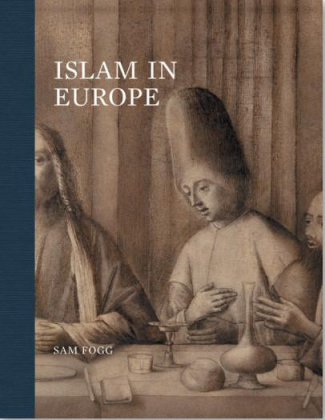
Islam in Europe
This illuminating exhibition catalogue interrogates the entanglement of the Islamic world with European visual culture during the medieval period and Renaissance, from the 9th century to the end of the 17th. It traces and reveals this interconnectedness through works of art that reflect the intense environment of contact, influence and exchange which developed over centuries between the two cultures. It also explores the reception of the image of ?Islam? in Europe, as highlighted by an important painting of the Supper at Emmaus, painted in the so-called ?Oriental Mode? by the Venetian artist Giovanni Mansueti (c. 1465?1527) in the last decade of the 15th century. Islam in Europe presents a survey of artistic production in the medieval Islamic world and the many ways it altered the trajectory of European visual culture. Opening with earlymedieval objects produced by Muslim artisans and known to have been exported in large numbers to medieval Europe, the catalogue explores the crosscurrents of visual culture at the nexus of Islam and Christendom which were already well developed by the 10th century. It continues with artworks produced under the aegis of the Umayyads (711?1031) and later Islamic dynasties which ruled large swathes of the Iberian Peninsula until 1492, and the influence of Islamic rule on the development of a distinctive visual culture in medieval Spain. A central group of objects traces the breathtaking force with which refined export wares from Mamluk Egypt and Syria, Central Asia and Anatolia flooded the Italian market during the 14th to 16th centuries, revolutionizing European aesthetics as well as the taste for (and very definition of) luxury goods. This section of the catalogue includes objects that chart the rise of European textiles, metalwork, ceramics and other arts specifically emulating Islamic designs. The catalogue concludes with a group of important early textiles spanning the 13th to 17th centuries. It explores how and why European artists started to incorporate lavish Ilkhanid silks into their imagery, and how Italian weavers began to imitate both these early imports, and later also Ottoman velvets flooding the market in the 15th century, with voracious appetite. One of the catalogue?s key foci is an important group of rare Anatolian carpets woven between the 15th and 17th centuries and richly imitated both by European painters including Titian and Holbein, and by local weavers vying for control of the market in luxury furnishings. The catalogue presents 60 works of art, which have taken a decade to bring together and are presented in this way for the first time. Together the works elucidate the complete integration of Islamic art and artisanal technology into European visual culture during a period of extraordinary efflorescence. A brief introductory essay explores questions of entanglement in the medieval world and proposes a new lens through which to examine the artistic production of the period. The catalogue closes with a new essay by Michael Franses analyzing the importance of the only firmly dateable ?Lotto? Arabesque carpet still in existence, acquired by The David Collection, Copenhagen, in 2022.Sur commande en 4-6 joursCOMMANDER35,00 €


Du même éditeur
-

-
LE GOUPIL ET LE PAYSAN (ROMAN DE RENART, BRANCHE X). ETUDES
Sur commande en 4-6 joursCOMMANDER20,00 € -
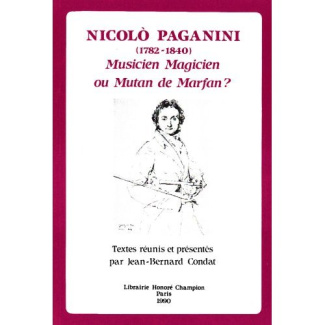
NICOLO PAGANINI (1782-1840), MUSICIEN MAGICIEN OU MUTAN DE MARFAN?
Sur commande en 4-6 joursCOMMANDER24,00 € -