

L'origine des Autres
Dans une série de conférences, Toni Morrison, Prix Nobel de littérature, aborde avec précision et subtilité les questions raciales, la peur, les frontières, les migrations, le désir d'appartenance. " Pugnace, inlassable et pédagogue, Morrison transmet la force et l'envie de se battre, de rester alerte, de lire, d'apprendre, de convaincre. " Clémentine Goldszal, ELLE Dans cette série de six conférences prononcées à l'université de Harvard en 2016, Toni Morrison analyse les arguments du racisme afin d'établir et d'entretenir la domination d'une seule catégorie d'individus. Des récits d'esclaves à l'évocation des lynchages et des récentes violences policières, l'auteur démontre que la " définition de l'inhumain " censée justifier le sadisme de " l'asservisseur " ne saurait en vérité s'appliquer qu'à celui-ci. Mais si la couleur a été utilisée pour ainsi nier l'individualité de l'" Autre ", nombre d'auteurs, tels Faulkner ou Hemingway, l'ont aussi largement entretenue, voire exploitée. En cette période marquée par la mondialisation et d'importants mouvements de population, souvent perçus comme des menaces, le combat de l'écrivain contre cette " obsession de la couleur " pourrait enfin nous permettre de nous avouer que l'étranger n'est, après tout, qu'une partie non reconnue de nous-mêmes. Dans ce recueil, Toni Morrison propose des réflexions éminemment politiques pour comprendre notre époque. Par la finesse de ses analyses historiques, psychologiques et littéraires, elle déploie toute l'élégance de son pouvoir de conviction, prouvant aussi que rien de ce qui est humain ne lui est étranger.
| Nombre de pages | 149 |
|---|---|
| Date de parution | 04/09/2025 |
| Poids | 100g |
| Largeur | 111mm |
| EAN | 9782264082534 |
|---|---|
| Auteur | Morrison Toni ; Coates Ta-Nehisi ; Laferrière Chri |
| Editeur | 10 X 18 |
| Largeur | 111 |
| Date de parution | 20250904 |
| Nombre de pages | 149,00 € |
| Disponibilité | Sur commande en 2-4 jours |
Pourquoi choisir Molière ?
Du même auteur
-

BELOVED BELOVED
Extrait I124 WAS SPITEFUL. Full of a baby's venom. The women in the house knew it and so did the children. For years each put up with the spite in his own way, but by 1873 Sethe and her daughter Denver were its only victims. The grandmother, Baby Suggs, was dead, and the sons, Howard and Buglar, had run away by the time they were thirteen years old--as soon as merely looking in a mirror shattered it (that was the signal for Buglar); as soon as two tiny band prints appeared in the cake (that was it for Howard). Neither boy waited to see more; another kettleful of chickpeas smoking in a heap on the floor; soda crackers crumbled and strewn in a line next to the doorsill. Nor did they wait for one of the relief periods: the weeks, months even, when nothing was disturbed. No. Each one fled at once--the moment the house committed what was for him the one insult not to be borne or witnessed a second time. Within two months, in the dead of winter, leaving their grandmother, Baby Suggs; Sethe, their mother; and their little sister, Denver, all by themselves in the gray and white house on Bluestone Road. It didn't have a number then, because Cincinnati didn't stretch that far. In fact, Ohio had been calling itself a state only seventy years when first one brother and then the next stuffed quilt packing into his hat, snatched up his shoes, and crept away from the lively spite the house felt for them.Baby Suggs didn't even raise her head. From her sickbed she heard them go but that wasn't the reason she lay still. It was a wonder to her that her grandsons had taken so long to realize that every house wasn't like the one on Bluestone Road. Suspended between the nastiness of life and the meanness of the dead, she couldn't get interested in leaving life or living it, let alone the fright of two creeping-off boys. Her past had been like her present--intolerable--and since she knew death was anything but forgetfulness, she used the little energy left her for pondering color."Bring a little lavender in, if you got any. Pink, if you don't."And Sethe would oblige her with anything from fabric to her own tongue. Winter in Ohio was especially rough if you had an appetite for color. Sky provided the only drama, and counting on a Cincinnati horizon for life's principal joy was reckless indeed. So Sethe and the girl Denver did what they could, and what the house permitted, for her. Together they waged a perfunctory battle against the outrageous behavior of that place; against turned-over slop jars, smacks on the behind, and gusts of sour air. For they understood the source of the outrage as well as they knew the source of light.Baby Suggs died shortly after the brothers left, with no interest whatsoever in their leave-taking or hers, and right afterward Sethe and Denver decided to end the persecution by calling forth the ghost that tried them so. Perhaps a conversation, they thought, an exchange of views or something would help. So they held hands and said, "Come on. Come on. You may as well just come on."The sideboard took a step forward but nothing else did."Grandma Baby must be stopping it," said Denver. She was ten and still mad at Baby Suggs for dying.Sethe opened her eyes. "I doubt that," she said."Then why don't it come?""You forgetting how little it is," said her mother. "She wasn't even two years old when she died. Too little to understand. Too little to talk much even.""Maybe she don't want to understand," said Denver."Maybe. But if she'd only come, I could make it clear to her." Sethe released her daughter's hand and together they pushed the sideboard back against the wall. Outside a driver whipped his horse into the gallop local people felt necessary when they passed 124."For a baby she throws a powerful spell," said Denver."No more powerful than the way I loved her," Sethe answered and there it was again. The welcoming cool of unchiseled headstones; the one she selected to lean against on tiptoe, her knees wide open as any grave. Pink as a fingernail it was, and sprinkled with glittering chips. Ten minutes, he said. You got ten minutes I'll do it for free.Ten minutes for seven letters. With another ten could she have gotten "Dearly" too? She had not thought to ask him and it bothered her still that it might have been possible--that for twenty minutes, a half hour, say, she could have had the whole thing, every word she heard the preacher say at the funeral (and all there was to say, surely) engraved on her baby's headstone: Dearly Beloved. But what she got, settled for, was the one word that mattered. She thought it would be enough, rutting among the headstones with the engraver, his young son looking on, the anger in his face so old; the appetite in it quite new. That should certainly be enough. Enough to answer one more preacher, one more abolitionist and a town full of disgust.Counting on the stillness of her own soul, she had forgotten the other one: the soul of her baby girl. Who would have thought that a little old baby could harbor so much rage? Rutting among the stones under the eyes of the engraver's son was not enough. Not only did she have to live out her years in a house palsied by the baby's fury at having its throat cut, but those ten minutes she spent pressed up against dawn-colored stone studded with star chips, her knees wide open as the grave, were longer than life, more alive, more pulsating than the baby blood that soaked her fingers like oil."We could move," she suggested once to her mother-in-law."What'd be the point?" asked Baby Suggs. "Not a house in the country ain't packed to its rafters with some dead Negro's grief. We lucky this ghost is a baby. My husband's spirit was to come back in here? or yours? Don't talk to me. You lucky. You got three left. Three pulling at your skirts and just one raising hell from the other side. Be thankful, why don't you? I had eight. Every one of them gone away from me. Four taken, four chased, and all, I expect, worrying somebody's house into evil." Baby Suggs rubbed her eyebrows. "My firstborn. All I can remember of her is how she loved the burned bottom of bread. Can you beat that? Eight children and that's all I remember.""That's all you let yourself remember," Sethe had told her, but she was down to one herself--one alive, that is--the boys chased off by the dead one, and her memory of Buglar was fading fast. Howard at least had a head shape nobody could forget. As for the rest, she worked hard to remember as close to nothing as was safe. Unfortunately her brain was devious. She might be hurrying across a field, running practically, to get to the pump quickly and rinse the chamomile sap from her legs. Nothing else would be in her mind. The picture of the men coming to nurse her was as lifeless as the nerves in her back where the skin buckled like a washboard. Nor was there the faintest scent of ink or the cherry gum and oak bark from which it was made. Nothing. Just the breeze cooling her face as she rushed toward water. And then sopping the chamomile away with pump water and rags, her mind fixed on getting every last bit of sap off--on her carelessness in taking a shortcut across the field just to save a half mile, and not noticing how high the weeds had grown until the itching was all the way to her knees. Then something. The plash of water, the sight of her shoes and stockings awry on the path where she had flung them; or Here Boy lapping in the puddle near her feet, and suddenly there was Sweet Home rolling, rolling, rolling out before her eyes, and although there was not a leaf on that farm that did not make her want to scream, it rolled itself out before her in shameless beauty. It never looked as terrible as it was and it made her wonder if hell was a pretty place too. Fire and brimstone all right, but hidden in lacy groves. Boys hanging from the most beautiful sycamores in the world. It shamed her--remembering the wonderful soughing trees rather than the boys. Try as she might to make it otherwise, the sycamores beat out the children every time and she could not forgive her memory for that.When the last of the chamomile was gone, she went around to the front of the house, collecting her shoes and stockings on the way. As if to punish her further for her terrible memory, sitting on the porch not forty feet away was Paul D, the last of the Sweet Home men. And although she could never mistake his face for another's, she said, "Is that you?""What's left." He stood up and smiled. "How you been, girl, besides barefoot?"When she laughed it came out loose and young. "Messed up my legs back yonder. Chamomile."He made a face as though tasting a teaspoon of something bitter. "I don't want to even hear 'bout it. Always did hate that stuff."Sethe balled up her stockings and jammed them into her pocket. "Come on in.""Porch is fine, Sethe. Cool out here." He sat back down and looked at the meadow on the other side of the road, knowing the eagerness he felt would be in his eyes."Eighteen years," she said softly."Eighteen," he repeated. "And I swear I been walking every one of em. Mind if I join you?" He nodded toward her feet and began unlacing his shoes."You want to soak them? Let me get you a basin of water." She moved closer to him to enter the house."No, uh uh. Can't baby feet. A whole lot more tramping they got to do yet.""You can't leave right away, Paul D. You got to stay awhile.""Well, long enough to see Baby Suggs, anyway. Where is she?"''Dead.''"Aw no. When?""Eight years now. Almost nine.""Was it hard? I hope she didn't die hard."Sethe shook her head. "Soft as cream. Bein... --Ce texte fait référence à une édition épuisée ou non disponible de ce titre.Sur commande en 2-4 joursCOMMANDER13,60 € -

-

TAR BABY
An unforgettable and transformative novel that explores race and gender with scorching insight from the Nobel-prize winning author of Beloved. Into a white millionaire's Caribbean mansion comes Jadine, a sophisticated graduate of the Sorbonne, art historian ? a black American now living in Paris and Rome. Then there?s Son, a criminal on the run, uneducated, violent, contemptuous ? a young American black of extreme beauty from small-town Florida. As Morrison follows their affair, she charts all the nuances of obligation and betrayal between blacks and whites, masters and servants, and men and women.Winner of the PEN/Saul Bellow award for achievement in American fiction?Toni Morrison was a quintessential, unabashedly American writer. Like her fellow giant, Walt Whitman, her work was, above all, audacious. She seized the landscape with a flourish and wove it, unwove it and put it back together? Bonnie Greer, GuardianEpuiséVOIR PRODUIT13,60 € -



Du même éditeur
-
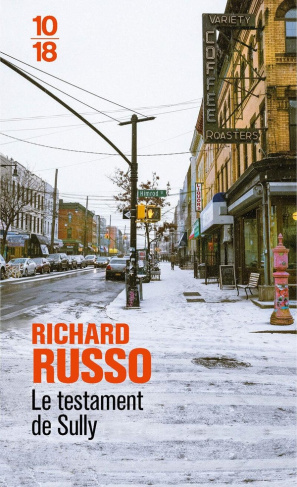
Le testament de Sully
Impregné d'humour et d'humanité, Le testament de Sully dessine le portrait d'une Amérique qui a du plomb dans l'aile. Sur le tabouret que Sully occupait au bar du Horse est désormais assis son fils Peter, professeur d'université encore aux prises avec cet héritage écrasant lorsque son propre rejeton, Thomas, refait surface après des années de séparation. C'est aussi au Horse que Doug Raymer, ancien chef de la police de North Bath, et Charice Bond, fraîchement nommée à la tête de la police de Schuyler, se retrouvent un samedi soir après la découverte d'un corps en décomposition dans la salle de bal du Sans Souci, hôtel abandonné situé à la limite entre les deux villes. Au Horse, toujours, que Janey fait des extras pour arrondir ses fins de mois et sortir de l'ornière. Ne serait-il pas temps de mettre fin à ses relations toxiques avec les hommes et de pardonner à sa mère, Ruth, son ancienne liaison avec Sully ? Tandis que dehors un ballet de chasse-neige, de dépanneuses et d'ambulances sillonne la ville, tout ce petit monde se demande qui a bien pu disparaître sans que personne s'en rende compte.En stockCOMMANDER10,90 € -

La mort de Jim Loney
« La Mort de Jim Loney qui suit l'Hiver dans le sang (10/18, n° 2460) est l'histoire d'un Indien métis qui, dans un bled perdu du Montana, erre à la recherche d'un père disparu, de ses souvenirs en fuite et d'un sens à sa vie. Une quête désespérante et d'avance perdue, comme le regard d'une femme croisée dans un cimetière, et qui "nous fait, dit Jim Harrison, l'effet d'une balle reçue en plein coeur'. » - Sylvie Genevoix, Page « La réalité décrite par ce roman est bien plus obsédante que le destin de ses personnages. C'est elle qui envoûte le lecteur et lui serre le coeur pour longtemps ». - Patrick Raynal, Le Monde "EpuiséVOIR PRODUIT8,10 € -

Only Lovers Left Alive
Un texte culte enfin disponible, aussi puissant qu' Orange mécanique . Angleterre, 1960. Les adultes victimes d'une vague de suicide laissent les adolescents livrés à eux-mêmes. Kathie, Ernie et une bande tentent de survivre dans un monde désolé en proie à la violence et d'atteindre le nord du pays. Angleterre, années 1960. Sans doute désespérés par l'état du monde qu'ils laissent à leurs enfants, les adultes sont touchés par une vague inédite de dépressions. Rapidement, les suicides se multiplient de façon incontrôlable. Peu à peu livrés à eux-mêmes, les adolescents sont maintenant libres de faire ce qui leur plait. Des gangs de jeunes s'abandonnent à des orgies dans des appartements désertés, d'autres errent dans un Londres en pleine décomposition, pillant à leur gré les magasins. Kathie, Ernie et leur bande essaient de survivre dans ce monde de plus désolé ou la violence s'est installée. Bientôt, ils décident de quitter cette jungle urbaine pour gagner le nord du pays. Interdit en Irlande pour nihilisme lors de sa publication en 1966, ce roman culte par excellence a été encensé par les plus grandes figures de la pop culture, de Jim Morrison à Jim Jarmusch. Il aurait dû être la première aventure cinématographique des Rolling Stones, qui en avaient confiés l'adaptation à Nicholas Ray. Tout aussi dérangeant qu' Orange mécanique , il est à mettre aux côtés du roman d'Anthony Burgess pour sa puissance visionnaire rarement égalée. Traduit de l'anglais (Royaume-Uni) par Samuel Sfez " Une étonnante dystopie " TransfugeSur commande en 2-4 joursCOMMANDER8,60 € -

Tant que fleuriront les citronniers
Salama, brillante étudiante, voit sa vie bouleversée par la révolution syrienne et se retrouve tiraillée entre l'envie d'aider son pays et la tentation de fuir pour mettre la famille qui lui reste à l'abri... Poignant destin de femme, histoire de guerre, histoire d'amour, le livre phénomène qui a conquis des centaines de milliers de lecteurs. Salama Kassab, 18 ans, avait la vie devant elle, quand la révolution a commencé en Syrie et quand les combats lui ont tout pris : sa famille, son avenir de pharmacienne. Il ne lui reste plus que Layla, sa belle-s'ur enceinte, et sa conviction de pouvoir aider son pays grâce à son travail bénévole à l'hôpital. Mais elle est tiraillée entre l'envie de se rendre utile, et celle de mettre Layla à l'abri. Au moment où elle se résigne finalement à fuir la Syrie, une rencontre avec un jeune militant plein d'espoir va tout remettre en cause. Traduit de l'anglais par Anne GuittonEn stockCOMMANDER9,20 €


De la même catégorie
-

Un fauteuil sur la Seine. Quatre siècles d'histoire de France
Depuis 1634, dix-huit personnages se sont succédé au 29e fauteuil de l'Académie française avant Amin Maalouf. Son premier occupant se noie dans la Seine, Montherlant se suicide dans son appartement avec vue sur la Seine, et l'Académie elle-même siège dans un petit périmètre longé par la Seine, entre le Louvre et le quai Conti : unité d'un lieu à partir duquel se déploie le kaléidoscope de l'Histoire. Le pouvoir des rois et des cardinaux, des hommes d'épée et des négociateurs, l'autorité grandissante ou déclinante des philosophes et des savants, l'influence des poètes, des librettistes, des dramaturges et des romanciers : autant de visages de la gloire qui nous parlent des âges différents de la Nation. Une redécouverte charnelle et incarnée de notre "génie national".En stockCOMMANDER10,20 € -
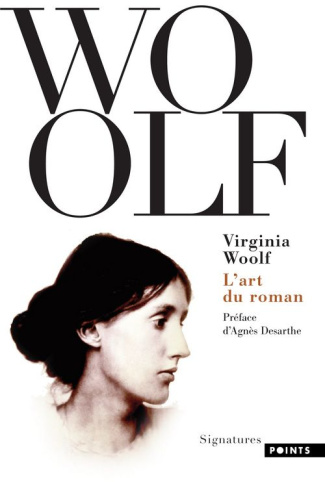
L'art du roman
Loin d'imposer un quelconque jugement, Virginia Woolf partage sans détour sa connaissance profonde et son indéfectible amour de la littérature. Elle admire Proust et Austen, se demande si on peut comprendre Tolstoï sans parler russe et s'interroge sur l'avenir des écrivains femmes, pour mieux imaginer le roman de demain. Biographie de l'auteur Virginia Woolf (1882-1941), l'une des plus grandes romancières du XXe siècle, a révolutionné la littérature grâce à ses romans, tel Mrs Dalloway, et à son immense talent d'éditrice et de critique. Véritable légende littéraire, sa vie mouvementée a été immortalisée par le roman Les Heures de Michael Cunningham, adapté au cinéma par Stephen Daldry.EpuiséVOIR PRODUIT9,60 € -

Huis clos, Jean-Paul Sartre
L'ouvrage fournit toutes les clés pour analyser la pièce de Jean-Paul Sartre. Le résumé détaillé est suivi de l'étude des problématiques essentielles, parmi lesquelles : - Le contexte culturel et littéraire - Garcin, Estelle et Inès - Tragédie ou anti-tragédie ? - Le jeu du miroir et du regard - Un univers fantastique.Sur commande en 2-4 joursCOMMANDER7,75 € -

Essais. Des Cannibales (I, 31) Des Coches (III, 6)
Les Essais nous rappellent que les études littéraires, les "humanités", selon l'expression de l'époque, avaient pour ambition la formation morale de l'homme et non l'acquisition de connaissances : "Le gain de notre étude, c'est en être devenu meilleur et plus sage". Cet humanisme a inspiré l'honnête homme du XVIIe siècle puis le philosophe des Lumières. A une époque où la nouveauté est érigée en dogme et l'excès en critère de qualité, il est plus que jamais nécessaire de lire et relire Montaigne. Le recueil contient 30 extraits et 6 essais.EpuiséVOIR PRODUIT3,79 €


