BERLIN - PHOTOS BY THOMAS KIEROK. BILINGUE ALLEMAND/ANGLAIS.
10,00 €
Epuisé
EAN :
9783037680902
Bilingue allemand/anglais. Berlin is always in motion. The vibrant capital city in the heart of Europe comes to life through a variety of impressions and enchants viewers with contrasts. Berlin is great history and hyper-modernity, punk and Potsdamer Platz, sausage stands and world politics. Berlin-based photographer Thomas Kierok has captured the many faces of his city. His collection of photographs shines a new light on familiar sights, and also ventures into the unexplored corners of the city. Always two motifs form a dialogue that tells about the charm and relaxed attitude of Berlin - a melting pot of dazzling architecture, scenes, people and moods, which is always sure to fascinate.
| Date de parution | 24/11/2011 |
|---|---|
| Poids | 530g |
| Largeur | 117mm |
Plus d'informations
| EAN | 9783037680902 |
|---|---|
| Titre | BERLIN - PHOTOS BY THOMAS KIEROK. BILINGUE ALLEMAND/ANGLAIS. |
| Auteur | KIEROK THOMAS |
| Editeur | BRAUN |
| Largeur | 117 |
| Poids | 530 |
| Date de parution | 20111124 |
| Nombre de pages | 0,00 € |
| Disponibilité | Epuisé |
Pourquoi choisir Molière ?
Efficacité et rapidité Commandé avant 16h livré demain
Économique et pratique Livraison dès 3,90 €
Facile et sans frais Retrait gratuit en magasin
Du même auteur
-
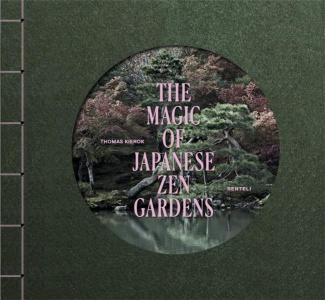
THE MAGIC OF JAPANESE ZEN GARDENS
Un jardin zen est la fusion symbiotique de la philosophie japonaise et de l'art du jardinage, un lieu spirituel de méditation et de réflexion intérieure qui enseigne l'attention et fait le bonheur de la vue. Si l'on veut découvrir cette culture des jardins, on ne trouve pas dans le monde entier, sur un espace aussi restreint, autant de merveilleux joyaux que ceux qui se trouvent en rangs serrés dans la ville japonaise de Kyoto. Thomas Kierok a photographié ces jardins uniques au cours des quatre saisons. Grâce à ses rencontres avec d'éminents architectes de jardins zen, il a pu développer une perspective photographique très personnelle, inspirée par l'esprit du zen. Des poèmes de poètes zen de renommée mondiale, Dogen, Basho et Ryokan, complètent ces chefs-d'oeuvre visuels. Ce livre est un refuge pour l'âme, une retraite entre deux couvertures, chaque fois que le besoin de calme, d'inspiration et de mise à la terre se fait sentir. Avec un prologue de Shunmyo Masuno, auteur de best-sellers, architecte paysagiste et professeur d'art des jardins à la Tama Art University de Tokyo.Sur commande en 2-4 joursCOMMANDER49,90 €

Du même éditeur
-
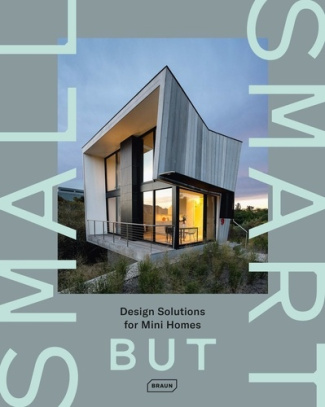
Small but smart. Design solutions for mini homes
By living in a large ceramic tub, Ancient Greek philosopher Diogenes was one of the first people to promote a simple lifestyle as a protest against a corrupt society - one could call him an unwitting pioneer of the current tiny-house movement. However, today small living is not necessarily connected to an alternative or even anarchic lifestyle - it simply makes things easier, more economic and eco-friendly to focus on what is really needed in life without compromising quality. This volume presents a large variety of sophisticated solutions for mini houses in terms of architectural style, construction method and interior design. Whether portable or prefabricated, newly built or reused, rural or urban, they all meet the highest technological and sustainable standards to literally reduce their owners' ecological footprint.EpuiséVOIR PRODUIT39,90 € -
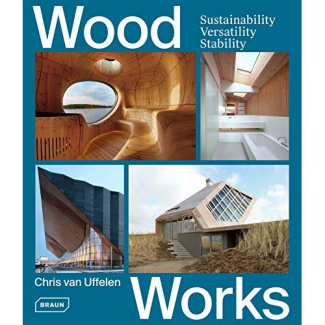
WOOD WORKS - SUSTAINABILITY, VERSATILITY, STABILITY
Wood is nature's most remarkable resource, embedded in the history, culture and life of humans worldwide. For the architecture world it is ingenious: malleable and at the same time resilient, fully recyclable and environmentally friendly as it reduces greenhouse gases, universally applicable and locally available. Today, new processing technologies extend the spectrum of its possible applications and the combinability with other building materials, enabling innovative technical and design solutions. In short, anything is possible when it comes to timber, whatever designers conceive can be realized. The traditional building material has become ultra-contemporary and increasingly cutting-edge, offering exciting possibilities for architectural design.EpuiséVOIR PRODUIT39,90 € -
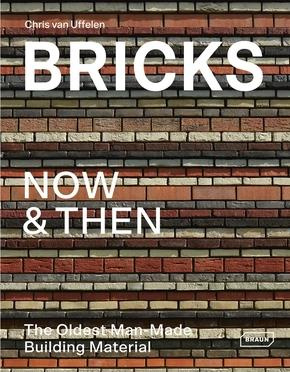
BRICKS NOW ET THEN - THE OLDEST MAN-MADE - BUILDING MATERIAL
Buildings made of brick are found in very different epochs and cultures all over the world. Always astonishing, the qualities of brickwork continue to be explored by the world's best architects until today. A key characteristic of the material's success since time immemorial has always been the ease of planning due to its standardized production and the resulting harmonized building processes. In addition to longevity, amazing constructive possibilities as well as inexpensive and at the same time environmentally friendly production are among the qualities that are particularly valued today. Using computer software solutions, and even robots in some cases, today's architects are deploying brick in inventive ways: perforated, pixelated, undulating and more. The featured works from the past and present are a demonstration of how the use and popularity of bricks has not diminished one bit over the millennia, and is even gaining popularity today.EpuiséVOIR PRODUIT39,90 €