

The kite runner
Extrait OneDecember 2001I became what I am today at the age of twelve, on a frigid overcast day in the winter of 1975. I remember the precise moment, crouching behind a crumbling mud wall, peeking into the alley near the frozen creek. That was a long time ago, but it’s wrong what they say about the past, I’ve learned, about how you can bury it. Because the past claws its way out. Looking back now, I realize I have been peeking into that deserted alley for the last twenty-six years.One day last summer, my friend Rahim Khan called from Pakistan. He asked me to come see him. Standing in the kitchen with the receiver to my ear, I knew it wasn’t just Rahim Khan on the line. It was my past of unatoned sins. After I hung up, I went for a walk along Spreckels Lake on the northern edge of Golden Gate Park. The early-afternoon sun sparkled on the water where dozens of miniature boats sailed, propelled by a crisp breeze. Then I glanced up and saw a pair of kites, red with long blue tails, soaring in the sky. They danced high above the trees on the west end of the park, over the windmills, floating side by side like a pair of eyes looking down on San Francisco, the city I now call home. And suddenly Hassan’s voice whispered in my head: For you, a thousand times over. Hassan the harelipped kite runner.I sat on a park bench near a willow tree. I thought about something Rahim Khan said just before he hung up, almost as an afterthought. There is a way to be good again. I looked up at those twin kites. I thought about Hassan. Thought about Baba. Ali. Kabul. I thought of the life I had lived until the winter of 1975 came along and changed everything. And made me what I am today.TwoWhen we were children, Hassan and I used to climb the poplar trees in the driveway of my father’s house and annoy our neighbors by reflecting sunlight into their homes with a shard of mirror. We would sit across from each other on a pair of high branches, our naked feet dangling, our trouser pockets filled with dried mulberries and walnuts. We took turns with the mirror as we ate mulberries, pelted each other with them, giggling, laughing. I can still see Hassan up on that tree, sunlight flickering through the leaves on his almost perfectly round face, a face like a Chinese doll chiselled from hardwood: his flat, broad nose and slanting, narrow eyes like bamboo leaves, eyes that looked, depending on the light, gold, green, even sapphire. I can still see his tiny low-set ears and that pointed stub of a chin, a meaty appendage that looked like it was added as a mere afterthought. And the cleft lip, just left of midline, where the Chinese doll maker’s instrument may have slipped, or perhaps he had simply grown tired and careless.Sometimes, up in those trees, I talked Hassan into firing walnuts with his slingshot at the neighbor’s one-eyed German shepherd. Hassan never wanted to, but if I asked, really asked, he wouldn’t deny me. Hassan never denied me anything. And he was deadly with his slingshot. Hassan’s father, Ali, used to catch us and get mad, or as mad as someone as gentle as Ali could ever get. He would wag his finger and wave us down from the tree. He would take the mirror and tell us what his mother had told him, that the devil shone mirrors too, shone them to distract Muslims during prayer. “And he laughs while he does it,” he always added, scowling at his son.“Yes, Father,” Hassan would mumble, looking down at his feed. But he never told on my. Never told that the mirror, like shooting walnuts at the neighbor’s dog, was always my idea.The poplar trees lined the redbrick driveway, which led to a pair of wrought-iron gates. They in turn opened into an extension of the driveway into my father’s estate. The house sat on the left side of the brick path, the backyard at the end of it.Everyone agreed that my father, my Baba, had built the most beautiful house in the Wazir Akbar Khan district, a new and affluent neighborhood in the northern part of Kabul. Some thought it was the prettiest house in all of Kabul. A broad entryway flanked by rosebushes led to the sprawling house of marble floors and wide windows. Intricate mosaic tiles, handpicked by Baba in Isfahan, covered the floors of the four bathrooms. Gold-stitched tapestries, which Baba had bought in Calcutta, lined the walls; a crystal chandelier hung from the vaulted ceiling.Upstairs was my bedroom, Baba’s room, and his study, also known as “the smoking room,” which perpetually smelled of tobacco and cinnamon. Baba and his friends reclined on black leather chairs there after Ali had served dinner. They stuffed their pipes -- except Baba always called it “fattening the pipe” -- and discussed their favorite three topics: politics, business, soccer. Sometimes I asked Baba if I could sit with them, but Baba would stand in the doorway. “Go on, now,” he’d say. “This is grown-ups’ time. Why don’t you go read one of those books of yours?” He’d close the door, leave me to wonder why it was always grown-ups’ time with him. I’d sit by the door, knees drawn into my chest. Sometimes I sat there for an hour, sometimes two, listening to their laughter, their chatter.The living room downstairs had a curved wall with custom-built cabinets. Inside sat framed family pictures: an old, grainy photo of my grandfather and King Nadir Shah taken in 1931, two years before the king’s assassination; they are standing over a dead deer, dressed in knee-high boots, rifles slung over their shoulders. There was a picture of my parents’ wedding night, Baba dashing in his black suit and my mother a smiling young princess in white. Here was Baba and his best friend and business partner, Rahim Kahn, standing outside our house, neither one smiling -- I am a baby in that photograph and Baba is holding me, looking tired and grim. I’m in his arms, but it’s Rahim Khan’s pinky my fingers are curled around.The curved wall led into the dining room, at the center of which was a mahogany table that could easily sit thirty guests -- and, given my father’s taste for extravagant parties, it did just that almost every week. On the other end of the dining room was a tall marble fireplace, always lit by the orange glow of a fire in the wintertime.A large sliding glass door opened into a semicircular terrace that overlooked two acres of backyard and rows of cherry trees. Baba and Ali had planted a small vegetable garden along the eastern wall: tomatoes, mint, peppers, and a row of corn that never really took. Hassan and I used to call it “the Wall of Ailing Corn.”On the south end of the garden, in the shadows of a loquat tree, was the servants’ home, a modest mud hut where Hassan lived with his father.It was there, in that little shack, that Hassan was born in the winter of 1964, just one year after my mother died giving birth to me.From the Hardcover edition. --Ce texte fait référence à une édition épuisée ou non disponible de ce titre.
| Date de parution | 28/06/2013 |
|---|---|
| Poids | 300g |
| EAN | 9781408824856 |
|---|---|
| Auteur | Hosseini Khaled |
| Editeur | BLOOMSBURY |
| Date de parution | 20130628 |
| Disponibilité | Sur commande en 6-10 jours |
Pourquoi choisir Molière ?
Du même auteur
-
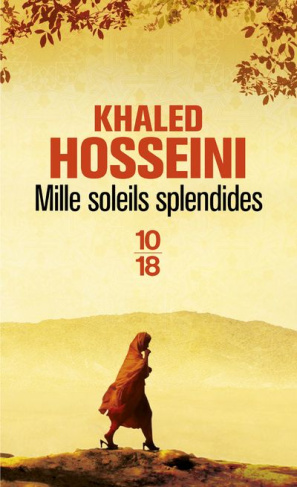
Mille soleils splendides
Forcée d'épouser un homme de trente ans son aîné, Mariam ne parvient pas à lui donner un fils. Après dix-huit années de soumission à cet homme brutal, elle doit endurer une nouvelle épreuve: l'arrivée sous son propre toit de Laila, une petite voisine de quatorze ans. Enceinte, Laila met au monde une fille. D'abord rongée par la jalousie, Mariam va finir par trouver une alliée en sa rivale. Toutes deux victimes de la violence et de la misogynie de leur mari, elles vont unir leur courage pour tenter de fuir l'Afghanistan. Mais parviendront-elles à s'arracher à cette terre afghane sacrifiée, et à leur ville, Kaboul, celle qui dissimulait autrefois derrière ses murs "mille soleils splendides"? Biographie de l'auteur Khaled Hosseini est né à Kaboul, en Afghanistan, en 1965. Fils de diplomate, il a obtenu avec sa famille le droit d'asile aux Etats-Unis en 1980. Son premier roman, Les Cerfs-Volants de Kaboul, est devenu un livre culte et Mille soleils splendides connaît à son tour un succès international. Khaled Hosseini vit aujourd'hui en Californie.En stockCOMMANDER9,50 € -
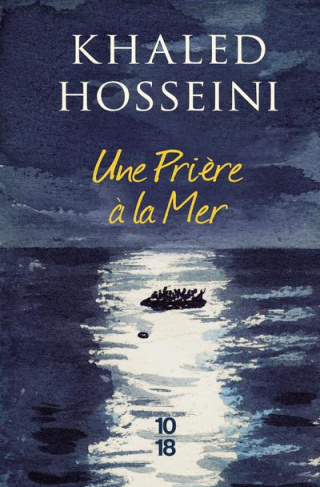
Une prière à la mer
Un livre illustré en hommage aux réfugiés syriens de Khaled Hosseini. Personne n'a oublié Aylan Kurdi : cet enfant Syrien de trois ans noyé alors qu'il tentait de rejoindre la Grèce. La photo de son petit corps abandonné sur une plage a fait le tour du monde en 2015. A l'occasion du troisième anniversaire de sa mort en septembre 2018, un texte de Khaled Hosseini, illustré par Dan Williams, lui rend hommage. Ecrit sous la forme d'une lettre imaginaire, Une prière à la mer est la prière d'un père, alors qu'il regarde son fils dormir, demandant protection pour la dangereuse traversée qu'ils vont entreprendre. Cette lettre est également un témoignage de leur vie d'avant à Homs en Syrie, et de la transformation rapide de la ville en zone de guerre.En stockCOMMANDER8,10 € -
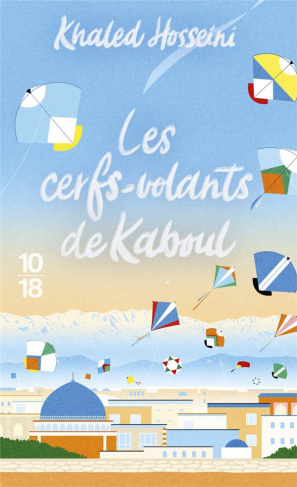
Les cerfs-volants de Kaboul. Edition collector
De Kaboul à San Francisco, des années 70 à nos jours, une déchirante histoire d'amitié et de trahison, avec, en arrière-plan, la chronique tourmentée d'un pays dévasté : l'Afghanistan. Au début des années 70, Amir et Hassan, frères de lait, embrasent le ciel de Kaboul de leurs cerfs-volants. Jusqu'à ce jour, terrible, où Amir abandonne Hassan à un sort tragique et se réfugie aux Etats-Unis. Vingt ans plus tard, en quête de rédemption, il devra affronter l'Afghanistan ravagé sous le joug des talibans... et le poids de son propre passé. " Portrait d'un homme en proie à son passé, ce premier roman de Khaled Hosseini dit aussi l'histoire d'un peuple. [... ] Le tableau qu'il dresse [de son pays], tout de contraste entre un passé idéalisé et la tourmente du présent, offre un très beau témoignage sur ce lien viscéral qu'entretient un homme avec sa terre natale. " Pauline Perrignon - Télérama Traduit de l'anglais (Etats-Unis) par Valérie BourgeoisEpuiséVOIR PRODUIT11,00 € -

The kite runner - Graphic Novel
In his debut novel, The Kite Runner, Khaled Hosseini accomplishes what very few contemporary novelists are able to do. He manages to provide an educational and eye-opening account of a country's political turmoil--in this case, Afghanistan--while also developing characters whose heartbreaking struggles and emotional triumphs resonate with readers long after the last page has been turned over. And he does this on his first try. The Kite Runner follows the story of Amir, the privileged son of a wealthy businessman in Kabul, and Hassan, the son of Amir's father's servant. As children in the relatively stable Afghanistan of the early 1970s, the boys are inseparable. They spend idyllic days running kites and telling stories of mystical places and powerful warriors until an unspeakable event changes the nature of their relationship forever, and eventually cements their bond in ways neither boy could have ever predicted. Even after Amir and his father flee to America, Amir remains haunted by his cowardly actions and disloyalty. In part, it is these demons and the sometimes impossible quest for forgiveness that bring him back to his war-torn native land after it comes under Taliban rule. ("...I wondered if that was how forgiveness budded, not with the fanfare of epiphany, but with pain gathering its things, packing up, and slipping away unannounced in the middle of the night.") Some of the plot's turns and twists may be somewhat implausible, but Hosseini has created characters that seem so real that one almost forgets that The Kite Runner is a novel and not a memoir. At a time when Afghanistan has been thrust into the forefront of America's collective consciousness ("people sipping lattes at Starbucks were talking about the battle for Kunduz"), Hosseini offers an honest, sometimes tragic, sometimes funny, but always heartfelt view of a fascinating land. Perhaps the only true flaw in this extraordinary novel is that it ends all too soon. --Gisele TouegEpuiséVOIR PRODUIT22,99 €



Du même éditeur
-
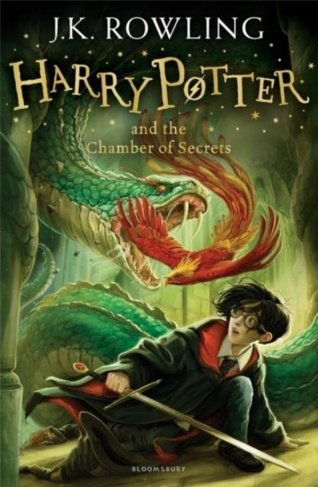
HARRY POTTER AND THE CHAMBER OF SECRETS (REJACKET)
Harry Potter's summer has included the worst birthday ever, doomy warnings from a house-elf called Dobby, and rescue from the Dursleys by his friend Ron Weasley in a magical flying car! Back at Hogwarts School of Witchcraft and Wizardry for his second year, Harry hears strange whispers echo through empty corridors - and then the attacks start. Students are found as though turned to stone . Dobby's sinister predictions seem to be coming true. These new editions of the classic and internationally bestselling, multi-award-winning series feature instantly pick-up-able new jackets by Jonny Duddle, with huge child appeal, to bring Harry Potter to the next generation of readers. It's time to PASS THE MAGIC ON.En stockCOMMANDER12,00 € -

Special Effect Glazes
Master the science of surface design and create stunning centrepieces with unique, dynamic glazes.In Special Effect Glazes, ceramicist Linda Bloomfield provides a masterclass in formulating, adjusting, and firing dramatic surfaces. If you want to learn how to make ceramic glazes that push the boundaries of surface design, this essential guide empowers you to harness the chemistry of your materials and create spectacular artworks.Packed with ceramic glaze recipes and expert technical insights, this book explores how to trigger and control complex reactions in the kiln. You will discover how to master:· Crackle and drippy glazes: Formulate elegant, classic crazing and harness the dynamic fluidity of heavily melting surfaces.· Lava, lichen and volcanic glazes: Create explosive, highly textured finishes that transform studio challenges into striking focal points.· Ash and shino glazes: Achieve rich, atmospheric surfaces inspired by wood-firing traditions and organic aesthetics.· Celadon and copper red glazes: Unlock the secrets behind deep, translucent hues, alongside metallic bronzes and crystal growths. Bloomfield demystifies the process, showing you how raw materials, stains, and firing cycles interact. Lavishly illustrated with pieces from contemporary makers, Special Effect Glazes provides the practical fixes and chemical understanding you need to experiment with confidence and achieve the perfect finish.Sur commande en 6-10 joursCOMMANDER44,64 € -
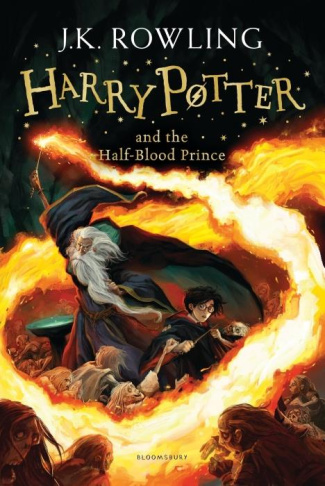
HARRY POTTER AND THE HALF-BLOOD PRINCE (REJACKET)
Revue de presse July 25, 2005'Harry Potter And The Half-Blood Prince': The Kirkus ReviewReview Date: JULY 25, 2005Category: NONEClassification: ONLINE EXCLUSIVERevealed at last–now that the fog of whipped-up anticipation, secrecy, hints, threats, news stories of legal action, wild speculation, midnight-oil-burning and marketing smoke is thinning–the penultimate Potter sequel delivers, as have its predecessors, a tale worth the wait. Readers who felt a bit hammered by the adolescent rage coloring Harry Potter and the Order of the Phoenix (2003) will be relieved to find that Rowling has returned to the lighter tone of earlier episodes, though properly portentous events do swirl in the background, and, as promised: There Is a Death.Harry enters his sixth year at Hogwarts knowing that he has a pivotal role to play in the now-open war against Voldemort, sure that Draco Malfoy is up to something, and more than a little conflicted by his attraction to Ginny Weasley, sidekick Ron's suddenly not-so-little sister. Harry's relationship to Dumbledore is entering a new phase, too, as under the kindly old wizard's direct guidance, he begins taking trips through a series of magically preserved memories to explore his archenemy's parentage and character.Meanwhile, Harry's glee at getting a leg up in Potions class thanks to a heavily annotated old textbook that once belonged to a mysterious “Half-Blood Prince” rivals his discomfort at being caught between Ron and Hermione, who are going through a rocky patch, and the horror of discovering that his new Defense Against the Dark Arts instructor is none other than hated, hateful Severus Snape. How could Dumbledore possibly insist, as he repeatedly does, that Snape is a trustworthy ally?While charting teenage infatuations and friendships with a wry wit that occasionally tumbles into outright merriment, Rowling tucks in several revelations (notably, the secret to Voldemort's seeming immortality), adds a dash of sympathy for Malfoy (of all people!), who does indeed turn out to be part of an ugly scheme, and further develops Snape's role as a pivotal character. Then, after a heartrending test of Harry's loyalty to Dumbledore, Rowling propels the plot to a climax that is–thanks to artful pre-pub preparation–tragic, but not uncomfortably shocking. This newest excursion into the Potterverse will leave readers pleased, amused, excited, scared, infuriated, delighted, sad, surprised, thoughtful–and likely wondering where Voldemort has got to, since he appears only in flashbacks. There's no doubt, however, that he'll figure prominently in what promises to be a spectacular finish.SLJ 8-05ROWLING, J. K. Harry Potter and the Half-Blood Prince. illus. by Mary GrandPré. 672p. Scholastic/Arthur A. Levine Bks. 2005. Tr $29.99. ISBN 0-439-78454-9; PLB $34.99. ISBN 0-439-78677-0. LC 2005921149.Gr 5 Up–Opening just a few weeks after the previous book left off, the penultimate entry in the series is, as the author foretold, the darkest and most unsettling yet. The deeds of Voldemort's Death Eaters are spreading even to the Muggle world, which is enshrouded in a mist caused by Dementors draining hope and happiness. Harry, turning 16, leaves for Hogwarts with the promise of private lessons with Dumbledore. No longer a fearful boy living under the stairs, he is clearly a leader and increasingly isolated as rumors spread that he is the “Chosen One,” the only individual capable of defeating Voldemort. Two attempts on students' lives, Harry's conviction that Draco Malfoy has become a Death Eater, and Snape's usual slimy behavior add to the increasing tension. Yet through it all, Harry and his friends are typical teens, sharing homework and messy rooms, rushing to classes and sports practices, and flirting. Ron and Hermione realize their attraction, as do Harry and Ginny. Dozens of plot strands are pEn stockCOMMANDER13,00 € -

house of flame and shadow
Bryce Quinlan never expected to see a world other than Midgard, but now that she has, all she wants is to get back. Everything she loves is in Midgard : her family, her friends, her mate. Stranded in a strange new world, she''s going to need all her wits about her to get home again. And that''s no easy feat when she has no idea who to trust. Hunt Athalar has found himself in some deep holes in his life, but this one might be the deepest of all. After a few brief months with everything he ever wanted, he''s in the Asteri''s dungeons again, stripped of his freedom and without a clue as to Bryce''s fate. He''s desperate to help her, but until he can escape the Asteri''s leash, his hands are quite literally tied. In this sexy, breathtaking sequel to the #1 bestsellers House of Earth and Blood and House of Sky and Breath, Sarah J. Maas''s Crescent City series reaches new heights as Bryce and Hunt''s world is brought to the brink of collapse-with its future resting on their shoulders.Sur commande en 6-10 joursCOMMANDER29,00 €


