

COLLECTION : ASIAN ARCHITECTURE
The exciting diversity of culture, climate and economics across the vast continent of Asia is matched only by the fascinating architectural diversity showcased in this volume. Influenced both by global architectural trends and dynamic developments within the region and the different countries, Asian design has experienced an explosion of creativity. From environmentally sensitive structures that draw on traditional images to high rises ascending from crowded urban areas, the inspiring architecture of Asia is a product of people, place and tradition. Ancient ritual and images merge seamlessly with cutting edge technology in apartment blocks, offices, ceremony halls and airports. This generously illustrated volume provides an overview of the transformation of Asian architecture as cultures move towards a synthesis of ideas and styles reconciling tradition and modernity. Top new contemporary projects also by architects from other countries were selected to show the extent of Asian influences on other cultures.
| Date de parution | 01/04/2010 |
|---|---|
| Poids | 3 828g |
| Largeur | 260mm |
| EAN | 9783037680476 |
|---|---|
| Titre | COLLECTION : ASIAN ARCHITECTURE |
| Auteur | GALINDO MICHELLE |
| Editeur | BRAUN |
| Largeur | 260 |
| Poids | 3828 |
| Date de parution | 20100401 |
| Nombre de pages | 0,00 € |
| Disponibilité | Epuisé |
Pourquoi choisir Molière ?
Du même auteur
-
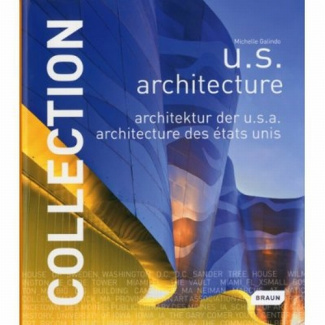
Collection : U.S. architecture
Contemporary architecture in the U.S.A. today presents a fascinating interplay of a multitude of regionalisms and architectural traditions with current national and international trends. Accordingly, Collection: U.S. Architecture presents projects by smaller offices with a regional focus, as well as by globally operating stars. From the portraits of a variety of construction projects, including high rises, museums, country estates, sports complexes, and sacral buildings, emerges a picture that presents the special and unique characteristics that distinguish the architecture between Pacific and Atlantic. From the contents: Contemporary Jewish Museum in San Francisco, CA (Daniel Libeskind) Switch Building in New York, NY, (nARCHITECTS) Des Moines Public Library, IA (David Chipperfields Architects) Cube Tower in Miami, FL (Oppenheim) The Prayer Chapel in Phoenix, AZ (DeBartolo Architects)EpuiséVOIR PRODUIT50,60 € -

-
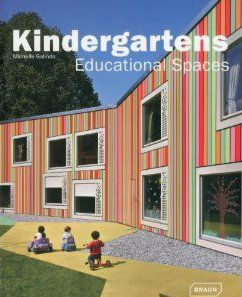
Kindergartens. Educational spaces
For too long, kindergarten architects have been seemingly preoccupied with the principles of durability, maximisation of space, and minimisation of cost. This, however, also meant forgetting that these environments should promote fun, learning and creativity. However, the field has been experiencing a revolution and this volume showcases 60 of the most outstanding recent innovations worldwide. The chosen projects prove especially that collaboration between educationalists and designers can be uniquely fruitful for the planning and building of kindergartens.EpuiséVOIR PRODUIT50,60 €



Du même éditeur
-
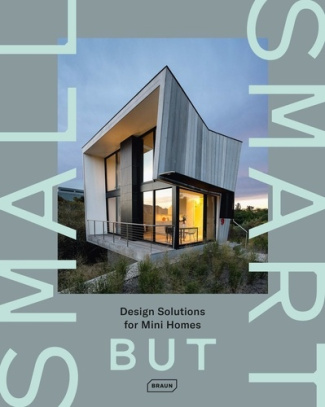
Small but smart. Design solutions for mini homes
By living in a large ceramic tub, Ancient Greek philosopher Diogenes was one of the first people to promote a simple lifestyle as a protest against a corrupt society - one could call him an unwitting pioneer of the current tiny-house movement. However, today small living is not necessarily connected to an alternative or even anarchic lifestyle - it simply makes things easier, more economic and eco-friendly to focus on what is really needed in life without compromising quality. This volume presents a large variety of sophisticated solutions for mini houses in terms of architectural style, construction method and interior design. Whether portable or prefabricated, newly built or reused, rural or urban, they all meet the highest technological and sustainable standards to literally reduce their owners' ecological footprint.EpuiséVOIR PRODUIT39,90 € -
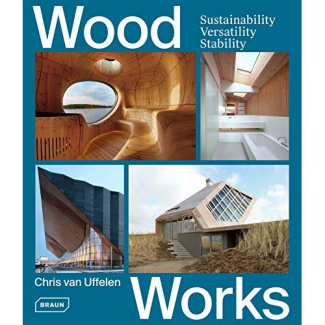
WOOD WORKS - SUSTAINABILITY, VERSATILITY, STABILITY
Wood is nature's most remarkable resource, embedded in the history, culture and life of humans worldwide. For the architecture world it is ingenious: malleable and at the same time resilient, fully recyclable and environmentally friendly as it reduces greenhouse gases, universally applicable and locally available. Today, new processing technologies extend the spectrum of its possible applications and the combinability with other building materials, enabling innovative technical and design solutions. In short, anything is possible when it comes to timber, whatever designers conceive can be realized. The traditional building material has become ultra-contemporary and increasingly cutting-edge, offering exciting possibilities for architectural design.EpuiséVOIR PRODUIT39,90 € -
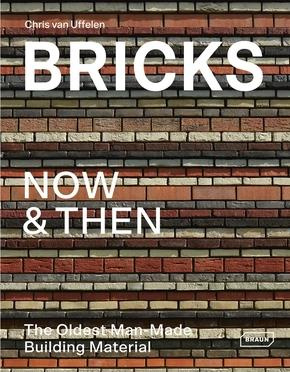
BRICKS NOW ET THEN - THE OLDEST MAN-MADE - BUILDING MATERIAL
Buildings made of brick are found in very different epochs and cultures all over the world. Always astonishing, the qualities of brickwork continue to be explored by the world's best architects until today. A key characteristic of the material's success since time immemorial has always been the ease of planning due to its standardized production and the resulting harmonized building processes. In addition to longevity, amazing constructive possibilities as well as inexpensive and at the same time environmentally friendly production are among the qualities that are particularly valued today. Using computer software solutions, and even robots in some cases, today's architects are deploying brick in inventive ways: perforated, pixelated, undulating and more. The featured works from the past and present are a demonstration of how the use and popularity of bricks has not diminished one bit over the millennia, and is even gaining popularity today.EpuiséVOIR PRODUIT39,90 €


