

SANCTUARY SANCTUAIRE
18,30 €
Sur commande en 2-4 jours
EAN :
9780679748144
Nine hours of deep Southern hatred. Nine hours of betrayals, brutal violence and evil. Nine hours of Faulkner read masterfully by Dick Hill is time well spent. Hill envelops the prose with a Southern accent and voices to match the sinister goings-on. Even his female voices sound convincing. But this version has even more. It's a rare instance when the narration and tone of an audiobook are equal to a listener's imagined experience with a text. Overall production quality is good, although tape hiss does take away from some parts. Acquaint, or reacquaint, yourself with this Faulkner classic. R.I.G. (c)AudioFile, Portland, Maine
| Date de parution | 02/06/1998 |
|---|---|
| Poids | 287g |
| Largeur | 133mm |
Plus d'informations
| EAN | 9780679748144 |
|---|---|
| Titre | SANCTUARY SANCTUAIRE |
| ISBN | 0679748148 |
| Auteur | FAULKNER WILLIA |
| Editeur | VINTAGE |
| Largeur | 133 |
| Poids | 287 |
| Date de parution | 19980602 |
| Nombre de pages | 0,00 € |
| Disponibilité | Sur commande en 2-4 jours |
Pourquoi choisir Molière ?
Efficacité et rapidité Commandé avant 16h livré demain
Économique et pratique Livraison dès 3,90 €
Facile et sans frais Retrait gratuit en magasin
Du même auteur
-

WILD PALMS
'His prose style is all his own, often sensuously alert, evocative, graceful' Daily Telegraph 'There is no writer living who can play upon a scene the rich and Rembrandtesque flame that Faulkner commands' Evening Standard In this feverishly beautiful novel, William Faulkner interweaves two narratives, each wholly absorbing in its own right, each subtly illuminating the other. In New Orleans in 1937, a man and a woman embark on a headlong flight into the wilderness of illicit passion, she fleeing her husband and the temptations of respectability. In Mississippi ten years earlier, a convict sets forth across a flooded river, risking his one chance at freedom to rescue a pregnant woman. From these separate stories Faulkner composes a symphony of deliverance and damnation, survival and self-sacrifice, a novel in which elemental danger is juxtaposed with fatal injuries of the spirit.EpuiséVOIR PRODUIT13,60 € -
ABSALOM ABSALOM
From a little after two oclock until almost sundown of the long still hot weary dead September afternoon they sat in what Miss Coldfield still called the office because her father had called it that-a dim hot airless room with the blinds all closed and fastened for forty-three summers because when she was a girl someone had believed that light and moving air carried heat and that dark was always cooler, and which (as the sun shone fuller and fuller on that side of the house) became latticed with yellow slashes full of dust motes which Quentin thought of as being flecks of the dead old dried paint itself blown inward from the scaling blinds as wind might have blown them. There was a wistaria vine blooming for the second time that summer on a wooden trellis before one window, into which sparrows came now and then in random gusts, making a dry vivid dusty sound before going away: and opposite Quentin, Miss Coldfield in the eternal black which she had worn for forty-three years now, whether for sister, father, or nothusband none knew, sitting so bolt upright in the straight hard chair that was so tall for her that her legs hung straight and rigid as if she had iron shinbones and ankles, clear of the floor with that air of impotent and static rage like children's feet, and talking in that grim haggard amazed voice until at last listening would renege and hearing-sense self-confound and the long-dead object of her impotent yet indomitable frustration would appear, as though by outraged recapitulation evoked, quiet inattentive and harmless, out of the biding and dreamy and victorious dust.Her voice would not cease, it would just vanish. There would be the dim coffin-smelling gloom sweet and oversweet with the twice-bloomed wistaria against the outer wall by the savage quiet September sun impacted distilled and hyperdistilled, into which came now and then the loud cloudy flutter of the sparrows like a flat limber stick whipped by an idle boy, and the rank smell of female old flesh long embattled in virginity while the wan haggard face watched him above the faint triangle of lace at wrists and throat from the too tall chair in which she resembled a crucified child; and the voice not ceasing but vanishing into and then out of the long intervals like a stream, a trickle running from patch to patch of dried sand, and the ghost mused with shadowy docility as if it were the voice which he haunted where a more fortunate one would have had a house. Out of quiet thunderclap he would abrupt (man-horse-demon) upon a scene peaceful and decorous as a schoolprize water color, faint sulphur-reek still in hair clothes and beard, with grouped behind him his band of wild niggers like beasts half tamed to walk upright like men, in attitudes wild and reposed, and manacled among them the French architect with his air grim, haggard, and tatterran. Immobile, bearded and hand palm-lifted the horseman sat; behind him the wild blacks and the captive architect huddled quietly, carrying in bloodless paradox the shovels and picks and axes of peaceful conquest. Then in the long unamaze Quentin seemed to watch them overrun suddenly the hundred square miles of tranquil and astonished earth and drag house and formal gardens violently out of the soundless Nothing and clap them down like cards upon a table beneath the up-palm immobile and pontific, creating the Sutpen's Hundred, the Be Sutpen's Hundred like the oldentime Be Light. Then hearing would reconcile and he would seem to listen to two separate Quentins now-the Quentin Compson preparing for Harvard in the South, the deep South dead since 1865 and peopled with garrulous outraged baffled ghosts, listening, having to listen, to one of the ghosts which had refused to lie still even longer than most had, telling him about old ghost-times; and the Quentin Compson who was still too young to deserve yet to be a ghost but nevertheless having to be one for all that, since he was born and bred in the deep South the same as she was-the two separate Quentins now talking to one another in the long silence of notpeople in notlanguage, like this: It seems that this demon-his name was Sutpen-(Colonel Sutpen)-Colonel Sutpen. Who came out of nowhere and without warning upon the land with a band of strange niggers and built a plantation -(Tore violently a plantation, Miss Rosa Coldfield says)-tore violently. And married her sister Ellen and begot a son and a daughter which-(Without gentleness begot, Miss Rosa Coldfield says)-without gentleness. Which should have been the jewels of his pride and the shield and comfort of his old age, only-(Only they destroyed him or something or he destroyed them or something. And died)-and died. Without regret, Miss Rosa Coldfield says-(Save by her) Yes, save by her. (And by Quentin Compson) Yes. And by Quentin Compson."Because you are going away to attend the college at Harvard they tell me," she said. "So I dont imagine you will ever come back here and settle down as a country lawyer in a little town like Jefferson since Northern people have already seen to it that there is little left in the South for a young man. So maybe you will enter the literary profession as so many Southern gentlemen and gentlewomen too are doing now and maybe some day you will remember this and write about it. You will be married then I expect and perhaps your wife will want a new gown or a new chair for the house and you can write this and submit it to the magazines. Perhaps you will even remember kindly then the old woman who made you spend a whole afternoon sitting indoors and listening while she talked about people and events you were fortunate enough to escape yourself when you wanted to be out among young friends of your own age.""Yessum," Quentin said. Only she dont mean that he thought. It's because she wants it told. It was still early then. He had yet in his pocket the note which he had received by the hand of a small negro boy just before noon, asking him to call and see her-the quaint, stiffly formal request which was actually a summons, out of another world almost-the queer archaic sheet of ancient good notepaper written over with the neat faded cramped script which, due to his astonishment at the request from a woman three times his age and whom he had known all his life without having exchanged a hundred words with her or perhaps to the fact that he was only twenty years old, he did not recognise as revealing a character cold, implacable, and even ruthless. He obeyed it immediately after the noon meal, walking the half mile between his home and hers through the dry dusty heat of early September and so into the house (it too somehow smaller than its actual size-it was of two storeys-unpainted and a little shabby, yet with an air, a quality of grim endurance as though like her it had been created to fit into and complement a world in all ways a little smaller than the one in which it found itself) where in the gloom of the shuttered hallway whose air was even hotter than outside, as if there were prisoned in it like in a tomb all the suspiration of slow heat-laden time which had recurred during the forty-three years, the small figure in black which did not even rustle, the wan triangle of lace at wrists and throat, the dim face looking at him with an expression speculative, urgent, and intent, waited to invite him in.It's because she wants it told he thought so that people whom she will never see and whose names she will never hear and who have never heard her name nor seen her face will read it and know at last why God let us lose the War: that only through the blood of our men and the tears of our women could He stay this demon and efface his name and lineage from the earth. Then almost immediately he decided that neither was this the reason why she had sent the note, and sending it, why to him, since if she had merely wanted it told, written and even printed, she would not have needed to call in anybody-a woman who even in his (Quentin's) father's youth had already established (even if not affirmed) herself as the town's and the county's poetess laureate by issuing to the stern and meagre subscription list of the county newspaper poems, ode eulogy and epitaph, out of some bitter and implacable reserve of undefeat; and these from a woman whose family's martial background as both town and county knew consisted of the father who, a conscientious objector on religious grounds, had starved to death in the attic of his own house, hidden (some said, walled up) there from Confederate provost marshals"men and fed secretly at night by this same daughter who at the very time was accumulating her first folio in which the lost cause's unregenerate vanquished were name by name embalmed; and the nephew who served for four years in the same company with his sister's fiance and then shot the fiance to death before the gates to the house where the sister waited in her wedding gown on the eve of the wedding and then fled, vanished, none knew where.It would be three hours yet before he would learn why she had sent for him because this part of it, this first part of it, Quentin already knew. It was a part of his twenty years" heritage of breathing the same air and hearing his father talk about the man; a part of the town's-Jefferson's-eighty years"heritage of the same air which the man himself had breathed between this September afternoon in 1909 and that Sunday morning in June in 1833 when he first rode into town out of no discernible past and acquired his land no one knew how and built his house, his mansion, apparently out of nothing and married Ellen Coldfield and begot his two children-the son who widowed the daughter who had not yet been a bride-and so accomplished his allotted course to its violent (Miss Coldfield at least would have said, just) end. Quentin had grown up with that; the mere names were interchangeable and almost myriad. His childhood was full of them; his very body was an empty hall echoing with sonorous defeated names; he was not a being, an entity, he was a commonwealth. He was a barracks filled with stubborn back-looking ghosts still recovering,..."EpuiséVOIR PRODUIT13,57 € -
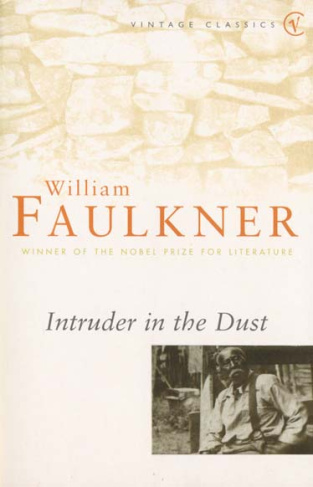
INTRUDER IN THE DUST
Set in the deep south that provided the backdrop for all of Faulkner's finest fiction, Intruder in the Dust is the novel that marks the final phase of its author's outstanding creative period. The chronicle of an elderly black farmer arrested for the murder of a white man and under threat from the lynch mob is a characteristically Faulknerian tale of dark omen, its sole ray of hope the character of the young white boy who repays an old favour by proving the innocence of the man who saved him from drowning in an icy creek.EpuiséVOIR PRODUIT13,57 € -


Du même éditeur
-

Portnoy's Complaint
Along with Saul Bellow's Herzog, Philip Roth's Portnoy's Complaint defined Jewish American literature in the 1960s. Roth's masterpiece takes place on the couch of a psychoanalyst, an appropriate jumping-off place for an insanely comical novel about the Jewish American experience. Roth has written several great books--Goodbye, Columbus and When She Was Good among them, but it is perhaps Portnoy's Complaint for which he is best known.Sur commande en 2-4 joursCOMMANDER12,60 € -
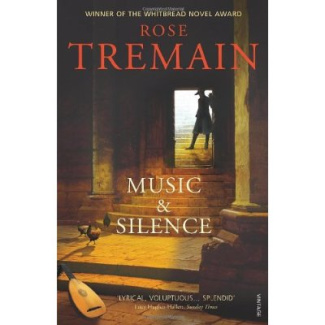
MUSIC AND SILENCE MUSIQUE ET SILENCE
Extrait Lilac and LindenA lamp is lit.Until this moment, when the flame of the lamp flares blue, then settles to steady yellow inside its ornate globe, the young man had been impressed by the profound darkness into which, upon his late-night arrival at the palace of Rosenborg, he had suddenly stepped. Tired from his long sea journey, his eyes stinging, his walk unsteady, he had been questioning the nature of this darkness. For it seemed to him not merely an external phenomenon, having to do with an actual absence of light, but rather as though it emanated from within him, as if he had finally crossed the threshold of his own absence of hope.Now, he is relieved to see the walls of a panelled room take shape around him. A voice says: 'This is the Vinterstue. The Winter Room.'The lamp is lifted up. Held high, it burns more brightly, as though sustained by purer air, and the young man sees a shadow cast onto the wall. It is a long, slanting shadow and so he knows it is his own. It appears to have a deformity, a hump, occurring along its spine from below the shoulder-blades to just above the waist. But this is the shadow's trickery. The young man is Peter Claire, the lutenist, and the curvature on his back is his lute.He is standing near a pair of lions, made of silver. Their eyes seem to watch him in the flickering gloom. Beyond them he can see a table and some tall chairs. But Peter Claire is separate from everything, cannot lean on any object, cannot rest. And now, the lamp moves and he must follow.'It may be', says a tall gentleman, who hurries on, carrying the light, 'that His Majesty, King Christian, will command you to play for him tonight. He is not well and his physicians have prescribed music. Therefore, members of the royal orchestra must be ready to perform at all times, day and night. I thought it best to advise you of this straight away.'Peter Claire's feelings of dismay increase. He begins to curse himself, to berate his own ambition for bringing him here to Denmark, for taking him so far from the places and people he had loved. He is at the end of his journey and yet he feels lost. Within this arrival some terrifying departure lies concealed. And suddenly, with peculiar speed, the lamp moves and everything in the room seems to rearrange itself. Peter Claire sees his shadow on the wall become elongated, stretching upwards for a few seconds towards the ceiling before being swallowed by the darkness, with no trace of it remaining.Then the end of a corridor is reached and the gentleman stops before a door. He knocks and waits, putting a finger to his lips and leaning close against the door to listen for the command from within. It comes at last, a voice deep and slow, and Peter Claire finds himself, in the next minute, standing before King Christian, who is sitting in a chair in his night-shirt. Before him, on a small table, is a pair of scales and by these a clutch of silver coins.The English lutenist bows as the King looks up and Peter Claire will always remember that, as King Christian first glimpses him in this dark middle of a winter's night, there comes into His Majesty's eyes a look of astonishment and, staring intently at the lute player's face, he whispers a single word: 'Bror.''I beg your pardon, Sir ...?' says Peter Claire.'Nothing,' says the King. 'A ghost. Denmark is full of ghosts. Did no one warn you?''No, Your Majesty.''Never mind. You will see them for yourself. We are one of the oldest nations on earth. But you should know that it is a time of storms here, of confusion, of incomprehension, of bitter boiling muddle.''Of muddle, Sir?''Yes. This is why I am weighing silver. I weigh the same pieces over and over again, to ensure that there is no error. No possibility of error. I am trying, piece by piece and day by day, to reimpose order upon chaos.'Peter Claire does not know how to reply to this and he is aware that the tall gentleman, without his noticing, has gone from the room, leaving him alone with the King, who now pushes the scales aside and settles himself more comfortably in the chair.King Christian lifts his head and asks: 'How old are you, Mr Claire? Where do you come from?'A fire is burning in the room, which is the Skrivestue, the King's study, and the small chamber smells sweetly of applewood and leather.Peter Claire replies that he is twenty-seven and that his parents live in the town of Harwich on the east coast of England. He adds that the sea in winter can be unforgiving there.'Unforgiving. Unforgiving!' says the King. 'Well, we must hurry on, pass over or skirt around that word. Unforgiving. But I tell you, lutenist, I am tortured by lice. Do not look alarmed. Not in my hair or on my pillow. I mean by cowards, rascals, liars, sots, cheats and lechers. Where are the philosophers? That is what I constantly ask.'Peter Claire hesitates before answering.'No need to reply,' says the King. 'For they are all gone from Denmark. There is not one left.'Then His Majesty stands up and moves towards the fire where Peter Claire is standing, and takes up a lamp and holds it near the young man's face. He examines the face and Peter Claire lowers his eyes because he has been warned not to stare at the King. This King is ugly. King Charles I of England, King Louis XIII of France, these are handsome men at this perilous moment in history, but King Christian IV of Denmark - all-powerful, brave and cultured as he is reported to be - has a face like a loaf.The lutenist, to whom, by cruel contrast, nature has given an angel's countenance, can smell wine on the King's breath. But he does not dare to move, not even when the King reaches up and tenderly touches his cheek with his hand. Peter Claire, with his blond hair and his eyes the colour of the sea, has been considered handsome from childhood. He wears this handsomeness lightly, frequently forgetting about it, as though almost impatient for time to take it away. He once overheard his sister Charlotte praying to God to be given his face in exchange for hers. He thought, it is really of little value to me; far better it were hers. And yet now, in this unfamiliar place, when his own thoughts are so sombre and dark, the lute player finds that his physical beauty is once again the subject of unexpected scrutiny.'I see. I see,' whispers the King. 'God has exaggerated, as He so often seems to do. Beware the attentions of my wife, Kirsten, who is a fool for yellow hair. I advise a mask when you are in her presence. And all beauty vanishes away, but of course you know that, I needn't underline the self-evident.''I know that beauty vanishes, Sir.''Of course you do. Well, you had better play for me. I suppose you know that we had your Mr Dowland here at court. The conundrum there was that such beautiful music could come from so agitated a soul. The man was all ambition and hatred, yet his ayres were as delicate as rain. We would sit there and blub, and Master Dowland would kill us with his furious look. I told my mother to take him to one side and say: ''Dowland, this will not do and cannot be tolerated,'' but he told her music can only be born out of fire and fury. What do you think about that?'Peter Claire is silent for a moment. For a reason he can't name, this question consoles him and he feels his agitation diminish by a fraction. 'I think that it is born out of fire and fury, Sir,' he says, 'but also out of the antitheses to these - out of cold reason and calm.''This sounds logical. But of course we do not really know where music comes from or why, or when the first note of it was heard. And we shall never know. It is the human soul, speaking without words. But it seems to cure pain - this is an honest fact. I yearn, by the way, for everything to be transparent, honest and true. So why do you not play me one of Dowland's Lachrimae? Economy of means was his gift and this I dote upon. His music leaves no room for exhibitionism on the part of the performer.'Peter Claire unslings his lute from his back and holds it close against his body. His ear (in which he wears a tiny jewel once given to him by an Irish countess) strains to hear, as he plucks and tunes. King Christian sighs, waiting for the sweet melody to begin. He is a heavy man. Any alteration of his body's position seems to cause him a fleeting moment of discomfort.Now Peter Claire arranges his body into the stance he must always adopt when he performs: leaning forward from the hips, head out, chin down, right arm forming a caressing half-circle, so that the instrument is held at the exact centre of his being. Only in this way can he feel that the music emanates from him. He begins to play. He hears the purity of the sound and suspects that this, alone, is what will count with the King of Denmark.When the song is over he glances at the King, but the King doesn't move. His wide hands clutch the arms of the chair. From the left side of his dark head falls a long, thin plait of hair, fastened with a pearl. 'In springtime,' Christian says suddenly, 'Copenhagen used to smell of lilac and of linden. I do not know where this heavenly scent has gone.'Kirsten Munk, Consort of King Christian IV of Denmark: From Her Private PapersWell, for my thirtieth birthday, I have been given a new Looking-glass which I thought I would adore. I thought I would dote upon this new Glass of mine. But there is an error in it, an undoubted fault in its silvering, so that the wicked object makes me look fat. I have sent for a hammer.My birthday gifts, I here record, were not as marvellous as the givers of them pretended they were. My poor old Lord and Master, the King, knowing my fondness for gold, gave me a little gold Statue of himself mounted on a gold horse and bearing a gold tilting pole. The horse, being in a prancing attitude, has his front legs lifted from the ground, so that the foolish thing would fall over, were it not for a small Harlequin pretending to run beside...EpuiséVOIR PRODUIT14,50 € -

Amsterdam
Extrait Two former lovers of Molly Lane stood waiting outside the crematorium chapel with their backs to the February chill. It had all been said before, but they said it again."She never knew what hit her." "When she did it was too late." "Rapid onset." "Poor Molly." "Mmm."Poor Molly. It began with a tingling in her arm as she raised it outside the Dorchester Grill to stop a cab--a sensation that never went away. Within weeks she was fumbling for the names of things. Parliament, chemistry, propeller she could forgive herself, but less so bed, cream, mirror. It was after the temporary disappearance of acanthus and bresaiola that she sought medical advice, expecting reassurance. Instead, she was sent for tests and, in a sense, never returned. How quickly feisty Molly became the sickroom prisoner of her morose, possessive husband, George. Molly, restaurant critic, gorgeous wit, and photographer, the daring gardener, who had been loved by the foreign secretary and could still turn a perfect cartwheel at the age of forty-six. The speed of her descent into madness and pain became a matter of common gossip: the loss of control of bodily function and with it all sense of humor, and then the tailing off into vagueness interspersed with episodes of ineffectual violence and muffled shrieking.It was the sight now of George emerging from the chapel that caused Molly's lovers to move off farther up the weedy gravel path. They wandered into an arrangement of oval rose beds marked by a sign, THE GARDEN OF REMEMBRANCE. Each plant had been savagely cut back to within a few inches of the frozen ground, a practice Molly used to deplore. The patch of lawn was strewn with flattened cigarette butts, for this was a place where people came to stand about and wait for the funeral party ahead of theirs to clear the building. As they strolled up and down, the two old friends resumed the conversation they had had in various forms a half-dozen times before but that gave them rather more comfort than singing "Pilgrim."Clive Linley had known Molly first, back when they were students in '68 and lived together in a chaotic, shifting household in the Vale of Health."A terrible way to go."He watched his own vaporized breath float off into the gray air. The temperature in central London was said to be twelve degrees today. Twelve. There was something seriously wrong with the world for which neither God nor his absence could be blamed. Man's first disobedience, the Fall, a falling figure, an oboe, nine notes, ten notes. Clive had the gift of perfect pitch and heard them descending from the G. There was no need to write them down.He continued, "I mean, to die that way, with no awareness, like an animal. To be reduced, humiliated, before she could make arrangements, or even say goodbye. It crept up on her, and then . . ."He shrugged. They came to the end of the trampled lawn, turned, and walked back."She would have killed herself rather than end up like that," Vernon Halliday said. He had lived with her for a year in Paris in '74, when he had his first job with Reuters and Molly did something or other for Vogue."Brain-dead and in George's clutches," Clive said.George, the sad, rich publisher who doted on her and whom, to everyone's surprise, she had not left, though she always treated him badly. They looked now to where he stood outside the door, receiving commiseration from a group of mourners. Her death had raised him from general contempt. He appeared to have grown an inch or two, his back had straightened, his voice had deepened, a new dignity had narrowed his pleading, greedy eyes. Refusing to consign her to a home, he had cared for her with his own hands. More to the point, in the early days, when people still wanted to see her, he vetted her visitors. Clive and Vernon were strictly rationed because they were considered to make her excitable and, afterward, depressed about her condition. Another key male, the foreign secretary, was also unwelcome. People began to mutter; there were muted references in a couple of gossip columns. And then it no longer mattered, because the word was she was horribly not herself; people didn't want to go and see her and were glad that George was there to prevent them. Clive and Vernon, however, continued to enjoy loathing him.As they turned about again, the phone in Vernon's pocket rang. He excused himself and stepped aside, leaving his friend to proceed alone. Clive drew his overcoat about him and slowed his pace. There must be over two hundred in the black-suited crowd outside the crematorium now. Soon it would seem rude not to go over and say something to George. He got her finally, when she couldn't recognize her own face in the mirror. He could do nothing about her affairs, but in the end she was entirely his. Clive was losing the sensation in his feet, and as he stamped them the rhythm gave him back the ten-note falling figure, ritardando, a cor anglais, and rising softly against it, contrapuntally, cellos in mirror image. Her face in it. The end. All he wanted now was the warmth, the silence of his studio, the piano, the unfinished score, and to reach the end. He heard Vernon say in parting, "Fine. Rewrite the standfirst and run it on page four. I'll be there in a couple of hours." Then he said to Clive, "Bloody Israelis. We ought to wander over.""I suppose so."But instead they took another turn about the lawn, for they were there, after all, to bury Molly.With a visible effort of concentration, Vernon resisted the anxieties of his office. "She was a lovely girl. Remember the snooker table?"In 1978 a group of friends rented a large house in Scotland for Christmas. Molly and the man she was going about with at the time, a QC named Brady, staged an Adam and Eve tableau on a disused snooker table, he in his Y-fronts, she in bra and panties, a cue rest for a snake and a red ball for an apple. The story handed down, however, the one that had appeared in an obituary and was remembered that way even by some who were present, was that Molly "danced naked on Christmas Eve on a snooker table in a Scottish castle.""A lovely girl," Clive repeated.She had looked right at him when she pretended to bite the apple, and smiled raunchily through her chomping, with one hand on a jutting hip, like a music hall parody of a tart. He thought it was a signal, the way she held his gaze, and sure enough, they were back together that April. She moved into the studio in South Kensington and stayed through the summer. This was about the time her restaurant column was taking off, when she went on television to denounce the Michelin guide as the "kitsch of cuisine." It was also the time of his own first break, the Orchestral Variations at the Festival Hall. Second time round. She probably hadn't changed, but he had. Ten years on, he'd learned enough to let her teach him something. He'd always been of the hammer-and-tongs school. She taught him sexual stealth, the occasional necessity of stillness. Lie still, like this, look at me, really look at me. We're a time bomb. He was almost thirty, by today's standards a late developer. When she found a place of her own and packed her bags, he asked her to marry him. She kissed him, and quoted in his ear, He married a woman to stop her getting away/Now she's there all day. She was right, for when she went he was happier than ever to be alone and wrote the Three Autumn Songs in less than a month."Did you ever learn anything from her?" Clive asked suddenly.In the mid-eighties Vernon too had had a second bite, on holiday on an estate in Umbria. Then he was Rome correspondent for the paper he now edited, and a married man."I can never remember sex," he said after a pause."I'm sure it was brilliant. But I do remember her teaching me all about porcini, picking them, cooking them."Clive assumed this was an evasion and decided against any confidences of his own. He looked toward the chapel entrance. They would have to go across. He surprised himself by saying rather savagely, "You know, I should have married her. When she started to go under, I would have killed her with a pillow or something and saved her from everyone's pity."Vernon was laughing as he steered his friend away from the Garden of Remembrance. "Easily said. I can just see you writing exercise yard anthems for the cons, like what's-her-name, the suffragette.""Ethel Smyth. I'd do a damn better job than she did."The friends of Molly who made up the funeral gathering would have preferred not to be at a crematorium, but George had made it clear there was to be no memorial service. He didn't want to hear these three former lovers publicly comparing notes from the pulpits of St. Martin's or St. James's, or exchanging glances while he made his own speech. As Clive and Vernon approached they heard the familiar gabble of a cockt... --Ce texte fait référence à l'édition Broché .Sur commande en 2-4 joursCOMMANDER12,99 € -

BELOVED BELOVED
Extrait I124 WAS SPITEFUL. Full of a baby's venom. The women in the house knew it and so did the children. For years each put up with the spite in his own way, but by 1873 Sethe and her daughter Denver were its only victims. The grandmother, Baby Suggs, was dead, and the sons, Howard and Buglar, had run away by the time they were thirteen years old--as soon as merely looking in a mirror shattered it (that was the signal for Buglar); as soon as two tiny band prints appeared in the cake (that was it for Howard). Neither boy waited to see more; another kettleful of chickpeas smoking in a heap on the floor; soda crackers crumbled and strewn in a line next to the doorsill. Nor did they wait for one of the relief periods: the weeks, months even, when nothing was disturbed. No. Each one fled at once--the moment the house committed what was for him the one insult not to be borne or witnessed a second time. Within two months, in the dead of winter, leaving their grandmother, Baby Suggs; Sethe, their mother; and their little sister, Denver, all by themselves in the gray and white house on Bluestone Road. It didn't have a number then, because Cincinnati didn't stretch that far. In fact, Ohio had been calling itself a state only seventy years when first one brother and then the next stuffed quilt packing into his hat, snatched up his shoes, and crept away from the lively spite the house felt for them.Baby Suggs didn't even raise her head. From her sickbed she heard them go but that wasn't the reason she lay still. It was a wonder to her that her grandsons had taken so long to realize that every house wasn't like the one on Bluestone Road. Suspended between the nastiness of life and the meanness of the dead, she couldn't get interested in leaving life or living it, let alone the fright of two creeping-off boys. Her past had been like her present--intolerable--and since she knew death was anything but forgetfulness, she used the little energy left her for pondering color."Bring a little lavender in, if you got any. Pink, if you don't."And Sethe would oblige her with anything from fabric to her own tongue. Winter in Ohio was especially rough if you had an appetite for color. Sky provided the only drama, and counting on a Cincinnati horizon for life's principal joy was reckless indeed. So Sethe and the girl Denver did what they could, and what the house permitted, for her. Together they waged a perfunctory battle against the outrageous behavior of that place; against turned-over slop jars, smacks on the behind, and gusts of sour air. For they understood the source of the outrage as well as they knew the source of light.Baby Suggs died shortly after the brothers left, with no interest whatsoever in their leave-taking or hers, and right afterward Sethe and Denver decided to end the persecution by calling forth the ghost that tried them so. Perhaps a conversation, they thought, an exchange of views or something would help. So they held hands and said, "Come on. Come on. You may as well just come on."The sideboard took a step forward but nothing else did."Grandma Baby must be stopping it," said Denver. She was ten and still mad at Baby Suggs for dying.Sethe opened her eyes. "I doubt that," she said."Then why don't it come?""You forgetting how little it is," said her mother. "She wasn't even two years old when she died. Too little to understand. Too little to talk much even.""Maybe she don't want to understand," said Denver."Maybe. But if she'd only come, I could make it clear to her." Sethe released her daughter's hand and together they pushed the sideboard back against the wall. Outside a driver whipped his horse into the gallop local people felt necessary when they passed 124."For a baby she throws a powerful spell," said Denver."No more powerful than the way I loved her," Sethe answered and there it was again. The welcoming cool of unchiseled headstones; the one she selected to lean against on tiptoe, her knees wide open as any grave. Pink as a fingernail it was, and sprinkled with glittering chips. Ten minutes, he said. You got ten minutes I'll do it for free.Ten minutes for seven letters. With another ten could she have gotten "Dearly" too? She had not thought to ask him and it bothered her still that it might have been possible--that for twenty minutes, a half hour, say, she could have had the whole thing, every word she heard the preacher say at the funeral (and all there was to say, surely) engraved on her baby's headstone: Dearly Beloved. But what she got, settled for, was the one word that mattered. She thought it would be enough, rutting among the headstones with the engraver, his young son looking on, the anger in his face so old; the appetite in it quite new. That should certainly be enough. Enough to answer one more preacher, one more abolitionist and a town full of disgust.Counting on the stillness of her own soul, she had forgotten the other one: the soul of her baby girl. Who would have thought that a little old baby could harbor so much rage? Rutting among the stones under the eyes of the engraver's son was not enough. Not only did she have to live out her years in a house palsied by the baby's fury at having its throat cut, but those ten minutes she spent pressed up against dawn-colored stone studded with star chips, her knees wide open as the grave, were longer than life, more alive, more pulsating than the baby blood that soaked her fingers like oil."We could move," she suggested once to her mother-in-law."What'd be the point?" asked Baby Suggs. "Not a house in the country ain't packed to its rafters with some dead Negro's grief. We lucky this ghost is a baby. My husband's spirit was to come back in here? or yours? Don't talk to me. You lucky. You got three left. Three pulling at your skirts and just one raising hell from the other side. Be thankful, why don't you? I had eight. Every one of them gone away from me. Four taken, four chased, and all, I expect, worrying somebody's house into evil." Baby Suggs rubbed her eyebrows. "My firstborn. All I can remember of her is how she loved the burned bottom of bread. Can you beat that? Eight children and that's all I remember.""That's all you let yourself remember," Sethe had told her, but she was down to one herself--one alive, that is--the boys chased off by the dead one, and her memory of Buglar was fading fast. Howard at least had a head shape nobody could forget. As for the rest, she worked hard to remember as close to nothing as was safe. Unfortunately her brain was devious. She might be hurrying across a field, running practically, to get to the pump quickly and rinse the chamomile sap from her legs. Nothing else would be in her mind. The picture of the men coming to nurse her was as lifeless as the nerves in her back where the skin buckled like a washboard. Nor was there the faintest scent of ink or the cherry gum and oak bark from which it was made. Nothing. Just the breeze cooling her face as she rushed toward water. And then sopping the chamomile away with pump water and rags, her mind fixed on getting every last bit of sap off--on her carelessness in taking a shortcut across the field just to save a half mile, and not noticing how high the weeds had grown until the itching was all the way to her knees. Then something. The plash of water, the sight of her shoes and stockings awry on the path where she had flung them; or Here Boy lapping in the puddle near her feet, and suddenly there was Sweet Home rolling, rolling, rolling out before her eyes, and although there was not a leaf on that farm that did not make her want to scream, it rolled itself out before her in shameless beauty. It never looked as terrible as it was and it made her wonder if hell was a pretty place too. Fire and brimstone all right, but hidden in lacy groves. Boys hanging from the most beautiful sycamores in the world. It shamed her--remembering the wonderful soughing trees rather than the boys. Try as she might to make it otherwise, the sycamores beat out the children every time and she could not forgive her memory for that.When the last of the chamomile was gone, she went around to the front of the house, collecting her shoes and stockings on the way. As if to punish her further for her terrible memory, sitting on the porch not forty feet away was Paul D, the last of the Sweet Home men. And although she could never mistake his face for another's, she said, "Is that you?""What's left." He stood up and smiled. "How you been, girl, besides barefoot?"When she laughed it came out loose and young. "Messed up my legs back yonder. Chamomile."He made a face as though tasting a teaspoon of something bitter. "I don't want to even hear 'bout it. Always did hate that stuff."Sethe balled up her stockings and jammed them into her pocket. "Come on in.""Porch is fine, Sethe. Cool out here." He sat back down and looked at the meadow on the other side of the road, knowing the eagerness he felt would be in his eyes."Eighteen years," she said softly."Eighteen," he repeated. "And I swear I been walking every one of em. Mind if I join you?" He nodded toward her feet and began unlacing his shoes."You want to soak them? Let me get you a basin of water." She moved closer to him to enter the house."No, uh uh. Can't baby feet. A whole lot more tramping they got to do yet.""You can't leave right away, Paul D. You got to stay awhile.""Well, long enough to see Baby Suggs, anyway. Where is she?"''Dead.''"Aw no. When?""Eight years now. Almost nine.""Was it hard? I hope she didn't die hard."Sethe shook her head. "Soft as cream. Bein... --Ce texte fait référence à une édition épuisée ou non disponible de ce titre.Sur commande en 2-4 joursCOMMANDER13,60 €


