

STEREOTOMY - STONE ARCHITECTURE AND NEW RESEARCH.
49,00 €
Sur commande en 2-4 jours
EAN :
9782859784683
The age of stone architecture is timeless and has prehistoric roots; it reaches beyond all trends and tendencies; it avoids that sense of transience that marks most contemporary architecture; and, at the same time, it inspires our most varied reflections and experiments, whether of constructive elements or small architectonic works. This book seeks to give a logical and chronological order to those reflections. Through our contribution to the development of stone architecture, we wish to emphasis that there is much still to be investigated and invented with stone, whereby we mean the enthusiastic rediscovery of those techniques and processes that time has forgotten but that hold, nonetheless, promise for the future.
| Date de parution | 14/02/2013 |
|---|---|
| Poids | 1 264g |
| Largeur | 234mm |
Plus d'informations
| EAN | 9782859784683 |
|---|---|
| Titre | STEREOTOMY - STONE ARCHITECTURE AND NEW RESEARCH. |
| Auteur | FALLACARA GIUSEPPE |
| Editeur | PONTS CHAUSSEES |
| Largeur | 234 |
| Poids | 1264 |
| Date de parution | 20130214 |
| Nombre de pages | 0,00 € |
| Disponibilité | Sur commande en 2-4 jours |
Pourquoi choisir Molière ?
Efficacité et rapidité Commandé avant 16h livré demain
Économique et pratique Livraison dès 3,90 €
Facile et sans frais Retrait gratuit en magasin
Du même auteur
-

ARCHITECTURAL STONE ELEMENTS - RESEARCH, DESIGN AND FABRICATION
Sur commande en 2-4 joursCOMMANDER24,99 € -
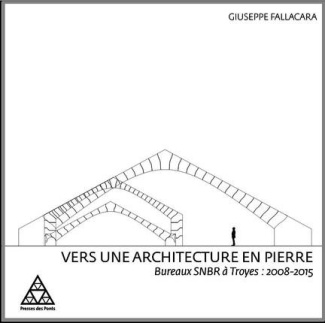
Vers une architecture en pierre. Bureaux SNBR à Troyes : 2008-2015
Le bâtiment de Fallacara proclame clairement sa volonté de se rattacher la grande architecture historique du passé, sans renoncer pour autant à la modernité des techniques et des formes. Il cherche, néanmoins, à renouer avec la tradition, certain que la grande architecture de l'Antiquité demeure une source inépuisable d'inspiration pouvant générer une architecture moderne, dont le lien avec le passé lui permet de s'élever au-dessus de la routine et de la banalité que nous montre souvent l'architecture contemporaine. La SNBR, une des sociétés pionnières dans le domaine de la restauration en France, a su comprendre l'architecture de Giuseppe Fallacara et sa signification profonde. Son engagement dans le domaine de la pierre et du milieu où l'on travaille ce matériau, l'a amenée à devenir une entreprise pionnière dans l'adoption des technologies les plus modernes pour le traitement et la taille de ce matériau. A la SNBR, on est conscients de ce que, tant dans l'architecture contemporaine que dans la restauration, l'avenir de la pierre et de tout un métier séculaire est lié à l'adoption des technologies les plus modernes. Ce bâtiment, siège de la société, résume très clairement les idées exposées ci-dessus. La stéréotomie n'est pas une science morte, elle peut et doit redevenir protagoniste de l'architecture occidentale. José Palacios GonzaloSur commande en 2-4 joursCOMMANDER30,00 € -
LITHIC TREE - A SEARCH FOR NATURAL STEREOTOMY.
So we continue our attempts; although imperfect, they will demonstrate that there is still so much do in the art of construction and that architecture will not take on a new form if she doesn't honestly submit to the new process of our age. (...) We have demonstrated in what manner the vault thrusts could be removed through a system of steel tie rods, (...), eliminate the arch thrust thanks to the combination of the iron and lithic systems. (...) This is nothing more than the application of iron in the ancient way of building." Viollet-le-Duc, Entretiens, 1863. These basic principles gave birth to the "Lithic Tree", a tribute to the fossilization process and lithic transformation, a careful observation of natural phenomena and human modeling and adaptation, an experimental project aimed at the reation of a pattern element suitable for the creation of vaulted spaces covered and/or diaphanous. "Lithic Tree" refers to a tree-like structure with a cantilevered lithic crown, made up of separated stone elements held together with a special steel reinforcement, favouring an optimal working compression dinamic between the voussoirs. The common thread that has guided the design of "Lithic Tree" is based on the fundamental dialectic about the opposites terms lightness vs heaviness that has represented since many years the distinctive feature of our entire research about steretomic architecture. Heaviness related to the natural composition of materials and lightness of the forms to which the project aims. The project approach can be considered as a synthesis between the sculptural soul of the Doric flutted column and the spatial impulse of the Gothic vault, mediated through technological innovation the translates meaning and significance on a different language level compared with the historical condition.Sur commande en 2-4 joursCOMMANDER30,00 €


Du même éditeur
-
Economie "circulaire" des routes de la soie, déroute des empires
Le parcours initiatique, et poétique, auquel nous invite cet ouvrage est celui de quelques chemins, de Lyon à Marseille, qui trouvent leur place et leur histoire dans la grande toile des "Routes de la soie" d'hier, d'aujourd'hui et de demain. Le lecteur en retiendra deux images : la première est celle de la parcelle de vignes, persistante et résistante, au milieu du grand site industriel rhodanien au sud de Lyon. La seconde sera celle des Portes du Tarn, avec son projet l'engageant à élaborer et réaliser, "hic et nunc", les solutions innovantes respectueuses de l'écologie, exigence scientifique pour la sauvegarde de l'habitabilité du Monde, dans la diversité de ses territoires. Ce livre nous dévoile "l'économie circulaire" et son impératif à propos d'une responsabilité publique prenant en compte les besoins sociaux, dans leurs interfaces avec l'environnement et la nature, et, croisement de leur flux de matières et d'énergie, leur représentation dans le système financier. Préface de François-Michel LambertSur commande en 2-4 joursCOMMANDER35,00 € -
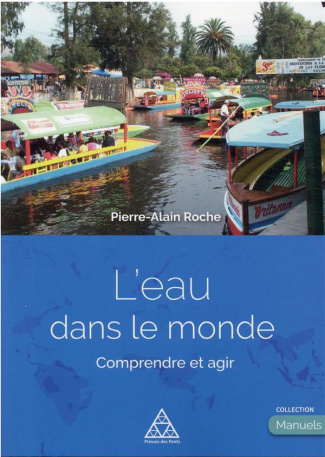
L'eau dans le monde. Comprendre et agir
Les enjeux d'une meilleure gouvernance de l'eau sont essentiels, tant au plan local que planétaire : - respecter les droits de l'homme pour l'eau potable, la salubrité et l'hygiène ; - préserver une biodiversité en fort déclin ; - permettre une alimentation équilibrée et développer une agriculture respectueuse des ressources naturelles que constituent l'eau et le sol, milieu vivant ; - contribuer à réduire des émissions de gaz à effet de serre par la production hydroélectrique ; - s'adapter au changement climatique en améliorant la résilience et la robustesse des installations humaines au regard des risques d'inondation. Multidisciplinaires par nature, insérées au plus profond de la vie et de la culture, ces questions complexes doivent être abordées avec pragmatisme, humilité et passion. Cet ouvrage est destiné en premier lieu aux enseignants du supérieur et à leurs étudiants qui se destinent à des métiers en lien avec l'eau. Les spécialistes y trouveront une synthèse actualisée des débats internationaux, de nombreux cas pratiques tirés de diverses régions du monde, avec une attention particulière pour l'Afrique et des pistes de progrès et d'approfondissement. Il est accessible sans prérequis et s'adresse à tous ceux qui ne se contentent pas de discours simplificateurs, qui veulent comprendre ces grands enjeux d'avenir dans toutes leurs dimensions et qui sont prêts à mobiliser leur énergie pour agir. L'auteur : Pierre-Alain Roche est enseignant à l'Ecole nationale des ponts et chaussées et à l'Ecole polytechnique en hydrologie et gestion de l'eau. Il a été chercheur au BRGM, puis au Cergrene (devenu LEESU), tout en exerçant au sein de l'administration, notamment dans le domaine des transports et de l'aménagement. Il a dirigé pendant sept ans l'agence de l'eau Seine-Normandie. Président d'honneur de l'ASTEE et gouverneur honoraire du Conseil mondial de l'eau, ingénieur général des ponts, des eaux et des forêts, il poursuit ses travaux avec l'OCDE dans le cadre de "l'initiative pour la gouvernance de l'eau" . Il est également l'auteur d'Hydrologie quantitative, processus, modèles et aides à la décision, co-écrit avec Jacques Miquel et Eric Gaume, qui a reçu le prix Roberval du manuel d'enseignement supérieur francophone.EpuiséVOIR PRODUIT45,00 € -

