
Brittle Beauty. Reflections on 18th-century european porcelain
Brittle Beauty presents a superlative private collection of European porcelain, comprising radical, rare and in many cases unique pieces assembled over thirty years. Lavishly illustrated and insightfully researched, the book showcases eighty vessels and sculptures, and includes accounts of their patrons and former owners, many as eccentric as the works themselves. One striking attribute of porcelain is its reflective glaze. Mirror-like in a wider sense, Brittle Beauty : Reflections on 18th Century European Porcelain examines the context in which this porcelain was created - including cultural, political, topographical and ceremonial aspects. It also looks at related materials such as silver, textiles and glass. The 18th century was the golden age of porcelain in Europe, which had previously been dependent on precious imports from the Far East. The discovery of the formula for hard-paste porcelain in Dresden in 1709 inspired the establishment of manufactories throughout the Continent. However, its popularity was not purely commercial : porcelain- with its meld of art and science, beauty and intellect, East and West - became a symbol of Enlightenment culture for every princely court. Chinese and Japanese motifs and European forms were synthesised with deceptive subtlety ; later, creations of pure fantasy emerged, often based on travellers' accounts of exotic lands. Familiar Occidental themes such as nature, hunting or archaeology were paralleled by ironic narratives of love, display and vanity. Porcelain, with its fragile allure, is uniquely expressive of the human comedy, yet its destiny has often been brutally tragic. This book features essays from eminent scholars. It also showcases a wealth of stunning imagery from Sylvain Deleu, who expertly photographed the pieces, many for the first time.
| Nombre de pages | 240 |
|---|---|
| Date de parution | 08/09/2023 |
| Poids | 2 952g |
| Largeur | 255mm |
| EAN | 9781912168293 |
|---|---|
| Titre | Brittle Beauty. Reflections on 18th-century european porcelain |
| Auteur | D'agliano Andreina ; Lerner Jobst claudia ; Manner |
| Editeur | HOLBERTON |
| Largeur | 255 |
| Poids | 2952 |
| Date de parution | 20230908 |
| Nombre de pages | 240,00 € |
| Disponibilité | Sur commande en 4-6 jours |
Pourquoi choisir Molière ?
Du même auteur
-
-
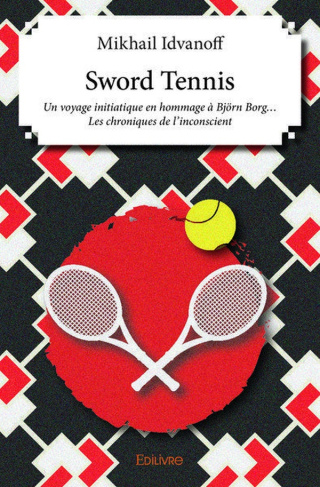
Sword Tennis. Un voyage initiatique en hommage à Björn Borg... - Les chroniques de l'inconscient
Sword Tennis est le parcours initiatique d'un samouraï des cours de tennis. Sam Përsson n'a plus de rival, il domine sa spécialité depuis plusieurs années. Alors, il décide de tout plaquer. Mais pour finir en beauté, il annonce qu'il veut réaliser l'exploit insensé de remporter tous les tournois majeurs en une seule saison. Derrière lui, une meute de "loups" est lâchée pour l'en empêcher... À la manière d'un manga, ce livre est un hommage au grand joueur de tennis, le Suédois Bjorn Borg. C'est aussi un clin d'oeil à Musashi Myamoto le plus grand escrimeur japonais de l'histoire...Sur commande en 2-4 joursCOMMANDER16,85 € -
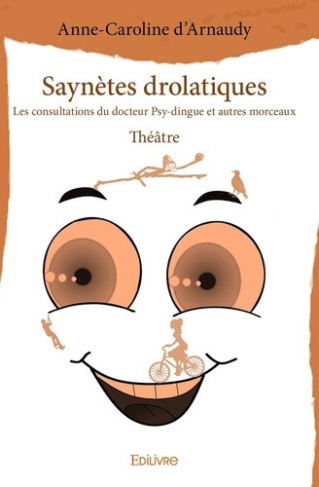
Saynètes drolatiques. Les consultations du docteur Psy-dingue et autres morceaux - Théâtre
Voilà des saynètes idéales pour le travail des ateliers théâtre et pour les compagnies qui cherchent des pièces courtes et amusantes. Des personnages hauts en couleur, des situations étonnantes, des possibilités de mise en scène variées, ces morceaux faciles à apprendre mettront en valeur les acteurs, pour le plus grand plaisir du public.Sur commande en 2-4 joursCOMMANDER11,95 € -
L'Anartiste
Ce récit constitue le troisième tome d'une trilogie comprenant Le Chef d'oeuvre, Artisan reporter et donc L'Anartiste, également édités chez Edilivre. Il aborde les difficultés du métier de comédien avec des témoignages de différents aspects du métier. Mais surtout, il nous fait partager son plaisir d'écrire : chansons, poésies, romans, récits, aphorismes, pièces, comédie musicale pour monter des spectacles en osmose avec des soirées à thème et des expositions. La quintessence de ces belles années vient compléter le récit avec 20 chansons et 20 poèmes en seconde partie.Sur commande en 2-4 joursCOMMANDER20,06 €


Du même éditeur
-

'A Perfect Eye and Steady Hand'. Goldsmithing in Tudor & Stuart London
This handsomely illustrated book is published to mark the opening of the Goldsmiths' Gallery at the new London Museum in Smithfield. Showcasing the Cheapside Hoard alongside historic treasures from the Goldsmiths' Company's collection, it takes readers on a global journey in the wake of plate, jewels and gemstones - and the people who made, traded and treasured them. Gold and silver are precious - prized as a form of portable capital, essential for the mints and coinage, used to express power and status. Yet great skill was needed in the buying, the fashioning and the selling of either metal. As fashions changed, much early modern plate and jewellery was melted down when sentiment gave way to market value. This makes the survival of the Goldsmiths' Company's holdings exceptional - and the Cheapside Hoard, unearthed by workmen in 1912 after lying undisturbed for nearly 300 years - nothing short of extraordinary. Comprising over 500 pieces - made of emeralds, diamonds and sapphires sourced from across the world, worked into mesmerising brooches, buttons, necklaces and rings - the Cheapside Hoard is the greatest single collection of Elizabethan and Stuart jewellery in the world. The book places the Hoard in its historical and global context, celebrating it alongside highlights from the Goldsmiths' Company's collection. It offers four main chapters on Elizabethan and early Stuart London, the goldsmiths' trade, the Hoard itself, and the city's global networks. Interwoven thematic sections explore craftsmanship, personal stories, trade practices, taste and fashion - bringingtogether jewels and plate to reveal a rich tapestry of skill, style and exchange.PréventePRÉCOMMANDER35,00 € -

-
-