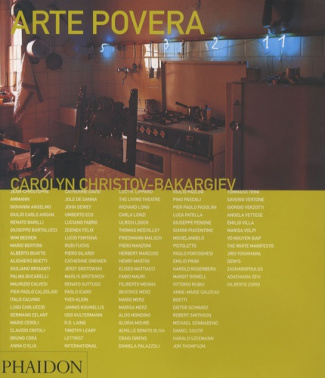
Christov-Bakargiev Carolyn ; Pinault François ; Gu
Coédition Dilecta et Bourse de Commerce ? Pinault Collection Au milieu des années 1960, des artistes italiens commencent à exposer ensemble, sous l'étendard de l'expression « arte povera » ? art pauvre ?, une expression forgée en 1967 par Germano Celant, critique d'art et commissaire d'exposition, qui adapte le concept de « théâtre pauvre », mis en avant par le metteur en scène de théâtre expérimental Jerzy Grotowski. Les artistes associés à ce movement ? Giovanni Anselmo, Alighiero Boetti, Pier Paolo Calzolari, Luciano Fabro, Jannis Kounellis, Mario and Marisa Merz, Giulio Paolini, Pino Pascali, Giuseppe Penone, Michelangelo Pistoletto, Emilio Prini, Gilberto Zorio ? s'intéressent principalement au croisement de l'art et de la vie, de la nature et de la culture. Ils suggèrent que l'essence d'une ?uvre d'art réside dans l'expérience subjective que l'on fait d'un matériau, de ses transformations et de l'espace. Ils concentrent leur attention sur l'énergie « primale » qui traversent toutes les facettes de la vie ? une énergie vécue directement, qui échappe à toute représentation, idéologie ou langage. Cette énergie correspond aux forces physiques fondamentales de la nature (la gravité et les champs magnétiques) et fait également référence aux éléments primordiaux de la nature humains (la vitalité, la mémoire, les émotions). Ces artistes, originaires de Turin, Gêne, Bologne, Milan ou encore Rome, créent de façon très singulière, libre, non conventionnelle et non dogmatique, tant dans le champ de la peinture que de la sculpture, du dessin et de la photographie ; ce sont eux qui produisent les premières installations, performances et actions de l'histoire de l'art ? passant d'un médium à l'autre dans se soucier de « style », se servant de matériaux (naturels comme artificiels) humbles afin de générer une véritable expérience de l'ici et maintenant. Les artistes de l'arte povera s'intéressent à notre perception, alliant leur fascination pour la vie quotidienne à un profond respect de la tradition artistique. Se méfiant de l'intellectualisation excessive du champ artistique, ils empruntent à l'esthétique baroque son hétérogénéité et son apparente incohérence. À la Bourse de Commerce ? Pinault Collection, l'exposition, organisée par Carolyn Christov-Bakargiev, experte internationalement reconnue sur le sujet, retrace l'histoire de ce mouvement, depuis ses prémices en Italie jusqu'à son développement à travers le monde, en s'appuyant sur une sélection d??uvres des treize artistes principaux de l'arte povera issues de la Collection Pinault, de celle du Castello di Rivoli et de la Fondazione per l'Arte Moderna e Contemporanea CRT, ou d'autres prestigieuses collections, dont celles des artistes eux-mêmes. Carolyn Christov-Bakargiev est une écrivaine, historienne de l'art et commissaire d'exposition italo-américaine. Elle a notamment dirigé le Castello di Rivoli Museo d'Arte Contemporanea et la Fondazione Francesco Federico Cerruti à Turin entre 2016 et 2023. Nommée personnalité la plus puissante du monde de l'art en 2012 par le classement Power 100 d'ArtReview, Christov-Bakargiev a été la directrice artistique de dOCUMENTA (13) (2012), événement pour lequel elle a par ailleurs également organisé des ateliers, des séminaires et des expositions à Alexandrie (Égypte), à Kaboul (Afghanistan) et à Banff (Canada). Gabriele Guercio est un chercheur indépendant basé à Milan. Il écrit sur l'art moderne et contemporain, ainsi que sur l'histoire de la théorie de l'art. Marcella Beccaria est historienne de l'art, conservatrice et auteure. Elle est actuellement conservatrice en chef et conservatrice des collections au Castello di Rivoli Museo d'Arte Contemporanea. Riccardo Passoni est historien de l'art, critique et commissaire d'exposition. Fabio Cafagna est historien de l'art
Sur commande en 4-6 jours
49,00 €
COMMANDER