Paris. Laboratoire de la littérature scandinave moderne (1880-1905)
37,50 €
Sur commande en 6-8 jours
EAN :
9782296119789
À la fin du XIXème siècle, Paris devient un passage obligé pour tout artiste scandinave s'intéressant au projet moderne. Attirés par un contexte transculturel et européen, les écrivains scandinaves font à Paris l'expérience des phénomènes concrets de la modernité : la métropole, le flâneur et la fantasmagorie. L'approche choisie dans cette étude relève de la discipline naissante de la géographie littéraire : il s'agit à la fois d'analyser la littérature avec des outils géographiques et d'évaluer la littérature comme une géographie, une écriture de l'espace.
| Nombre de pages | 388 |
|---|---|
| Date de parution | 29/04/2010 |
| Poids | 590g |
| Largeur | 155mm |
Plus d'informations
| EAN | 9782296119789 |
|---|---|
| Titre | Paris. Laboratoire de la littérature scandinave moderne (1880-1905) |
| Auteur | Briens Sylvain |
| Editeur | L'HARMATTAN |
| Largeur | 155 |
| Poids | 590 |
| Date de parution | 20100429 |
| Nombre de pages | 388,00 € |
| Disponibilité | Sur commande en 6-8 jours |
Pourquoi choisir Molière ?
Efficacité et rapidité Commandé avant 16h livré demain
Économique et pratique Livraison dès 3,90 €
Facile et sans frais Retrait gratuit en magasin
Du même auteur
-
-
Technique et littérature. Train, téléphone et génie littéraire suédois
Sur commande en 6-8 joursCOMMANDER28,01 € -
Etudes Germaniques N° 272, 4/2013 : Strindberg en héritage
Gunnel ENGWALL Strindberg, journaliste français During his lifetime, August Strindberg participated not only in the Swedish newspaper debate but also in the French. The first contribution was published in 1883 and the last in 1911, with a concentration to the years 1885-1887 and 1894-1898, e. g. during Strindberg's longer stays in France. The texts, written by the author directly in French or translated by others, represent a number of different genres, and were published in several of the most well-known journals of the time. A concluding annex presents a chronological list with references to all contributions by Strindberg in French journals. Under sin livstid deltog August Strindberg inte bara i den svenska tidningsdebatten utan även i den franska. Det första bidraget publicerades år 1883 och det sista år 1911, med en koncentration under åren 1885-1887 och 1894-1898, dvs. under Strindbergs längre Frankrikevistelser. Texterna, som Strindberg skrivit direkt på franska eller som har översatts av andra, faller inom en rad olika genrer och publicerades i flera av dåtidens mest välkända tidskrifter. Ett avslutande appendix innehåller en kronologisk lista med referenser till Strindbergs samtliga bidrag i den franska pressen. Mickaëlle CEDERGREN L'Ambivalence d'un positionnement littéraire ? : Strindberg face à la Suède et la France entre ?1898 et ?1902 This article evaluates how Strindberg positions himself in Sweden and France between 1898 and 1902. Strindberg returns to Sweden from his travels to renew the art of theatre, while maintaining a keen interest in affairs outside of Sweden, and especially in France. Looking at Strindberg's correspondence and the reception of his work, it becomes clear that he wishes to forge links with the former naturalists, now converted, in order to break new ground. He sets out to innovate, and presents himself as an avant-gardist and a challenger. The theoretical basis of this study is taken from Bourdieu's and Maingueneau's hypotheses regarding the strategies the author adopts to position himself within the literary field. Through an investigation of Strindberg's statements and action strategies it is clear that he is trying to free himself from the Swedish literary, political and religious establishment and to become a "?secular theist ?" , for fear of being labelled a Catholic sympathizer. I denna studie har vi studerat hur Strindberg positionerar sig i Sverige och Frankrike mellan 1898 och 1902. Efter hans hemkomst från utlandet förnyar Strindberg teaterkonsten och fortsätter samtidigt att hysa intresse för världen och speciellt för Frankrike. Med utgångspunkt i Strindbergs brevväxling och mottagandet av hans verk blir det uppenbart att han vill närma sig de före detta naturalisterna och nyblivna konvertiterna i syfte att bryta ny mark. Han vill göra slut med det gamla och framstå som avantgardist och motståndare. Som teoretisk utgångspunkt används Bourdieus och Maingueneaus hypoteser angående de strategier som författaren använder för att positionera sig inom det litterära fältet. Undersökningen av Strindbergs uttalanden och handlingsstrategier visar därmed att han försöker frigöra sig från det litterära, politiska och religiösa svenska etablissemanget och av rädsla för att stämplas som katolsk sympatisör gör han sig till "?konfessionslös teist ?" . Edouard ROLLAND Du hasard créatif chez August Strindberg Marcel Duchamp is generally considered as the first artist having worked on chance in his work, in particular with his masterpiece of 1913, "Trois Stoppages Etalon". However, in 1894, about twenty years before Marcel Duchamp, August Strindberg had already studied and experiented chance in his artistic work when he published a small book entitled Du Hasard dans la production artistique. In this book, Strindberg evokes his funny experiments concerning chance, in music, in painting and in sculpture, and explains how he discovered the creative potential of chance, whether it is the fruit of a conscious process or not. Strindberg can really be called an avant-gardist artist, for example when he praises an abstract and informal art, improvising "a theory of the automatic art" with the manipulation "by chance" of his tools and his musical instruments, fifty years before an artist like John Cage. This article will focus on the theoretical and plastic ways of the creative chance in this short text, which is as interesting as prophetic. Marcel Duchamp anses vanligen vara den första konstnär som arbetade med slumpen i sina verk, och detta gäller i synnerhet hans mästerverk "Trois Stoppages Etalon" från 1913. Men faktum är att August Strindberg redan 1894, alltså ungefär tjugo år före Marcel Duchamp, hade studerat och experimenterat med slumpen i sitt konstnärliga skapande, vilket han gav ut en lite bok om kallad Du Hasard dans la production artistique. I denna bok beskriver Strindberg dråpliga slumpbaserade experiment inom musik, måleri och skulptur, och han förklarar hur han upptäckte slumpens kreativa potential, vare sig denna var ett resultat av en medveten process eller ej. Strindberg kan förvisso kallas en avantgarde-artist, bland annat med tanke på hans lovordande av abstrakt och informell konst, hans improviserande kring "en teori för den automatiska konsten" och hans "slumpmässiga" manipulerande med verktyg och musikinstrument, 50 år före en konstnär som John Cage. Denna artikel fokuserar på de teoretiska och plastiska dimensionerna i det slumpmässiga skapandet som beskrivs i hans korta text, som även är intressant som profetia. Martin KYLHAMMAR Strindberg, inventeur - et critique - de la civilisation moderne This essay examines Strindberg's attempt to become an inventor in and around the year 1895. Strindberg left behind about 100 inventive ideas. They are often linked to ongoing technical research and contemporary problems. But the critical reviewer can only conclude ? : every working idea in this field that Strindberg produced was already done by somebody else ?; everyone of Strindberg's independent and original ideas, rested on absurd premises. Strindberg strävade ständigt efter att vara modern, att vara i framkant, i ledningen för omvandlingar och nyorienteringar. Detta till trots kom han aldrig att ställa sig bakom sin tids tekniska och vetenskapliga framstegstro. Han var författarskapet igenom trogen sin djupa, "gröna", civilisationskritik. Just detta gör det extra intressant att han åren runt 1895 försökte slå igenom som uppfinnare. I den här uppsatsen granskas hans tekniska ambitioner och de cirka hundra uppfinningsidéer han lämnade efter sig. Det handlar om förslag till nya konsumtionsartiklar, till nya processinnovationer och nya metoder för råvaruutvinning. Strindberg tog inte sina tekniska idéer ur luften, de anknöt till teknisk forskning och samtida problem. Men den kritiske granskaren kan bara konstatera ? : allt Strindberg tänkt rätt på detta fält, var redan gjort av andra - allt Strindberg tänkt nytt, vilade på orimliga premisser. Sylvain BRIENS Ecrivain-écologue. La naissance de l'écologie scientifique dans Jardin des Plantes d'August Strindberg August Strindberg wrote Jardin des Plantes in 1896 as an attempt to gain recognition as a botanist and chemist. This paper evaluates the scientific relevance of the text, taking into account the status of science at the end of the nineteenth century. A comparison with Ocology of Plants ? : An Introduction to the Study of Plant Communities, written one year previously by Eugenius Warming (a Danish botanist and major founding figure of the scientific discipline of ecology) shows that Jardin des Plantes is a fairly accurate summary of the state of botany in the late nineteenth century. Strindberg expresses a vision of ecology which is comparable in many aspects to that of Warming, but unlike Warming he is unable to found a new epistemology. August Strindberg skrev Jardin des Plantes 1896 i avsikt att bli erkänd som botanist och kemist. Denna uppsats bedömer det vetenskapliga värdet av hans text med hänsyn till naturvetenskapens status på slutet av 1800-talet. En jämförelse görs med Eugenius Warmings verk Plantesamfund - Grundtraek af den okologiske Plantegeografi, författat ett år tidigare. Warming var dansk botaniker och förgrundsgestalt inom ekologisk vetenskap. Jämförelsen visar att Jardin des Plantes ger en tämligen korrekt beskrivning av läget inom den botaniska vetenskapen mot slutet av 1800-talet. Strindberg framför en syn på ekologi som i många avseenden liknar Warmings utan att, i motsats till den senare, lyckas introducera en ny epistemologi. Gustaf MARCUS "?Une tentative de réaliser la littérature de l'avenir ?" ? : l'hérédité comme moteur du récit dans Le Fils de la servante d'August Strindberg The object of this article is to read August Strindberg's autobiography The Son of a Servant in the light of the science of heredity of the late 19th century. The point of departure is an analysis of the paradoxical narrative structure of the work, where the present of the protagonist is disrupted by the narration of the past and the future. This undermines the the protagonist in a way that resembles the relativisation of the subject in the scientific literature on heredity. The article also shows how Strindberg uses this scientific knowledge to formulate a critique of society and literature. Artikelns syfte är att läsa Strindbergs självbiografi Tjänstekvinnans son i ljuset av vetenskapen om ärftligheten vid slutet av 1800-talet. Utgångspunkten är en analys av den paradoxala narrativa strukturen i verket, där huvudpersonens nutid genomgående upplöses av berättandet om det förgångna och framtiden. Detta underminerar huvudpersonen som ett helt subjekt på ett sätt som liknar relativiseringen av subjektet i den vetenskapliga litteraturen om ärftligheten. Artikeln visar även hur Strindberg använder det här vetandet för att formulera en kritik av samhället och litteraturen. Ylva LINDBERG Strindberg face aux femmes This study offers a presentation and a critical reading of research on Strindberg dealing with the question of the female. The overview spans research from the 1960s until today and is divided into three areas ? : the biographical perspective, the historical perspective and the aesthetic and literary perspective. The conclusions are partly that the aesthetic and literary perspective is more strongly emphasized in later research, and that underlying methodological assumptions are more explicit and elaborated. Finally, the focus on the female is abandoned in favour of discussions of gender and relationships. Studien är en översiktlig och kritisk presentation av Strindbergforskningen som fokuserar på kvinnofrågan. Studien berör forskning från 1960-talet och framåt och är indelad i tre områden ? : det biografiska, det historiska och det estetiskt litterära. En av slutsatserna är att det estetiskt litterära perspektivet tar överhanden i senare forskning och att metodologiska ställningstaganden blir mer uttalade. Fokuseringen på kvinnofrågan går även över i att diskutera genus och parförhållanden. Sven HEED Strindberg et le rêve d'un théâtre artistique This article proposes a different approach to Strindberg's theatrical work from the perspective of the theatre itself and the innovations in the theatre of his time. The search for an artistic theatre is a constant in Strindberg's life. The article traces the evolution of this constant through different projects and realizations of an experimental theatre and places Strindberg's contribution to the theatre in relation to contemporary attempts to find new forms of expression in the theatre. Together with other theatre men of his time, Strindberg remains a forerunner and an important figure within the artistic theatre of the 20th century. Artikeln erbjuder ett nytt sätt att närma sig Strindbergs dramatik från ett teatralt perspektiv med hänsyn till teaterns förnyelse i hans samtid. Sökandet efter en konstnärlig teater framstår som en konstant i Strindbergs liv. Artikeln följer utvecklingen av denna konstant genom olika teaterprojekt och förverkliganden av en experimentteater och definierar Strindbergs bidrag till teatern i förhållande till samtida försök att finna nya uttrycksformer i teatern. Strindberg är och förblir en föregångare, i nivå med andra framstående teatermän i hans samtid, och en förgrundsgestalt inom 1900-talets konstnärliga teater. Marthe SEGRESTIN La Danse de mort en France - les métamorphoses du tragique The history of the productions of The Dance of Death in France shows not only that the play fascinated the biggest directors, from Lugné-Poe to Jacques Lassalle, via Jean Vilar and Claude Régy, but also that very different approaches have been proposed during the twentieth century, to express the tragic of the play. The analysis of the scenic space allows us to emphasize this evolution ? : in 1921, with the first production of Lugné-Poe, the space is confined, the small size of the stage serves to create an atmosphere of "?huis clos ?" . The Dance of Death becomes in France the drama of the conjugal hatred ? : the hell of the couple is stressed by closing space on very small stages. However, we notice another interpretation of the play already in the 1920s, but mainly after 1970 ? : the choice of bigger stages and of an open scenic space changes completely the meaning of the play ? : "?the huis clos ?" becomes less important, whereas the face to face with death comes in the forefront. In the Palais de Chaillot, Claude Régy turns in 1970 the drama of the conjugal hatred into a tragedy of the death. Den historiska raden av uppsättningar av Dödsdansen i Frankrike visar inte bara att dramat fascinerade de största regissörerna, från Lugné-Poe till Jacques Lassalle, via Jean Vilar och Claude Régy, men också bredden av de tolkningar som föreslagits f för att uttrycka det tragiska i dramat. En analys av scenrummet gör det möjligt att visa hur dessa tolkningar har lyft fram olika aspekter av pjäsens tragik. I den första uppsättningen av Lugné-Poe (1921) är utrymmet på scenen begränsat och bidrar till att skapa en atmosfär av "?huis clos ?" det vill säga ett drama bakom lyckta dörrar. Genom att utrymmet på scenen förminskas betonas helvetet inom hemmets väggar, något som gjorde att Dödsdansen efter denna uppsättning i Frankrike kom att betraktas som en arketyp för det äktenskapliga dramat. Redan under 1920-talet påbörjas dock en utveckling som märks allt tydligare framförallt efter 1970, då pjäsen tolkas helt annorlunda. Flera regissörer väljer att använda stora scener och därmed att öppna utrymmet, så att kammarspelet blir mindre framträdande medan mötet med döden kommer i förgrunden. Detta är fallet med Claude Régys uppsättning på Palais de Chaillot 1970, som förvandlar äktenskapsdramat till en tragedi med döden som central tematik. Antoine GUEMY Un héritage encombrant et poussiéreux ?? Les mises en scène en France des pièces historiques de Strindberg One need not worry about the Strindberg legacy ? : it is still very vivid - not the least on stage everywhere in the world, particulary in France. But one part of his theatrical work has been largely neglected in the country of Corneille since the very beginning ? : his historical dramas. How do you explain such a lack of interest ?? However, if the plays where known by a few specialists of scandinavian litterature, the french public had to wait until 1958 in order to be able to read the first translations in french (by C. G. Bjuström and Boris Vian) of one of the historical dramas, Erik XIV, a bit later (1960) Charles XII, Christine and Gustav III, and as late as 1986 to get the whole range of them (13 plays). This allowed a short blooming of productions in the sixties. Most famous was the performance of Erik XIV directed by Jean Vilar on the huge parisian Théâtre National Populaire (TNP) in 1960, where an enormous number of spectators could discover this part of Strindbergs work. All these attempts seemed to express and reflect the movement called "?théâtre populaire ?" with it´s leitmotif "?decentralisation ?" which had been initialized by André Malraux' Ministery of culture in the early sixties, and was especially open to innovative and foreign repertoire. After a long silence, a very brave attempt was done in the season 2009-10 by a tiny theater in Paris, the "?Théâtre du Nord-ouest ?" to play Strindbergs complete theatrical work, and among this his historical dramas. With its very tight economy, they could only afford to produce two of the historical plays on stage, (Erik XIV and The Nightingale of Wittenberg) but managed to make lectures of all the others. Man behöver inte känna sig det minsta orolig för Strindbergs arv- det lever och frodas inte minst på teaterscenerna världen över och alldeles särskilt i Frankrike. Men en del av hans dramatiska verk har aldrig hittat fram till fransmännens hjärta ? : hans historiska dramer. Hur kan man förklara detta ?? I Frankrike var det länge emellertid endast några få specialister på skandinavisk litteratur som kände till dem, eftersom den första översättningen (Erik XIV) publicerades först 1958 (av C. G. Bjurström och Boris Vian) följd av Karl XII, Kristina samt Gustav III år 1960 och först så sent som 1986 fick den franska publiken tillgång till hela verket av 13 pjäser. Som en följd af detta uppstod på sextiotalet en kort blomstringstid, då t. ex. Erik XIV sattes upp av Jean Vilar på TNP's (Théâtre National Populaire) stora scenen i Paris (1960) och lockade många besökare. Alla dessa försök verkar ha varit en del av den generösa rörelsen som gick under benämningen "théâtre populaire", med "decentralisering" som ett centralt begrepp under ledning av André Malraux som kulturminister i början på 60talet och som var särdeles öppen för en okänd, utländsk repertoire. Sedan dröjde det enda till 2009 då en liten teater i Paris, le Théâtre du Nord-ouest gjorde en djärv satsning och programmerade hela Strindbergs verk för teatern, varav även hans historiska dramer. Endast två av dem (Erik XIV and Näktergalen i Wittenberg) kunde emellertid sättas upp på riktigt ? : de övriga i form av uppläsningar. Karl GADELII La traduction en français des traits oraux dans I havsbandet par August Strindberg Strindberg's language is among other things characterized by an important variation in sentence-initial position. This variation is made possible by the facility in Swedish of allowing practically any type of constituent to introduce the sentence, as long as the finite verb is in second position. This property may be formalized as XVS, and does not exist as such in French. This means that other strategies have to be used when translating the left periphery in Strindberg's language into French, such as detachment to the left (XSV). The paper evaluates to which extent these strategies are successful. Strindbergs stil karakteriseras bland annat av stor variation i satsbörjan, något som underlättas av svenskans rika möjligheter att låta nästan vilken typ av konstituent som helst föregå det böjda verbet, som alltid står på andra plats i huvudsatser. Denna egenskap i svenskans syntax kan formaliseras som XVS, och förekommer inte på samma sätt i franskan. Detta gör att översättare måste ta till andra strategier vid översättning av vänsterperiferin i Strindbergs språk, bland annat "?vänsterpetning ?" (XSV). Artikeln utvärderar hur väl de olika översättningsstrategierna återger Strindbergs stil. Annie BOURGUIGNON Le "?roman de journaliste ?" Strindberg's novel The Red Room (1879) is one of the first "?journalist's novels ?" , a genre which distinctive features are that 1) the main character is a journalist and reality is shown through her/his activities ?; 2) it describes how the media work ?; 3) it questions the ability of a text to produce a true representation of reality. The paper also introduces some journalist's novels of the 20th century, such as Ivar Lo-Johansson's Journalisten (1956, "?The Journalist ?"), Jörn Donner's Jag, Erik Anders (1955, "?I, Erik Anders ?") and Erik Eriksson's Efter regntiden (1985, "?After the Rainy Season ?"). "?Journalistromanen ?" kan anses vara en undergenre som tar sin början med Röda rummet och karakteriseras av att 1) huvudgestalten är journalist och verkligheten framställs genom berättelsen om journalistens verksamhet ?; 2) romanen beskriver journalisternas arbetsmiljö?; 3) journalisten funderar kring frågan om en text kan återge verkligheten troget. Artikeln sysslar sedan med några journalistromaner från 1900-talet, bland andra Ivar Lo-Johanssons Journalisten (1956), Jörn Donners Jag, Erik Anders (1955) och Erik Erikssons Efter regntiden (1985). Maxime ABOLGASSEMI "?L'objet trouvé?" et l'héritage surréaliste de Strindberg The possibility that Strindberg could be a precursor of surrealism is often suggested, but it is not easy to show precisely how this is relevant. Probably because of a legacy quiet unfamiliar and therefore weakly assumed by the Surrealists themselves. We will take the case of the "?found objects (objets trouvés)?" to see that the Parisian story Inferno reveals how Strindberg attempted experiments typically surrealist. And prove that he was already invoking a new chance able to attack the poor and bounded reason, something very close to the "?objective chance (hasard objectif)?" lately described by Breton. Möjligheten att Strindberg kunde vara surrealismens föregångare nämns ibland men det är inte helt enkelt att visa exakt hur, vilket delvis beror på att surrealisterna själva inte kände till det strindbergianska arvet så bra. Genom begreppet "?funna föremål ?" ("?objets trouvés ?") ser vi att Strindberg i Parisberättelsen Inferno gör vad som liknar typiskt surrealistiska experiment. Vi vill påvisa att Strindberg använde slumpmässiga fynd och föremål som ett sätt att spränga ramarna och bryta med förnuftets torra logik, vilket påminner om vad Breton senare kallade "?den objektiva slumpen ?" (le hasard objectif).Sur commande en 4-6 joursCOMMANDER22,00 € -
Etudes Germaniques N° 290, 2/2018 : Le boréalisme 2.0
ARTICLESSylvain BRIENS, Pierre-Brice STAHL et Raphaëlle JAMET : « Non un programme, mais une direction » Sylvain BRIENS : Boréalisme. Pour un atlas sensible du NordAlessandra BALLOTTI : Analyse des processus d'interaction et de réception du boréalismeFrançois ÉMION : Le Nord selon Olaus MagnusJean-François BATTAIL : Fascination boréale. L'exemple de Carl von LinnéRaphaëlle JAMET : Asger Jorn et l'Institut Scandinave de Vandalisme Comparé. La création d'un boréalisme endogèneVirginie ADAM : Fantasy et boréalisme. Smaug, une étude de casKarl Erland GADELII : L'usage du norrois dans la série télévisée VikingsPierre-Brice STAHL : La représentation du Nord dans Vikings. Entre exploration, imaginaire et altéritéNOTES ET DOCUMENTSSylvie LE MOËL : Le gallotropisme, un nouveau modèle heuristique. Bernd WITTE : Von Moses zu Marx. Wilhelm Voßkamps ?Poetik und Geschichte literarischer Utopien...Anne-Marie SAINT-GILLE : Résistance et opposition. Le cas de la RDABIBLIOGRAPHIE CRITIQUENOTICES BIBLIOGRAPHIQUESOUVRAGES REÇUSSur commande en 4-6 joursCOMMANDER27,00 €


Du même éditeur
-
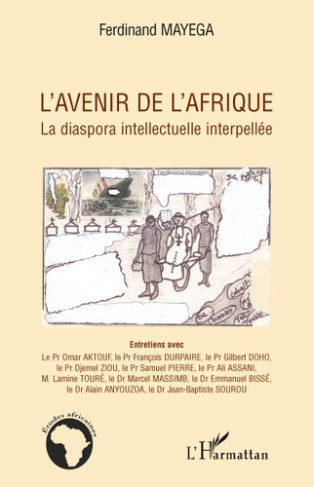
L'AVENIR DE L'AFRIQUE - LA DIASPORA INTELLECTUELLE INTERPELLEE
L'année 2010 marquera, pour de nombreux pays africains surtout francophones, 50 ans d'indépendance, donc de gestion du pouvoir entre les mains des élites dirigeantes africaines. Seulement, un demi-siècle plus tard, un constat se dégage de l'ensemble des Etats africains : le développement semble s'éloigner de l'Afrique au fur et à mesure que les années passent. Pourquoi l'Afrique demeure-t-elle à la traîne malgré toutes les richesses qu'elle possède ? Le continent noir peut-il se sortir du piège de l'aide pour son développement si la bonne gouvernance s'installe effectivement et si les mentalités changent radicalement ? Compte tenu de l'apport remarquable des diasporas intellectuelles notamment chinoise et indienne pour l'émergence de la Chine et de l'Inde, la diaspora intellectuelle africaine, avec l'élection du fils d'Afrique Barack Obama à la Maison Blanche, ne constitue-t-elle pas le meilleur pilier de l'Afrique pour sortir du labyrinthe de la néguentropie ? Dans le cadre de mes recherches de plus d'une décennie, je présente également ce que l'on pourrait assimiler à une nouvelle théorie des relations Nord-Sud. Ce sont ces réflexions et interrogations auxquelles nous essayons de trouver des solutions pour l'avenir de l'Afrique avec quelques brillants intellectuels de la diaspora africaine d'Europe et d'Amérique du Nord.EpuiséVOIR PRODUIT32,00 € -
Les institutions politiques mossis à l'épreuve de la situation coloniale
Avant la conquête française, la plus grande partie de la moitié orientale du Burkina Faso actuel était occupée par les Mossis. On appelle également "mossis" les représentants de l'ordre aristocratique qui dirige ce territoire, souvent qualifié à tort d'empire, un ordre dont les institutions se sont maintenues durant les six décennies de domination coloniale. Pourquoi et comment ce système a-t-il été préservé alors même que la société toute entière vit de grands bouleversements ? Au moment de la conquête, les chefs précoloniaux n'auraient-ils pas dû être renversés et leur système aboli ? Et lorsqu'on s'approche de la décolonisation, c'est-à-dire d'une indépendance accordée à une élite "moderne" formée à l'école coloniale, la question de l'abolition des organisations traditionnelles n'aurait-elle pas dû être de nouveau soulevée ? Comment les structures politiques mossis ont-elles su se maintenir durant la période coloniale ? Selon quelles modalités ...Sur commande en 6-8 joursCOMMANDER29,00 € -