

Gunnar Asplund. Edition en anglais
Erik Gunnar Asplund (1885-1940) produced buildings of extraordinary grace and poetry in his native Sweden. Among his best known works are the pavilions at the 1930 Stockholm Exhibition, the Stockholm Library (1928) and the Woodland Chapel (1920). This book celebrates the life and work of Asplund, a contemporary of Walter Gropius and Le Corbusier, who was recognized for his unique blend of Classical, Modernist and Vernacular architecture. Asplund's achievements are amply demonstrated through masterpieces that lasted throughout his career, such as the Gothenburg Law Courts (1913-1937) and the Enskede Cemetery (1915-1940), a collaboration with Sigurd Lewerentz. As a result of detailed and specialist research, each project is examined through a comprehensive survey of original and archival drawings from Asplund's office, offering a comprehensive and authoritative guide to his oeuvre. In addition to major buildings, smaller built and unbuilt projects are also explored, such as the architect's own summer house at Stennäs (1938) and the crematoria at Kviberg and Skövde (1940). Peter Blundell Jones' study provides an expert overview of Asplund and his legacy of Scandinavian Modernism. Generously illustrated throughout with key plans, sketches, archival drawings and unseen special photography, this book presents a unique and essential evaluation of Asplund for anyone interested in the subject of architecture during the first half of the twentieth century.
| Nombre de pages | 237 |
|---|---|
| Date de parution | 18/05/2006 |
| Poids | 1 835g |
| Largeur | 257mm |
| EAN | 9780714839769 |
|---|---|
| Titre | Gunnar Asplund. Edition en anglais |
| Auteur | Blundell Jones Peter |
| Editeur | PHAIDON PRESS |
| Largeur | 257 |
| Poids | 1835 |
| Date de parution | 20060518 |
| Nombre de pages | 237,00 € |
| Disponibilité | Epuisé |
Pourquoi choisir Molière ?
Du même auteur
-
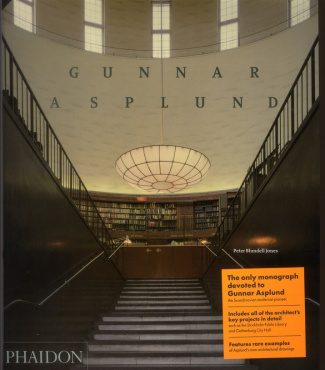
Gunnar Asplund
Comprehensive monograph of Erik Gunnar Asplund (1885-1940), Sweden's pre-eminent architect and a central figure in the development of Scandinavia's architectural modernism. Offers an in-depth analysis of Asplund's life and work, in particular his collaborations with architect Sigurd Lewerentz. Extensively illustrated with photographs and features rare examples of Asplund's own drawings. Explores all key projects in detail, including Stockholm City Library (1928), Gothenburg Law Courts (1937) and the Woodland Crematorium at Enskede (1940).EpuiséVOIR PRODUIT29,95 € -

-
-
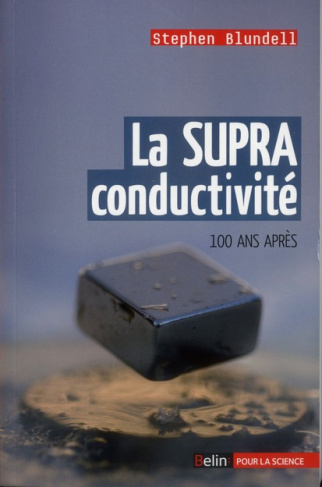
La SUPRA conductivité. 100 ans après
La supraconductivité est l un des domaines de recherche les plus fascinants de la physique: à très basse température, certains matériaux se mettent à conduire le courant électrique sans pertes, et font léviter les aimants! Découverte il y a exactement 100 ans, elle a défrayé la chronique à la fin des années 1980 quand de nouvelles classes de matériaux « à haute température critique » ont vu le jour. Ces températures relatives « chaudes » ( 130 °C tout de même) laissaient entrevoir des applications inédites, tout en fragilisant l explication théorique admise jusque-là. La recherche a rebondi encore tout récemment, quand d étranges composés à base de fer se sont révélés supraconducteurs.Cet ouvrage propose la première introduction à cette énigme de la physique moderne. Il détaille la découverte de la supraconductivité, et l incroyable frénésie créatrice qui s est emparée des chercheurs pour en percer théoriquement les mécanismes, sans oublier les multiples applications, de l IRM aux trains à sustentation magnétique.Sur commande en 4-6 joursCOMMANDER19,40 €



Du même éditeur
-
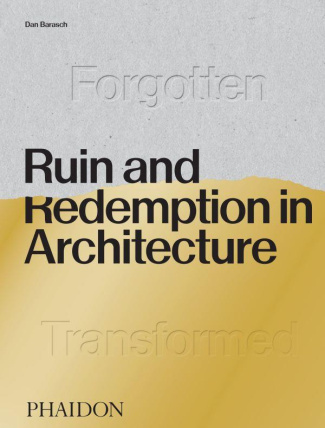
RUIN AND REDEMPTION IN ARCHITECTURE
Explores the power of abandoned architecture, capturing the awe-inspiring drama of lost and forgotten, as well as reimagined and transformed structures across the globe. From Victorian gas holders, railway stations and factories, to World War Il flak towers and bunkers, from Gothic churches, as well as Modernist and Brutalist masterpieces, this book demonstrates that transforming our built heritage has the power to change lives, communities, neighbourhoods and cities the world over.EpuiséVOIR PRODUIT49,95 € -
-

-

EZRA STOLLER - A PHOTOGRAPHIC HISTORY OF MODERN AMERICAN ARCHITECTURE
Sur commande en 2-4 joursCOMMANDER125,01 €


