THE EXORCIST
14,47 €
Epuisé
EAN :
9780571202393
| Date de parution | 01/04/2001 |
|---|---|
| Poids | 200g |
Plus d'informations
| EAN | 9780571202393 |
|---|---|
| Titre | THE EXORCIST |
| ISBN | 057120239X |
| Auteur | WP BLATTY |
| Editeur | FABER ET FABER |
| Largeur | 0 |
| Poids | 200 |
| Date de parution | 20010401 |
| Nombre de pages | 0,00 € |
| Disponibilité | Epuisé |
Pourquoi choisir Molière ?
Efficacité et rapidité Commandé avant 16h livré demain
Économique et pratique Livraison dès 3,90 €
Facile et sans frais Retrait gratuit en magasin
Du même auteur
-

-
-
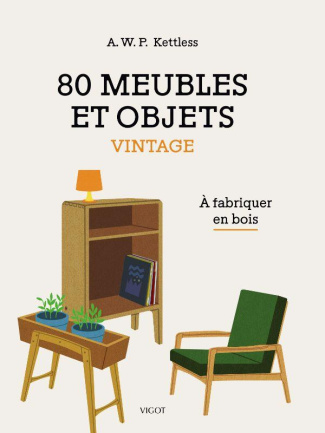
80 meubles et objets vintage. A fabriquer en bois
Écrit par un passionné du travail du bois dans les années 1960, ce manuel offre plus de 80 projets de meubles et objets vintage pour la maison, aujourd'hui considérés comme des classiques du design.Les modèles, qui vont du simple plateau à la cabane de jardin en passant par la table basse, la bibliothèque de salon ou encore le fauteuil d'inspiration scandinave, sont classés par ordre de difficulté et respectent une progression pédagogique claire. Les instructions détaillées pas à pas s'appuient sur de nombreux dessins pour bien comprendre les méthodes de construction et les assemblages utilisés.L'ouvrage réunit tout ce qu'il faut savoir sur le maniement des outils manuels et la maîtrise des techniques traditionnelles. Conçu comme un support d'apprentissage, il aborde de nombreux domaines liés au travail du bois, ainsi qu'un très large spectre de techniques.EpuiséVOIR PRODUIT35,00 € -
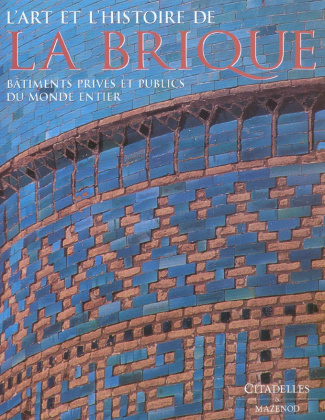
L'art et l'histoire de la brique. Bâtiments privés et publics du monde entier
Tout récemment encore, la brique était la Cendrillon de l'industrie du bâtiment. Intimidés par les doctrines modernistes, architectes et critiques d'art se consacraient à l'acier, au béton et au verre, oubliant les réalisations spectaculaires qui jalonnent toute l'histoire de la brique - pour ne rien dire de ses avantages pratiques. La situation a maintenant changé: la brique est de retour. La remise à l'honneur de son long passé n'avait que trop tardé. Ce livre d'architecture totalement original - le premier jamais consacré à une étude complète sur ce sujet - retrace l'histoire de la brique depuis 5000 av. J.-C. jusqu'à son emploi dans les constructions actuelles, en passant par les basiliques et les thermes colossaux du monde romain, les merveilles de la Backsteingotik en Allemagne, les temples majestueux de Pagan, les mosquées de l'Asie centrale et de l'Iran, et le revival moderne. Merveilleusement illustré de photographies spectaculaires réalisées spécialement, le présent ouvrage est à la fois une histoire de l'emploi de la brique à travers les siècles, une vue d'ensemble sur les techniques de fabrication et d'utilisation de ce matériau, et un essai d'histoire architecturale et culturelle. Les auteurs ont appliqué leurs connaissances visuelles et techniques à plus d'une centaine de réalisations, depuis le briquetage de l'ancienne Égypte jusqu'aux créations de maîtres modernes tels que Louis Kahn, Alvar Aalto et Renzo Piano. Les grandes oeuvres d'ingénierie civile - viaducs, tunnels et ponts - sont mises en valeur parallèlement aux temples et aux mosquées, aux cathédrales et aux résidences campagnardes, attestant l'incroyable souplesse d'emploi et l'importance de ce matériau. Un glossaire illustré détaillant les termes techniques et les diverses méthodes de liaison, d'appareil et de construction complète l'ouvrage. L'ancienne ville de Babylone, la Grande Muraille de Chine, la cathédrale d'Albi, le Chrysler Building... Les chefs-d'oeuvre en brique sont plus nombreux qu'on ne le pense. Voici un livre qui révèle des mondes nouveaux et nous apporte une connaissance encyclopédique de l'art de la brique. Cet ouvrage comporte plus de 600 illustrations, dont 570 en couleurs. Biographie de l'auteur James W. P. Campbell est chargé de cours en architecture et histoire de l'art à Queen's College, à Cambridge, et directeur des archives de Finch Forman Architects, à Londres. Will Pryce est un grand photographe et documentariste basé à Londres. Ses clichés ont été publiés dans de nombreux journaux, magazines et revues, dont The Daily Telegraph, The Observer et le Finoncial Times. Formé en architectureà l'Université de Cambridge et au Royal College of Art,il photographie particulièrement bien les sujets architecturaux.EpuiséVOIR PRODUIT91,90 €



Du même éditeur
-

-
LOOK BACK IN ANGER
Anyone who's never watched someone die is suffering from a pretty bad case of virginity.Look Back in Anger premiered at the Royal Court Theatre, London, in 1956. 'John Osborne didn't contribute to British theatre: he set off a landmine called Look Back in Anger and blew most of it up.' Alan Sillitoe 'A story of youthful insecurity inflamed by lack of opportunity and the terrifying, destabilizing force of love . . . Jimmy Porter could fill an opera house with his bellowing hunger for a bigger, better life and a loyal love to share it with.' New York Times 'Look Back in Anger presents post-war youth as it really is. To have done this at all would be a signal achievement; to have done it in a first play is a minor miracle. All the qualities are there, qualities one had despaired of ever seeing on the stage - the drift towards anarchy, the instinctive leftishness, the automatic rejection of "official" attitudes, the surrealist sense of humour, the casual promiscuity, the sense of lacking a crusade worth fighting for and, underlying all these, the determination that no one who dies shall go unmourned . . . I doubt if I could love anyone who did not wish to see Look Back in Anger. It is the best young play of its decade.' Kenneth Tynan, Observer'How bracing, and, yes, even shocking, its white-hot fury remains.' The Times This edition includes an introduction by Michael Billington and an afterword by David Hare.EpuiséVOIR PRODUIT15,20 € -
-