

LE SEIGNEUR DES ANNEAUX LA COLLECTION DE PIN'S OFFICIELLE !
50,30 €
Epuisé
EAN :
9782376976028
Passez les fêtes avec la Communauté de l’anneau grâce à ce coffret de pin’s exclusifs.Présenté dans un étui cartonné avec dorure, chaque pin’s est à dévoiler durant 12 jours, comme un calendrier de l’avent !
Plus d'informations
| EAN | 9782376976028 |
|---|---|
| Auteur | TOLKIEN J. R. R. |
| Editeur | YNNIS |
| Largeur | 260 |
| Date de parution | 20251001 |
| Nombre de pages | 0,00 € |
| Disponibilité | Epuisé |
Pourquoi choisir Molière ?
Efficacité et rapidité Commandé avant 16h livré demain
Économique et pratique Livraison dès 3,90 €
Facile et sans frais Retrait gratuit en magasin
Du même auteur
-

The Bovadium Fragments (VO anglaise)
World first publication of a previously unknown short satirical fantasy by J.R.R. Tolkien, edited by his son, Christopher Tolkien, and accompanied by illustrations from the author together with an essay, The Origin of Bovadium, by Richard Ovenden OBE. As Christopher Tolkien notes in his Introduction, The Bovadium Fragments was a ?satirical fantasy? written by his father, which grew out of a planning controversy that erupted in Oxford in the late 1940s, when J.R.R. Tolkien was the Merton Professor of English Language and Literature. Written initially for his own amusement, Tolkien?s tale was a private academic jest that poked gentle fun at such things as 'the pomposities of archaeologists' and 'the hideousness of college crockery'. However, it was at the same time expressing a barbed cri de coeur against the inexorable rise of motor transport and 'machine-worship' that was overwhelming the tranquillity of his beloved city. Enriched by a selection of illustrations by the author, and enhanced by Christopher Tolkien's notes and commentary, readers can enjoy at last this tale of an imagined Oxford viewed through the lens of future (and not wholly reliable) academic study. Richard Ovenden's accompanying essay paints a vivid portrait of Oxford during that time. He also provides rich background to the casus belli which led to the furore that Tolkien witnessed first-hand, as the embers of debate between town planners and the university colleges were fanned into flame. Playful, erudite, and ultimately tragically moving, The Bovadium Fragments is like nothing else that J.R.R. Tolkien wrote, and its themes remain both provocative and timely. Within its lines may be found a concern for the fragility of our natural world, a love of which that was shared by both father and son. As Christopher Tolkien?s final presentation of his father?s work, it is therefore perhaps fitting that The Bovadium Fragments should be their coda.Sur commande en 6-10 joursCOMMANDER26,00 € -
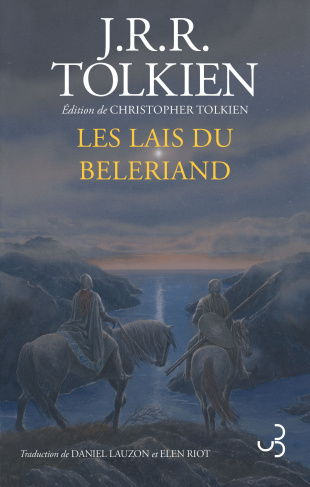
Les Lais du Beleriand
Avec ce troisième volume, L'histoire de la Terre du Milieu parvient à un moment crucial de la création de la mythologie de J.R.R. Tolkien. Le lecteur découvrira ici des poèmes essentiels, qui rapportent les histoires de Túrin et de Lúthien, deux héros centraux du Silmarillion et des Contes Perdus. Le Lai des entants de Húrin raconte la vie tragique de Túrin Turambar : le Lai de Leithian (présenté ici en édition bilingue) décrit la quête du Silmaril par Beren et Lúthien et leur face a face avec Morgoth. Ce volume comporte également un texte de C.S. Lewis sur le Lai de Leithian et des poèmes fragmentaires (Fuite des Noldoli, Lai d'Eärendel et Lai de la Chute de Gondolin). Les commentaires de Christopher Tolkien décrivent l'évolution de l'Histoire des Jours Anciens, qui forment le décor du Seigneur des Anneaux.En stockCOMMANDER30,00 € -

The Lord of the Rings - Box Set
One Ring to rule them all, One Ring to find them, One Ring to bring them all and in the darkness bind themIn ancient times the Rings of Power were crafted by the Elven-smiths, and Sauron, The Dark Lord, forged the One Ring, filling it with his own power so that he could rule all others. But the One Ring was taken from him, and though he sought it throughout Middle-earth, it remained lost to him. After many ages, it fell by chance into the hands of the hobbit Bilbo Baggins.From his fastness in the Dark Tower of Mordor, Sauron's power spread far and wide. He gathered all the Great Rings to him, but always he searched far and wide for the One Ring that would complete his dominion.On Bilbo's eleventy-first birthday, he disapeared, bequeathing to his young cousin, Frodo, the Ruling Ring and a perilous quest: to journey across Middle-earth, deep into the shadow of the Dark Lord, and destroy the Ring by casting it into the Cracks of Doom.THE LORD OF THE RINGS tells of the great quest undertaken by Frodo and the Fellowship of the Ring: Gandalf the Wizard; the hobbits Merry, Pippin and Sam; Gimli the Dwarf; Legolas the Elf; Boromir of Gondor; and a tall, mysterious stranger called Strider.EpuiséVOIR PRODUIT28,01 € -
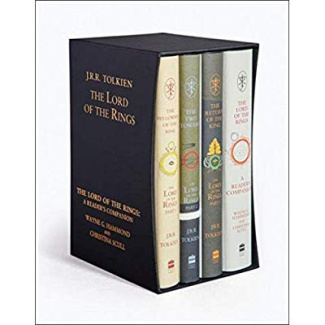
The Lord of the Rings Boxed Set
Four-volume boxed-set edition of The Lord of the Rings in hardback, featuring Tolkien?s original unused dust-jacket designs, together with fourth hardback volume, The Lord of the Rings: A Reader's Companion. Includes special features and the definitive edition of the text. Since it was first published in 1954, The Lord of the Rings has been a book people have treasured. Steeped in unrivalled magic and otherworldliness, its sweeping fantasy has touched the hearts of young and old alike, with one hundred and fifty million copies of its many editions sold around the world. In 2005 Tolkien?s text was fully restored ? with the full co-operation of Christopher Tolkien ? with almost 400 corrections, the original red and black maps as fold-out sheets, a fully revised and enlarged index, and for the first time a special plate section containing the pages from the Book of Mazarbul, making this set as close as possible to the version that J.R.R. Tolkien intended. This Diamond Anniversary reissue of the prized boxed set marks 60 years since the first publication of The Fellowship of the Ring. These hardback editions feature Tolkien?s original unused dust-jacket designs from the 1950s, reworked for this edition, and some additional text corrections. The four-volume boxed set includes The Lord of the Rings: A Reader's Companion, a unique annotated guide to the text, fully updated since its first publication in 2005, and is a book which will enhance the reader's enjoyment and understanding of one of the most influential books of the 20th century.Sur commande en 6-10 joursCOMMANDER126,00 €


Du même éditeur
-
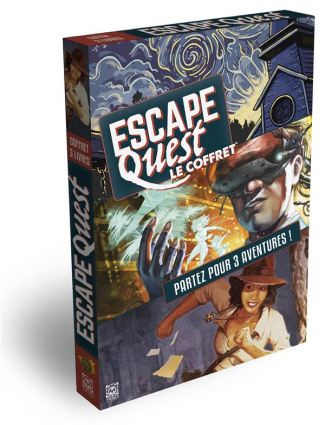
Escape Quest : Coffret en 3 volumes : A la recherche du trésor perdu ; Au delà du virtuel ; Seul dan
Un coffret en édition limitée pour découvrir les 3 premiers numéros d'Escape QuestEscape Quest est une collection de jeux d’aventures trimestrielle inspirée du monde des Escape Game et des jeux de rôle.Vivez une aventure indépendante dans laquelle VOUS êtes le personnage principal et au cours de laquelle vous devrez résoudre de mystérieuses énigmes pour déjouer tous les pièges que vous rencontrerez…Mais attention ! Seule une logique implacable associée à un sens de l’observation et de déduction vous permettront de résoudre toutes les énigmes ! Saurez-vous relever le défi ...EpuiséVOIR PRODUIT31,25 € -
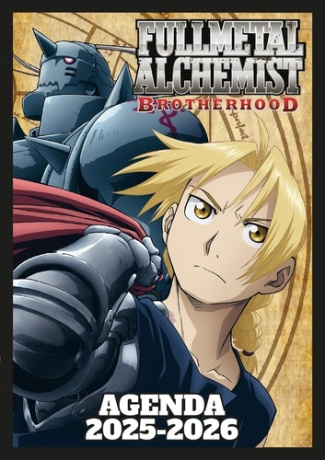
Agenda scolaire Fullmetal Alchemist. Brotherhood, Edition 2025-2026
Une page par jour de la semaine, de nombreuses illustrations de la série, de la place pour noter vos activités scolaires ou professionnelles !En voulant ressusciter leur mère, Edward et Alphonse Elric vont utiliser une technique interdite relevant du domaine de l'alchimie : la transmutation humaine. Seulement, l'expérience va mal tourner : Edward perd un bras et une jambe et Alphonse son corps, son esprit se retrouvant prisonnier d'une armure. Devenu un alchimiste d'État, Edward, surnommé « fullmetal alchimiste », se lance, avec l'aide de son frère, à la recherche de la pierre philosophale, leur seule chance de retrouver leur état initial.EpuiséVOIR PRODUIT13,60 € -



De la même catégorie
-
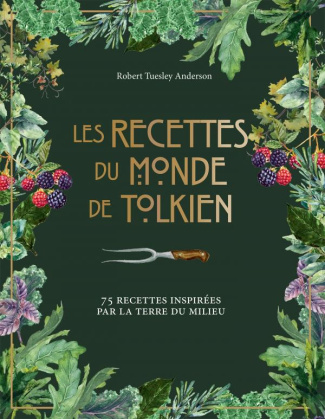
Les recettes du monde de Tolkien. 75 recettes inspirées par la Terre du Milieu
Vous avez toujours voulu goûter le pain lmbas des elfes, le gâteau au miel de Beorn ou le ragoût de lapin de Sam ? Du Pain à la pomme de Creux-Le-Cricq au Déjeuner de Pippin à Minas Tirith, en passant par les Pains Blancs boulés à l'elfique, les Craquelins du Quartier Ouest, la Tarte aux mûres de Filibert Fleuredebeurre, les Truites marinées à l'orientaise ou encore la Tourte au poisson du Brandivin... ces 75 recettes vous plongeront dans un voyage savoureux, qui suit les 6 repas quotidiens des Hobbits. Plongez dans le monde fantastique et épique inventé par Tolkien à travers ces recettes inspirées par les lieux les plus marquants et les personnages les plus iconiques de la Terre du Milieu.Sur commande en 2-4 joursCOMMANDER20,85 € -
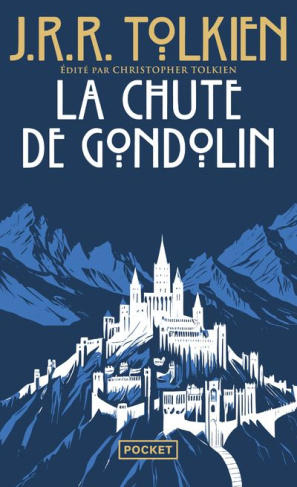
La chute de Gondolin
Le destin tragique de la cité de Gondolin. Suivez Tuor dans les sentiers dérobés de la cité de Gondolin, construite par les Elfes pour échapper au dieu Morgoth, alors que leur aveuglement orgueilleux et la trahison de Meglin menacent de la détruire. Lorsque Morgoth lancera ses armées menées par des dragons et des Balrogs, le dernier espoir tiendra peut-être à l'enfant né de Tuor et de l'Elfe Idril.En stockCOMMANDER9,00 € -
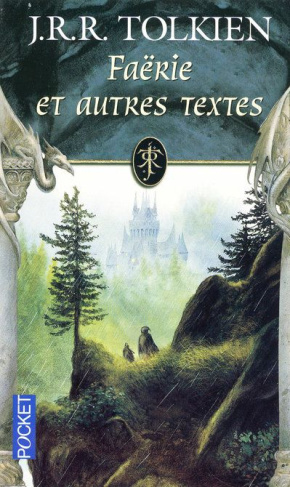
FAERIE ET AUTRES TEXTES
Faërie permettra à tous les lecteurs du Seigneur des Anneaux de découvrir plus intimement l'univers de Tolkien.Dans son essai Du conte des fées, Tolkien nous donne une clé pour entrer dans son univers. Au sommaire également : trois nouvelles, ainsi que Le Retour de Beorhtnoth, un texte sur la guerre et l'héroïsme, Mythopoeia, texte fondamental pour comprendre Tolkien et sa relation aux mythes, et, enfin, une traduction révisée des Aventures de Tom Bombadil ? accompagnée du texte anglais ?, précédée d'une introduction de l'auteur qui intègre ce recueil dans le cycle de la Terre du Milieu.EpuiséVOIR PRODUIT9,60 € -

Le haut-elfique pour les débutants
Initiation à la langue elfique ou quenya réalisée par un linguiste spécialiste de J R R Tolkien. Le vocabulaire est donné sous forme de lexique bilingue français-elfique, et complété par des rudiments de grammaire.En stock (dernières pièces)COMMANDER10,30 €


