

La lumière du jour
Né à Londres en 1949, Graham Swift est considéré comme l'un des tout premiers écrivains britanniques de sa génération. Son ?uvre est traduite en plus de vingt langues.4e de couverture : George Webb est détective privé. Plus rien n'étonne cet ancien policier compétent et blasé. Et pourtant, un jeudi sur deux, George quitte son bureau pour voir une femme. Toujours au même endroit. Car ce qui s'annonçait comme une banale filature pour adultère a débouché à la fois sur une tragédie et une révélation.Si l'énigme policière est bien vite résolue, un autre mystère demeure, irréductible : celui des êtres, de leurs désirs obscurs, de leurs secrets coupables. Et en ce jeudi pas comme les autres, George va devoir exhumer toutes les histoires enfouies : son passé professionnel et conjugal, sa fascination pour ses clientes, et jusqu'à son enfance. Car l'enquête est vouée à ne jamais finir.Plus encore que dans La dernière tournée, Graham Swift parvient à conférer à une langue simple et dépouillée une puissance incantatoire pour explorer la mémoire, le deuil, l'amour et la perte. Tissant une toile romanesque d'une densité et d'une cohérence sans égales, il recrée les détails du monde et les élans de l'âme humaine, dans toute leur grandeur et leur ambiguïté, réaffirmant la vocation du roman et nous offrant un chef-d'?uvre intemporel.
| Nombre de pages | 338 |
|---|---|
| Date de parution | 22/04/2004 |
| Poids | 350g |
| Largeur | 142mm |

| EAN | 9782070767540 |
|---|---|
| Titre | La lumière du jour |
| Auteur | Swift Graham ; Davreu Robert |
| Editeur | GALLIMARD |
| Largeur | 142 |
| Poids | 350 |
| Date de parution | 20040422 |
| Nombre de pages | 338,00 € |
| Disponibilité | Sur commande en 2-4 jours |
Pourquoi choisir Molière ?
Du même auteur
-
-
WATERLAND
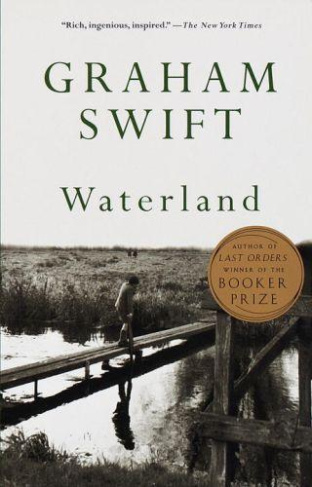
Extrait Excerpted from the IntroductionI was sitting on the steps of a caravan. It was winter and the sun was out. The house we had bought was still a wreck. I was a junior editor at Penguin and Graham had given me the first sixty or so pages of his new novel. I had worked on Graham’s second novel Shuttlecock and we had become friends. This was his third novel. It was to be called Waterland. Almost at once, from the very opening, from those first few promises of stories and ancestry and mother’s milk, I knew instinctively that I was in the presence of something extra- ordinary, something which, when opened fully, was going to envelop me like a glorious burst of light, changing me and the world I lived in forever. Reading a great book is a discovery of its own. The reader feels an almost limitless thrill, like an archaeologist must when stumbling upon a fabled burial site or the lost skull of civilization. It is as if you have discovered this treasure by yourself, and it is yours and yours alone. You take possession of it, guard it jealously. Sure, that moment will pass. Later you will offer up its secrets to others, allow them to talk of it, handle it with (as far as you are concerned) disturbing familiarity, but for those precious hours and days it belongs to no one else, and you hug it closely, protecting every page. That was how I felt, reading those sixty pages. That is how everyone feels, first reading those sixty pages and beyond. It is yours, made just for you. What is more, to some unfathomable degree, it is your story too, in more ways than you thought possible.Circumstances changed. By the time Graham had finished the novel, I had moved to become editor of Picador. In those days Picador was solely a paperback house, but happily, partly thanks to our previous relationship, it came about that Waterland would be published by Heinemann in hardcover and a year later in paperback, at Picador. I would edit the novel, along with David Godwin at Heinemann. It was a big book for me. It was a big book for Graham. It’s a big book for everyone who reads it.This is a personal introduction, because it seems to me that is what Waterland is. A personal book, a book that speaks to the innermost core of the reader, digging into the psyche, asking questions, unearthing feelings, seeding ideas, suspicions, that have laid dormant, as to who you are and where you came from, and why it is that doubt, unease, a sense of unspoken, fearful history, is always there, floating under the surface of the waters of the unknown. In that respect there is a quality to it reserved for the most part to the symphony, an underlying motif, an inference, which travels through the novel almost in a different life form, hovering above it all – a note, a call, which lies beyond what is written, emanating from a place that is at one and the same time familiar and utterly new. Reson- ance. You travel through Waterland on its reverberation.Waterland is a strange book in that, contrary to accepted wisdom, it lies outside Swift’s usual canon. If one removed Waterland from the body of his work and followed the progres- sion of the other novels, they take on a very particular trajec- tory, his aim (or at least one of them) concentrated on quite a specific target, with clear markers laid out along the way, from The Sweet Shop Owner right through to Wish You Were Here. Swift’s overriding intent, as a writer of prose, is to reduce that prose, the word, the sentence, down to its purest form and thereby to unleash the latent power lying within. Swift becomes, if you like, the novelist’s equivalent of a nuclear physicist, working towards the day when, freed from impurities, he breaks the word down into its seemingly lightest, most weightless form, releasing moments of dazzling, almost limitless energy. Two instances of this spring immediately to mind. The airport scene in The Light of Day – a scene of almost religious intensity – and, more recently, the moment in Wish You Were Here when Major Richards, an army officer and the bearer of bad news, steps out of a car and puts on his cap. That is all he does. He reaches out for his peaked cap resting on the passenger seat, gets out of the car and puts it on, yet in that brief action the weight of the world billows out in shock waves. It is difficult, if not impossible to understand quite how or why. Take the sentences apart, examine them and the power simply slips away, but together, under Swift’s tutelage, the intensity is (to use the word in its correct context) awesome. You stand in awe of it. It takes your breath away.But if all his other novels have been fashioned by the novelist from Los Alamos, then Waterland has been put together in a more familiar manner, made with more familiar tools, from more familiar elements, and in a more familiar design (albeit an astonishing one). Waterland has the appearance of a magnificent engine, a shining and brilliant marvel of construction. It has its oiled wheels, its cogs, its ratchets, its levers. It breathes power. Once begun, there is no stopping Waterland; every part sets another part in motion. It is a glorious, bravura construct, producing story after story in a seemingly unstoppable flow. Reading it, we are conscious of it all (Waterland like a gleaming Flying Scotsman, perfect and polished, powering over the land), and (in the same vein as up on that railway bank, watch- ing the behemoth pass) we stand in wonder of Waterland’s physical appearance, beguiled by its complexities, thrilled by the rhythm and hum of it as the novel does its work. (Waterland does that other steam-engine thing too – being in its presence makes us feel good, makes us feel part of it. It uplifts.) The people – the passengers – are similarly held in thrall to this powerhouse, working through its influence, serving its purpose, carried by its energy and its working parts, its locks and water- ways, its relentless little pump houses. They, like us, are in its power. But though we are (players and readers alike) conscious of it, this great thing, breathing like a beast, its presence never detracts from its intent, never diverts us from its purpose, why it is there, its reason for delivering its stories and its people with a memorizing fecundity, setting them down and moving them (and us) along. We do not mind how deliberately it lies both outside and inside of us, how its power is experienced both internally and externally; in fact we crave it, and are tied to this Waterland as much as those strapped within. We are all affected, readers and passengers alike, harnessed to the wheel, the piston, to the circumstance, to the sluice gates and the waters as they swirl and surround us and carry us off. Here we have it then – Swift as Brunel, brilliant inventor, master builder, blueprint wizard, plotter and planner, a visionary, a user of all materials, creating this Waterland, this wonder of the age, setting his creation free to steam across Great Britain, then continents and oceans to the wider waiting world.Waterland. There it is. He made it for you and me. What did he do, this hatless Isambard? What did he create exactly? What is it, this novel? What is it...Let us start, as the narrator might suggest, at the beginning. Open the first page. Take a look at the blueprint. The Contents. They will give you pause for thought.The first two entries are 1. About the Stars and the Sluice, followed by an oddly resonant phrase (a phrase which accidentally transports us to an age after the book was written), 2. The End of History. So we have three elements already in the mix. Stars - the heavens (space, distance, time), Sluice, a mechanism for controlling current (storing up, letting go – a novelist’s device if ever there was one), and thirdly, The End of History, an unsettling notion, pointing almost to the end of time itself, or when the earth has no more need of it – when perhaps the stars have gone out). For our third and fourth chapters we are delivered to firmer, more habitable ground: About the Fens and Before the Headmaster (place and character), and with Bruise upon a Bruise following in their wake, we have the other stuff of novels: conflict. Read on. Back and forth it goes, like, dare I say it, a shuttlecock, the book laying its pattern down, weaving its web: About the Story-telling Animal, About the Rise of the Atkinsons, About Accidental Death (note the philosophical plural there), then suddenly, De la R ́evolution, a title in French, and later on – after Lock-keepers and Grandfathers – Aux Armes (is that not from the Marseillaise? Aux armes, citoyens! Formez vos bataillons?) It must be, because after Coronation Ale (back to England and English monarchs complete with heads) comes the Fourteenth of July, again in French, Quatorze Juillet, and following fast, the instruction, despite all that, to Forget the Bastille. This novel, it is clear, will be playing with us, taking us we know not where, from one place to another, dropping us in, whipping us out, past, present, water, land, in, out, up, down, round and round. Yes, forget the Bastille, it’s not about that at all, it’s About the Eel, and About the Saviour of the World, About the East Wind, Contemporary Nightmares, Empire-building. In fact, it’s The Whole Story.The Whole Story? Is that what it is...Here you have an inkling, if not a map, of where this novel intends to take you. Everywhere. Waterland is history, it is exploration. Waterland is geography, lineage. It is commerce, decline and fall, the industrial revolution (the French one too, with heads lopped off ) and, like everything around us, it bears the scars of the two great wars of the twentieth century. It is family saga, fam... --Ce texte fait référence à l'édition Broché .EpuiséVOIR PRODUIT15,11 € -

-
Le dimanche des mères
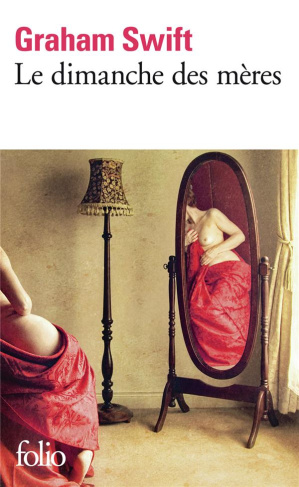
Un roman d'apprentissage ciselé avec finesse et lucidité. Une histoire sensuelle et sensible ! Une plume impeccable et étincelante ! Une ode intense à la littérature !!!En stockCOMMANDER8,60 €




Du même éditeur
-

Comme un flambeau, dans ces ténèbres noires. Anthologie poétique 1961-1995
L'oeuvre de Joseph Brodsky (1940-1996), lauréat du prix Nobel de littérature en 1987, a été en partie occultée en France par le destin du poète, symbole de la dissidence du régime soviétique. Pour rendre compte de sa poésie d'une extraordinaire virtuosité formelle, liant l'intime à l'épique, au mythologique, et à de constantes préoccupations métaphysiques, André Markowicz a composé un volume qui réunit les poèmes publiés dans la collection "Du monde entier" en 1987 et 1993, replacés ici dans leur ordre chronologique, auxquels s'ajoute une sélection de poèmes inédits en français.En stockCOMMANDER11,40 € -

Au fond des années passées
Ce n'était pas un monde perdu dont je me souvenais, ces mois que nous avions passés ensemble dans les années quatre-vingt. C'était le même temps qui avait continué sa course, et avait fini par nous rattraper." De prime abord, la vie du narrateur semble terminée. Le diagnostic de maladie de Parkinson a d'abord été posé, puis sa femme l'a quitté. Mais un jour, au milieu d'un parc de Copenhague, il croise Anna, son amour de jeunesse, une femme libre qu'il a tant aimée autrefois. Aujourd'hui, elle ne se soucie pas de ce diagnostic, et elle l'entraîne dans le drame de sa propre vie, une histoire emblématique de notre temps, remplie d'abus de pouvoir et de trahisons. Jens Christian Grøndahl écrit une partition subtile où au milieu des souvenirs sont exposées les problématiques les plus actuelles - qui vont de la maladie à l'égarement politique, du fossé entre les générations aux violences faites aux femmes. Une fois encore, Jens Christian Grøndahl nous éblouit par sa capacité à saisir l'esprit du temps et à montrer comment l'on peut choisir de se relever après avoir subi une chute et faire le choix de la vie.Sur commande en 2-4 joursCOMMANDER21,00 € -
Les Mystères de Paris
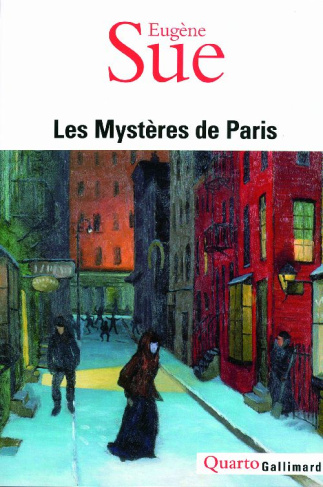
Il y a dans Les Mystères de Paris une énergie sauvage: celle d'une cohorte de personnages maléfiques, malfrats hideux comme la Chouette, Tortillard - un anti-Gavroche -, le Maître d'école ou Bras-Rouge, criminels du grand monde comme le comte de Saint-Remy, monstres hypocrites comme le notaire Jacques Ferrand. Eugène Sue n'est pas avare de noirceur. Mais il y a aussi une sauvagerie du Bien, celle de Rodolphe, prince mélancolique venu à Paris à la recherche de sa fille perdue, impitoyable avec les méchants qu'il punit au mépris des lois. On doit à sa cruauté quelques-unes des scènes les plus stupéfiantes du roman: le châtiment du Maître d'école, ou le supplice de luxure imposé à Jacques Ferrand. Cette cruauté contraste avec la pureté morale de Fleur-de-Marie, comme avec la face solaire de Rodolphe, providence de tous les malheureux honnêtes dont il croise le chemin. Le roman exprime dans son ensemble une quête assoiffée de régénération morale de la société, par l'amélioration des mécanismes préventifs et répressifs (c'est le sens de l'engagement de Sue en faveur dans l'encellulement des criminels) ainsi que par l'invention de mécanismes d'incitation au Bien, police ou tribunal de la Vertu, qui doivent récompenser publiquement les actions exemplaires." Judith Lyon-Caen.EpuiséVOIR PRODUIT32,00 € -
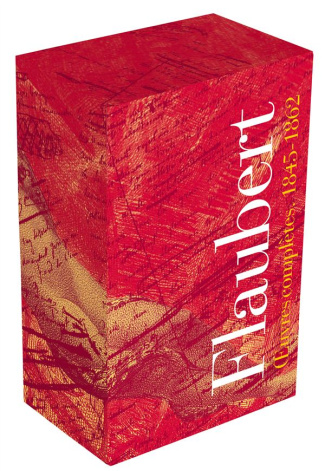
Oeuvres complètes. 2 volumes : Tome 2, 1845-1851 ; Tome 3, 1851-1862
Le premier volume desEpuiséVOIR PRODUIT146,00 €



De la même catégorie
-

L'invention des ailes
1803, Caroline du Sud. Fille d'une riche famille de Charleston, Sarah Grimké aspire dès le plus jeune âge à accomplir de grandes choses. Lorsque, pour ses onze ans, sa mère lui offre la petite Handful comme esclave personnelle, Sarah se dresse contre ce système inhumain. Entre les fillettes naît alors une véritable amitié, qui grandit au fil des années. Guidée par ses idéaux mais surtout par son affection pour Handful, Sarah n'abandonnera jamais l'espoir d'affranchir son amie. Superbe ode à la liberté et au courage, L'Invention des ailes dépeint les destins entrecroisés de deux personnages inoubliables, à la force de caractère incroyable, unis par le même profond désir d'indépendance.EpuiséVOIR PRODUIT24,70 € -

American Housewife
Après de premiers échanges d'une cordialité toute bourgeoise, deux voisines en viennent à se livrer une véritable guerre (chantage, insultes, incitation au divorce?) pour une histoire de lambris que l'une veut repeindre dans le hall de l'immeuble et l'autre pas. L'une d'elles finira par disparaître dans de mystérieuses conditions. Une nouvelle recrue d'un club de lecture est reçue par sa présidente qui lui en présente les membres, une à une. A mesure qu'elle raconte leurs goûts littéraires (gore, romance coquine) ainsi que leurs histoires intimes (insémination de l'une, morts suspectes des maris successifs de l'autre), elle distille son venin... Voici quelques exemples tirés de ces douze nouvelles empreintes d'un humour féroce. Des portraits cruels de femmes toutes plus névrosées les unes que les autres, qui sont aussi les révélateurs d'une société américaine aisée, qui tient à tout prix à se montrer sous son masque de perfection. Helen Ellis fait éclater les apparences et décrit la solitude de ces femmes au foyer, mais aussi le pouvoir qu'elles ont sur leur petit royaume ? leur appartement, leur club de lecture, leur immeuble, leur mari ?, allant parfois jusqu'à la pulsion criminelle? Une satire de notre époque qui contraint au bonheur et à sa représentation en toute circonstance.EpuiséVOIR PRODUIT18,00 € -

Rien dans la nuit que des fantômes
Le passé n'est jamais mort. Il n'est même pas passé." (William Faulkner)Voici trente ans que Billie James n'a pas remis les pieds dans le Mississippi. Un sacré tempérament, quelques dollars en poche et son chien Rufus au bout de sa laisse, elle débarque à Greendale et s'installe dans une bicoque décrépite où vécut autrefois son père. Ce dernier, poète noir de renom, est mort de manière accidentelle alors que Billie n'avait que quatre ans. La petite fille était présente au moment du drame, mais n'en a conservé aucun souvenir.Alors que les voisins font preuve d'un comportement étrange, que des rumeurs circulent, laissant soupçonner une tout autre vérité quant à la mort du père de Billie, celle-ci mène son enquête, aidée par son oncle et un drôle d'olibrius universitaire. Ensemble, ils vont exhumer de lourds secrets, dévoilant peu à peu l'histoire de ses origines mais aussi, en toile de fond, celle d'un pays marqué par les blessures toujours à vif de la ségrégation.Campé dans le décor à la fois somptueux et inquiétant du Sud profond, le premier roman de Chanelle Benz fourbit les armes du polar pour nous raconter ce qu'a été - et ce qu'est encore - l'Amérique tourmentée par les spectres les plus sombres de son Histoire.Traduit de l'anglais par David FauquembergChanelle Benz, britannique et antiguaise d'origine, vit et enseigne aujourd'hui à Memphis, dans le Tennessee. Elle est diplômée de l'université de Syracuse, où elle a eu pour mentor l'écrivain George Saunders, qui a salué en elle " une nouvelle voix sidérante de la fiction américaine ", et a également étudié l'art dramatique à l'université de Boston. Après un virtuose premier recueil de nouvelles, Dans la grande violence de la joie (Seuil, 2018), elle signe avec Rien dans la nuit que des fantômes son premier roman.Sur commande en 2-4 joursCOMMANDER21,00 € -

Front de lune
Avant de s'engager dans l'armée iranienne pour combattre l'ennemi irakien, Amir Yamini était un playboy, qui passait le plus clair de son temps à séduire les femmes et exaspérer sa très pieuse famille. Cinq ans plus tard, sa mère et sa soeur le retrouvent, amputé de son bras gauche, dans un hôpital psychiatrique pour soldats traumatisés. Quasi amnésique, Amir est hanté par la vision d'une mystérieuse femme sans visage, au front orné d'un croissant de lune. De retour à Téhéran, le fils prodigue est tour à tour salué comme un martyr de la Révolution islamique et confiné dans sa chambre comme un fou dangereux. Avec la complicité de sa soeur, il s'évade en escaladant le mur de leur jardin et repart sur le champ de bataille à la recherche de celle qu'il surnomme « Front de lune », accompagné dans ce périple au fil de la mémoire par deux scribes perchés sur ses épaules - l'ange de la vertu et l'ange du péché - qui consignent depuis toujours son histoire. Avec cette épopée amoureuse, guerrière et poétique d'une inventivité exubérante, porteuse d'un regard subtil sur la société iranienne contemporaine et empreinte d'une sensualité tout droit héritée de la grande tradition des contes persans, le grand romancier iranien Shahriar Mandanipour signe une oeuvre forte, envoûtante et pleine d'humanité.Sur commande en 2-4 joursCOMMANDER23,00 €


