Extrait 9781400065752|excerptQuindlen / STILL LIFE WITH BREAD CRUMBSNo OutletsA few minutes after two in the morning Rebecca Winter woke to the sound of a gunshot and sat up in bed.Well, to be completely accurate, she had no idea what time it was. When she had moved into the ramshackle cottage in a hollow halfway up the mountain, it had taken her two days to realize that there was a worrisome soft spot in the kitchen floor, a loose step out to the backyard, and not one electrical outlet in the entire bedroom. She stood, turning in a circle, her old alarm clock in her hand trailing its useless tail of a cord, as though, like some magic spell, a few rotations and some muttered curses would lead to a place to plug it in. Like much of what constituted Rebecca’s life at that moment, the clock had been with her far past the time when it was current or useful.Later she would wonder why she had never owned one of those glow-in-the-dark battery-operated digital clocks, the ones available so cheaply at the Walmart squatting aggressively just off the highway a half hour north of town. But that was later.As for the gunshot: Rebecca Winter had no idea what a gunshot actually sounded like. She had grown up almost entirely in New York City, on the west side of Manhattan, with vacations on the shores of Long Island and the occasional foray to Provence or Tuscany. These were the usual vacations of the people she knew. Everyone always talked about how marvelous those places were, how beautiful the beaches, how splendid the vineyards. Marvelous, they said, rolling the word around in their mouths the way her husband, Peter, did with that first tasting of wine, pretending he knew more about it than he did, occasionally sending a bottle back to make a point.But for her family, which she had felt when she was a child hardly deserved the name, being composed of only a father, a mother, and a single child, the trips were never pleasant. Her parents were deeply suspicious of anything that smacked of nature; her mother was almost pathologically afraid of bugs, was always calling down to the doorman to deal with spiders or recalcitrant bees sneaking in from the park outside. Her father had various pollen allergies and from March until October carried an enormous handkerchief, like a white flag of surrender for his sinuses.Certainly it did happen from time to time that there would be a noise on Central Park West or Riverside Drive or Broadway, and someone might say, Was that a gunshot? This happened especially during that period after Rebecca graduated from college, when it was agreed by people who would never dream of living elsewhere that the city, dangerous and dirty, was becoming unlivable. It was always eventually decided that the gunshot was a car backfire, or a bottle being smashed, or a door slamming to the building’s basement, where the trash was stored.This was always, without fail, true.Nevertheless Rebecca was almost certain that it was a gunshot that had awakened her now as she lay stiffly in the bed in the room without outlets. She tried to look at her watch, but it was a small flat gold watch, like a superannuated dime, that her parents had given her when she married, as though her marriage was a retirement of some kind. It had the initials R.W.S. on the back, what her mother called her new monogram, although Rebecca had never changed her name. Still, she had great sentimental attachment to the watch, mainly because of her father, who had selected it and had taken an enormous amount of pleasure in giving it to her. “That’s a beauty!” he said when she removed it from the mahogany box. “It’s not waterproof,” her mother added.Under the best of conditions it was a difficult watch to read, never mind now, in a bedroom fringed with large pine trees and with the heavy cloud cover of a muggy May night, a thunderstorm moving in overhead. The room was so dark you could not see your hand in front of you. To test this, Rebecca held her hand in front of her, where it glimmered whitely, faintly. She could see it, but just barely.She was not sleeping soundly in the strange bed, which had a well in the center into which she fell whenever she rolled over, a well like the one used for drainage along the side of the road. Rebecca still didn’t know the name of the road the cottage was on. It was the second right off 547. That’s all she knew. Then the driveway past the pump house. What did the pump house pump? She had said it aloud as she turned in. No answer.Who lives in a house on a road whose name she does not know? Who moves into a place she has seen only in flattering photographs on the Internet? It reminded her of what she had heard a woman telling a friend at the next table when she was waiting to have lunch with an art book editor. “You walk in and you can’t pick them out at the bar because they look nothing like their picture on the website,” the woman had said. “Nothing. Not. A. Thing.” The cottage was the real estate version of online dating, built atop lies, leading downhill to disenchantment. Or capitulation. “We were so happy here,” the owner had said in an email, attaching a photo of two men with their arms around one another in front of a large tree. They were so happy here, and then they left, and took all the comfortable furniture with them, and replaced it with bits and pieces from the Salvation Army.A true child of New York, Rebecca thought she felt the bites of bedbugs.She rolled over and fell into the well in the mattress, the gunshot just a memory, perhaps only an illusion. It was quiet now. There was a smell. There were so many smells. Mildew, damp linen, trampled plants. The bananas in the glass bowl on the drainboard. A whiff of what might be skunk, or skunk cabbage. In the backyard she had taken a deep breath. It had smelled as though the entire forest around her was rotting by inches.She sniffed audibly, or it would have been audible if there had been anyone to hear. Rebecca was entirely alone. She told herself that she was surprised she wasn’t more frightened by the sound of the gunshot. In truth she was terrified but her body acknowledged the fear without her mind’s concurrence, the way she had developed a bad back after her divorce when she was absolutely sure she was getting along fine. Instead of pajamas she was wearing an old T-shirt that commemorated an exhibition of daguerreotypes at the New-York Historical Society and a pair of very old cotton panties. Her legs were like walking sticks beneath the wool blanket, stiff and tense. The quiet of the country was unnerving. She didn’t find it peaceful in the least, more like the TV with the mute button pressed on the remote. Empty. Her cellphone would not work in the house. Neither would her computer. She had made a terrible mistake.That was her conclusion even before the nominal gunshot, and then the noise overhead that followed.It sounded like an elevated subway train making a turn while going too fast. Or like a drawerful of heavy silverware being emptied into a large metal bucket. Or like the pots-and-pans cabinet of a kitchen when the contents are stacked precariously and the door is opened unthinkingly. Benjamin had loved to sit on the floor and play with the lids. “Are we certain those were washed thoroughly?” her husband would say drily. Peter was English. He said everything drily. He never offered to wash the lids, and Rebecca never thought to suggest it. She was the daughter of her father, an avatar of peace at any price.The train or the silver or the pots or whatever it was overhead crashed again, and again. The smell grew stronger. Rebecca sat up further, with some difficulty, and looked toward the ceiling. She felt as though it might come down around her, blanketing her with plaster and lath, a snowstorm of ceiling. She could see herself in her mind’s eye, the flimsy blue blanket covered with chunks of white and wood. “Fully furnished” the ad for the cottage had said. Ha. Two bedrooms, one blanket, and not a good one, either.She of all people, to be seduced by a series of photographs, snapshots really, none of the kitchen and bath, two of the view. That should have been the tip-off, that vista of trees with what looked like a stream snaking through them in the distance. You couldn’t sleep in the view, or take a hot shower in it, or make coffee. Nor could you do any of those in this godforsaken house. Fully furnished. Four forks.Not a gunshot, she realized suddenly, recalling the events of the day. She must have been sleeping more soundly than she thought not to have realized what was happening above her. She reconstructed it as best she could, given her utter ignorance of the situation. First a wire trap snapping shut hard as the lever was tripped with a sound like a gunshot. Now the noise of an angry animal thrashing around in the trap, turning the metal cage over and over like an amusement park ride. Bam bam bam. Finally she was certain she had gotten it right. As for the smell, her imagination failed her. She made a faint sound, somewhere between a prayer, an exclamation, and an obscenity.Skitter skitter skitter. That’s how it had started. “There’s something in my attic,” she had told the exterminator in town, but he was too busy with a tick outbreak at the nursing home. (False alarm: a squashed engorged mosquito on the top sheet of a woman with an excitable niece.) Instead he’d suggested Rebecca call a roofer. “If you got something in your attic, it’s because you got some way into your attic,” said the exterminator, who was wearing a T-shirt that said you bug me, except that the bug was an image of an insect and not a printed word. “No point me getting it out, then you having to call somebody anyhow to fix the hole.”“There’s something in my attic,” she had told the roofer. He’d stood on a metal ladder as the sunlight faltered in late afternoon, a small flashlight in one hand. “Would you like me to hold the ladder?” Rebecca had asked. “I spend a lot of time up on ladders,” he’d said, shifting the flashlight to his other hand. “Is there a hatch in your hall?”“Pardon?” Rebecca had said.“Well, we’ve got two related problems here,” he’d said when he emerged from the attic crawl space through the hatch in the hall. “The first is that there’s a coon living up there. The second is that he’s got easy access and egress. There’s a corner of your flashing with a big hole in it. He’s climbing that pine tree in the back and using the hole to get in. I don’t think he’s got a way out of the attic and down into the house. No scat, right?”“I don’t believe so,” Rebecca had said vaguely. The roofer’s conversation was full of mysteries. What precisely was flashing? Scat she thought she had divined from context. The idea that a raccoon was living above her was deeply unsettling.“Oh, you’d know,” the roofer had said. Rebecca couldn’t remember his name. He was big, with fair hair and a ruddy tone to his skin. His eyelashes and eyebrows were so light they were practically invisible. There was a line of pink skin along his part as he bent his head to put the flashlight in his tool bag. The exterminator had recommended him. “Roofers are thieves,” he’d said. Apparently this one was not a thief.He’d taken a card from a banged-up metal case in his back pocket. Rebecca thought his hands cried out to be photographed. They had light hair on the backs, and were covered with scars—small lines, larger circles, a big snaky one that was a pale pink and covered the side of his palm. On his left hand his index finger was missing the last joint. In black-and-white the scars would be more prominent, Rebecca knew, the hairs a kind of faint cross-hatching.“Bates Roofing,” the card said. “Family Owned Since 1934.” Grandfather, father, son. Someday this man would be too old to climb a ladder and a young fair-haired man would show up to check the flashing in his stead. By then she would be long gone. Maybe by next month she would be long gone. Her apartment in the city had been sublet for a year. She’d signed a lease for the cottage for a year, too. She sighed and let her eyes close. An uncomfortable bed, a room with no outlets, a raccoon overhead. Surely she could get a visiting position at a college in San Francisco, Seattle, Chicago. Someplace where a super worried about the condition of the flashing, whatever flashing was.“Give me a minute,” the roofer had said, opening the back of his truck.He’d baited the trap with one of her bananas. He’d wanted peanut butter, but she had none in the house. In the refrigerator there was cream cheese, two bagels she’d brought from the city now hardening into a food artifact, a six-pack of Diet Coke, a cold chicken, and some lettuce. In the pantry there was canned soup and tuna fish and a half loaf of bread with a faint rime of mold around the edge of the last slice. She had to find a supermarket, she thought as he put the baited trap into the attic.The trap, she thought now, staring up at the ceiling in the dark. Overhead the crashing stopped, then started again. She lay in bed in the unyielding darkness wondering what time it was, whether it was too early to get up. (It was 2:08, too early to get up.) The roofer’s card was on the kitchen counter, next to a list: bottle opener. Scissors. Trash bags. Spaghetti. He’d said to call if she thought the trap had been sprung. “How will I be certain?” she’d asked. “You’ll know,” he’d said. He’d been right. The trap had been sprung, in her muscles, her nerves, her fingertips, the soles of her feet. The house was nothing but the darkness, the odors, and the noise of a trapped raccoon thrashing his way from one end of the attic to another.Maybe the roofer was imagining all that when he’d looked at her and added, “You know what? I’ll just stop back in the morning in case we get him overnight. Let’s hope it’s not a mom with a couple of babies.”Was the roofer’s name Joe...There was a long silence, and she shut her eyes. Then the crashing began again. It sounded as though it was over the living room now. How did I wind up here? Rebecca thought. How on earth did I wind up here... --Ce texte fait référence à l'édition Broché .
Mary Beth Latham a tout pour être heureuse. Elle a construit sa vie autour de sa famille et veille au bien-être de chacun de ses membres. Quand l'un de ses fils paraît sombrer dans la dépression, c'est tout naturellement qu'elle se consacre à lui, sans avoir conscience de l'imminence d'une tout autre tragédie. Car le petit monde de Mary Beth va brutalement basculer... A travers ce bouleversant portrait de femme, Anna Quindlen évoque à la fois la culpabilité, le deuil, la détermination et notre capacité à trouver la force d'affronter nos peurs les plus intimes. Tous sans exception est une courageuse ode à la vie et un poignant testament d'amour.
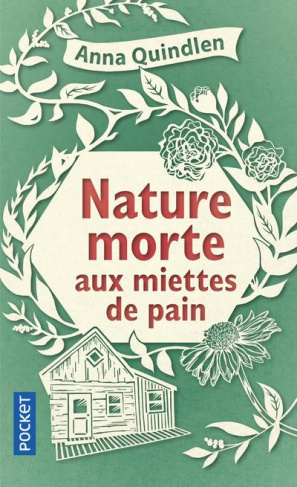
Célèbre photographe, dont le cliché Nature morte aux miettes de pain avait lancé sa carrière et bouleversé son existence, Rebecca Winter est aujourd'hui une artiste has been et ruinée. Unique solution pour soulager ses finances en baisse et son inspiration en berne : quitter Manhattan. Sauf que la vie champêtre n'a rien d'idyllique : sa maison tient plus de l'abri de jardin que du petit cottage cosy, Rebecca partage le grenier avec un raton laveur et, les soirs de pluie, c'est l'inondation assurée. Quant à l'inspiration, elle ne revient toujours pas... Mais sa rencontre avec Jim, jeune charpentier passionné d'ornithologie, pourrait bien tout changer, lui faire découvrir la majesté d'une nature vivante et peut-être réveiller son regard... " Il n'est jamais trop tard pour trouver le bonheur. " The Guardian
Grâce à une enquête merveilleusement documentée et enrichie d'un éclairant cahier photos, Simon Morrison livre un document électrique sur la face cachée d'un joyau qui, depuis toujours, déchaîne les passions.Comme va la Russie, ainsi va le Bolchoï.Simon MorrisonLe Bolchoï : Le Lac des cygnes, Casse-Noisette, Prokofiev, Chostakovitch, les prouesses de Maïa Plissetskaïa, un corps de ballet éblouissant de perfection, des costumes luxueux, le faste des soirées mondaines, les grandes heures de l'ère impériale.Le Bolchoï : Catherine de Russie, Alexandre III, Nicolas II, mais aussi la révolution bolchévique, la création de l'URSS par le premier Congrès des Soviets, le règne stalinien... Le plus beau théâtre du monde comme le témoin de l'Histoire d'un pays.Derrière les portes de ce lieu mythique se jouent également des intrigues sulfureuses, des amours impossibles, des trahisons, des affaires de corruption, des assassinats. En 2013 encore, les tensions sont telles que Sergueï Filine, directeur artistique, subit une attaque à l'acide de la part d'un danseur qui souhaitait venger sa compagne...
Greger Michael ; Stone Gene ; Lacoste Sophie ; Gou
Mieux manger est plus simple que ce que l'on croit, ne coûte pas plus cher et peut nous sauver la vie. C'est ce que nous démontre le docteur Michael Greger dans l'ouvrage ultradocumenté et pourtant très facile d'accès qu'il a coécrit avec Gene Stone. Un véritable guide qui nous ouvre les portes d'un univers fascinant, celui de la science des aliments. Michael Greger analyse d'abord le rôle de l'alimentation dans les principales maladies du siècle, telles que les maladies cardiaques, pulmonaires, cérébrales... Puis il dresse la liste des 12 aliments quotidiens qui sont selon lui essentiels pour une alimentation optimale, un régime vert à base d'haricots, de baies, de légumes crucifères, etc., où chaque aliment a son lot de bienfaits. Il nous explique enfin comment intégrer à notre quotidien alimentaire de petits réflexes qui peuvent prévenir certaines affections voire renverser le cours des maladies et nous aider à mener une vie plus longue et plus saine.
Sous ses apparences d'ours mal léché, Cesare Annunziata, a un c?ur d'or. Mais à 77 ans, la solitude le ronge et ce ne sont pas les relations qu'il entretient avec ses proches qui le comblent. Alors, quand Cesare comprend que sa nouvelle voisine vit un enfer, il va de nouveau oser affronter le monde. Généreux tout en se gardant bien des clichés, un roman intime, tendre et profond sur la solitude, les liens familiaux et la vieillesse.
Après La Symphonie du hasard, Douglas Kennedy nous offre une ?uvre sensuelle, délicate, nostalgique, sur les amours contrariées, le destin que l'on se forge et les regrets qui peuvent jalonner l'existence. C'est aussi sa déclaration d'amour à Paris, ville de tous les possibles et de toutes les réinventions.Avant Isabelle, je ne savais rien du sexe.Avant Isabelle, je ne savais rien de la liberté.Avant Isabelle, je ne savais rien de la vie.Paris, début des années 1970.Dans une librairie de la rive gauche, un jeune homme rencontre une femme. Il est américain, étudiant, sans le sou, et a tout quitté pour assouvir ses fantasmes de la Ville Lumière ; elle est française, un peu plus âgée, sophistiquée, mystérieuse et... mariée.Entre Sam et Isabelle, c'est le coup de foudre.Commence alors une liaison tumultueuse, des cinq à sept fiévreux, des rendez-vous furtifs, des moments volés. Mais Sam veut plus. Isabelle lui a ouvert les portes d'une autre vie mais est-elle prête à tout lui sacrifier ? La passion saura-t-elle résister au quotidien, aux épreuves et au temps qui passe ?
1803, Caroline du Sud. Fille d'une riche famille de Charleston, Sarah Grimké aspire dès le plus jeune âge à accomplir de grandes choses. Lorsque, pour ses onze ans, sa mère lui offre la petite Handful comme esclave personnelle, Sarah se dresse contre ce système inhumain. Entre les fillettes naît alors une véritable amitié, qui grandit au fil des années. Guidée par ses idéaux mais surtout par son affection pour Handful, Sarah n'abandonnera jamais l'espoir d'affranchir son amie. Superbe ode à la liberté et au courage, L'Invention des ailes dépeint les destins entrecroisés de deux personnages inoubliables, à la force de caractère incroyable, unis par le même profond désir d'indépendance.
Après de premiers échanges d'une cordialité toute bourgeoise, deux voisines en viennent à se livrer une véritable guerre (chantage, insultes, incitation au divorce?) pour une histoire de lambris que l'une veut repeindre dans le hall de l'immeuble et l'autre pas. L'une d'elles finira par disparaître dans de mystérieuses conditions. Une nouvelle recrue d'un club de lecture est reçue par sa présidente qui lui en présente les membres, une à une. A mesure qu'elle raconte leurs goûts littéraires (gore, romance coquine) ainsi que leurs histoires intimes (insémination de l'une, morts suspectes des maris successifs de l'autre), elle distille son venin... Voici quelques exemples tirés de ces douze nouvelles empreintes d'un humour féroce. Des portraits cruels de femmes toutes plus névrosées les unes que les autres, qui sont aussi les révélateurs d'une société américaine aisée, qui tient à tout prix à se montrer sous son masque de perfection. Helen Ellis fait éclater les apparences et décrit la solitude de ces femmes au foyer, mais aussi le pouvoir qu'elles ont sur leur petit royaume ? leur appartement, leur club de lecture, leur immeuble, leur mari ?, allant parfois jusqu'à la pulsion criminelle? Une satire de notre époque qui contraint au bonheur et à sa représentation en toute circonstance.
Le passé n'est jamais mort. Il n'est même pas passé." (William Faulkner)Voici trente ans que Billie James n'a pas remis les pieds dans le Mississippi. Un sacré tempérament, quelques dollars en poche et son chien Rufus au bout de sa laisse, elle débarque à Greendale et s'installe dans une bicoque décrépite où vécut autrefois son père. Ce dernier, poète noir de renom, est mort de manière accidentelle alors que Billie n'avait que quatre ans. La petite fille était présente au moment du drame, mais n'en a conservé aucun souvenir.Alors que les voisins font preuve d'un comportement étrange, que des rumeurs circulent, laissant soupçonner une tout autre vérité quant à la mort du père de Billie, celle-ci mène son enquête, aidée par son oncle et un drôle d'olibrius universitaire. Ensemble, ils vont exhumer de lourds secrets, dévoilant peu à peu l'histoire de ses origines mais aussi, en toile de fond, celle d'un pays marqué par les blessures toujours à vif de la ségrégation.Campé dans le décor à la fois somptueux et inquiétant du Sud profond, le premier roman de Chanelle Benz fourbit les armes du polar pour nous raconter ce qu'a été - et ce qu'est encore - l'Amérique tourmentée par les spectres les plus sombres de son Histoire.Traduit de l'anglais par David FauquembergChanelle Benz, britannique et antiguaise d'origine, vit et enseigne aujourd'hui à Memphis, dans le Tennessee. Elle est diplômée de l'université de Syracuse, où elle a eu pour mentor l'écrivain George Saunders, qui a salué en elle " une nouvelle voix sidérante de la fiction américaine ", et a également étudié l'art dramatique à l'université de Boston. Après un virtuose premier recueil de nouvelles, Dans la grande violence de la joie (Seuil, 2018), elle signe avec Rien dans la nuit que des fantômes son premier roman.
Avant de s'engager dans l'armée iranienne pour combattre l'ennemi irakien, Amir Yamini était un playboy, qui passait le plus clair de son temps à séduire les femmes et exaspérer sa très pieuse famille. Cinq ans plus tard, sa mère et sa soeur le retrouvent, amputé de son bras gauche, dans un hôpital psychiatrique pour soldats traumatisés. Quasi amnésique, Amir est hanté par la vision d'une mystérieuse femme sans visage, au front orné d'un croissant de lune. De retour à Téhéran, le fils prodigue est tour à tour salué comme un martyr de la Révolution islamique et confiné dans sa chambre comme un fou dangereux. Avec la complicité de sa soeur, il s'évade en escaladant le mur de leur jardin et repart sur le champ de bataille à la recherche de celle qu'il surnomme « Front de lune », accompagné dans ce périple au fil de la mémoire par deux scribes perchés sur ses épaules - l'ange de la vertu et l'ange du péché - qui consignent depuis toujours son histoire. Avec cette épopée amoureuse, guerrière et poétique d'une inventivité exubérante, porteuse d'un regard subtil sur la société iranienne contemporaine et empreinte d'une sensualité tout droit héritée de la grande tradition des contes persans, le grand romancier iranien Shahriar Mandanipour signe une oeuvre forte, envoûtante et pleine d'humanité.