NAKED
14,47 €
Epuisé
EAN :
9780571202645
| Date de parution | 01/04/2001 |
|---|---|
| Poids | 110g |
| Largeur | 111mm |
Plus d'informations
| EAN | 9780571202645 |
|---|---|
| Titre | NAKED |
| ISBN | 0571202640 |
| Auteur | MIKE LEIGH |
| Editeur | FABER ET FABER |
| Largeur | 111 |
| Poids | 110 |
| Date de parution | 20010401 |
| Nombre de pages | 0,00 € |
| Disponibilité | Epuisé |
Pourquoi choisir Molière ?
Efficacité et rapidité Commandé avant 16h livré demain
Économique et pratique Livraison dès 3,90 €
Facile et sans frais Retrait gratuit en magasin
Du même auteur
-
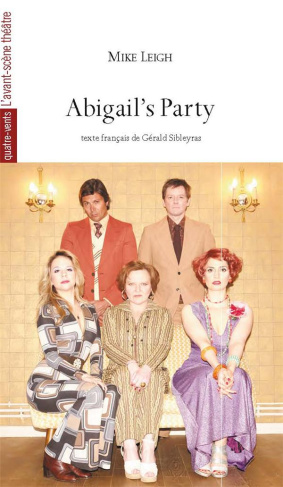
ABIGAIL'S PARTY
Beverley et Peter font partie d'une nouvelle classe moyenne, plus préoccupée de profit matériel que d'enrichissement spirituel, qui émerge dans la Grande-Bretagne des années 1970. Ils reçoivent des voisins, tandis que la fille de l'une d'entre eux organise une soirée dans la maison d'à côté. La conversation se prolonge, l'alcool aidant, entre anecdotes insignifiantes et remarques embarrassantes. Quarante ans après sa création au Hampstead Theater à Londres le 18 avril 1977, la pièce est jouée au Théâtre de Poche-Montparnasse à partir du 31 janvier 2017, dans une mise en scène de Thierry Harcourt, avec Cédric Carlier, Dimitri Rataud, Alexie Ribes, Lara Suyeux et Séverine Vincent.Sur commande en 4-6 joursCOMMANDER12,00 € -
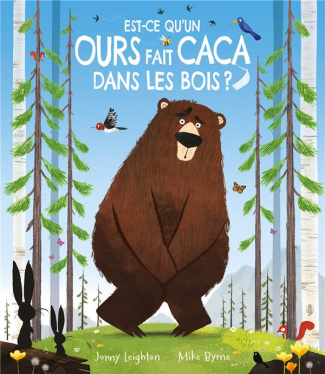
Est-ce qu'un ours fait caca dans les bois ?
C'est le matin. L'ours se réveille. Comme tous les matins, il a une envie pressante. Comment peut-il faire ses besoins à l’abri des regards indiscrets ? Une histoire très drôle à vite découvrir ! A partir de 3 ansEn stock (dernières pièces)COMMANDER12,95 € -
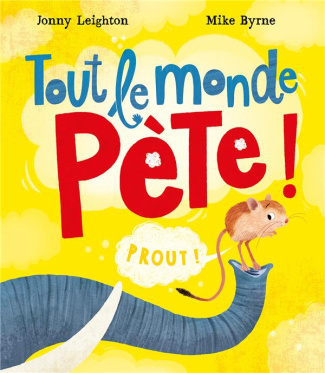
Tout le monde pète !
Une histoire hilarante pour dédramatiser les pets et les verbaliser, à l'âge où l'enfant assimile son corps et la propreté. Fous rires gara Lorsque la timide Gerboise libère accidentellement un tout petit pet, elle est très ennuyée. Mais son ami Éléphant lui explique qu'il n'y a pas de quoi avoir honte. Tout le monde pète ! Les baleines pètent sans gêne, les souris ne font pas de bruit, les serpents pètent en dormant... Les enfants et les parents aussi ? Et même les papis et les mamies ! Une histoire hilarante pour dédramatiser les pets et les verbaliser, à l'âge où l'enfant assimile son corps et la propreté. Fous rires garantis pour toute la famille !Sur commande en 2-4 joursCOMMANDER13,95 € -
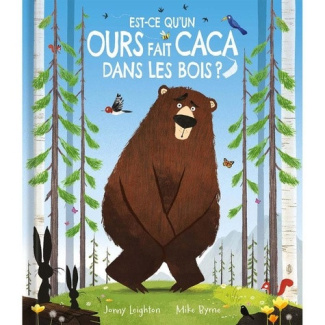
Est-ce qu'un ours fait caca dans les bois ?
Un album irrésistiblement drôle qui fait rire enfants et parents, autour d'un sujet universel : trouver un petit coin tranquille ! Barry est un ours discret... et très pudique. Ce matin, une urgence le presse : il doit absolument trouver un endroit calme pour faire caca. Mais dans la forêt, rien ne se passe comme prévu ! Entre les oiseaux qui se soulagent en plein vol, les mouffettes envahissantes et les animaux sans aucune gêne, impossible d'avoir un moment de tranquillité... Commence alors une quête aussi drôle que mouvementée pour trouver LE coin parfait. Porté par le texte plein de malice de Jonny Leighton et les illustrations expressives de Mike Byrne, cet album joue avec un sujet universel pour mieux faire rire ?; et toucher juste. Car derrière le comique irrésistible, il parle aussi d'intimité, de pudeur... et de ce besoin très humain d'avoir, parfois, un endroit rien qu'à soi. Un album coup de c'ur, aussi drôle que fin, qui déclenche les fous rires et dédramatise avec intelligence les sujets liés à la propreté.En stockCOMMANDER13,95 €


Du même éditeur
-
-
LOOK BACK IN ANGER
Anyone who's never watched someone die is suffering from a pretty bad case of virginity.Look Back in Anger premiered at the Royal Court Theatre, London, in 1956. 'John Osborne didn't contribute to British theatre: he set off a landmine called Look Back in Anger and blew most of it up.' Alan Sillitoe 'A story of youthful insecurity inflamed by lack of opportunity and the terrifying, destabilizing force of love . . . Jimmy Porter could fill an opera house with his bellowing hunger for a bigger, better life and a loyal love to share it with.' New York Times 'Look Back in Anger presents post-war youth as it really is. To have done this at all would be a signal achievement; to have done it in a first play is a minor miracle. All the qualities are there, qualities one had despaired of ever seeing on the stage - the drift towards anarchy, the instinctive leftishness, the automatic rejection of "official" attitudes, the surrealist sense of humour, the casual promiscuity, the sense of lacking a crusade worth fighting for and, underlying all these, the determination that no one who dies shall go unmourned . . . I doubt if I could love anyone who did not wish to see Look Back in Anger. It is the best young play of its decade.' Kenneth Tynan, Observer'How bracing, and, yes, even shocking, its white-hot fury remains.' The Times This edition includes an introduction by Michael Billington and an afterword by David Hare.EpuiséVOIR PRODUIT15,20 € -
-