Tu penses à quoi, papy ? Plaisirs et tracas d'un grand-père d'aujourd'hui
Jean-Claude Amblant, moderne septuagénaire, veut bien être grand-père, mais ne veut pas être un papy. A travers de petites scènes de la vie quotidienne d'aujourd'hui et d'autrefois, ordinateur, iPod, 4 cv Renault, bains-douches, produits cosmétiques en tous genres, douleurs et analyses de sang, musiques actuelles et chansons de naguère sont passés au crible du regard aiguisé de ce doyen d'une famille recomposée. On suit avec amusement sa quête d'un yaourt au supermarché, on est ému avec lui à l'évocation d'une orange américaine qui vole dans le ciel de juin 44 et on rit presque en connivence des critiques de ses petits-enfants face à sa résistance au téléphone portable et aux tics de notre époque. Une série de petits textes souvent drôles, qui donnent à chaque fois le point de vue du Papy et celui du monde qui l'entoure. A faire lire aux grands-pères, actuels et futurs, et même aux grands-mères.
| Nombre de pages | 144 |
|---|---|
| Date de parution | 28/09/2010 |
| Poids | 240g |
| Largeur | 160mm |
| EAN | 9782296126176 |
|---|---|
| Titre | Tu penses à quoi, papy ? Plaisirs et tracas d'un grand-père d'aujourd'hui |
| Auteur | Malissard Alain |
| Editeur | L'HARMATTAN |
| Largeur | 160 |
| Poids | 240 |
| Date de parution | 20100928 |
| Nombre de pages | 144,00 € |
| Disponibilité | Sur commande en 6-8 jours |
Pourquoi choisir Molière ?
Du même auteur
-
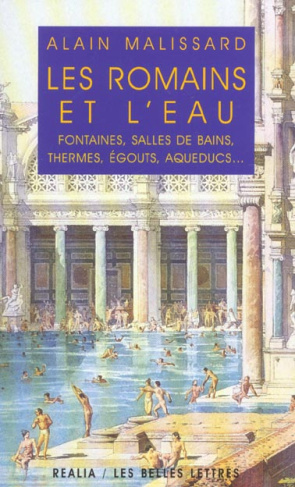
Les Romains et l'eau. Fontaines, salles de bains, thermes, égouts, aqueducs...
[This book is written in French.]Vitale pour toute sociAvec une prOn rencontre ici les Romains dans leur intimitEpuiséVOIR PRODUIT25,50 € -
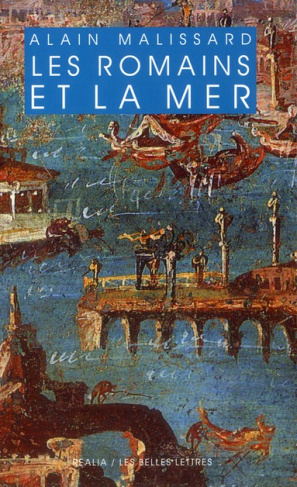
Les Romains et la mer
En 169 avant Jésus-Christ, les Romains ne craignent pas de s'embarquer sur des bateaux, qu'ils ne savent ni commander ni manoeuvrer, pour attaquer la puissance maritime des Carthaginois. Devenus les maîtres de la Méditerranée, ils la débarrassent des pirates et y fondent même leur Empire, quand Octave met en fuite les navires d'Antoine et de Cléopâtre. Ils savent installer des chantiers navals, rénover les ports, entretenir une flotte militaire, favoriser l'essor de la pêche et des compagnies de navigation, développer jusqu'en Inde, en Chine et en Atlantique leurs grandes lignes maritimes. Pourtant terriens dans l'âme, ils cuisinent avec raffinement les poissons de mer, consomment les huîtres avec passion, raffolent des perles et de la pourpre née des coquillages ; ils découvrent les plaisirs de la plaisance, les charmes de la plage et les bienfaits d'une certaine thalassothérapie. Les plus riches se font construire de magnifiques résidences en bord de mer ; les plus savants réfléchissent aux questions que soulèvent les marées de l'Atlantique ; les poètes, les philosophes et les orateurs reprennent les thèmes du pirate, du pilote, de la tempête ou du voyage en mer.Sur commande en 4-6 joursCOMMANDER29,00 € -
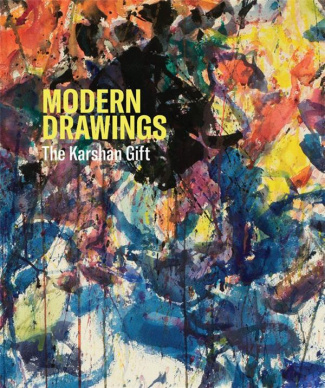
MODERN DRAWINGS: THE KARSHAN GIFT - ILLUSTRATIONS, COULEUR
This stunning catalogue presents for the first time an outstanding group of modern drawings by European and American masters, assembled by the late Howard Karshan and his wife, Linda, who recently presented the works to The Courtauld. Accompanying their exhibition at The Courtauld Gallery, the catalogue features drawings by renowned artists including Paul Cézanne, Wassily Kandinsky, Paul Klee, Willem de Kooning, Philip Guston, Sam Francis, Cy Twombly, Gerhard Richter and Georg Baselitz. The Karshan gift is a significant addition to The Courtauld?s collection. The works demonstrate Howard and Linda Karshan?s sensibility for the expressive power and rich variety of drawing as an art form. The drawings are characterised by innovative mark-making and distinctive use of line. Examples range from radical watercolours by Cézanne and highly expressive finger drawings in ink by Louis Soutter, to abstract compositions made by Henri Michaux whilst experimenting with Mescalin to explore the subconscious, and on to works by Twombly that further broadened the possibilities of draughtsmanship. The 25 drawings of the Karshan gift will be shown at The Courtauld Gallery when it reopens in late 2021, following a major transformation project. This catalogue will include an interview with Linda Karshan, two essays and a fully illustrated catalogue with detailed entries on each work.Sur commande en 4-6 joursCOMMANDER30,00 € -
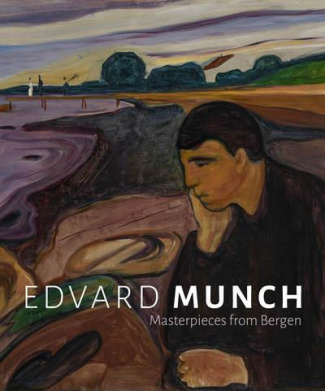
Edvard Munch. Masterpieces from Bergen
This important publication accompanies a major exhibition at The Courtauld Gallery, London, of paintings by Edvard Munch, one of the world's greatest modern artists. The exhibition and catalogue showcase 18 major works from the collection of KODE Art Museums in Bergen. The works span the most significant part of Munch's artistic development and have never before been shown as a group outside of Scandinavia. KODE houses one of the most important collections of paintings by Edvard Munch (1863- 1944) in the world. The collection was assembled at the beginning of the 20th century by the Norwegian industrialist, mill owner and philanthropist Rasmus Meyer (1858-1916), who was one of the fi rst signifi cant early collectors of Munch's work. Meyer knew Munch personally and was astute in acquiring major canvases by the artist that chart his artistic development. Edvard Munch : Masterpieces from Bergen explores this group of remarkable works in detail and considers the important role of Rasmus Meyer as a collector. The exhibition and publication include seminal paintings from Munch's early 'realist' phase of the 1880s, such as Morning (1884), which was made when the artist was just twenty years old, and Summer Night (1889), a pivotal work that shows the artist's move towards the expressive and psychologically charged work for which he became famous. These paintings launched Munch's career and set the stage for his renowned, highly expressive paintings of the 1890s when his compositions became powerful projections of his emotions and imaginative states. Such works are a major feature of the exhibition that includes remarkable canvases from Munch's famous 'Frieze of Life' series, such as Evening on Karl Johan (1892), Melancholy (1894-96) and At the Death Bed (1895). Through his 'Frieze of Life' works, Munch intended to address profound themes of human existence, from love to death. The artist used his own experiences as source material to make visceral depictions of the human psyche, which he hoped would help others understand their own life. Munch's powerful use of colour and form to convey his subjects marked him out as one of the most radical painters at the turn of the 20th century. This fully illustrated publication includes a catalogue of the works, with contributions by leading experts in their fi eld from KODE and The Courtauld.Sur commande en 4-6 joursCOMMANDER30,00 €


Du même éditeur
-
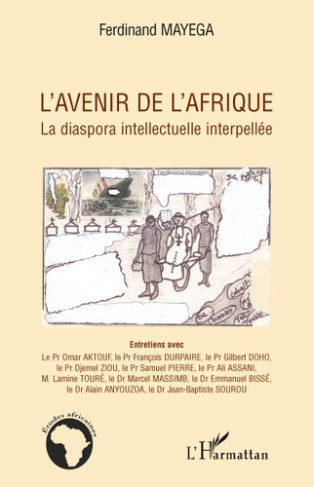
L'AVENIR DE L'AFRIQUE - LA DIASPORA INTELLECTUELLE INTERPELLEE
L'année 2010 marquera, pour de nombreux pays africains surtout francophones, 50 ans d'indépendance, donc de gestion du pouvoir entre les mains des élites dirigeantes africaines. Seulement, un demi-siècle plus tard, un constat se dégage de l'ensemble des Etats africains : le développement semble s'éloigner de l'Afrique au fur et à mesure que les années passent. Pourquoi l'Afrique demeure-t-elle à la traîne malgré toutes les richesses qu'elle possède ? Le continent noir peut-il se sortir du piège de l'aide pour son développement si la bonne gouvernance s'installe effectivement et si les mentalités changent radicalement ? Compte tenu de l'apport remarquable des diasporas intellectuelles notamment chinoise et indienne pour l'émergence de la Chine et de l'Inde, la diaspora intellectuelle africaine, avec l'élection du fils d'Afrique Barack Obama à la Maison Blanche, ne constitue-t-elle pas le meilleur pilier de l'Afrique pour sortir du labyrinthe de la néguentropie ? Dans le cadre de mes recherches de plus d'une décennie, je présente également ce que l'on pourrait assimiler à une nouvelle théorie des relations Nord-Sud. Ce sont ces réflexions et interrogations auxquelles nous essayons de trouver des solutions pour l'avenir de l'Afrique avec quelques brillants intellectuels de la diaspora africaine d'Europe et d'Amérique du Nord.EpuiséVOIR PRODUIT32,00 € -
Les institutions politiques mossis à l'épreuve de la situation coloniale
Avant la conquête française, la plus grande partie de la moitié orientale du Burkina Faso actuel était occupée par les Mossis. On appelle également "mossis" les représentants de l'ordre aristocratique qui dirige ce territoire, souvent qualifié à tort d'empire, un ordre dont les institutions se sont maintenues durant les six décennies de domination coloniale. Pourquoi et comment ce système a-t-il été préservé alors même que la société toute entière vit de grands bouleversements ? Au moment de la conquête, les chefs précoloniaux n'auraient-ils pas dû être renversés et leur système aboli ? Et lorsqu'on s'approche de la décolonisation, c'est-à-dire d'une indépendance accordée à une élite "moderne" formée à l'école coloniale, la question de l'abolition des organisations traditionnelles n'aurait-elle pas dû être de nouveau soulevée ? Comment les structures politiques mossis ont-elles su se maintenir durant la période coloniale ? Selon quelles modalités ...Sur commande en 6-8 joursCOMMANDER29,00 € -