This substantial catalogue explores a remarkable collection of medieval European sculpture. Richly detailed with plentiful illustrations and original research, it is a notable contribution to medieval scholarship. The McCarthy collection comprises more than 150 specimens of medieval European sculpture, produced over a period of nearly 600 years. A testimony to the comprehensiveness of Robert McCarthy's interest in the art and culture of the Middle Ages, its geographical, chronological and typological breadth place it among the most important of its kind in private hands. Including a few early examples from Merovingian France, Anglo-Saxon England and Visigothic Spain, its holdings have a strong focus on Romanesque art, with over fifty capitals and other architectural carvings from Iberia, France and the Italian Peninsula. Some of these pieces are associable with such notable workshops as those of Gislebertus, the Master of Agüero and Compostela's Master Mateo, while a great number can be closely compared to anonymous works in major and provincial sites. Notable monuments like the monastic powerhouse of Cluny or the abbatial churches of Autun and Savigny are represented through important sculptural fragments - most published here for the first time. The transition to the Gothic style and the period of its splendour, particularly in France, are witnessed by an ample selection of statuary and architectural fragments - some traceable to such important buildings as Noyon cathedral and Paris' Notre Dame, and others, more loosely, to the artistic circles that gravitated around the great projects of the age. Freestanding sculpture in stone or wood, including a small but precious nucleus of Virgin and Child statuary and some Spanish polychrome figures, constitutes an interesting subset of the collection's late medieval holdings, as do some especially fine examples of Italian trecento sculpture. Enriched with outstanding photography by Barney Hindle and Mark French, entries aim to provide detailed stylistic, iconographic and contextual analyses, with special attention paid to comparanda in public and other private collections. This approach, complemented in some cases by petrographic analysis, has allowed the. authors to connect much of the material presented in these pages with specific buildings, workshops or regional schools, contributing to a better understanding of the pieces themselves, their original settings and their cultural and artistic milieux. This catalogue follows the publication of three volumes dedicated to Robert McCarthy's vast collection of Western miniatures and manuscript leaves (2018-2021), and is part of an ambitious project to document the entirety of his holdings - which also include notable selections of medieval ivories, stained glass and East Christian Art.
Nombre de pages
304
Date de parution
05/04/2024
Poids
2 160g
Largeur
250mm
Plus d'informations
Plus d'informations
EAN
9781915401052
Titre
The McCarthy collection. Sculpture
Auteur
Little Charles T. ; Ayres de Campos Miguel
Editeur
HOLBERTON
Largeur
250
Poids
2160
Date de parution
20240405
Nombre de pages
304,00 €
Pourquoi choisir Molière ?
Efficacité et rapiditéCommandé avant 16hlivré demain
Économique et pratiqueLivraison dès 3,90 €
Facile et sans fraisRetrait gratuiten magasin
Disponibilité et écouteContactez-nous sur WhatsApp
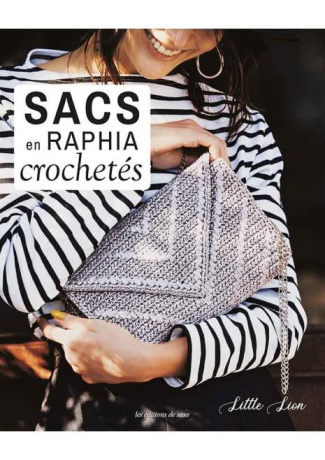
Les accessoires au crochet, qu'il s'agisse de sacs, de pochettes, de chapeaux, tous ont le vent en poupe surtout lorsque ceux-ci sont crochetés en matériaux originaux tels que le raphia, le fil de lin ou fantaisie. On retrouve chaque année, au détour des défilés de Printemps, cet esprit bohème chic et tendance que seuls les accessoires fait-main sont en mesure d'apporter. Portables en toutes circonstances, ces petits " joyaux " seront les must-have de la belle saison. Lancez-vous dans ces projets créatifs et crochetez sans compter l'accessoire qui vous ressemble. Dans ce livre, vous découvrirez : De petits accessoires indispensables tels que pochettes et mini-sacs ; De jolis cabas et grands sacs avec quelques chapeaux assortis ; Les possibilités infinies de couleurs des fils de raphias ; Les bases du crochet et des points de finition indispensables ; Des schémas techniques pour réussir vos ouvrages très facilement.
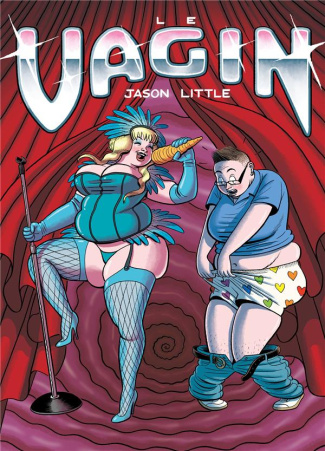
Polly Amorous, artiste burlesque new-yorkaise et Molly M. Morris, gérante d'un café à Oakland en Californie ont un grand nombre de points communs : elles sont toutes les deux rondes, ont toutes deux un vagin particulièrement petit, ont toutes deux été adoptées, avec la même date de naissance, mais ne se connaissent pas... Du moins pas encore ! Alors que les deux femmes, continuent à prendre du poids chacune de leur côté, un étrange phénomène se produit... L'augmentation respective le leur "chakra du Mulhadara" semble à l'origine de distorsions étranges de l'espace temps, autour leur pelvis. Suite à une séance de masturbation, le vibromasseur de Polly se retrouve aspiré dans son vagin, pour se retrouver dans celui de Molly... Une histoire totalement loufoque et échevélée où le vagin des deux femmes se retrouvent connectés comme la porte magique du monde de Narnia !
Bobbie n'est qu'un môme lorsque Mel lui sauve la vie. Initié à des réalités que bien des adultes ignorent, le gamin va se former au métier de truand de haut vol, de ceux qui risquent beaucoup pour ramasser gros mais qui peuvent tout perdre sur une trahison, une erreur ou un hasard. La violence demeure. La marginalité reste. Bobbie, grièvement blessé, soigné à l'héroïne, découvre une autre forme de survie où l'amour trouve difficilement sa place. Bobbie le sait : demain ne sera peut-être pas un autre jour. Pourtant, comment ne pas l'espérer ?
Résumé : This catalogue accompanies an exhibition which presents artefacts from burial mounds of the Saka people of East Kazakhstan, who, over 2, 500 years ago, lived lives rich in complexity. The Saka people occupied a landscape of seemingly endless steppe to the west, bounded by mountains to the east and south. Known to be fierce warriors, they were also skilled craftspeople, producing intricate gold and other metalwork. Their artistic expression indicates a deep respect for the animals around them - both real and imagined. They dominated their landscapes with huge burial mounds of sophisticated construction, burying their horses with elite members of their society. Recent excavations and analyses, led by archaeologists from Kazakhstan, have demonstrated that by looking through a scientific and social lens at what the Saka left behind we can paint a picture of a complex society. We can start to understand how it affected the way people lived, how they travelled, the things they made and what they believed in. Including contributions from experts at Nazarbayev University, Al-Farabi Kazakh National University, and the University of Cambridge, this publication details the results of new archaeological research from East Kazakhstan. It is richly illustrated with photographs of intricate gold artefacts in the Saka-Scythian animal style, landscape and aerial photography of the burial mounds, and details of the excavations and analyses. Grounded in decades of careful study, papers by the two leading Kazakhstani archaeologists of the East Kazakhstan region, Professors Zainolla Samashev and Abdesh Toleubayev, demonstrate current archaeological thinking in Kazakhstan today. These papers are complemented by material from a team of international scholars, which contribute the results of new scientific analyses on the artefacts, and wider Eurasian perspectives on the Saka people and their practice of horse burial.
Shone Richard ; Clarke Darren ; Gage Deborah ; Hen
Accompanying an exhibition at Philip Mould & Company, this lavish catalogue tells the story of Vanessa Bell and Duncan Grant's enduring attachment to their home at Charleston Farmhouse, and showcases the work the artists produced between the two world wars. This stunning collection of artwork is beautifully presented alongside illuminating, illustrated essays, an interview and complete catalogue. Vanessa Bell and Duncan Grant's enduring attachment to their home at Charleston Farmhouse, its idyllic surroundings, and constant fl ow of visitors can be witnessed through their art. Beginning with radical modern works infl uenced by European trends - from painted furniture to depictions of food preparation in the kitchen, from the barns to the pond, the people to the household cat - this catalogue tells a story of over thirty years of astonishing artistic productivity. Charleston was not just the Bloomsbury Group's country retreat but a venue for their progressive social self-expression. It was also a family home. Focusing on Vanessa and Duncan's most productive years of creativity, between and including two world wars, this catalogue will explore how Charleston fed their artistic impulses and ideas to produce a glorious canon of art.