Jannis Kounellis (Piraeus, 1936 - Rome, 2017) was an artist known for his groundbreaking sculptures made from materials like charcoal, wood and iron Born in Greece during a tumultuous Ome in the country's history, Kounellis eventually moved to Rome in 1956, where he enrolled at the Academy of Fine Arts and studied painting with Italian painter and poet Tab Snaloja Initially influenced by Art Informel, Kounellis slowly started incorporating elements available in nature into his work, such as soil, stones and vegetation On the occasion of the exhibition 'Fuoco Immagme Acqua Terra' in Rome in 1967, Kounellis, together with his friend and fellow artist Piro Pascal], exhibited sculptures made of water and fire. The show caught the attention of critic and curator Germano Celant, who addressed the work of both artists in "Notes for a Guerrilla War", an essay that would later become the official manifesto for the Arte Povere movement. In 1969, Kounellis sent shockwaves through the art world when he exhibited living animals in a gallery Held at Galleria L'Athco in Rome, Untitled (Cave') consisted of twelve horses tethered to the walls of the space, referencing the animals depicted on the friezes adorning ancient Greek temples A few months later, Kounellis was invited to participate in Harald Szeemann's revolutionary exhibition 'Live in Your Head When Attitudes Become Forms' in Bern, an event that would solidify his reputation on the international scene In the following years Kounellis expanded his activities to include stage design for operas, ballets and plays around the world, while continuing to work on site-speehc installations. But he never stopped considering himself a painter 'My work is about images. I don't physically paint anymore, but I work using the same principles' Over the past five decades, Kounellis's work has been presented in solo exhibitions in museums around the world, such as the Musée d'Orsay, Paris (2009), the Neue Nationalgalene, Berlin (2007), the Galena Nationale d'Arte Moderna, Rome (2002), the Stedelijk Museum, Amsterdam (1990), and the Museum of Contemporary Art in Chicago (1966), among others. His work has also been featured in many influential institutional exhibitions, including the Venice Biennale and Documenta in Kassel From 1993 to 2001, Kounellis was Professor of Sculpture at the Kunstakademie in Dusseldorf In the Tribute, twenty key figures from Kounellis's life contribute their memories of the artist. PHILIP LARRATT-SMITH's Survey offers a comprehensive reading into the historical context and conceptual framework from which Kounellis's practice developed. RUDI FUCHS focuses on Kounellis's work Untitled ISenga Stolo) (1991). Studio Visit is a collection of archival images providing a view on the artist's creative process. Finally, Artist's Writings features a selection of Kounellis's poignant observations on art, literature and geopohtics, as well as extracts from a group conversation with Jean-Christophe Ammann, Joseph Beuys, Enzo Cucchi and Anselm Kiefer.
Date de parution
15/11/2018
Poids
1 056g
Largeur
252mm
Plus d'informations
Plus d'informations
EAN
9780714870793
Titre
JANNIS KOUNELLIS
Auteur
LARRATT-SMITH PHILIP
Editeur
PHAIDON PRESS
Largeur
252
Poids
1056
Date de parution
20181115
Nombre de pages
0,00 €
Disponibilité
Sur commande en 2-4 jours
Pourquoi choisir Molière ?
Efficacité et rapiditéCommandé avant 16hlivré demain
Économique et pratiqueLivraison dès 3,90 €
Facile et sans fraisRetrait gratuiten magasin
Disponibilité et écouteContactez-nous sur WhatsApp
Larrart Thierry ; Rose Annabelle ; Perrin Frédéric
Les tapas sont devenues incontournables. Originaires d'Espagne, ces délicieux amuse-gueules que l'on déguste dans les bars ou les auberges avant le dîner sont aussi variés que leur pays : des plus simples (chorizo grillé, jambon de montagne...) aux plus sophistiqués (cuisses de grenouile, ailes de cailles, escargots...). Servies en petites quantités, en accompagnement d'un verre de vin, les tapas sont connues de tous et font partie des vedettes de la cuisine internationale. Alors adoptez l'esprit tapas et doonez à vos apéritifs et à vos soirées une touche de convivialité et de soleil.
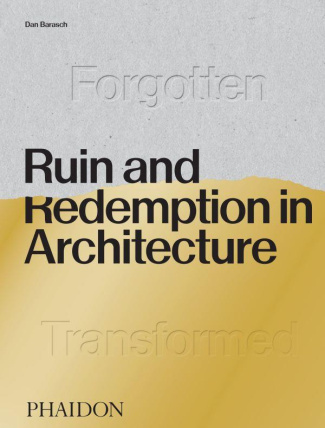
Explores the power of abandoned architecture, capturing the awe-inspiring drama of lost and forgotten, as well as reimagined and transformed structures across the globe. From Victorian gas holders, railway stations and factories, to World War Il flak towers and bunkers, from Gothic churches, as well as Modernist and Brutalist masterpieces, this book demonstrates that transforming our built heritage has the power to change lives, communities, neighbourhoods and cities the world over.